PUBLISHER: Aviation & Defense Market Reports (A&D) | PRODUCT CODE: 1966912

PUBLISHER: Aviation & Defense Market Reports (A&D) | PRODUCT CODE: 1966912
Global Rolled Homogeneous Armor (RHA) Plate Market 2026-2036
Global Rolled Homogeneous Armor (RHA) Plate Market
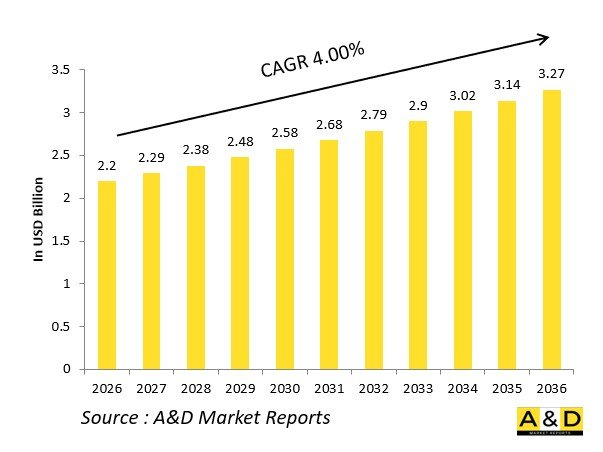
The Global Rolled Homogeneous Armor (RHA) Plate Market is estimated at USD 2.2 billion in 2026, projected to grow to USD 3.27 billion by 2036 at a Compound Annual Growth Rate (CAGR) of 4.00% over the forecast period 2026-2036.
Introduction: Global Rolled Homogeneous Armor Plate Market
Rolled homogeneous armor plates are foundational protective materials used across a wide range of military platforms. Known for their uniform composition and reliable ballistic performance, these steel-based armor solutions are widely deployed in armored vehicles, tanks, naval vessels, and structural fortifications. Rolled homogeneous armor provides effective resistance against ballistic threats, blast impacts, and fragmentation, making it a trusted choice for conventional and modern defense applications. As ground and naval forces continue to modernize fleets, demand remains strong for armor solutions that balance protection, manufacturability, and cost efficiency. The global market is influenced by evolving threat environments, including kinetic munitions and battlefield fragmentation hazards. Defense planners value rolled homogeneous armor for its proven performance, ease of fabrication, and compatibility with layered and composite protection systems. Despite the emergence of advanced armor materials, rolled homogeneous armor plates continue to play a critical role in military survivability strategies.
Technology Impact in Rolled Homogeneous Armor Plate
Technological advancements are enhancing the performance and application scope of rolled homogeneous armor plates. Improvements in metallurgical processes have led to better control over hardness, toughness, and ductility, resulting in improved ballistic resistance. Advanced heat treatment techniques enhance energy absorption while reducing susceptibility to cracking under impact. Precision rolling and forming technologies enable consistent thickness and structural integrity across large armor panels. Integration with composite and modular armor systems allows rolled homogeneous armor to serve as a base layer in multi-threat protection solutions. Modern welding and joining methods improve structural strength while preserving ballistic properties. Research into microstructural refinement continues to optimize performance against evolving kinetic and blast threats. These technological developments ensure that rolled homogeneous armor remains relevant, adaptable, and effective within modern military protection architectures.
Key Drivers in Rolled Homogeneous Armor Plate
Several strategic and operational factors drive sustained demand for rolled homogeneous armor plates. Ongoing modernization of armored vehicles and naval platforms reinforces the need for proven, reliable armor materials. Rising focus on crew survivability and platform durability increases investment in robust protective solutions. Rolled homogeneous armor is favored for its cost effectiveness, ease of manufacturing, and compatibility with existing vehicle designs. Increased deployment of military vehicles in conflict zones heightens the requirement for dependable ballistic protection. Infrastructure protection and military engineering applications also contribute to demand growth. Interoperability with add-on and reactive armor systems makes rolled homogeneous armor a flexible choice for evolving protection needs. Additionally, maintenance simplicity and long service life support its continued adoption. Together, these drivers sustain the role of rolled homogeneous armor plates as essential components of defense protection strategies.
Regional Trends in Rolled Homogeneous Armor Plate
Regional trends in the rolled homogeneous armor plate market reflect diverse defense priorities and industrial capabilities. Regions with established armored vehicle manufacturing bases emphasize domestic production and material self-reliance. These areas focus on consistent quality and integration with indigenous vehicle programs. Emerging defense markets prioritize affordable and reliable armor solutions to upgrade existing fleets. Border security and internal stability concerns drive demand for armored vehicles equipped with proven steel armor. Naval-focused regions incorporate rolled homogeneous armor into hull protection and critical infrastructure shielding. Harsh operational environments in certain regions necessitate armor materials with high durability and corrosion resistance. Government policies supporting local defense industries encourage partnerships between global material suppliers and regional manufacturers. Overall, regional developments demonstrate continued reliance on rolled homogeneous armor as a dependable and adaptable protection solution.
Key Rolled Homogeneous Armor Plate Programs
Rolled homogeneous armor plate programs are closely linked to broader armored platform development and protection enhancement initiatives. These programs focus on supplying standardized armor solutions for tanks, infantry fighting vehicles, and support platforms. Emphasis is placed on meeting stringent military specifications for ballistic resistance and structural integrity. Integration with modular armor kits allows platforms to be adapted to different threat environments. Many programs support fleet refurbishment efforts by replacing aging armor with improved steel compositions. Collaboration between defense agencies, steel manufacturers, and research institutions drives material optimization. Quality assurance and consistent production processes are central program objectives. Lifecycle support, including repair and replacement capabilities, is also prioritized. Through these programs, defense organizations maintain reliable protection levels while balancing performance, cost, and long-term sustainability.
Table of Contents
Global Rolled Homogeneous Armor (RHA) Plate Market - Table of Contents
Global Rolled Homogeneous Armor (RHA) Plate Market Report Definition
Global Rolled Homogeneous Armor (RHA) Plate Market Segmentation
By Region
By Platform
By Thickness
By Application
By Steel Grade
By Treatment
Global Rolled Homogeneous Armor (RHA) Plate Market Analysis for next 10 Years
The 10-year Global Defense Explosive Reactive Armor (ERA) Tiles Market analysis would give a detailed overview of Global Defense Explosive Reactive Armor (ERA) Tiles Market growth, changing dynamics, technology adoption overviews and the overall market attractiveness is covered in this chapter.
Market Technologies of Global Rolled Homogeneous Armor (RHA) Plate Market
This segment covers the top 10 technologies that is expected to impact this market and the possible implications these technologies would have on the overall market.
Global Rolled Homogeneous Armor (RHA) Plate Market Forecast
The 10-year Global Defense Explosive Reactive Armor (ERA) Tiles Market forecast of this market is covered in detailed across the segments which are mentioned above.
Regional Global Rolled Homogeneous Armor (RHA) Plate Market Trends & Forecast
The regional counter drone market trends, drivers, restraints and Challenges of this market, the Political, Economic, Social and Technology aspects are covered in this segment. The market forecast and scenario analysis across regions are also covered in detailed in this segment. The last part of the regional analysis includes profiling of the key companies, supplier landscape and company benchmarking. The current market size is estimated based on the normal scenario.
North America
Drivers, Restraints and Challenges
PEST
Market Forecast & Scenario Analysis
Key Companies
Supplier Tier Landscape
Company Benchmarking
Europe
Middle East
APAC
South America
Country Analysis of Global Rolled Homogeneous Armor (RHA) Plate Market
This chapter deals with the key defense programs in this market, it also covers the latest news and patents which have been filed in this market. Country level 10 year market forecast and scenario analysis are also covered in this chapter.
US
Defense Programs
Latest News
Patents
Current levels of technology maturation in this market
Market Forecast & Scenario Analysis
Canada
Italy
France
Germany
Netherlands
Belgium
Spain
Sweden
Greece
Australia
South Africa
India
China
Russia
South Korea
Japan
Malaysia
Singapore
Brazil
Opportunity Matrix for Global Rolled Homogeneous Armor (RHA) Plate Market
The opportunity matrix helps the readers understand the high opportunity segments in this market.
Expert Opinions on Global Rolled Homogeneous Armor (RHA) Plate Market Report
Hear from our experts their opinion of the possible analysis for this market.
Conclusions
About Aviation and Defense Market Reports
List of Tables
- Table 1: 10 Year Market Outlook, 2026-2036
- Table 2: Drivers, Impact Analysis, North America
- Table 3: Restraints, Impact Analysis, North America
- Table 4: Challenges, Impact Analysis, North America
- Table 5: Drivers, Impact Analysis, Europe
- Table 6: Restraints, Impact Analysis, Europe
- Table 7: Challenges, Impact Analysis, Europe
- Table 8: Drivers, Impact Analysis, Middle East
- Table 9: Restraints, Impact Analysis, Middle East
- Table 10: Challenges, Impact Analysis, Middle East
- Table 11: Drivers, Impact Analysis, APAC
- Table 12: Restraints, Impact Analysis, APAC
- Table 13: Challenges, Impact Analysis, APAC
- Table 14: Drivers, Impact Analysis, South America
- Table 15: Restraints, Impact Analysis, South America
- Table 16: Challenges, Impact Analysis, South America
- Table 17: Scenario Analysis, Scenario 1, By Thickness, 2026-2036
- Table 18: Scenario Analysis, Scenario 1, By Platform, 2026-2036
- Table 19: Scenario Analysis, Scenario 1, By Region, 2026-2036
- Table 20: Scenario Analysis, Scenario 2, By Thickness, 2026-2036
- Table 21: Scenario Analysis, Scenario 2, By Platform, 2026-2036
- Table 22: Scenario Analysis, Scenario 2, By Region, 2026-2036
List of Figures
- Figure 1: Global Rolled Homogeneous Armor (RHA) Plate Market Forecast, 2026-2036
- Figure 2: Global Rolled Homogeneous Armor (RHA) Plate Market Forecast, By Thickness, 2026-2036
- Figure 3: Global Rolled Homogeneous Armor (RHA) Plate Market Forecast, By Platform, 2026-2036
- Figure 4: Global Rolled Homogeneous Armor (RHA) Plate Market Forecast, By Region, 2026-2036
- Figure 5: North America, Rolled Homogeneous Armor (RHA) Plate Market, Forecast, 2026-2036
- Figure 6: Europe, Rolled Homogeneous Armor (RHA) Plate Market, Forecast, 2026-2036
- Figure 7: Middle East, Rolled Homogeneous Armor (RHA) Plate Market, Forecast, 2026-2036
- Figure 8: APAC, Rolled Homogeneous Armor (RHA) Plate Market, Forecast, 2026-2036
- Figure 9: South America, Rolled Homogeneous Armor (RHA) Plate Market, Forecast, 2026-2036
- Figure 10: United States, Rolled Homogeneous Armor (RHA) Plate Market, Thickness Maturation, 2026-2036
- Figure 11: United States, Rolled Homogeneous Armor (RHA) Plate Market, Forecast, 2026-2036
- Figure 12: Canada, Rolled Homogeneous Armor (RHA) Plate Market, Thickness Maturation, 2026-2036
- Figure 13: Canada, Rolled Homogeneous Armor (RHA) Plate Market, Forecast, 2026-2036
- Figure 14: Italy, Rolled Homogeneous Armor (RHA) Plate Market, Thickness Maturation, 2026-2036
- Figure 15: Italy, Rolled Homogeneous Armor (RHA) Plate Market, Market Forecast, 2026-2036
- Figure 16: France, Rolled Homogeneous Armor (RHA) Plate Market, Thickness Maturation, 2026-2036
- Figure 17: France, Rolled Homogeneous Armor (RHA) Plate Market, Market Forecast, 2026-2036
- Figure 18: Germany, Rolled Homogeneous Armor (RHA) Plate Market, Thickness Maturation, 2026-2036
- Figure 19: Germany, Rolled Homogeneous Armor (RHA) Plate Market, Market Forecast, 2026-2036
- Figure 20: Netherlands, Rolled Homogeneous Armor (RHA) Plate Market, Thickness Maturation, 2026-2036
- Figure 21: Netherlands, Rolled Homogeneous Armor (RHA) Plate Market, Market Forecast, 2026-2036
- Figure 22: Belgium, Rolled Homogeneous Armor (RHA) Plate Market, Thickness Maturation, 2026-2036
- Figure 23: Belgium, Rolled Homogeneous Armor (RHA) Plate Market, Market Forecast, 2026-2036
- Figure 24: Spain, Rolled Homogeneous Armor (RHA) Plate Market, Thickness Maturation, 2026-2036
- Figure 25: Spain, Rolled Homogeneous Armor (RHA) Plate Market, Market Forecast, 2026-2036
- Figure 26: Sweden, Rolled Homogeneous Armor (RHA) Plate Market, Thickness Maturation, 2026-2036
- Figure 27: Sweden, Rolled Homogeneous Armor (RHA) Plate Market, Forecast, 2026-2036
- Figure 28: Brazil, Rolled Homogeneous Armor (RHA) Plate Market, Thickness Maturation, 2026-2036
- Figure 29: Brazil, Rolled Homogeneous Armor (RHA) Plate Market, Market Forecast, 2026-2036
- Figure 30: Australia, Rolled Homogeneous Armor (RHA) Plate Market, Thickness Maturation, 2026-2036
- Figure 31: Australia, Rolled Homogeneous Armor (RHA) Plate Market, Market Forecast, 2026-2036
- Figure 32: India, Rolled Homogeneous Armor (RHA) Plate Market, Thickness Maturation, 2026-2036
- Figure 33: India, Rolled Homogeneous Armor (RHA) Plate Market, Market Forecast, 2026-2036
- Figure 34: China, Rolled Homogeneous Armor (RHA) Plate Market, Thickness Maturation, 2026-2036
- Figure 35: China, Rolled Homogeneous Armor (RHA) Plate Market, Market Forecast, 2026-2036
- Figure 36: Saudi Arabia, Rolled Homogeneous Armor (RHA) Plate Market, Thickness Maturation, 2026-2036
- Figure 37: Saudi Arabia, Rolled Homogeneous Armor (RHA) Plate Market, Market Forecast, 2026-2036
- Figure 38: South Korea, Rolled Homogeneous Armor (RHA) Plate Market, Thickness Maturation, 2026-2036
- Figure 39: South Korea, Rolled Homogeneous Armor (RHA) Plate Market, Market Forecast, 2026-2036
- Figure 40: Japan, Rolled Homogeneous Armor (RHA) Plate Market, Thickness Maturation, 2026-2036
- Figure 41: Japan, Rolled Homogeneous Armor (RHA) Plate Market, Market Forecast, 2026-2036
- Figure 42: Malaysia, Rolled Homogeneous Armor (RHA) Plate Market, Thickness Maturation, 2026-2036
- Figure 43: Malaysia, Rolled Homogeneous Armor (RHA) Plate Market, Market Forecast, 2026-2036
- Figure 44: Singapore, Rolled Homogeneous Armor (RHA) Plate Market, Thickness Maturation, 2026-2036
- Figure 45: Singapore, Rolled Homogeneous Armor (RHA) Plate Market, Market Forecast, 2026-2036
- Figure 46: United Kingdom, Rolled Homogeneous Armor (RHA) Plate Market, Thickness Maturation, 2026-2036
- Figure 47: United Kingdom, Rolled Homogeneous Armor (RHA) Plate Market, Market Forecast, 2026-2036
- Figure 48: Opportunity Analysis, Rolled Homogeneous Armor (RHA) Plate Market, By Thickness(Cumulative Market), 2026-2036
- Figure 49: Opportunity Analysis, Rolled Homogeneous Armor (RHA) Plate Market, By Thickness(CAGR), 2026-2036
- Figure 50: Opportunity Analysis, Rolled Homogeneous Armor (RHA) Plate Market, By (Cumulative Market), 2026-2036
- Figure 51: Opportunity Analysis, Rolled Homogeneous Armor (RHA) Plate Market, By Platform(CAGR), 2026-2036
- Figure 52: Opportunity Analysis, Rolled Homogeneous Armor (RHA) Plate Market, By Region (Cumulative Market), 2026-2036
- Figure 53: Opportunity Analysis, Rolled Homogeneous Armor (RHA) Plate Market, By Region (CAGR), 2026-2036
- Figure 54: Scenario Analysis, Rolled Homogeneous Armor (RHA) Plate Market, Cumulative Market, 2026-2036
- Figure 55: Scenario Analysis, Rolled Homogeneous Armor (RHA) Plate Market, Global Market, 2026-2036
- Figure 56: Scenario 1, Rolled Homogeneous Armor (RHA) Plate Market, Total Market, 2026-2036
- Figure 57: Scenario 1, Rolled Homogeneous Armor (RHA) Plate Market, By Thickness, 2026-2036
- Figure 58: Scenario 1, Rolled Homogeneous Armor (RHA) Plate Market, By Platform, 2026-2036
- Figure 59: Scenario 1, Rolled Homogeneous Armor (RHA) Plate Market, By Region, 2026-2036
- Figure 60: Scenario 2, Rolled Homogeneous Armor (RHA) Plate Market, Total Market, 2026-2036
- Figure 61: Scenario 2, Rolled Homogeneous Armor (RHA) Plate Market, By Thickness, 2026-2036
- Figure 62: Scenario 2, Rolled Homogeneous Armor (RHA) Plate Market, By Platform, 2026-2036
- Figure 63: Scenario 2, Rolled Homogeneous Armor (RHA) Plate Market, By Region, 2026-2036
- Figure 64: Company Benchmark, Rolled Homogeneous Armor (RHA) Plate Market, 2026-2036

