
PUBLISHER: Aviation & Defense Market Reports (A&D) | PRODUCT CODE: 1904990

PUBLISHER: Aviation & Defense Market Reports (A&D) | PRODUCT CODE: 1904990
Global Defense MRO - Naval Platforms Market 2026-2036
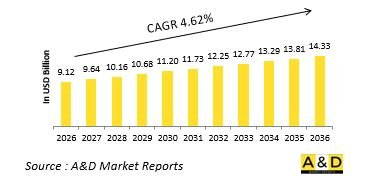
The Global MRO-Naval market is estimated at USD 9.12 billion in 2026, projected to grow to USD 14.33 billion by 2036 at a Compound Annual Growth Rate (CAGR) of 4.62% over the forecast period 2026-2036.
Introduction to MRO-Naval Market:
The Global Defense Maintenance, Repair, and Overhaul (MRO) market for Naval Platforms addresses the unique challenges of sustaining warships, submarines, and support vessels through their multi-decade service lives. Naval MRO encompasses everything from routine dockside maintenance and voyage repairs to extensive dry-dock refurbishments, mid-life modernizations, and complex submarine overhaul cycles. This sector must account for corrosive marine environments, specialized propulsion systems (including nuclear), sophisticated combat systems, and the integration of aviation facilities on larger vessels. The market structure involves naval shipyards (both public and privatized), OEM service teams, and specialized marine engineering firms operating within stringent safety, security, and environmental regulations. Naval MRO represents particularly long planning horizons and substantial capital investment in specialized infrastructure like dry docks, cranes, and testing facilities.
Technology Impact in MRO-Naval Market:
Technological advancement in naval MRO focuses on inspection methodologies, repair techniques, and planning tools. Underwater drones and remotely operated vehicles enable detailed hull and propeller inspections without dry-docking. Advanced non-destructive testing methods-including phased array ultrasonics and digital radiography-improve defect detection in thick hull plating and critical welds. Laser scanning creates precise 3D models of ship compartments to support modification planning and parts fabrication. Robotic systems perform hazardous tasks like tank cleaning and weld repair in confined spaces. Digital twin technology models entire vessel systems to predict maintenance needs and optimize dry-dock periods. Augmented reality systems guide technicians through complex assembly and repair procedures in crowded machinery spaces. These technologies enhance work quality, reduce vessel immobilization time, and improve worker safety in challenging maritime maintenance environments.
Key Drivers in MRO-Naval Market:
Geopolitical competition driving naval expansion and modernization programs generates substantial MRO demand as fleets grow and age simultaneously. Extended service lives of naval vessels-often 30-50 years-necessitate multiple major refurbishment cycles to maintain operational capability and integrate new technologies. Increasing operational tempos for presence missions, freedom of navigation patrols, and exercises accelerate wear and maintenance requirements. Regulatory compliance with evolving environmental, safety, and cybersecurity standards mandates regular upgrades throughout vessel lifecycles. Budget constraints that limit new construction force navies to invest more heavily in extending existing hulls through comprehensive MRO programs. Additionally, the trend toward fewer but more capable vessels increases the operational impact of any single ship being unavailable, raising the premium on efficient, predictable MRO execution.
Regional Trends in MRO-Naval Market:
Naval MRO capabilities correlate closely with regional shipbuilding industries and strategic maritime priorities. North America maintains extensive public naval shipyards supplemented by private sector capacity, particularly for complex nuclear submarine overhaul. European nations increasingly collaborate on naval MRO through shared facilities and standardized procedures within NATO frameworks. The Asia-Pacific region shows rapid capability development as countries like China, India, and South Korea expand both naval fleets and supporting maintenance infrastructure. Middle Eastern nations invest in naval MRO facilities to support growing regional naval ambitions while reducing dependence on foreign support. South American countries focus on sustaining limited but strategically important submarine and frigate capabilities through international technical partnerships. Small island nations develop specialized expertise in patrol boat maintenance relevant to their exclusive economic zone protection missions.
Key Defense MRO-Naval Program:
South Korea-based HJ Shipbuilding & Construction (HJSC) confirmed the signing of a Mid-Term Availability (MTA) contract with the U.S. Navy's Naval Supply Systems Command (NAVSUP) and the Military Sealift Command (MSC) for the USNS Amelia Earhart, a 40,000-ton Lewis and Clark-class dry cargo and ammunition vessel. The agreement covers scheduled maintenance and sustainment activities aimed at ensuring the vessel's operational readiness and mission availability.
This contract represents HJSC's first concrete milestone following its formal entry into the U.S. Navy maintenance, repair, and overhaul domain. Securing an MTA assignment for a strategic logistics vessel underscores the company's growing credibility and technical capability in meeting stringent U.S. Navy standards. The Amelia Earhart plays a vital role in replenishment operations, supporting sustained naval deployments by transporting ammunition, provisions, and dry cargo to fleet units.
Beyond its immediate operational scope, the agreement holds broader strategic significance for HJSC. It positions the company as an emerging international service provider within the U.S. naval sustainment ecosystem and signals increasing openness to allied shipyards supporting U.S. naval logistics requirements. The contract also reflects the expanding role of global partnerships in naval MRO activities, particularly as fleet sizes grow and maintenance demands increase across geographically dispersed theaters of operation.
Table of Contents
Defense MRO - Naval Platforms Market Report Definition
Defense MRO - Naval Platforms Market Segmentation
By Region
By Component
By Vessel Type
Defense MRO - Naval Platforms Market Analysis for next 10 Years
The 10-year Defense MRO - Naval Platforms Market analysis would give a detailed overview of Defense MRO - Naval Platforms Market growth, changing dynamics, technology adoption overviews and the overall market attractiveness is covered in this chapter.
Market Technologies of Defense MRO - Naval Platforms Market
This segment covers the top 10 technologies that is expected to impact this market and the possible implications these technologies would have on the overall market.
Global Defense MRO - Naval Platforms Market Forecast
The 10-year Defense MRO - Naval Platforms Market forecast of this market is covered in detailed across the segments which are mentioned above.
Regional Defense MRO - Naval Platforms Market Trends & Forecast
The regional Defense MRO - Naval Platforms Market trends, drivers, restraints and Challenges of this market, the Political, Economic, Social and Technology aspects are covered in this segment. The market forecast and scenario analysis across regions are also covered in detailed in this segment. The last part of the regional analysis includes profiling of the key companies, supplier landscape and company benchmarking. The current market size is estimated based on the normal scenario.
North America
Drivers, Restraints and Challenges
PEST
Market Forecast & Scenario Analysis
Key Companies
Supplier Tier Landscape
Company Benchmarking
Europe
Middle East
APAC
South America
Country Analysis of Defense MRO - Naval Platforms Market
This chapter deals with the key defense programs in this market, it also covers the latest news and patents which have been filed in this market. Country level 10 year market forecast and scenario analysis are also covered in this chapter.
US
Defense Programs
Latest News
Patents
Current levels of technology maturation in this market
Market Forecast & Scenario Analysis
Canada
Italy
France
Germany
Netherlands
Belgium
Spain
Sweden
Greece
Australia
South Africa
India
China
Russia
South Korea
Japan
Malaysia
Singapore
Brazil
Opportunity Matrix for Defense MRO - Naval Platforms Market
The opportunity matrix helps the readers understand the high opportunity segments in this market.
Expert Opinions on Defense MRO - Naval Platforms Market Report
Hear from our experts their opinion of the possible analysis for this market.
Conclusions
About Aviation and Defense Market Reports
List of Tables
- Table 1: 10 Year Market Outlook, 2025-2035
- Table 2: Drivers, Impact Analysis, North America
- Table 3: Restraints, Impact Analysis, North America
- Table 4: Challenges, Impact Analysis, North America
- Table 5: Drivers, Impact Analysis, Europe
- Table 6: Restraints, Impact Analysis, Europe
- Table 7: Challenges, Impact Analysis, Europe
- Table 8: Drivers, Impact Analysis, Middle East
- Table 9: Restraints, Impact Analysis, Middle East
- Table 10: Challenges, Impact Analysis, Middle East
- Table 11: Drivers, Impact Analysis, APAC
- Table 12: Restraints, Impact Analysis, APAC
- Table 13: Challenges, Impact Analysis, APAC
- Table 14: Drivers, Impact Analysis, South America
- Table 15: Restraints, Impact Analysis, South America
- Table 16: Challenges, Impact Analysis, South America
- Table 17: Scenario Analysis, Scenario 1, By Region, 2025-2035
- Table 18: Scenario Analysis, Scenario 1, By MRO Type, 2025-2035
- Table 19: Scenario Analysis, Scenario 1, By Platform, 2025-2035
- Table 20: Scenario Analysis, Scenario 2, By Region, 2025-2035
- Table 21: Scenario Analysis, Scenario 2, By MRO Type, 2025-2035
- Table 22: Scenario Analysis, Scenario 2, By Platform, 2025-2035
List of Figures
- Figure 1: Global Defense MRO - Naval Platforms Market Forecast, 2025-2035
- Figure 2: Global Defense MRO - Naval Platforms Market Forecast, By Region, 2025-2035
- Figure 3: Global Defense MRO - Naval Platforms Market Forecast, By MRO Type, 2025-2035
- Figure 4: Global Defense MRO - Naval Platforms Market Forecast, By Platform, 2025-2035
- Figure 5: North America, Defense MRO - Naval Platforms Market, Market Forecast, 2025-2035
- Figure 6: Europe, Defense MRO - Naval Platforms Market, Market Forecast, 2025-2035
- Figure 7: Middle East, Defense MRO - Naval Platforms Market, Market Forecast, 2025-2035
- Figure 8: APAC, Defense MRO - Naval Platforms Market, Market Forecast, 2025-2035
- Figure 9: South America, Defense MRO - Naval Platforms Market, Market Forecast, 2025-2035
- Figure 10: United States, Defense MRO - Naval Platforms Market, Technology Maturation, 2025-2035
- Figure 11: United States, Defense MRO - Naval Platforms Market, Market Forecast, 2025-2035
- Figure 12: Canada, Defense MRO - Naval Platforms Market, Technology Maturation, 2025-2035
- Figure 13: Canada, Defense MRO - Naval Platforms Market, Market Forecast, 2025-2035
- Figure 14: Italy, Defense MRO - Naval Platforms Market, Technology Maturation, 2025-2035
- Figure 15: Italy, Defense MRO - Naval Platforms Market, Market Forecast, 2025-2035
- Figure 16: France, Defense MRO - Naval Platforms Market, Technology Maturation, 2025-2035
- Figure 17: France, Defense MRO - Naval Platforms Market, Market Forecast, 2025-2035
- Figure 18: Germany, Defense MRO - Naval Platforms Market, Technology Maturation, 2025-2035
- Figure 19: Germany, Defense MRO - Naval Platforms Market, Market Forecast, 2025-2035
- Figure 20: Netherland, Defense MRO - Naval Platforms Market, Technology Maturation, 2025-2035
- Figure 21: Netherland, Defense MRO - Naval Platforms Market, Market Forecast, 2025-2035
- Figure 22: Belgium, Defense MRO - Naval Platforms Market, Technology Maturation, 2025-2035
- Figure 23: Belgium, Defense MRO - Naval Platforms Market, Market Forecast, 2025-2035
- Figure 24: Spain, Defense MRO - Naval Platforms Market, Technology Maturation, 2025-2035
- Figure 25: Spain, Defense MRO - Naval Platforms Market, Market Forecast, 2025-2035
- Figure 26: Sweden, Defense MRO - Naval Platforms Market, Technology Maturation, 2025-2035
- Figure 27: Sweden, Defense MRO - Naval Platforms Market, Market Forecast, 2025-2035
- Figure 28: Brazil, Defense MRO - Naval Platforms Market, Technology Maturation, 2025-2035
- Figure 29: Brazil, Defense MRO - Naval Platforms Market, Market Forecast, 2025-2035
- Figure 30: Australia, Defense MRO - Naval Platforms Market, Technology Maturation, 2025-2035
- Figure 31: Australia, Defense MRO - Naval Platforms Market, Market Forecast, 2025-2035
- Figure 32: India, Defense MRO - Naval Platforms Market, Technology Maturation, 2025-2035
- Figure 33: India, Defense MRO - Naval Platforms Market, Market Forecast, 2025-2035
- Figure 34: China, Defense MRO - Naval Platforms Market, Technology Maturation, 2025-2035
- Figure 35: China, Defense MRO - Naval Platforms Market, Market Forecast, 2025-2035
- Figure 36: Saudi Arabia, Defense MRO - Naval Platforms Market, Technology Maturation, 2025-2035
- Figure 37: Saudi Arabia, Defense MRO - Naval Platforms Market, Market Forecast, 2025-2035
- Figure 38: South Korea, Defense MRO - Naval Platforms Market, Technology Maturation, 2025-2035
- Figure 39: South Korea, Defense MRO - Naval Platforms Market, Market Forecast, 2025-2035
- Figure 40: Japan, Defense MRO - Naval Platforms Market, Technology Maturation, 2025-2035
- Figure 41: Japan, Defense MRO - Naval Platforms Market, Market Forecast, 2025-2035
- Figure 42: Malaysia, Defense MRO - Naval Platforms Market, Technology Maturation, 2025-2035
- Figure 43: Malaysia, Defense MRO - Naval Platforms Market, Market Forecast, 2025-2035
- Figure 44: Singapore, Defense MRO - Naval Platforms Market, Technology Maturation, 2025-2035
- Figure 45: Singapore, Defense MRO - Naval Platforms Market, Market Forecast, 2025-2035
- Figure 46: United Kingdom, Defense MRO - Naval Platforms Market, Technology Maturation, 2025-2035
- Figure 47: United Kingdom, Defense MRO - Naval Platforms Market, Market Forecast, 2025-2035
- Figure 48: Opportunity Analysis, Defense MRO - Naval Platforms Market, By Region (Cumulative Market), 2025-2035
- Figure 49: Opportunity Analysis, Defense MRO - Naval Platforms Market, By Region (CAGR), 2025-2035
- Figure 50: Opportunity Analysis, Defense MRO - Naval Platforms Market, By MRO Type (Cumulative Market), 2025-2035
- Figure 51: Opportunity Analysis, Defense MRO - Naval Platforms Market, By MRO Type (CAGR), 2025-2035
- Figure 52: Opportunity Analysis, Defense MRO - Naval Platforms Market, By Platform (Cumulative Market), 2025-2035
- Figure 53: Opportunity Analysis, Defense MRO - Naval Platforms Market, By Platform (CAGR), 2025-2035
- Figure 54: Scenario Analysis, Defense MRO - Naval Platforms Market, Cumulative Market, 2025-2035
- Figure 55: Scenario Analysis, Defense MRO - Naval Platforms Market, Global Market, 2025-2035
- Figure 56: Scenario 1, Defense MRO - Naval Platforms Market, Total Market, 2025-2035
- Figure 57: Scenario 1, Defense MRO - Naval Platforms Market, By Region, 2025-2035
- Figure 58: Scenario 1, Defense MRO - Naval Platforms Market, By MRO Type, 2025-2035
- Figure 59: Scenario 1, Defense MRO - Naval Platforms Market, By Platform, 2025-2035
- Figure 60: Scenario 2, Defense MRO - Naval Platforms Market, Total Market, 2025-2035
- Figure 61: Scenario 2, Defense MRO - Naval Platforms Market, By Region, 2025-2035
- Figure 62: Scenario 2, Defense MRO - Naval Platforms Market, By MRO Type, 2025-2035
- Figure 63: Scenario 2, Defense MRO - Naval Platforms Market, By Platform, 2025-2035
- Figure 64: Company Benchmark, Defense MRO - Naval Platforms Market, 2025-2035

