
PUBLISHER: Aviation & Defense Market Reports (A&D) | PRODUCT CODE: 1904991

PUBLISHER: Aviation & Defense Market Reports (A&D) | PRODUCT CODE: 1904991
Global Defense Multirotor Drone Market 2026-2036
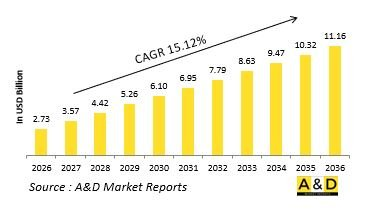
The Global Defense Multirotor Drone market is estimated at USD 2.73 billion in 2026, projected to grow to USD 11.16 billion by 2036 at a Compound Annual Growth Rate (CAGR) of 15.12% over the forecast period 2026-2036.
Introduction to Defense Multirotor Drone Market:
The Global Defense Multirotor Drone Market encompasses vertical take-off and landing (VTOL) unmanned aerial systems characterized by multiple rotors, offering exceptional hover stability, maneuverability, and operational flexibility in confined spaces. These platforms have transformed tactical military operations by providing immediate, localized intelligence, surveillance, and reconnaissance (ISR) capabilities at the small unit level. Unlike fixed-wing drones, multirotor systems can operate effectively in urban environments, inside structures, and from virtually any deployment point without launch infrastructure. Their applications have expanded from basic reconnaissance to include target designation, communications relay, electronic warfare, logistics resupply, and force protection. The proliferation of increasingly capable commercial drone technology has both accelerated military adoption and created new asymmetric threats, driving corresponding development of military-grade multirotor systems with enhanced performance, security, and durability.
Technology Impact in Defense Multirotor Drone Market:
Technological evolution in multirotor drones centers on autonomy, endurance, and payload integration. Advanced flight control algorithms enable stable operation in degraded visual environments and high wind conditions. Artificial intelligence-powered obstacle avoidance and navigation systems allow operation in complex urban terrain without continuous pilot intervention. Hybrid power systems combining batteries with miniature internal combustion engines or fuel cells significantly extend flight durations beyond typical electric-only limitations. Miniaturization of sensor packages enables integration of high-resolution electro-optics, thermal imagers, laser designators, and signal intelligence collectors on small platforms. Swarm coordination technology allows multiple drones to operate collaboratively on shared missions. Secure digital data links with anti-jamming features protect command and video feeds from interception or disruption. These advancements are transforming multirotor drones from remotely piloted cameras into intelligent, persistent, multi-role tactical assets.
Key Drivers in Defense Multirotor Drone Market:
The democratization of aerial surveillance at the tactical level represents the fundamental market driver, putting previously platform-based capabilities directly in infantry squads' hands. Asymmetric warfare and counter-insurgency operations create persistent demand for immediate overhead observation without relying on larger, less responsive aircraft. Urban warfare proliferation necessitates systems capable of operating in complex three-dimensional environments where fixed-wing platforms are ineffective. Force protection requirements drive adoption of perimeter surveillance and inspection drones that reduce personnel exposure to threats. Counter-drone mission needs spur development of interceptor multirotor systems capable of neutralizing hostile drones. Additionally, commercial technology advancement continuously lowers barriers to capable system development while creating urgency for military-specific solutions with enhanced security and robustness for contested environments.
Regional Trends in Defense Multirotor Drone Market:
Regional adoption patterns reflect differing operational priorities, threat environments, and industrial approaches. North American development emphasizes secure, networked systems integrated with existing battlefield management infrastructure. European programs focus on modular, mission-configurable drones with strong emphasis on data protection and regulatory compliance. The Asia-Pacific region shows particularly rapid adoption, with both advanced military systems and large-scale procurement of commercial-derived drones for widespread deployment. Middle Eastern conflict zones have become proving grounds for multirotor combat applications, driving innovation in both offensive and defensive systems. African nations increasingly employ multirotor drones for border surveillance and peacekeeping missions where infrastructure limitations favor VTOL systems. Globally, the line between commercial and military drone technology continues to blur, with dual-use systems proliferating across conflict and security applications.
Key Defense Multirotor Drone Program:
India-based unmanned systems manufacturer ideaForge Technology Ltd has received a supply order valued at approximately ₹100 crore from the Indian Army for its next-generation tactical unmanned platforms, including the Zolt unmanned aerial vehicle and the all-terrain vertical take-off and landing (VTOL) drone, SWITCH 2. The order represents a significant endorsement of indigenous drone capabilities developed for military applications. The procurement includes a capital emergency acquisition for the Zolt platform, estimated at around ₹75 crore, following a comprehensive evaluation process. The system underwent rigorous field trials in electronic warfare environments and was subjected to strict country-of-origin verification requirements before approval. In addition, the SWITCH 2 system has been ordered under a separate contract valued at approximately ₹30 crore. Both platforms were officially unveiled by ideaForge at the Aero India exhibition held earlier this year in Bengaluru. The Zolt UAV is designed as a multi-mission platform, offering extended-range intelligence, surveillance, and reconnaissance capabilities, along with precision payload delivery. It is optimized for contemporary military operations, emphasizing autonomy, endurance, and resilience in contested environments. The SWITCH 2 drone, already operational with the Indian Army, has been battle-tested and is currently deployed for ISR missions, reinforcing its reliability and operational maturity.
Table of Contents
Defense Multirotor Drone Market Report Definition
Defense Multirotor Drone Market Segmentation
By Region
By Application
By Range
Defense Multirotor Drone Market Analysis for next 10 Years
The 10-year Defense Multirotor Drone Market analysis would give a detailed overview of Defense Multirotor Drone Market growth, changing dynamics, technology adoption overviews and the overall market attractiveness is covered in this chapter.
Market Technologies of Defense Multirotor Drone Market
This segment covers the top 10 technologies that is expected to impact this market and the possible implications these technologies would have on the overall market.
Global Defense Multirotor Drone Market Forecast
The 10-year Defense Multirotor Drone Market forecast of this market is covered in detailed across the segments which are mentioned above.
Regional Defense Multirotor Drone Market Trends & Forecast
The regional Defense Multirotor Drone Market trends, drivers, restraints and Challenges of this market, the Political, Economic, Social and Technology aspects are covered in this segment. The market forecast and scenario analysis across regions are also covered in detailed in this segment. The last part of the regional analysis includes profiling of the key companies, supplier landscape and company benchmarking. The current market size is estimated based on the normal scenario.
North America
Drivers, Restraints and Challenges
PEST
Market Forecast & Scenario Analysis
Key Companies
Supplier Tier Landscape
Company Benchmarking
Europe
Middle East
APAC
South America
Country Analysis of Defense Multirotor Drone Market
This chapter deals with the key defense programs in this market, it also covers the latest news and patents which have been filed in this market. Country level 10 year market forecast and scenario analysis are also covered in this chapter.
US
Defense Programs
Latest News
Patents
Current levels of technology maturation in this market
Market Forecast & Scenario Analysis
Canada
Italy
France
Germany
Netherlands
Belgium
Spain
Sweden
Greece
Australia
South Africa
India
China
Russia
South Korea
Japan
Malaysia
Singapore
Brazil
Opportunity Matrix for Defense Multirotor Drone Market
The opportunity matrix helps the readers understand the high opportunity segments in this market.
Expert Opinions on Defense Multirotor Drone Market Report
Hear from our experts their opinion of the possible analysis for this market.
Conclusions
About Aviation and Defense Market Reports
List of Tables
- Table 1: 10 Year Market Outlook, 2025-2035
- Table 2: Drivers, Impact Analysis, North America
- Table 3: Restraints, Impact Analysis, North America
- Table 4: Challenges, Impact Analysis, North America
- Table 5: Drivers, Impact Analysis, Europe
- Table 6: Restraints, Impact Analysis, Europe
- Table 7: Challenges, Impact Analysis, Europe
- Table 8: Drivers, Impact Analysis, Middle East
- Table 9: Restraints, Impact Analysis, Middle East
- Table 10: Challenges, Impact Analysis, Middle East
- Table 11: Drivers, Impact Analysis, APAC
- Table 12: Restraints, Impact Analysis, APAC
- Table 13: Challenges, Impact Analysis, APAC
- Table 14: Drivers, Impact Analysis, South America
- Table 15: Restraints, Impact Analysis, South America
- Table 16: Challenges, Impact Analysis, South America
- Table 17: Scenario Analysis, Scenario 1, By Region, 2025-2035
- Table 18: Scenario Analysis, Scenario 1, By Application, 2025-2035
- Table 19: Scenario Analysis, Scenario 1, By Range, 2025-2035
- Table 20: Scenario Analysis, Scenario 2, By Region, 2025-2035
- Table 21: Scenario Analysis, Scenario 2, By Application, 2025-2035
- Table 22: Scenario Analysis, Scenario 2, By Range, 2025-2035
List of Figures
- Figure 1: Global Defense Multirotor Drone Market Forecast, 2025-2035
- Figure 2: Global Defense Multirotor Drone Market Forecast, By Region, 2025-2035
- Figure 3: Global Defense Multirotor Drone Market Forecast, By Application, 2025-2035
- Figure 4: Global Defense Multirotor Drone Market Forecast, By Range, 2025-2035
- Figure 5: North America, Defense Multirotor Drone Market, Market Forecast, 2025-2035
- Figure 6: Europe, Defense Multirotor Drone Market, Market Forecast, 2025-2035
- Figure 7: Middle East, Defense Multirotor Drone Market, Market Forecast, 2025-2035
- Figure 8: APAC, Defense Multirotor Drone Market, Market Forecast, 2025-2035
- Figure 9: South America, Defense Multirotor Drone Market, Market Forecast, 2025-2035
- Figure 10: United States, Defense Multirotor Drone Market, Technology Maturation, 2025-2035
- Figure 11: United States, Defense Multirotor Drone Market, Market Forecast, 2025-2035
- Figure 12: Canada, Defense Multirotor Drone Market, Technology Maturation, 2025-2035
- Figure 13: Canada, Defense Multirotor Drone Market, Market Forecast, 2025-2035
- Figure 14: Italy, Defense Multirotor Drone Market, Technology Maturation, 2025-2035
- Figure 15: Italy, Defense Multirotor Drone Market, Market Forecast, 2025-2035
- Figure 16: France, Defense Multirotor Drone Market, Technology Maturation, 2025-2035
- Figure 17: France, Defense Multirotor Drone Market, Market Forecast, 2025-2035
- Figure 18: Germany, Defense Multirotor Drone Market, Technology Maturation, 2025-2035
- Figure 19: Germany, Defense Multirotor Drone Market, Market Forecast, 2025-2035
- Figure 20: Netherland, Defense Multirotor Drone Market, Technology Maturation, 2025-2035
- Figure 21: Netherland, Defense Multirotor Drone Market, Market Forecast, 2025-2035
- Figure 22: Belgium, Defense Multirotor Drone Market, Technology Maturation, 2025-2035
- Figure 23: Belgium, Defense Multirotor Drone Market, Market Forecast, 2025-2035
- Figure 24: Spain, Defense Multirotor Drone Market, Technology Maturation, 2025-2035
- Figure 25: Spain, Defense Multirotor Drone Market, Market Forecast, 2025-2035
- Figure 26: Sweden, Defense Multirotor Drone Market, Technology Maturation, 2025-2035
- Figure 27: Sweden, Defense Multirotor Drone Market, Market Forecast, 2025-2035
- Figure 28: Brazil, Defense Multirotor Drone Market, Technology Maturation, 2025-2035
- Figure 29: Brazil, Defense Multirotor Drone Market, Market Forecast, 2025-2035
- Figure 30: Australia, Defense Multirotor Drone Market, Technology Maturation, 2025-2035
- Figure 31: Australia, Defense Multirotor Drone Market, Market Forecast, 2025-2035
- Figure 32: India, Defense Multirotor Drone Market, Technology Maturation, 2025-2035
- Figure 33: India, Defense Multirotor Drone Market, Market Forecast, 2025-2035
- Figure 34: China, Defense Multirotor Drone Market, Technology Maturation, 2025-2035
- Figure 35: China, Defense Multirotor Drone Market, Market Forecast, 2025-2035
- Figure 36: Saudi Arabia, Defense Multirotor Drone Market, Technology Maturation, 2025-2035
- Figure 37: Saudi Arabia, Defense Multirotor Drone Market, Market Forecast, 2025-2035
- Figure 38: South Korea, Defense Multirotor Drone Market, Technology Maturation, 2025-2035
- Figure 39: South Korea, Defense Multirotor Drone Market, Market Forecast, 2025-2035
- Figure 40: Japan, Defense Multirotor Drone Market, Technology Maturation, 2025-2035
- Figure 41: Japan, Defense Multirotor Drone Market, Market Forecast, 2025-2035
- Figure 42: Malaysia, Defense Multirotor Drone Market, Technology Maturation, 2025-2035
- Figure 43: Malaysia, Defense Multirotor Drone Market, Market Forecast, 2025-2035
- Figure 44: Singapore, Defense Multirotor Drone Market, Technology Maturation, 2025-2035
- Figure 45: Singapore, Defense Multirotor Drone Market, Market Forecast, 2025-2035
- Figure 46: United Kingdom, Defense Multirotor Drone Market, Technology Maturation, 2025-2035
- Figure 47: United Kingdom, Defense Multirotor Drone Market, Market Forecast, 2025-2035
- Figure 48: Opportunity Analysis, Defense Multirotor Drone Market, By Region (Cumulative Market), 2025-2035
- Figure 49: Opportunity Analysis, Defense Multirotor Drone Market, By Region (CAGR), 2025-2035
- Figure 50: Opportunity Analysis, Defense Multirotor Drone Market, By Application (Cumulative Market), 2025-2035
- Figure 51: Opportunity Analysis, Defense Multirotor Drone Market, By Application (CAGR), 2025-2035
- Figure 52: Opportunity Analysis, Defense Multirotor Drone Market, By Range (Cumulative Market), 2025-2035
- Figure 53: Opportunity Analysis, Defense Multirotor Drone Market, By Range (CAGR), 2025-2035
- Figure 54: Scenario Analysis, Defense Multirotor Drone Market, Cumulative Market, 2025-2035
- Figure 55: Scenario Analysis, Defense Multirotor Drone Market, Global Market, 2025-2035
- Figure 56: Scenario 1, Defense Multirotor Drone Market, Total Market, 2025-2035
- Figure 57: Scenario 1, Defense Multirotor Drone Market, By Region, 2025-2035
- Figure 58: Scenario 1, Defense Multirotor Drone Market, By Application, 2025-2035
- Figure 59: Scenario 1, Defense Multirotor Drone Market, By Range, 2025-2035
- Figure 60: Scenario 2, Defense Multirotor Drone Market, Total Market, 2025-2035
- Figure 61: Scenario 2, Defense Multirotor Drone Market, By Region, 2025-2035
- Figure 62: Scenario 2, Defense Multirotor Drone Market, By Application, 2025-2035
- Figure 63: Scenario 2, Defense Multirotor Drone Market, By Range, 2025-2035
- Figure 64: Company Benchmark, Defense Multirotor Drone Market, 2025-2035

