
PUBLISHER: Aviation & Defense Market Reports (A&D) | PRODUCT CODE: 1904994

PUBLISHER: Aviation & Defense Market Reports (A&D) | PRODUCT CODE: 1904994
Global Defense Avionics Market 2026-2036
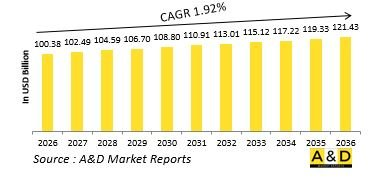
The Global Defense Avionics market is estimated at USD 100.38 billion in 2026, projected to grow to USD 121.43 billion by 2036 at a Compound Annual Growth Rate (CAGR) of 1.92% over the forecast period 2026-2036.
Introduction to Defense Avionics Market:
The Global Defense Avionics Market encompasses the electronic systems that enable aircraft to perform their missions, integrating communications, navigation, surveillance, flight control, mission computing, and vehicle management functions. Modern military avionics transform aircraft from merely airborne platforms into networked nodes within larger combat systems, processing and exchanging vast amounts of data to support decision-making and weapons employment. These systems range from simple radio and navigation equipment on training aircraft to integrated sensor suites on combat platforms that fuse radar, electronic warfare, and electro-optical data into coherent tactical pictures. Avionics represents the primary differentiator between generations of military aircraft, with each advancement enabling new capabilities in situational awareness, survivability, and lethality. The transition from federated systems to integrated modular avionics architectures represents the current paradigm, enabling more capable, upgradable, and supportable systems throughout extended aircraft service lives.
Technology Impact in Defense Avionics Market:
Technological transformation in avionics centers on integration, processing power, and connectivity. Integrated modular avionics architectures replace dedicated hardware for each function with shared computing resources running software applications, enabling capability upgrades without physical modification. Sensor fusion algorithms combine data from radar, infrared search and track, electronic support measures, and off-board sources to create unified, validated tracks of surrounding air and surface activity. Artificial intelligence applications range from automated target recognition to predictive maintenance and mission planning optimization. Cyber-physical security measures are increasingly embedded throughout avionics architectures to protect against sophisticated threats. High-speed data networking enables real-time sharing of sensor data across platforms through tactical data links. Additionally, the adoption of open systems standards facilitates technology insertion and reduces lifecycle costs. These advancements collectively transform aircraft from isolated platforms into intelligent, connected elements of networked combat systems.
Key Drivers in Defense Avionics Market:
The evolution toward network-centric warfare creates fundamental demand for avionics that can receive, process, and disseminate battlefield information seamlessly across joint forces. Increasingly contested electromagnetic environments necessitate advanced electronic warfare capabilities integrated with other avionics functions for spectrum awareness and protection. Cockpit crew reduction initiatives across both combat and support aircraft require more automated systems and intuitive human-machine interfaces to maintain effectiveness with fewer personnel. Obsolescence management for aging aircraft fleets drives comprehensive avionics modernization programs to maintain operational relevance against evolving threats. Unmanned aircraft integration into controlled airspace requires certifiable sense-and-avoid systems and reliable command links. Additionally, international cooperation on development programs demands avionics architectures that support technology sharing while protecting sensitive national capabilities. These interconnected drivers ensure sustained avionics investment across all aircraft categories and mission types.
Regional Trends in Defense Avionics Market:
Regional avionics development reflects differing industrial strategies, threat perceptions, and platform portfolios. North American programs emphasize total system integration, with leading prime contractors managing complex supply chains to deliver complete mission systems. European development often occurs through multinational consortia that share development costs and industrial workshares across participating nations. The Asia-Pacific region shows diverging approaches, with some countries pursuing indigenous avionics ecosystems for strategic autonomy while others integrate Western systems into locally assembled platforms. Israeli industry excels in specific niches like electronic warfare and targeting pods, often integrated with other nations' platforms. Middle Eastern nations increasingly demand technology transfer and localized support as part of avionics procurement agreements. Global supply chain complexities have prompted reevaluation of sourcing strategies, with some regions investing in sovereign capabilities for critical avionics components previously obtained internationally.
Key Defense Avionics Program:
MKU Limited has secured a significant supply agreement from the Indian Army for 29,762 units of its Netro NW 3000 Night Vision Weapon Sights, with the contract valued at approximately ₹660 crore. Awarded under the emergency procurement authority of the Raksha Mantri, the order ranks among the largest electro-optics procurements ever executed by the Indian Army, highlighting the scale of ongoing infantry modernization efforts.
The Netro NW 3000 systems are designed to provide enhanced night-fighting capability, enabling soldiers to detect, identify, and engage targets effectively in low-light and no-light conditions. By improving accuracy and situational awareness during night operations, the weapon sights significantly contribute to operational effectiveness and force protection in diverse combat environments.
This procurement strongly aligns with the Government of India's Make in India and Atmanirbhar Bharat initiatives, reflecting a sustained shift toward sourcing critical defense equipment from domestic manufacturers. The contract reinforces confidence in indigenous design, manufacturing, and quality assurance capabilities within India's defense industrial base.
From an industry perspective, the order strengthens MKU's role as a key supplier of advanced electro-optical solutions for the armed forces. It also signals continued momentum in the Indian Army's push to equip frontline units with modern, locally developed technologies that enhance combat readiness and reduce long-term import dependence.
Table of Contents
Aerospace Defense Avionics Market Report Definition
Aerospace Defense Avionics Market Segmentation
By Region
By End User
By Fitment
Aerospace Defense Avionics Market Analysis for next 10 Years
The 10-year aerospace defense avionics market analysis would give a detailed overview of aerospace defense avionics market growth, changing dynamics, technology adoption overviews and the overall market attractiveness is covered in this chapter.
Market Technologies of Aerospace Defense Avionics Market
This segment covers the top 10 technologies that is expected to impact this market and the possible implications these technologies would have on the overall market.
Global Aerospace Defense Avionics Market Forecast
The 10-year aerospace defense avionics market forecast of this market is covered in detailed across the segments which are mentioned above.
Regional Aerospace Defense Avionics Market Trends & Forecast
The regional aerospace defense avionics market trends, drivers, restraints and Challenges of this market, the Political, Economic, Social and Technology aspects are covered in this segment. The market forecast and scenario analysis across regions are also covered in detailed in this segment. The last part of the regional analysis includes profiling of the key companies, supplier landscape and company benchmarking. The current market size is estimated based on the normal scenario.
North America
Drivers, Restraints and Challenges
PEST
Market Forecast & Scenario Analysis
Key Companies
Supplier Tier Landscape
Company Benchmarking
Europe
Middle East
APAC
South America
Country Analysis of Aerospace Defense Avionics Market
This chapter deals with the key defense programs in this market, it also covers the latest news and patents which have been filed in this market. Country level 10 year market forecast and scenario analysis are also covered in this chapter.
US
Latest News
Patents
Current levels of technology maturation in this market
Market Forecast & Scenario Analysis
Canada
Italy
France
Germany
Netherlands
Belgium
Spain
Sweden
Greece
Australia
South Africa
India
China
Russia
South Korea
Japan
Malaysia
Singapore
Brazil
Opportunity Matrix for Aerospace Defense Avionics Market
The opportunity matrix helps the readers understand the high opportunity segments in this market.
Expert Opinions on Aerospace Defense Avionics Market Report
Hear from our experts their opinion of the possible analysis for this market.
Conclusions
About Aviation and Defense Market Reports
List of Tables
- Table 1: 10 Year Market Outlook, 2025-2035
- Table 2: Drivers, Impact Analysis, North America
- Table 3: Restraints, Impact Analysis, North America
- Table 4: Challenges, Impact Analysis, North America
- Table 5: Drivers, Impact Analysis, Europe
- Table 6: Restraints, Impact Analysis, Europe
- Table 7: Challenges, Impact Analysis, Europe
- Table 8: Drivers, Impact Analysis, Middle East
- Table 9: Restraints, Impact Analysis, Middle East
- Table 10: Challenges, Impact Analysis, Middle East
- Table 11: Drivers, Impact Analysis, APAC
- Table 12: Restraints, Impact Analysis, APAC
- Table 13: Challenges, Impact Analysis, APAC
- Table 14: Drivers, Impact Analysis, South America
- Table 15: Restraints, Impact Analysis, South America
- Table 16: Challenges, Impact Analysis, South America
- Table 17: Scenario Analysis, Scenario 1, By Region, 2025-2035
- Table 18: Scenario Analysis, Scenario 1, By Fit, 2025-2035
- Table 19: Scenario Analysis, Scenario 1, By Platform, 2025-2035
- Table 20: Scenario Analysis, Scenario 2, By Region, 2025-2035
- Table 21: Scenario Analysis, Scenario 2, By Fit, 2025-2035
- Table 22: Scenario Analysis, Scenario 2, By Platform, 2025-2035
List of Figures
- Figure 1: Global Defense Aerospace Defense Avionics Market Forecast, 2025-2035
- Figure 2: Global Defense Aerospace Defense Avionics Market Forecast, By Region, 2025-2035
- Figure 3: Global Defense Aerospace Defense Avionics Market Forecast, By Fit, 2025-2035
- Figure 4: Global Defense Aerospace Defense Avionics Market Forecast, By Platform, 2025-2035
- Figure 5: North America, Defense Aerospace Defense Avionics Market, Market Forecast, 2025-2035
- Figure 6: Europe, Defense Aerospace Defense Avionics Market, Market Forecast, 2025-2035
- Figure 7: Middle East, Defense Aerospace Defense Avionics Market, Market Forecast, 2025-2035
- Figure 8: APAC, Defense Aerospace Defense Avionics Market, Market Forecast, 2025-2035
- Figure 9: South America, Defense Aerospace Defense Avionics Market, Market Forecast, 2025-2035
- Figure 10: United States, Defense Aerospace Defense Avionics Market, Technology Maturation, 2025-2035
- Figure 11: United States, Defense Aerospace Defense Avionics Market, Market Forecast, 2025-2035
- Figure 12: Canada, Defense Aerospace Defense Avionics Market, Technology Maturation, 2025-2035
- Figure 13: Canada, Defense Aerospace Defense Avionics Market, Market Forecast, 2025-2035
- Figure 14: Italy, Defense Aerospace Defense Avionics Market, Technology Maturation, 2025-2035
- Figure 15: Italy, Defense Aerospace Defense Avionics Market, Market Forecast, 2025-2035
- Figure 16: France, Defense Aerospace Defense Avionics Market, Technology Maturation, 2025-2035
- Figure 17: France, Defense Aerospace Defense Avionics Market, Market Forecast, 2025-2035
- Figure 18: Germany, Defense Aerospace Defense Avionics Market, Technology Maturation, 2025-2035
- Figure 19: Germany, Defense Aerospace Defense Avionics Market, Market Forecast, 2025-2035
- Figure 20: Netherland, Defense Aerospace Defense Avionics Market, Technology Maturation, 2025-2035
- Figure 21: Netherland, Defense Aerospace Defense Avionics Market, Market Forecast, 2025-2035
- Figure 22: Belgium, Defense Aerospace Defense Avionics Market, Technology Maturation, 2025-2035
- Figure 23: Belgium, Defense Aerospace Defense Avionics Market, Market Forecast, 2025-2035
- Figure 24: Spain, Defense Aerospace Defense Avionics Market, Technology Maturation, 2025-2035
- Figure 25: Spain, Defense Aerospace Defense Avionics Market, Market Forecast, 2025-2035
- Figure 26: Sweden, Defense Aerospace Defense Avionics Market, Technology Maturation, 2025-2035
- Figure 27: Sweden, Defense Aerospace Defense Avionics Market, Market Forecast, 2025-2035
- Figure 28: Brazil, Defense Aerospace Defense Avionics Market, Technology Maturation, 2025-2035
- Figure 29: Brazil, Defense Aerospace Defense Avionics Market, Market Forecast, 2025-2035
- Figure 30: Australia, Defense Aerospace Defense Avionics Market, Technology Maturation, 2025-2035
- Figure 31: Australia, Defense Aerospace Defense Avionics Market, Market Forecast, 2025-2035
- Figure 32: India, Defense Aerospace Defense Avionics Market, Technology Maturation, 2025-2035
- Figure 33: India, Defense Aerospace Defense Avionics Market, Market Forecast, 2025-2035
- Figure 34: China, Defense Aerospace Defense Avionics Market, Technology Maturation, 2025-2035
- Figure 35: China, Defense Aerospace Defense Avionics Market, Market Forecast, 2025-2035
- Figure 36: Saudi Arabia, Defense Aerospace Defense Avionics Market, Technology Maturation, 2025-2035
- Figure 37: Saudi Arabia, Defense Aerospace Defense Avionics Market, Market Forecast, 2025-2035
- Figure 38: South Korea, Defense Aerospace Defense Avionics Market, Technology Maturation, 2025-2035
- Figure 39: South Korea, Defense Aerospace Defense Avionics Market, Market Forecast, 2025-2035
- Figure 40: Japan, Defense Aerospace Defense Avionics Market, Technology Maturation, 2025-2035
- Figure 41: Japan, Defense Aerospace Defense Avionics Market, Market Forecast, 2025-2035
- Figure 42: Malaysia, Defense Aerospace Defense Avionics Market, Technology Maturation, 2025-2035
- Figure 43: Malaysia, Defense Aerospace Defense Avionics Market, Market Forecast, 2025-2035
- Figure 44: Singapore, Defense Aerospace Defense Avionics Market, Technology Maturation, 2025-2035
- Figure 45: Singapore, Defense Aerospace Defense Avionics Market, Market Forecast, 2025-2035
- Figure 46: United Kingdom, Defense Aerospace Defense Avionics Market, Technology Maturation, 2025-2035
- Figure 47: United Kingdom, Defense Aerospace Defense Avionics Market, Market Forecast, 2025-2035
- Figure 48: Opportunity Analysis, Defense Aerospace Defense Avionics Market, By Region (Cumulative Market), 2025-2035
- Figure 49: Opportunity Analysis, Defense Aerospace Defense Avionics Market, By Region (CAGR), 2025-2035
- Figure 50: Opportunity Analysis, Defense Aerospace Defense Avionics Market, By Fit (Cumulative Market), 2025-2035
- Figure 51: Opportunity Analysis, Defense Aerospace Defense Avionics Market, By Fit (CAGR), 2025-2035
- Figure 52: Opportunity Analysis, Defense Aerospace Defense Avionics Market, By Platform (Cumulative Market), 2025-2035
- Figure 53: Opportunity Analysis, Defense Aerospace Defense Avionics Market, By Platform (CAGR), 2025-2035
- Figure 54: Scenario Analysis, Defense Aerospace Defense Avionics Market, Cumulative Market, 2025-2035
- Figure 55: Scenario Analysis, Defense Aerospace Defense Avionics Market, Global Market, 2025-2035
- Figure 56: Scenario 1, Defense Aerospace Defense Avionics Market, Total Market, 2025-2035
- Figure 57: Scenario 1, Defense Aerospace Defense Avionics Market, By Region, 2025-2035
- Figure 58: Scenario 1, Defense Aerospace Defense Avionics Market, By Fit, 2025-2035
- Figure 59: Scenario 1, Defense Aerospace Defense Avionics Market, By Platform, 2025-2035
- Figure 60: Scenario 2, Defense Aerospace Defense Avionics Market, Total Market, 2025-2035
- Figure 61: Scenario 2, Defense Aerospace Defense Avionics Market, By Region, 2025-2035
- Figure 62: Scenario 2, Defense Aerospace Defense Avionics Market, By Fit, 2025-2035
- Figure 63: Scenario 2, Defense Aerospace Defense Avionics Market, By Platform, 2025-2035
- Figure 64: Company Benchmark, Defense Aerospace Defense Avionics Market, 2025-2035

