
PUBLISHER: Aviation & Defense Market Reports (A&D) | PRODUCT CODE: 1904997

PUBLISHER: Aviation & Defense Market Reports (A&D) | PRODUCT CODE: 1904997
Global Defense Electrical Systems Market 2026-2036
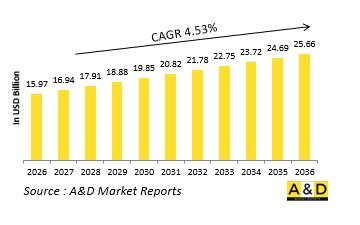
The Global Defense Electrical Systems market is estimated at USD 15.97 billion in 2026, projected to grow to USD 25.66 billion by 2036 at a Compound Annual Growth Rate (CAGR) of 4.53% over the forecast period 2026-2036.
Introduction to Defense Electrical Systems Market
The Global Defense Electrical Systems Market encompasses the complete ecosystem for generating, distributing, managing, and utilizing electrical power across military platforms. This includes power generation (engines, auxiliary power units, fuel cells), energy storage (batteries, capacitors), power distribution (bus architectures, circuit protection), power conversion (transformers, inverters), and motor drives for actuation and propulsion. Modern defense platforms are undergoing profound electrification, transitioning from primarily mechanical and hydraulic systems to electrical alternatives that offer greater efficiency, controllability, and diagnostic capability. Electrical systems now enable capabilities ranging from electric armor and directed energy weapons to advanced sensors and silent watch operation. As platform capabilities become increasingly power-intensive, electrical system design has evolved from an ancillary consideration to a central determinant of overall platform performance, influencing architecture decisions from initial concept through entire service life.
Technology Impact in Defense Electrical Systems Market:
Technological advancement in defense electrical systems centers on power density, management intelligence, and system integration. Wide bandgap semiconductors (silicon carbide and gallium nitride) enable more efficient power conversion in smaller, cooler packages. Advanced battery chemistries (lithium-ion, solid-state) deliver higher energy density for silent operation and emergency power. Intelligent power management systems dynamically allocate available power based on mission priorities and component health. Integrated vehicle power systems generate electricity from main engines for both propulsion and mission systems, eliminating separate generators. Fault-tolerant architectures ensure continued operation despite damage or component failure. Wireless power transfer enables charging of unmanned systems and soldier equipment without physical connectors. These innovations address the fundamental challenge of delivering increasing electrical power within constrained space and weight allocations while maintaining reliability in harsh operational environments.
Key Drivers in Defense Electrical Systems Market:
The proliferation of power-hungry systems-from radar and electronic warfare to computing and communications-creates exponential growth in electrical power requirements across all platforms. Electrification of traditionally mechanical functions like actuation, pumping, and propulsion improves efficiency, reduces maintenance, and enables new capabilities like silent mobility. Directed energy weapon development depends entirely on advancements in electrical power generation, storage, and delivery with extreme power quality requirements. Unmanned and autonomous system operation requires reliable electrical systems that maximize endurance and mission capability. Survivability enhancements favor distributed electrical architectures that continue functioning despite localized damage. Additionally, fuel efficiency mandates drive adoption of more electric systems that reduce overall platform energy consumption. These interconnected drivers ensure electrical systems remain a critical focus area throughout defense platform development and modernization cycles.
Regional Trends in Defense Electrical Systems Market:
Regional approaches to defense electrical systems reflect differing platform portfolios, industrial capabilities, and strategic priorities. North American programs lead in integrated power system concepts, particularly for next-generation naval vessels and combat vehicles. European development emphasizes more electric aircraft technologies, with significant research into hybrid-electric propulsion for future air systems. The Asia-Pacific region shows strong growth in battery technology and power electronics, supporting both indigenous platform programs and global supply chains. Israeli innovation focuses on specialized applications like vehicle exportable power and unmanned system endurance enhancement. Middle Eastern nations increasingly demand comprehensive power system upgrades as part of platform modernization packages to support additional electronic systems. Climate considerations influence regional priorities, with Arctic operations driving cold-weather electrical system performance while tropical deployments emphasize cooling and humidity resistance in design requirements.
Key Defense Electrical Systems Program:
The Indian Army has entered into a contract valued at ₹2.93 billion with domestic defense manufacturer Nibe for the supply of equipment and ammunition intended for its universal rocket launcher systems. The procurement forms part of the Army's broader long-term modernization strategy aimed at enhancing deep-strike and rapid-response firepower capabilities across multiple operational scenarios.
According to a regulatory disclosure submitted to the Bombay Stock Exchange, the contract supports the Army's efforts to strengthen its artillery and rocket forces with locally produced systems and consumables. The equipment and ammunition supplied under the agreement are expected to improve operational flexibility, readiness, and sustainment of rocket launcher units deployed across varied terrains and threat environments. The order also reflects the continued emphasis on indigenous sourcing of critical defense hardware, in line with national initiatives to reduce reliance on imports and strengthen the domestic defense industrial base. By engaging an Indian manufacturer for this requirement, the Army is reinforcing local production capacity while ensuring long-term supply assurance for mission-critical systems. From an industry standpoint, the contract represents a notable milestone for Nibe, underscoring its growing role within India's defense manufacturing ecosystem. It further highlights the Indian Army's commitment to developing self-reliant strike capabilities through sustained investment in domestically developed artillery and rocket systems.
Table of Contents
Defense Electrical Systems Market Report Definition
Defense Electrical Systems Market Segmentation
By Region
By Type
By Platform
Defense Electrical Systems Market Analysis for next 10 Years
The 10-year defense electrical systems market analysis would give a detailed overview of underwater warfare market growth, changing dynamics, technology adoption overviews and the overall market attractiveness is covered in this chapter.
Market Technologies of Defense Electrical Systems Market
This segment covers the top 10 technologies that is expected to impact this market and the possible implications these technologies would have on the overall market.
Global Defense Electrical Systems Market Forecast
The 10-year defense electrical systems market forecast of this market is covered in detailed across the segments which are mentioned above.
Regional Defense Electrical Systems Market Trends & Forecast
The regional defense electrical systems market trends, drivers, restraints and Challenges of this market, the Political, Economic, Social and Technology aspects are covered in this segment. The market forecast and scenario analysis across regions are also covered in detailed in this segment. The last part of the regional analysis includes profiling of the key companies, supplier landscape and company benchmarking. The current market size is estimated based on the normal scenario.
North America
Drivers, Restraints and Challenges
PEST
Market Forecast & Scenario Analysis
Key Companies
Supplier Tier Landscape
Company Benchmarking
Europe
Middle East
APAC
South America
Country Analysis of Defense Electrical Systems Market
This chapter deals with the key defense programs in this market, it also covers the latest news and patents which have been filed in this market. Country level 10 year market forecast and scenario analysis are also covered in this chapter.
US
Defense Programs
Latest News
Patents
Current levels of technology maturation in this market
Market Forecast & Scenario Analysis
Canada
Italy
France
Germany
Netherlands
Belgium
Spain
Sweden
Greece
Australia
South Africa
India
China
Russia
South Korea
Japan
Malaysia
Singapore
Brazil
Opportunity Matrix for Defense Electrical Systems Market
The opportunity matrix helps the readers understand the high opportunity segments in this market.
Expert Opinions on Defense Electrical Systems Market Report
Hear from our experts their opinion of the possible analysis for this market.
Conclusions
About Aviation and Defense Market Reports
List of Tables
- Table 1: 10 Year Market Outlook, 2025-2035
- Table 2: Drivers, Impact Analysis, North America
- Table 3: Restraints, Impact Analysis, North America
- Table 4: Challenges, Impact Analysis, North America
- Table 5: Drivers, Impact Analysis, Europe
- Table 6: Restraints, Impact Analysis, Europe
- Table 7: Challenges, Impact Analysis, Europe
- Table 8: Drivers, Impact Analysis, Middle East
- Table 9: Restraints, Impact Analysis, Middle East
- Table 10: Challenges, Impact Analysis, Middle East
- Table 11: Drivers, Impact Analysis, APAC
- Table 12: Restraints, Impact Analysis, APAC
- Table 13: Challenges, Impact Analysis, APAC
- Table 14: Drivers, Impact Analysis, South America
- Table 15: Restraints, Impact Analysis, South America
- Table 16: Challenges, Impact Analysis, South America
- Table 17: Scenario Analysis, Scenario 1, By Region, 2025-2035
- Table 18: Scenario Analysis, Scenario 1, By Type, 2025-2035
- Table 19: Scenario Analysis, Scenario 1, By Platform, 2025-2035
- Table 20: Scenario Analysis, Scenario 2, By Region, 2025-2035
- Table 21: Scenario Analysis, Scenario 2, By Type, 2025-2035
- Table 22: Scenario Analysis, Scenario 2, By Platform, 2025-2035
List of Figures
- Figure 1: Global Defense Electrical Systems Market Forecast, 2025-2035
- Figure 2: Global Defense Electrical Systems Market Forecast, By Region, 2025-2035
- Figure 3: Global Defense Electrical Systems Market Forecast, By Type, 2025-2035
- Figure 4: Global Defense Electrical Systems Market Forecast, By Platform, 2025-2035
- Figure 5: North America, Defense Electrical Systems Market, Market Forecast, 2025-2035
- Figure 6: Europe, Defense Electrical Systems Market, Market Forecast, 2025-2035
- Figure 7: Middle East, Defense Electrical Systems Market, Market Forecast, 2025-2035
- Figure 8: APAC, Defense Electrical Systems Market, Market Forecast, 2025-2035
- Figure 9: South America, Defense Electrical Systems Market, Market Forecast, 2025-2035
- Figure 10: United States, Defense Electrical Systems Market, Technology Maturation, 2025-2035
- Figure 11: United States, Defense Electrical Systems Market, Market Forecast, 2025-2035
- Figure 12: Canada, Defense Electrical Systems Market, Technology Maturation, 2025-2035
- Figure 13: Canada, Defense Electrical Systems Market, Market Forecast, 2025-2035
- Figure 14: Italy, Defense Electrical Systems Market, Technology Maturation, 2025-2035
- Figure 15: Italy, Defense Electrical Systems Market, Market Forecast, 2025-2035
- Figure 16: France, Defense Electrical Systems Market, Technology Maturation, 2025-2035
- Figure 17: France, Defense Electrical Systems Market, Market Forecast, 2025-2035
- Figure 18: Germany, Defense Electrical Systems Market, Technology Maturation, 2025-2035
- Figure 19: Germany, Defense Electrical Systems Market, Market Forecast, 2025-2035
- Figure 20: Netherland, Defense Electrical Systems Market, Technology Maturation, 2025-2035
- Figure 21: Netherland, Defense Electrical Systems Market, Market Forecast, 2025-2035
- Figure 22: Belgium, Defense Electrical Systems Market, Technology Maturation, 2025-2035
- Figure 23: Belgium, Defense Electrical Systems Market, Market Forecast, 2025-2035
- Figure 24: Spain, Defense Electrical Systems Market, Technology Maturation, 2025-2035
- Figure 25: Spain, Defense Electrical Systems Market, Market Forecast, 2025-2035
- Figure 26: Sweden, Defense Electrical Systems Market, Technology Maturation, 2025-2035
- Figure 27: Sweden, Defense Electrical Systems Market, Market Forecast, 2025-2035
- Figure 28: Brazil, Defense Electrical Systems Market, Technology Maturation, 2025-2035
- Figure 29: Brazil, Defense Electrical Systems Market, Market Forecast, 2025-2035
- Figure 30: Australia, Defense Electrical Systems Market, Technology Maturation, 2025-2035
- Figure 31: Australia, Defense Electrical Systems Market, Market Forecast, 2025-2035
- Figure 32: India, Defense Electrical Systems Market, Technology Maturation, 2025-2035
- Figure 33: India, Defense Electrical Systems Market, Market Forecast, 2025-2035
- Figure 34: China, Defense Electrical Systems Market, Technology Maturation, 2025-2035
- Figure 35: China, Defense Electrical Systems Market, Market Forecast, 2025-2035
- Figure 36: Saudi Arabia, Defense Electrical Systems Market, Technology Maturation, 2025-2035
- Figure 37: Saudi Arabia, Defense Electrical Systems Market, Market Forecast, 2025-2035
- Figure 38: South Korea, Defense Electrical Systems Market, Technology Maturation, 2025-2035
- Figure 39: South Korea, Defense Electrical Systems Market, Market Forecast, 2025-2035
- Figure 40: Japan, Defense Electrical Systems Market, Technology Maturation, 2025-2035
- Figure 41: Japan, Defense Electrical Systems Market, Market Forecast, 2025-2035
- Figure 42: Malaysia, Defense Electrical Systems Market, Technology Maturation, 2025-2035
- Figure 43: Malaysia, Defense Electrical Systems Market, Market Forecast, 2025-2035
- Figure 44: Singapore, Defense Electrical Systems Market, Technology Maturation, 2025-2035
- Figure 45: Singapore, Defense Electrical Systems Market, Market Forecast, 2025-2035
- Figure 46: United Kingdom, Defense Electrical Systems Market, Technology Maturation, 2025-2035
- Figure 47: United Kingdom, Defense Electrical Systems Market, Market Forecast, 2025-2035
- Figure 48: Opportunity Analysis, Defense Electrical Systems Market, By Region (Cumulative Market), 2025-2035
- Figure 49: Opportunity Analysis, Defense Electrical Systems Market, By Region (CAGR), 2025-2035
- Figure 50: Opportunity Analysis, Defense Electrical Systems Market, By Type (Cumulative Market), 2025-2035
- Figure 51: Opportunity Analysis, Defense Electrical Systems Market, By Type (CAGR), 2025-2035
- Figure 52: Opportunity Analysis, Defense Electrical Systems Market, By Platform (Cumulative Market), 2025-2035
- Figure 53: Opportunity Analysis, Defense Electrical Systems Market, By Platform (CAGR), 2025-2035
- Figure 54: Scenario Analysis, Defense Electrical Systems Market, Cumulative Market, 2025-2035
- Figure 55: Scenario Analysis, Defense Electrical Systems Market, Global Market, 2025-2035
- Figure 56: Scenario 1, Defense Electrical Systems Market, Total Market, 2025-2035
- Figure 57: Scenario 1, Defense Electrical Systems Market, By Region, 2025-2035
- Figure 58: Scenario 1, Defense Electrical Systems Market, By Type, 2025-2035
- Figure 59: Scenario 1, Defense Electrical Systems Market, By Platform, 2025-2035
- Figure 60: Scenario 2, Defense Electrical Systems Market, Total Market, 2025-2035
- Figure 61: Scenario 2, Defense Electrical Systems Market, By Region, 2025-2035
- Figure 62: Scenario 2, Defense Electrical Systems Market, By Type, 2025-2035
- Figure 63: Scenario 2, Defense Electrical Systems Market, By Platform, 2025-2035
- Figure 64: Company Benchmark, Defense Electrical Systems Market, 2025-2035

