PUBLISHER: Aviation & Defense Market Reports (A&D) | PRODUCT CODE: 1927658

PUBLISHER: Aviation & Defense Market Reports (A&D) | PRODUCT CODE: 1927658
Global Defense AI Market 2026-2036
The Global Defense AI market is estimated at USD 11.90 billion in 2026, projected to grow to USD 17.76 billion by 2036 at a Compound Annual Growth Rate (CAGR) of 4.09% over the forecast period 2026-2036.
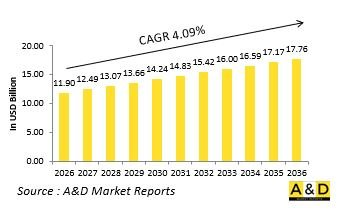
Introduction to Global Defense Artificial Intelligence
Global defense artificial intelligence refers to the application of advanced computational systems that enable machines to perceive, learn, reason, and support decision-making within military environments. These capabilities are increasingly embedded across defense operations to enhance situational understanding and operational efficiency. Artificial intelligence assists in interpreting large volumes of data generated from sensors, intelligence feeds, and operational networks, converting raw information into actionable insight. Its adoption reflects a shift from platform-centric warfare toward information-driven operations where speed and accuracy are decisive. Defense artificial intelligence supports command functions, intelligence assessment, logistics coordination, and training simulation without replacing human authority. Instead, it augments judgment by providing analytical depth and predictive awareness. As military missions grow more complex and time-sensitive, artificial intelligence becomes essential for maintaining operational advantage. Its role continues to expand as defense organizations seek adaptive tools capable of functioning across contested, data-dense environments while supporting long-term strategic planning and mission readiness.
Technology Impact in Global Defense Artificial Intelligence
Technological evolution has significantly expanded the scope and reliability of defense artificial intelligence. Improvements in machine learning architectures enable systems to recognize patterns, assess threats, and adapt to new data without constant reprogramming. High-performance computing supports rapid analysis of multi-domain information streams, enhancing real-time responsiveness. Secure data environments and protected processing frameworks strengthen resilience against interference and manipulation. Artificial intelligence systems are increasingly deployed closer to operational theaters through localized computing, reducing dependency on centralized infrastructure. Integration with sensing, surveillance, and communication platforms improves coherence across defense networks. These advances allow artificial intelligence to function as a trusted analytical partner that enhances awareness, coordination, and decision quality under operational pressure.
Key Drivers in Global Defense Artificial Intelligence
Several forces drive the expanding role of artificial intelligence in defense. Modern battlefields generate information volumes beyond human processing capacity, creating demand for automated analysis. Faster decision cycles are required to respond effectively to evolving threats. Artificial intelligence supports force efficiency by optimizing resource allocation and mission planning. Strategic competition encourages investment in technologies that provide informational advantage. Defense modernization programs increasingly prioritize digital transformation, accelerating artificial intelligence integration. Workforce limitations also encourage automation of repetitive analytical tasks. Together, these drivers position artificial intelligence as a foundational capability within modern defense ecosystems.
Regional Trends in Global Defense Artificial Intelligence
Regional adoption patterns reflect varying defense priorities and governance approaches. Technologically advanced regions emphasize controlled deployment and ethical oversight. Regions facing high operational pressure focus on real-time analytics and automation. Collaborative development dominates allied defense networks, while others prioritize sovereign artificial intelligence capabilities. These trends demonstrate how defense artificial intelligence adapts to regional security needs while supporting global military transformation.
Key Defense AI Program:
OpenAI has secured a $200 million contract to deliver artificial intelligence capabilities to the U.S. Department of Defense. The one-year agreement was announced on Monday and follows OpenAI's earlier disclosure that it would partner with defense technology firm Anduril to support the deployment of advanced AI systems for national security applications. Anduril itself was awarded a $100 million defense contract in December. The award also comes amid growing collaboration between leading AI developers and the U.S. defense establishment. In the weeks prior, OpenAI competitor Anthropic revealed plans to work alongside Palantir and Amazon to make its AI models available to U.S. defense and intelligence agencies, highlighting the accelerating adoption of commercial AI technologies across national security missions.
Table of Contents
Defense AI Market Report - Table of Contents
Defense AI Market Report Definition
Defense AI Market Report Segmentation
By Technology
By Region
By Type
Defense AI Market Report Analysis for next 10 Years
The 10-year defense ai market report analysis would give a detailed overview of defense AI market report growth, changing dynamics, technology adoption overviews and the overall market attractiveness is covered in this chapter.
Market Technologies of Defense AI Market Report
This segment covers the top 10 technologies that is expected to impact this market and the possible implications these technologies would have on the overall market.
Global Defense AI Market Report Forecast
The 10-year defense ai market report forecast of this market is covered in detailed across the segments which are mentioned above.
Regional Defense AI Market Report Trends & Forecast
The regional defense ai market report trends, drivers, restraints and Challenges of this market, the Political, Economic, Social and Technology aspects are covered in this segment. The market forecast and scenario analysis across regions are also covered in detailed in this segment. The last part of the regional analysis includes profiling of the key companies, supplier landscape and company benchmarking. The current market size is estimated based on the normal scenario.
North America
Drivers, Restraints and Challenges
PEST
Market Forecast & Scenario Analysis
Key Companies
Supplier Tier Landscape
Company Benchmarking
Europe
Middle East
APAC
South America
Country Analysis of Defense AI Market Report
This chapter deals with the key defense programs in this market, it also covers the latest news and patents which have been filed in this market. Country level 10 year market forecast and scenario analysis are also covered in this chapter.
US
Defense Programs
Latest News
Patents
Current levels of technology maturation in this market
Market Forecast & Scenario Analysis
Canada
Italy
France
Germany
Netherlands
Belgium
Spain
Sweden
Greece
Australia
South Africa
India
China
Russia
South Korea
Japan
Malaysia
Singapore
Brazil
Opportunity Matrix for Defense AI Market Report
The opportunity matrix helps the readers understand the high opportunity segments in this market.
Expert Opinions on Defense AI Market Report Report
Hear from our experts their opinion of the possible analysis for this market.
Conclusions
About Aviation and Defense Market Reports
List of Tables
- Table 1: 10 Year Market Outlook, 2026-2036
- Table 2: Drivers, Impact Analysis, North America
- Table 3: Restraints, Impact Analysis, North America
- Table 4: Challenges, Impact Analysis, North America
- Table 5: Drivers, Impact Analysis, Europe
- Table 6: Restraints, Impact Analysis, Europe
- Table 7: Challenges, Impact Analysis, Europe
- Table 8: Drivers, Impact Analysis, Middle East
- Table 9: Restraints, Impact Analysis, Middle East
- Table 10: Challenges, Impact Analysis, Middle East
- Table 11: Drivers, Impact Analysis, APAC
- Table 12: Restraints, Impact Analysis, APAC
- Table 13: Challenges, Impact Analysis, APAC
- Table 14: Drivers, Impact Analysis, South America
- Table 15: Restraints, Impact Analysis, South America
- Table 16: Challenges, Impact Analysis, South America
- Table 17: Scenario Analysis, Scenario 1, By Region, 2026-2036
- Table 18: Scenario Analysis, Scenario 1, By Technology, 2026-2036
- Table 19: Scenario Analysis, Scenario 1, By Type, 2026-2036
- Table 20: Scenario Analysis, Scenario 2, By Region, 2026-2036
- Table 21: Scenario Analysis, Scenario 2, By Technology, 2026-2036
- Table 22: Scenario Analysis, Scenario 2, By Type, 2026-2036
List of Figures
- Figure 1: Global Defense AI Market Forecast, 2026-2036
- Figure 2: Global Defense AI Market Forecast, By Region, 2026-2036
- Figure 3: Global Defense AI Market Forecast, By Technology, 2026-2036
- Figure 4: Global Defense AI Market Forecast, By Type, 2026-2036
- Figure 5: North America, Defense AI Market, Market Forecast, 2026-2036
- Figure 6: Europe, Defense AI Market, Market Forecast, 2026-2036
- Figure 7: Middle East, Defense AI Market, Market Forecast, 2026-2036
- Figure 8: APAC, Defense AI Market, Market Forecast, 2026-2036
- Figure 9: South America, Defense AI Market, Market Forecast, 2026-2036
- Figure 10: United States, Defense AI Market, Technology Maturation, 2026-2036
- Figure 11: United States, Defense AI Market, Market Forecast, 2026-2036
- Figure 12: Canada, Defense AI Market, Technology Maturation, 2026-2036
- Figure 13: Canada, Defense AI Market, Market Forecast, 2026-2036
- Figure 14: Italy, Defense AI Market, Technology Maturation, 2026-2036
- Figure 15: Italy, Defense AI Market, Market Forecast, 2026-2036
- Figure 16: France, Defense AI Market, Technology Maturation, 2026-2036
- Figure 17: France, Defense AI Market, Market Forecast, 2026-2036
- Figure 18: Germany, Defense AI Market, Technology Maturation, 2026-2036
- Figure 19: Germany, Defense AI Market, Market Forecast, 2026-2036
- Figure 20: Netherlands, Defense AI Market, Technology Maturation, 2026-2036
- Figure 21: Netherlands, Defense AI Market, Market Forecast, 2026-2036
- Figure 22: Belgium, Defense AI Market, Technology Maturation, 2026-2036
- Figure 23: Belgium, Defense AI Market, Market Forecast, 2026-2036
- Figure 24: Spain, Defense AI Market, Technology Maturation, 2026-2036
- Figure 25: Spain, Defense AI Market, Market Forecast, 2026-2036
- Figure 26: Sweden, Defense AI Market, Technology Maturation, 2026-2036
- Figure 27: Sweden, Defense AI Market, Market Forecast, 2026-2036
- Figure 28: Brazil, Defense AI Market, Technology Maturation, 2026-2036
- Figure 29: Brazil, Defense AI Market, Market Forecast, 2026-2036
- Figure 30: Australia, Defense AI Market, Technology Maturation, 2026-2036
- Figure 31: Australia, Defense AI Market, Market Forecast, 2026-2036
- Figure 32: India, Defense AI Market, Technology Maturation, 2026-2036
- Figure 33: India, Defense AI Market, Market Forecast, 2026-2036
- Figure 34: China, Defense AI Market, Technology Maturation, 2026-2036
- Figure 35: China, Defense AI Market, Market Forecast, 2026-2036
- Figure 36: Saudi Arabia, Defense AI Market, Technology Maturation, 2026-2036
- Figure 37: Saudi Arabia, Defense AI Market, Market Forecast, 2026-2036
- Figure 38: South Korea, Defense AI Market, Technology Maturation, 2026-2036
- Figure 39: South Korea, Defense AI Market, Market Forecast, 2026-2036
- Figure 40: Japan, Defense AI Market, Technology Maturation, 2026-2036
- Figure 41: Japan, Defense AI Market, Market Forecast, 2026-2036
- Figure 42: Malaysia, Defense AI Market, Technology Maturation, 2026-2036
- Figure 43: Malaysia, Defense AI Market, Market Forecast, 2026-2036
- Figure 44: Singapore, Defense AI Market, Technology Maturation, 2026-2036
- Figure 45: Singapore, Defense AI Market, Market Forecast, 2026-2036
- Figure 46: United Kingdom, Defense AI Market, Technology Maturation, 2026-2036
- Figure 47: United Kingdom, Defense AI Market, Market Forecast, 2026-2036
- Figure 48: Opportunity Analysis, Defense AI Market, By Region (Cumulative Market), 2026-2036
- Figure 49: Opportunity Analysis, Defense AI Market, By Region (CAGR), 2026-2036
- Figure 50: Opportunity Analysis, Defense AI Market, By Technology (Cumulative Market), 2026-2036
- Figure 51: Opportunity Analysis, Defense AI Market, By Technology (CAGR), 2026-2036
- Figure 52: Opportunity Analysis, Defense AI Market, By Type (Cumulative Market), 2026-2036
- Figure 53: Opportunity Analysis, Defense AI Market, By Type (CAGR), 2026-2036
- Figure 54: Scenario Analysis, Defense AI Market, Cumulative Market, 2026-2036
- Figure 55: Scenario Analysis, Defense AI Market, Global Market, 2026-2036
- Figure 56: Scenario 1, Defense AI Market, Total Market, 2026-2036
- Figure 57: Scenario 1, Defense AI Market, By Region, 2026-2036
- Figure 58: Scenario 1, Defense AI Market, By Technology, 2026-2036
- Figure 59: Scenario 1, Defense AI Market, By Type, 2026-2036
- Figure 60: Scenario 2, Defense AI Market, Total Market, 2026-2036
- Figure 61: Scenario 2, Defense AI Market, By Region, 2026-2036
- Figure 62: Scenario 2, Defense AI Market, By Technology, 2026-2036
- Figure 63: Scenario 2, Defense AI Market, By Type, 2026-2036
- Figure 64: Company Benchmark, Defense AI Market, 2026-2036

