
PUBLISHER: Aviation & Defense Market Reports (A&D) | PRODUCT CODE: 1930532

PUBLISHER: Aviation & Defense Market Reports (A&D) | PRODUCT CODE: 1930532
Global Battlefield Management System Market 2026-2036
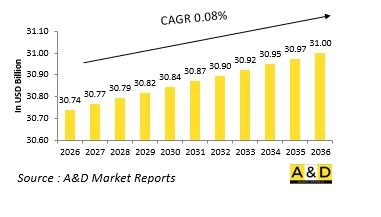
The Global Battlefield Management System market is estimated at USD 30.74 billion in 2026, projected to grow to USD 31.00 billion by 2036 at a Compound Annual Growth Rate (CAGR) of 0.08% over the forecast period 2026-2036.
Introduction
Battlefield management systems have become central to modern military operations by enabling commanders and frontline units to achieve a unified operational picture across complex and dynamic combat environments. These systems integrate data from sensors, communication networks, and command structures to support informed decision-making and coordinated action. As warfare evolves toward multi-domain operations involving land, air, sea, cyber, and space elements, battlefield management systems serve as the digital backbone that connects dispersed forces. Their importance is heightened by the growing speed of engagements and the need for real-time situational awareness at multiple command levels. Armed forces worldwide are adopting these systems to reduce information gaps, enhance coordination, and improve mission effectiveness. Battlefield management systems also support interoperability among allied forces, which is increasingly important in joint and coalition operations. By enabling faster response cycles and clearer command intent, these systems directly contribute to operational superiority. Their expanding role reflects a broader shift toward information-driven warfare, where data integration and rapid analysis are as critical as traditional combat power.
Technology Impact in Battlefield Management Systems
Technological advancements are transforming battlefield management systems into highly adaptive and intelligent command tools. Improved data fusion techniques allow information from multiple sources to be combined into coherent and actionable displays. Secure communication technologies ensure reliable information exchange even in contested or degraded environments. Artificial intelligence and machine learning capabilities enhance threat assessment, pattern recognition, and decision support by processing large volumes of operational data. Cloud-enabled architectures support scalability and rapid deployment across different operational units. Enhanced user interfaces improve usability, enabling commanders and soldiers to interpret complex information quickly under high-stress conditions. Cyber resilience measures are increasingly integrated to protect sensitive data and maintain system integrity. Integration with unmanned systems and advanced sensors expands situational awareness beyond line-of-sight limitations. These technological developments enable battlefield management systems to function as dynamic enablers of coordinated operations rather than static command tools.
Key Drivers in Battlefield Management Systems
Several factors are driving the widespread adoption of battlefield management systems across global armed forces. The complexity of modern operations demands rapid information sharing and synchronized action among dispersed units. Military modernization programs emphasize digital transformation to improve command efficiency and reduce decision latency. Joint and coalition operations require interoperable systems that facilitate seamless coordination across different forces. The growing role of unmanned platforms and sensor networks increases the volume of data that must be effectively managed and interpreted. Urban and asymmetric warfare scenarios further underscore the need for precise situational awareness to minimize risks and enhance mission success. Additionally, the emphasis on force protection and operational transparency drives investment in systems that provide accurate and timely battlefield insights. Training and simulation integration also supports improved preparedness and doctrinal development. These drivers collectively reinforce the strategic importance of battlefield management systems in contemporary defense planning.
Regional Trends in Battlefield Management Systems
Regional defense strategies strongly influence how battlefield management systems are developed and deployed. North America focuses on advanced network integration and joint force interoperability to support multi-domain operations. European forces prioritize standardized architectures that enable collaboration within multinational defense frameworks. Asia-Pacific militaries emphasize scalable systems suited to diverse terrains and rapidly evolving security challenges. Middle Eastern forces focus on systems that support rapid response and coordination in complex operational environments. African defense organizations increasingly seek adaptable and cost-effective solutions to enhance command and control capabilities. Across regions, there is growing emphasis on domestic development, technology partnerships, and incremental upgrades to ensure long-term system relevance. These trends highlight the global shift toward digitally enabled command structures as a cornerstone of modern military effectiveness.
Key Battlefield Management Systems Program
Booz Allen Hamilton partnered with L3Harris Technologies in July 2025 on a $315 million U.S. Air Force contract to deliver the Advanced Battle Management System Distributed Battle Management Node. This next-generation command-and-control architecture integrates sensor data, artificial intelligence, and secure communications to provide real-time situational awareness across joint forces. The system enables faster decision-making cycles and enhanced coordination between air, land, and maritime assets during complex multi-domain operations.
Table of Contents
Battlefield Management Systems Market - Table of Contents
Battlefield Management Systems Market Report Definition
Battlefield Management Systems Market Segmentation
By Type
By Region
By Application
Battlefield Management Systems Market Analysis for next 10 Years
The 10-year battlefield management systems market analysis would give a detailed overview of battlefield management systems market growth, changing dynamics, technology adoption overviews and the overall market attractiveness is covered in this chapter.
Market Technologies of Battlefield Management Systems Market
This segment covers the top 10 technologies that is expected to impact this market and the possible implications these technologies would have on the overall market.
Global Battlefield Management Systems Market Forecast
The 10-year battlefield management systems market forecast of this market is covered in detailed across the segments which are mentioned above.
Regional Battlefield Management Systems Market Trends & Forecast
The regional battlefield management systems market trends, drivers, restraints and Challenges of this market, the Political, Economic, Social and Technology aspects are covered in this segment. The market forecast and scenario analysis across regions are also covered in detailed in this segment. The last part of the regional analysis includes profiling of the key companies, supplier landscape and company benchmarking. The current market size is estimated based on the normal scenario.
North America
Drivers, Restraints and Challenges
PEST
Market Forecast & Scenario Analysis
Key Companies
Supplier Tier Landscape
Company Benchmarking
Europe
Middle East
APAC
South America
Country Analysis of Battlefield Management Systems Market
This chapter deals with the key defense programs in this market, it also covers the latest news and patents which have been filed in this market. Country level 10 year market forecast and scenario analysis are also covered in this chapter.
US
Defense Programs
Latest News
Patents
Current levels of technology maturation in this market
Market Forecast & Scenario Analysis
Canada
Italy
France
Germany
Netherlands
Belgium
Spain
Sweden
Greece
Australia
South Africa
India
China
Russia
South Korea
Japan
Malaysia
Singapore
Brazil
Opportunity Matrix for Battlefield Management Systems Market
The opportunity matrix helps the readers understand the high opportunity segments in this market.
Expert Opinions on Battlefield Management Systems Market Report
Hear from our experts their opinion of the possible analysis for this market.
Conclusions
About Aviation and Defense Market Reports
List of Tables
- Table 1: 10 Year Market Outlook, 2026-2036
- Table 2: Drivers, Impact Analysis, North America
- Table 3: Restraints, Impact Analysis, North America
- Table 4: Challenges, Impact Analysis, North America
- Table 5: Drivers, Impact Analysis, Europe
- Table 6: Restraints, Impact Analysis, Europe
- Table 7: Challenges, Impact Analysis, Europe
- Table 8: Drivers, Impact Analysis, Middle East
- Table 9: Restraints, Impact Analysis, Middle East
- Table 10: Challenges, Impact Analysis, Middle East
- Table 11: Drivers, Impact Analysis, APAC
- Table 12: Restraints, Impact Analysis, APAC
- Table 13: Challenges, Impact Analysis, APAC
- Table 14: Drivers, Impact Analysis, South America
- Table 15: Restraints, Impact Analysis, South America
- Table 16: Challenges, Impact Analysis, South America
- Table 17: Scenario Analysis, Scenario 1, By Region, 2026-2036
- Table 18: Scenario Analysis, Scenario 1, By Type, 2026-2036
- Table 19: Scenario Analysis, Scenario 1, By Application, 2026-2036
- Table 20: Scenario Analysis, Scenario 2, By Region, 2026-2036
- Table 21: Scenario Analysis, Scenario 2, By Type, 2026-2036
- Table 22: Scenario Analysis, Scenario 2, By Application, 2026-2036
List of Figures
- Figure 1: Global Battlefield Management Systems Market Forecast, 2026-2036
- Figure 2: Global Battlefield Management Systems Market Forecast, By Type, 2026-2036
- Figure 3: Global Battlefield Management Systems Market Forecast, By Region, 2026-2036
- Figure 4: Global Battlefield Management Systems Market Forecast, By Application, 2026-2036
- Figure 5: North America, Battlefield Management Systems Market, Market Forecast, 2026-2036
- Figure 6: Europe, Battlefield Management Systems Market, Market Forecast, 2026-2036
- Figure 7: Middle East, Battlefield Management Systems Market, Market Forecast, 2026-2036
- Figure 8: APAC, Battlefield Management Systems Market, Market Forecast, 2026-2036
- Figure 9: South America, Battlefield Management Systems Market, Market Forecast, 2026-2036
- Figure 10: United States, Battlefield Management Systems Market, Technology Maturation, 2026-2036
- Figure 11: United States, Battlefield Management Systems Market, Market Forecast, 2026-2036
- Figure 12: Canada, Battlefield Management Systems Market, Technology Maturation, 2026-2036
- Figure 13: Canada, Battlefield Management Systems Market, Market Forecast, 2026-2036
- Figure 14: Italy, Battlefield Management Systems Market, Technology Maturation, 2026-2036
- Figure 15: Italy, Battlefield Management Systems Market, Market Forecast, 2026-2036
- Figure 16: France, Battlefield Management Systems Market, Technology Maturation, 2026-2036
- Figure 17: France, Battlefield Management Systems Market, Market Forecast, 2026-2036
- Figure 18: Germany, Battlefield Management Systems Market, Technology Maturation, 2026-2036
- Figure 19: Germany, Battlefield Management Systems Market, Market Forecast, 2026-2036
- Figure 20: Netherlands, Battlefield Management Systems Market, Technology Maturation, 2026-2036
- Figure 21: Netherlands, Battlefield Management Systems Market, Market Forecast, 2026-2036
- Figure 22: Belgium, Battlefield Management Systems Market, Technology Maturation, 2026-2036
- Figure 23: Belgium, Battlefield Management Systems Market, Market Forecast, 2026-2036
- Figure 24: Spain, Battlefield Management Systems Market, Technology Maturation, 2026-2036
- Figure 25: Spain, Battlefield Management Systems Market, Market Forecast, 2026-2036
- Figure 26: Sweden, Battlefield Management Systems Market, Technology Maturation, 2026-2036
- Figure 27: Sweden, Battlefield Management Systems Market, Market Forecast, 2026-2036
- Figure 28: Brazil, Battlefield Management Systems Market, Technology Maturation, 2026-2036
- Figure 29: Brazil, Battlefield Management Systems Market, Market Forecast, 2026-2036
- Figure 30: Australia, Battlefield Management Systems Market, Technology Maturation, 2026-2036
- Figure 31: Australia, Battlefield Management Systems Market, Market Forecast, 2026-2036
- Figure 32: India, Battlefield Management Systems Market, Technology Maturation, 2026-2036
- Figure 33: India, Battlefield Management Systems Market, Market Forecast, 2026-2036
- Figure 34: China, Battlefield Management Systems Market, Technology Maturation, 2026-2036
- Figure 35: China, Battlefield Management Systems Market, Market Forecast, 2026-2036
- Figure 36: Saudi Arabia, Battlefield Management Systems Market, Technology Maturation, 2026-2036
- Figure 37: Saudi Arabia, Battlefield Management Systems Market, Market Forecast, 2026-2036
- Figure 38: South Korea, Battlefield Management Systems Market, Technology Maturation, 2026-2036
- Figure 39: South Korea, Battlefield Management Systems Market, Market Forecast, 2026-2036
- Figure 40: Japan, Battlefield Management Systems Market, Technology Maturation, 2026-2036
- Figure 41: Japan, Battlefield Management Systems Market, Market Forecast, 2026-2036
- Figure 42: Malaysia, Battlefield Management Systems Market, Technology Maturation, 2026-2036
- Figure 43: Malaysia, Battlefield Management Systems Market, Market Forecast, 2026-2036
- Figure 44: Singapore, Battlefield Management Systems Market, Technology Maturation, 2026-2036
- Figure 45: Singapore, Battlefield Management Systems Market, Market Forecast, 2026-2036
- Figure 46: United Kingdom, Battlefield Management Systems Market, Technology Maturation, 2026-2036
- Figure 47: United Kingdom, Battlefield Management Systems Market, Market Forecast, 2026-2036
- Figure 48: Opportunity Analysis, Battlefield Management Systems Market, By Region (Cumulative Market), 2026-2036
- Figure 49: Opportunity Analysis, Battlefield Management Systems Market, By Region (CAGR), 2026-2036
- Figure 50: Opportunity Analysis, Battlefield Management Systems Market, By Type (Cumulative Market), 2026-2036
- Figure 51: Opportunity Analysis, Battlefield Management Systems Market, By Type (CAGR), 2026-2036
- Figure 52: Opportunity Analysis, Battlefield Management Systems Market, By Application (Cumulative Market), 2026-2036
- Figure 53: Opportunity Analysis, Battlefield Management Systems Market, By Application (CAGR), 2026-2036
- Figure 54: Scenario Analysis, Battlefield Management Systems Market, Cumulative Market, 2026-2036
- Figure 55: Scenario Analysis, Battlefield Management Systems Market, Global Market, 2026-2036
- Figure 56: Scenario 1, Battlefield Management Systems Market, Total Market, 2026-2036
- Figure 57: Scenario 1, Battlefield Management Systems Market, By Region, 2026-2036
- Figure 58: Scenario 1, Battlefield Management Systems Market, By Type, 2026-2036
- Figure 59: Scenario 1, Battlefield Management Systems Market, By Application, 2026-2036
- Figure 60: Scenario 2, Battlefield Management Systems Market, Total Market, 2026-2036
- Figure 61: Scenario 2, Battlefield Management Systems Market, By Region, 2026-2036
- Figure 62: Scenario 2, Battlefield Management Systems Market, By Type, 2026-2036
- Figure 63: Scenario 2, Battlefield Management Systems Market, By Application, 2026-2036
- Figure 64: Company Benchmark, Battlefield Management Systems Market, 2026-2036

