
PUBLISHER: Aviation & Defense Market Reports (A&D) | PRODUCT CODE: 1930533

PUBLISHER: Aviation & Defense Market Reports (A&D) | PRODUCT CODE: 1930533
Global Blast Protection Market 2026-2036
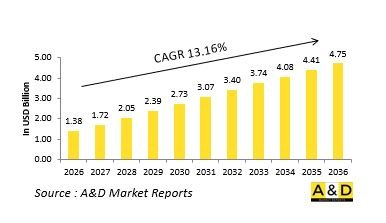
The Global Blast Protection market is estimated at USD 1.38 billion in 2026, projected to grow to USD 4.75 billion by 2036 at a Compound Annual Growth Rate (CAGR) of 13.16% over the forecast period 2026-2036.
Introduction
Blast protection has become a critical focus area for modern defense forces as exposure to explosive threats remains a defining characteristic of contemporary conflict. Military personnel, vehicles, infrastructure, and critical assets increasingly operate in environments where improvised explosive devices, artillery impacts, and indirect fire pose constant risks. Blast protection encompasses a wide range of solutions designed to mitigate the effects of shockwaves, fragmentation, and overpressure on both human occupants and equipment. Its importance extends beyond frontline combat to include peacekeeping missions, logistics convoys, and base security operations. As operational theaters grow more complex and unpredictable, armed forces are prioritizing survivability and force protection as core elements of mission planning. Blast protection solutions are integrated into armored vehicles, personal protective equipment, buildings, and mobile shelters, reflecting a holistic approach to safety. The emphasis on reducing casualties and maintaining operational continuity has elevated blast protection from a reactive measure to a strategic requirement. This growing focus underscores the recognition that survivability directly influences morale, mission effectiveness, and long-term force sustainability.
Technology Impact in Blast Protection
Technological innovation is reshaping blast protection through advanced materials and structural design techniques. High-performance composites and energy-absorbing materials are increasingly used to dissipate blast energy and reduce transmitted forces. Layered armor systems combine different material properties to address multiple threat types simultaneously. Computational modeling and simulation tools enable designers to predict blast behavior and optimize protective structures before physical testing. Improved manufacturing processes allow for lighter and more adaptable protection solutions without compromising performance. Vehicle hull shaping and structural reinforcements are engineered to deflect blast waves away from occupants, enhancing survivability. In personal protection, advances in wearable materials improve comfort and mobility while maintaining high protection levels. Modular protection systems enable rapid upgrades and mission-specific configuration. These technological developments enhance the effectiveness of blast protection while supporting operational flexibility and reduced logistical burden.
Key Drivers in Blast Protection
The demand for blast protection is driven by persistent exposure to explosive threats across modern operational environments. Asymmetric warfare and urban operations increase the likelihood of close-range explosive encounters. Military modernization efforts emphasize improved survivability for both personnel and platforms. Lessons learned from recent conflicts highlight the importance of protective solutions in reducing casualties and preserving combat capability. Force protection policies prioritize safeguarding soldiers during patrols, transport, and base operations. The expansion of peacekeeping and stability missions also sustains demand for blast-resistant infrastructure and vehicles. Additionally, evolving threat profiles require adaptable protection solutions that can address diverse explosive scenarios. Training and doctrinal changes further reinforce the importance of integrating blast protection into platform design and operational planning. These drivers collectively ensure sustained attention to blast protection across defense planning cycles.
Regional Trends in Blast Protection
Regional security environments strongly influence the adoption and development of blast protection solutions. North American forces focus on advanced materials and vehicle-integrated protection to support expeditionary operations. European militaries emphasize modular protection systems that align with multinational deployment requirements. Asia-Pacific defense organizations prioritize adaptable solutions suitable for varied terrain and urban environments. Middle Eastern forces concentrate on robust protection measures to counter persistent explosive threats in high-risk areas. African defense forces increasingly adopt cost-effective and durable blast protection solutions to support peacekeeping and internal security missions. Across regions, there is a growing emphasis on local manufacturing and technology partnerships to enhance supply chain resilience. These regional trends reflect a global commitment to improving survivability and operational resilience in explosive-threat environments.
Key Blast Protection Program:
Cymat Technologies received a $510,000 order in late 2025 for underbelly blast-protection kits destined for Asian military vehicles, part of a larger $4-5 million contract covering 700 armored platforms. These aluminum foam-based solutions absorb explosive energy from improvised explosive devices and landmines, significantly improving crew survivability in asymmetric warfare environments. The technology represents evolving requirements for lightweight yet effective counter-IED systems across global defense forces.
Table of Contents
Blast protection Market - Table of Contents
Blast protection Market Definition
Blast protection Market Segmentation
By Type
By Region
By Application
10 Year Market Outlook
The 10-year market outlook would give a detailed overview of changing dynamics, technology adoption overviews and the overall market attractiveness is covered in this chapter.
Market Technologies
This segment covers the top 10 technologies that is expected to impact this market and the possible implications these technologies would have on the overall market.
Global Market Forecast
The 10-year market forecast of this market is covered in detailed across the segments which are mentioned above.
Regional Market Trends & Forecast
The regional market trends, drivers, restraints and Challenges of this market, the Political, Economic, Social and Technology aspects are covered in this segment. The market forecast and scenario analysis across regions are also covered in detailed in this segment. The last part of the regional analysis includes profiling of the key companies, supplier landscape and company benchmarking.
North America
Drivers, Restraints and Challenges
PEST
Market Forecast & Scenario Analysis
Key Companies
Supplier Tier Landscape
Company Benchmarking
Europe
Middle East
APAC
South America
Country Analysis
This chapter deals with the key defense programs in this market, it also covers the latest news and patents which have been filed in this market. Country level 10 year market forecast and scenario analysis are also covered in this chapter.
US
Defense Programs
Latest News
Patents
Current levels of technology maturation in this market
Market Forecast & Scenario Analysis
Canada
Italy
France
Germany
Netherlands
Belgium
Spain
Sweden
Greece
Australia
South Africa
India
China
Russia
South Korea
Japan
Malaysia
Singapore
Brazil
Opportunity Matrix
The opportunity matrix helps the readers understand the high opportunity segments in this market.
Expert Opinions
Hear from our experts their opinion of the possible outlook for this market.
Conclusions
About Aviation and Defense Market Reports
List of Tables
- Table 1: 10 Year Market Outlook, 2026-2036
- Table 2: Drivers, Impact Analysis, North America
- Table 3: Restraints, Impact Analysis, North America
- Table 4: Challenges, Impact Analysis, North America
- Table 5: Drivers, Impact Analysis, Europe
- Table 6: Restraints, Impact Analysis, Europe
- Table 7: Challenges, Impact Analysis, Europe
- Table 8: Drivers, Impact Analysis, Middle East
- Table 9: Restraints, Impact Analysis, Middle East
- Table 10: Challenges, Impact Analysis, Middle East
- Table 11: Drivers, Impact Analysis, APAC
- Table 12: Restraints, Impact Analysis, APAC
- Table 13: Challenges, Impact Analysis, APAC
- Table 14: Drivers, Impact Analysis, South America
- Table 15: Restraints, Impact Analysis, South America
- Table 16: Challenges, Impact Analysis, South America
- Table 17: Scenario Analysis, Scenario 1, By Region, 2026-2036
- Table 18: Scenario Analysis, Scenario 1, By Type, 2026-2036
- Table 19: Scenario Analysis, Scenario 1, By Application, 2026-2036
- Table 20: Scenario Analysis, Scenario 2, By Region, 2026-2036
- Table 21: Scenario Analysis, Scenario 2, By Type, 2026-2036
- Table 22: Scenario Analysis, Scenario 2, By Application, 2026-2036
List of Figures
- Figure 1: Global Blast Protection Market Forecast, 2026-2036
- Figure 2: Global Blast Protection Market Forecast, By Type, 2026-2036
- Figure 3: Global Blast Protection Market Forecast, By Region, 2026-2036
- Figure 4: Global Blast Protection Market Forecast, By Application, 2026-2036
- Figure 5: North America, Blast Protection Market, Market Forecast, 2026-2036
- Figure 6: Europe, Blast Protection Market, Market Forecast, 2026-2036
- Figure 7: Middle East, Blast Protection Market, Market Forecast, 2026-2036
- Figure 8: APAC, Blast Protection Market, Market Forecast, 2026-2036
- Figure 9: South America, Blast Protection Market, Market Forecast, 2026-2036
- Figure 10: United States, Blast Protection Market, Technology Maturation, 2026-2036
- Figure 11: United States, Blast Protection Market, Market Forecast, 2026-2036
- Figure 12: Canada, Blast Protection Market, Technology Maturation, 2026-2036
- Figure 13: Canada, Blast Protection Market, Market Forecast, 2026-2036
- Figure 14: Italy, Blast Protection Market, Technology Maturation, 2026-2036
- Figure 15: Italy, Blast Protection Market, Market Forecast, 2026-2036
- Figure 16: France, Blast Protection Market, Technology Maturation, 2026-2036
- Figure 17: France, Blast Protection Market, Market Forecast, 2026-2036
- Figure 18: Germany, Blast Protection Market, Technology Maturation, 2026-2036
- Figure 19: Germany, Blast Protection Market, Market Forecast, 2026-2036
- Figure 20: Netherlands, Blast Protection Market, Technology Maturation, 2026-2036
- Figure 21: Netherlands, Blast Protection Market, Market Forecast, 2026-2036
- Figure 22: Belgium, Blast Protection Market, Technology Maturation, 2026-2036
- Figure 23: Belgium, Blast Protection Market, Market Forecast, 2026-2036
- Figure 24: Spain, Blast Protection Market, Technology Maturation, 2026-2036
- Figure 25: Spain, Blast Protection Market, Market Forecast, 2026-2036
- Figure 26: Sweden, Blast Protection Market, Technology Maturation, 2026-2036
- Figure 27: Sweden, Blast Protection Market, Market Forecast, 2026-2036
- Figure 28: Brazil, Blast Protection Market, Technology Maturation, 2026-2036
- Figure 29: Brazil, Blast Protection Market, Market Forecast, 2026-2036
- Figure 30: Australia, Blast Protection Market, Technology Maturation, 2026-2036
- Figure 31: Australia, Blast Protection Market, Market Forecast, 2026-2036
- Figure 32: India, Blast Protection Market, Technology Maturation, 2026-2036
- Figure 33: India, Blast Protection Market, Market Forecast, 2026-2036
- Figure 34: China, Blast Protection Market, Technology Maturation, 2026-2036
- Figure 35: China, Blast Protection Market, Market Forecast, 2026-2036
- Figure 36: Saudi Arabia, Blast Protection Market, Technology Maturation, 2026-2036
- Figure 37: Saudi Arabia, Blast Protection Market, Market Forecast, 2026-2036
- Figure 38: South Korea, Blast Protection Market, Technology Maturation, 2026-2036
- Figure 39: South Korea, Blast Protection Market, Market Forecast, 2026-2036
- Figure 40: Japan, Blast Protection Market, Technology Maturation, 2026-2036
- Figure 41: Japan, Blast Protection Market, Market Forecast, 2026-2036
- Figure 42: Malaysia, Blast Protection Market, Technology Maturation, 2026-2036
- Figure 43: Malaysia, Blast Protection Market, Market Forecast, 2026-2036
- Figure 44: Singapore, Blast Protection Market, Technology Maturation, 2026-2036
- Figure 45: Singapore, Blast Protection Market, Market Forecast, 2026-2036
- Figure 46: United Kingdom, Blast Protection Market, Technology Maturation, 2026-2036
- Figure 47: United Kingdom, Blast Protection Market, Market Forecast, 2026-2036
- Figure 48: Opportunity Analysis, Blast Protection Market, By Region (Cumulative Market), 2026-2036
- Figure 49: Opportunity Analysis, Blast Protection Market, By Region (CAGR), 2026-2036
- Figure 50: Opportunity Analysis, Blast Protection Market, By Type (Cumulative Market), 2026-2036
- Figure 51: Opportunity Analysis, Blast Protection Market, By Type (CAGR), 2026-2036
- Figure 52: Opportunity Analysis, Blast Protection Market, By Application (Cumulative Market), 2026-2036
- Figure 53: Opportunity Analysis, Blast Protection Market, By Application (CAGR), 2026-2036
- Figure 54: Scenario Analysis, Blast Protection Market, Cumulative Market, 2026-2036
- Figure 55: Scenario Analysis, Blast Protection Market, Global Market, 2026-2036
- Figure 56: Scenario 1, Blast Protection Market, Total Market, 2026-2036
- Figure 57: Scenario 1, Blast Protection Market, By Region, 2026-2036
- Figure 58: Scenario 1, Blast Protection Market, By Type, 2026-2036
- Figure 59: Scenario 1, Blast Protection Market, By Application, 2026-2036
- Figure 60: Scenario 2, Blast Protection Market, Total Market, 2026-2036
- Figure 61: Scenario 2, Blast Protection Market, By Region, 2026-2036
- Figure 62: Scenario 2, Blast Protection Market, By Type, 2026-2036
- Figure 63: Scenario 2, Blast Protection Market, By Application, 2026-2036
- Figure 64: Company Benchmark, Blast Protection Market, 2026-2036

