PUBLISHER: Aviation & Defense Market Reports (A&D) | PRODUCT CODE: 1930538

PUBLISHER: Aviation & Defense Market Reports (A&D) | PRODUCT CODE: 1930538
Global Amphibious Vehicle Market 2026-2036
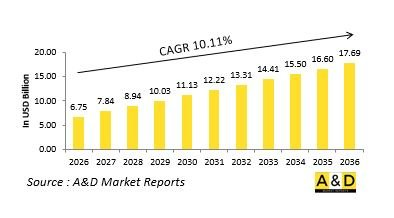
The Global Amphibious vehicle market is estimated at USD 6.75 billion in 2026, projected to grow to USD 17.69 billion by 2036 at a Compound Annual Growth Rate (CAGR) of 10.11% over the forecast period 2026-2036.
Introduction
Amphibious vehicles occupy a unique position within military force structures by enabling seamless movement between sea, riverine, and land environments. These platforms are designed to support amphibious assaults, coastal security operations, disaster response, and expeditionary missions where conventional vehicles face mobility limitations. Their ability to operate across multiple terrains provides commanders with tactical flexibility and surprise, particularly in littoral and island regions. Modern amphibious vehicles are no longer limited to troop transport; they also support command functions, logistics, medical evacuation, and fire support roles. As geopolitical focus shifts toward contested coastlines and maritime access points, the operational relevance of amphibious vehicles continues to grow. Defense forces increasingly value these platforms for their role in rapid force projection and humanitarian assistance missions. Integration with naval and air assets further enhances their effectiveness within joint operations. Amphibious vehicles represent a critical bridge between naval and ground forces, reinforcing their importance in modern military planning and expeditionary doctrine.
Technology Impact in Amphibious Vehicles
Technological advancements are significantly enhancing the performance and survivability of amphibious vehicles. Improved hull designs and hydrodynamic shaping enhance stability and speed in water while maintaining land mobility. Lightweight armor materials balance protection with buoyancy requirements. Advanced propulsion systems enable smoother transition between aquatic and terrestrial modes. Digital navigation and situational awareness systems improve operational safety in complex coastal environments. Integration of communication systems ensures coordination with naval vessels and ground units. Modular payload configurations allow rapid adaptation to mission-specific roles. Advances in corrosion-resistant materials extend platform durability in saltwater conditions. These technological innovations support expanded operational roles and increased reliability across diverse environments.
Key Drivers in Amphibious Vehicles
The demand for amphibious vehicles is driven by evolving military doctrines and geographic realities. Increased focus on littoral operations and island security reinforces the need for platforms capable of operating across water and land. Expeditionary and rapid response missions require flexible mobility solutions. Humanitarian assistance and disaster relief operations further highlight the value of amphibious capabilities. Defense modernization initiatives emphasize multi-role platforms that reduce logistical complexity. Joint operations and interoperability requirements influence platform design and acquisition. National security strategies focused on maritime access and coastal defense also sustain demand. These drivers ensure continued investment in amphibious vehicle capabilities.
Regional Trends in Amphibious Vehicles
Regional dynamics significantly shape amphibious vehicle adoption and development. North American forces emphasize expeditionary capability and integration with naval task forces. European militaries focus on interoperability and coastal security operations within multinational frameworks. Asia-Pacific countries prioritize amphibious platforms due to extensive coastlines and island territories. Middle Eastern forces emphasize rapid coastal response and infrastructure protection. African defense organizations increasingly adopt amphibious vehicles for riverine operations and disaster response. Across regions, local manufacturing and customization initiatives are expanding. These trends reflect the growing strategic importance of amphibious mobility in modern defense planning
Key Defense Amphibious Vehicle Program:
BAE Systems received a $184 million U.S. Marine Corps contract in January 2026 for 30 additional ACV-30 Amphibious Combat Vehicles featuring 30mm cannon turrets. This full-rate production award expands the program beyond 100 vehicles delivered since initial fielding. The eight-wheeled platform provides protected water-to-land mobility for Marine infantry squads, combining armor protection against small arms and shell fragments with swimming capability at speeds exceeding 6 knots in open water conditions.
Table of Contents
Amphibious Vehicle Market - Table of Contents
Amphibious Vehicle Market Report Definition
Amphibious Vehicle Market Segmentation
By Type
By Region
By End User
Amphibious Vehicle Market Analysis for next 10 Years
The 10-year amphibious vehicle market analysis would give a detailed overview of amphibious vehicle market growth, changing dynamics, technology adoption overviews and the overall market attractiveness is covered in this chapter.
Market Technologies of Amphibious Vehicle Market
This segment covers the top 10 technologies that is expected to impact this market and the possible implications these technologies would have on the overall market.
Global Amphibious Vehicle Market Forecast
The 10-year amphibious vehicle market forecast of this market is covered in detailed across the segments which are mentioned above.
Regional Amphibious Vehicle Market Trends & Forecast
The regional amphibious vehicle market trends, drivers, restraints and Challenges of this market, the Political, Economic, Social and Technology aspects are covered in this segment. The market forecast and scenario analysis across regions are also covered in detailed in this segment. The last part of the regional analysis includes profiling of the key companies, supplier landscape and company benchmarking. The current market size is estimated based on the normal scenario.
North America
Drivers, Restraints and Challenges
PEST
Market Forecast & Scenario Analysis
Key Companies
Supplier Tier Landscape
Company Benchmarking
Europe
Middle East
APAC
South America
Country Analysis of Amphibious Vehicle Market
This chapter deals with the key defense programs in this market, it also covers the latest news and patents which have been filed in this market. Country level 10 year market forecast and scenario analysis are also covered in this chapter.
US
Latest News
Patents
Current levels of technology maturation in this market
Market Forecast & Scenario Analysis
Canada
Italy
France
Germany
Netherlands
Belgium
Spain
Sweden
Greece
Australia
South Africa
India
China
Russia
South Korea
Japan
Malaysia
Singapore
Brazil
Opportunity Matrix for Amphibious Vehicle Market
The opportunity matrix helps the readers understand the high opportunity segments in this market.
Expert Opinions on Amphibious Vehicle Market Report
Hear from our experts their opinion of the possible analysis for this market.
Conclusions
About Aviation and Defense Market Reports
List of Tables
- Table 1: 10 Year Market Outlook, 2026-2036
- Table 2: Drivers, Impact Analysis, North America
- Table 3: Restraints, Impact Analysis, North America
- Table 4: Challenges, Impact Analysis, North America
- Table 5: Drivers, Impact Analysis, Europe
- Table 6: Restraints, Impact Analysis, Europe
- Table 7: Challenges, Impact Analysis, Europe
- Table 8: Drivers, Impact Analysis, Middle East
- Table 9: Restraints, Impact Analysis, Middle East
- Table 10: Challenges, Impact Analysis, Middle East
- Table 11: Drivers, Impact Analysis, APAC
- Table 12: Restraints, Impact Analysis, APAC
- Table 13: Challenges, Impact Analysis, APAC
- Table 14: Drivers, Impact Analysis, South America
- Table 15: Restraints, Impact Analysis, South America
- Table 16: Challenges, Impact Analysis, South America
- Table 17: Scenario Analysis, Scenario 1, By Region, 2026-2036
- Table 18: Scenario Analysis, Scenario 1, By Type, 2026-2036
- Table 19: Scenario Analysis, Scenario 1, By End User, 2026-2036
- Table 20: Scenario Analysis, Scenario 2, By Region, 2026-2036
- Table 21: Scenario Analysis, Scenario 2, By Type, 2026-2036
- Table 22: Scenario Analysis, Scenario 2, By End User, 2026-2036
List of Figures
- Figure 1: Global Amphibious Vehicle Market Forecast, 2026-2036
- Figure 2: Global Amphibious Vehicle Market Forecast, By Type, 2026-2036
- Figure 3: Global Amphibious Vehicle Market Forecast, By Region, 2026-2036
- Figure 4: Global Amphibious Vehicle Market Forecast, By End User, 2026-2036
- Figure 5: North America, Amphibious Vehicle Market, Market Forecast, 2026-2036
- Figure 6: Europe, Amphibious Vehicle Market, Market Forecast, 2026-2036
- Figure 7: Middle East, Amphibious Vehicle Market, Market Forecast, 2026-2036
- Figure 8: APAC, Amphibious Vehicle Market, Market Forecast, 2026-2036
- Figure 9: South America, Amphibious Vehicle Market, Market Forecast, 2026-2036
- Figure 10: United States, Amphibious Vehicle Market, Technology Maturation, 2026-2036
- Figure 11: United States, Amphibious Vehicle Market, Market Forecast, 2026-2036
- Figure 12: Canada, Amphibious Vehicle Market, Technology Maturation, 2026-2036
- Figure 13: Canada, Amphibious Vehicle Market, Market Forecast, 2026-2036
- Figure 14: Italy, Amphibious Vehicle Market, Technology Maturation, 2026-2036
- Figure 15: Italy, Amphibious Vehicle Market, Market Forecast, 2026-2036
- Figure 16: France, Amphibious Vehicle Market, Technology Maturation, 2026-2036
- Figure 17: France, Amphibious Vehicle Market, Market Forecast, 2026-2036
- Figure 18: Germany, Amphibious Vehicle Market, Technology Maturation, 2026-2036
- Figure 19: Germany, Amphibious Vehicle Market, Market Forecast, 2026-2036
- Figure 20: Netherlands, Amphibious Vehicle Market, Technology Maturation, 2026-2036
- Figure 21: Netherlands, Amphibious Vehicle Market, Market Forecast, 2026-2036
- Figure 22: Belgium, Amphibious Vehicle Market, Technology Maturation, 2026-2036
- Figure 23: Belgium, Amphibious Vehicle Market, Market Forecast, 2026-2036
- Figure 24: Spain, Amphibious Vehicle Market, Technology Maturation, 2026-2036
- Figure 25: Spain, Amphibious Vehicle Market, Market Forecast, 2026-2036
- Figure 26: Sweden, Amphibious Vehicle Market, Technology Maturation, 2026-2036
- Figure 27: Sweden, Amphibious Vehicle Market, Market Forecast, 2026-2036
- Figure 28: Brazil, Amphibious Vehicle Market, Technology Maturation, 2026-2036
- Figure 29: Brazil, Amphibious Vehicle Market, Market Forecast, 2026-2036
- Figure 30: Australia, Amphibious Vehicle Market, Technology Maturation, 2026-2036
- Figure 31: Australia, Amphibious Vehicle Market, Market Forecast, 2026-2036
- Figure 32: India, Amphibious Vehicle Market, Technology Maturation, 2026-2036
- Figure 33: India, Amphibious Vehicle Market, Market Forecast, 2026-2036
- Figure 34: China, Amphibious Vehicle Market, Technology Maturation, 2026-2036
- Figure 35: China, Amphibious Vehicle Market, Market Forecast, 2026-2036
- Figure 36: Saudi Arabia, Amphibious Vehicle Market, Technology Maturation, 2026-2036
- Figure 37: Saudi Arabia, Amphibious Vehicle Market, Market Forecast, 2026-2036
- Figure 38: South Korea, Amphibious Vehicle Market, Technology Maturation, 2026-2036
- Figure 39: South Korea, Amphibious Vehicle Market, Market Forecast, 2026-2036
- Figure 40: Japan, Amphibious Vehicle Market, Technology Maturation, 2026-2036
- Figure 41: Japan, Amphibious Vehicle Market, Market Forecast, 2026-2036
- Figure 42: Malaysia, Amphibious Vehicle Market, Technology Maturation, 2026-2036
- Figure 43: Malaysia, Amphibious Vehicle Market, Market Forecast, 2026-2036
- Figure 44: Singapore, Amphibious Vehicle Market, Technology Maturation, 2026-2036
- Figure 45: Singapore, Amphibious Vehicle Market, Market Forecast, 2026-2036
- Figure 46: United Kingdom, Amphibious Vehicle Market, Technology Maturation, 2026-2036
- Figure 47: United Kingdom, Amphibious Vehicle Market, Market Forecast, 2026-2036
- Figure 48: Opportunity Analysis, Amphibious Vehicle Market, By Region (Cumulative Market), 2026-2036
- Figure 49: Opportunity Analysis, Amphibious Vehicle Market, By Region (CAGR), 2026-2036
- Figure 50: Opportunity Analysis, Amphibious Vehicle Market, By Type (Cumulative Market), 2026-2036
- Figure 51: Opportunity Analysis, Amphibious Vehicle Market, By Type (CAGR), 2026-2036
- Figure 52: Opportunity Analysis, Amphibious Vehicle Market, By End User (Cumulative Market), 2026-2036
- Figure 53: Opportunity Analysis, Amphibious Vehicle Market, By End User (CAGR), 2026-2036
- Figure 54: Scenario Analysis, Amphibious Vehicle Market, Cumulative Market, 2026-2036
- Figure 55: Scenario Analysis, Amphibious Vehicle Market, Global Market, 2026-2036
- Figure 56: Scenario 1, Amphibious Vehicle Market, Total Market, 2026-2036
- Figure 57: Scenario 1, Amphibious Vehicle Market, By Region, 2026-2036
- Figure 58: Scenario 1, Amphibious Vehicle Market, By Type, 2026-2036
- Figure 59: Scenario 1, Amphibious Vehicle Market, By End User, 2026-2036
- Figure 60: Scenario 2, Amphibious Vehicle Market, Total Market, 2026-2036
- Figure 61: Scenario 2, Amphibious Vehicle Market, By Region, 2026-2036
- Figure 62: Scenario 2, Amphibious Vehicle Market, By Type, 2026-2036
- Figure 63: Scenario 2, Amphibious Vehicle Market, By End User, 2026-2036
- Figure 64: Company Benchmark, Amphibious Vehicle Market, 2026-2036

