PUBLISHER: Aviation & Defense Market Reports (A&D) | PRODUCT CODE: 1930540

PUBLISHER: Aviation & Defense Market Reports (A&D) | PRODUCT CODE: 1930540
Global Anti Ship Missiles Market 2026-2036
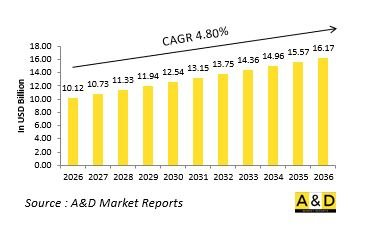
The Global Anti-Ship Missiles market is estimated at USD 10.12 billion in 2026, projected to grow to USD 16.17 billion by 2036 at a Compound Annual Growth Rate (CAGR) of 4.80% over the forecast period 2026-2036.
Introduction
Anti ship missiles are a central element of maritime combat capability, designed to deny adversaries freedom of movement across strategic sea lanes and coastal regions. These systems enable naval forces to project power beyond visual range and impose significant deterrence against surface fleets. Their importance has increased as maritime competition intensifies and naval operations extend into contested littoral zones. Anti ship missiles are deployed across a wide range of platforms, including surface vessels, submarines, aircraft, coastal batteries, and mobile land-based launchers. This flexibility allows defense forces to establish layered maritime defense architectures that complicate adversary planning. Modern naval doctrine emphasizes sea denial and access control, positioning anti ship missiles as key instruments of asymmetric advantage. Their role extends beyond high-intensity conflict to include deterrence patrols and strategic signaling. As naval platforms become more networked and sensor-driven, anti ship missiles are increasingly integrated into broader maritime surveillance and targeting ecosystems. Their continued evolution reflects the growing emphasis on precision engagement and control of maritime domains.
Technology Impact in Anti Ship Missiles
Technological advancements are redefining the effectiveness and survivability of anti ship missile systems. Improvements in seeker technology enhance target discrimination in cluttered maritime environments. Advanced guidance algorithms allow missiles to adapt flight profiles and evade defensive systems. Propulsion enhancements extend operational reach while maintaining maneuverability. Low-observable design techniques reduce detectability during terminal phases. Network-enabled targeting allows mid-course updates based on real-time sensor inputs. Improved electronic counter-countermeasures increase resistance to jamming and deception. Warhead design innovations optimize impact effectiveness against modern ship defenses. Integration with multi-domain sensor networks enhances targeting accuracy. These technological developments ensure anti ship missiles remain credible threats in increasingly defended maritime environments.
Key Drivers in Anti Ship Missiles
The demand for anti ship missiles is driven by shifting maritime security dynamics and evolving naval doctrines. The need to protect territorial waters and exclusive maritime zones sustains investment in coastal defense capabilities. Naval modernization programs emphasize distributed lethality and long-range strike options. Increased emphasis on sea lane protection and power projection reinforces the importance of surface strike systems. Budget efficiency considerations favor missile-based deterrence compared to large fleet expansion. Interoperability with allied naval forces also influences system development. The rise of anti-access strategies further drives demand for advanced missile solutions. These drivers collectively sustain the strategic relevance of anti ship missile capabilities.
Regional Trends in Anti Ship Missiles
Regional maritime priorities strongly influence anti ship missile adoption and deployment. North American naval forces focus on integration with carrier strike groups and multi-domain maritime operations. European navies emphasize coastal defense and joint maritime security initiatives. Asia-Pacific regions prioritize sea denial and island defense strategies in congested waters. Middle Eastern forces focus on protecting strategic waterways and critical infrastructure. African coastal states increasingly explore missile capabilities to enhance maritime security and deterrence. Across regions, domestic development and technology partnerships are expanding. These trends highlight the central role of anti ship missiles in modern naval strategy.
Key Defense Anti-Ship Missiles Program:
Lockheed Martin received a $9.5 billion Pentagon contract in July 2025 covering large-lot procurement of AGM-158C Long Range Anti-Ship Missiles and Joint Air-to-Surface Standoff Missiles. The award includes production lots 22-26 for JASSM and lots 9-12 for LRASM through 2033, with additional $4.3 billion allocated specifically for LRASM surge production. These stealthy, precision-guided missiles provide U.S. and allied air forces with stand-off capability to neutralize high-value maritime targets while operating outside enemy air defense envelopes.
Table of Contents
Anti Ship Missiles Market - Table of Contents
Anti Ship Missiles Market Report Definition
Anti Ship Missiles Market Segmentation
By Platform
By Region
By Type
Anti Ship Missiles Market Analysis for next 10 years
The 10-year anti ship missiles market analysis would give a detailed overview of anti ship missiles market growth, changing dynamics, technology adoption overviews and the overall market attractiveness is covered in this chapter.
Market Technologies of Anti Ship Missiles Market
This segment covers the top 10 technologies that is expected to impact this market and the possible implications these technologies would have on the overall market.
Global Anti Ship Missiles Market Forecast
The 10-year anti ship missiles market forecast of this market is covered in detailed across the segments which are mentioned above.
Regional Anti Ship Missiles Market Trends & Forecast
The regional anti ship missiles market trends, drivers, restraints and Challenges of this market, the Political, Economic, Social and Technology aspects are covered in this segment. The market forecast and scenario analysis across regions are also covered in detailed in this segment. The last part of the regional analysis includes profiling of the key companies, supplier landscape and company benchmarking.
North America
Drivers, Restraints and Challenges
PEST
Market Forecast & Scenario Analysis
Key Companies
Supplier Tier Landscape
Company Benchmarking
Europe
Middle East
APAC
South America
Country Analysis of Anti Ship Missiles Market
This chapter deals with the key defense programs in this market, it also covers the latest news and patents which have been filed in this market. Country level 10 year market forecast and scenario analysis are also covered in this chapter.
US
Defense Programs
Latest News
Patents
Current levels of technology maturation in this market
Market Forecast & Scenario Analysis
Canada
Italy
France
Germany
Netherlands
Belgium
Spain
Sweden
Greece
Australia
South Africa
India
China
Russia
South Korea
Japan
Malaysia
Singapore
Brazil
Opportunity Matrix of Anti Ship Missiles Market
The opportunity matrix helps the readers understand the high opportunity segments in this market.
Expert Opinions on Anti Ship Missiles Market Report
Hear from our experts their opinion of the possible outlook for this market.
Conclusions
About Aviation and Defense Market Report
List of Tables
- Table 1: 10 Year Market Outlook, 2026-2036
- Table 2: Drivers, Impact Analysis, North America
- Table 3: Restraints, Impact Analysis, North America
- Table 4: Challenges, Impact Analysis, North America
- Table 5: Drivers, Impact Analysis, Europe
- Table 6: Restraints, Impact Analysis, Europe
- Table 7: Challenges, Impact Analysis, Europe
- Table 8: Drivers, Impact Analysis, Middle East
- Table 9: Restraints, Impact Analysis, Middle East
- Table 10: Challenges, Impact Analysis, Middle East
- Table 11: Drivers, Impact Analysis, APAC
- Table 12: Restraints, Impact Analysis, APAC
- Table 13: Challenges, Impact Analysis, APAC
- Table 14: Drivers, Impact Analysis, South America
- Table 15: Restraints, Impact Analysis, South America
- Table 16: Challenges, Impact Analysis, South America
- Table 17: Scenario Analysis, Scenario 1, By Region, 2026-2036
- Table 18: Scenario Analysis, Scenario 1, By Platform, 2026-2036
- Table 19: Scenario Analysis, Scenario 1, By Type, 2026-2036
- Table 20: Scenario Analysis, Scenario 2, By Region, 2026-2036
- Table 21: Scenario Analysis, Scenario 2, By Platform, 2026-2036
- Table 22: Scenario Analysis, Scenario 2, By Type, 2026-2036
List of Figures
- Figure 1: Global Anti Ship Missiles Market Forecast, 2026-2036
- Figure 2: Global Anti Ship Missiles Market Forecast, By Platform, 2026-2036
- Figure 3: Global Anti Ship Missiles Market Forecast, By Region, 2026-2036
- Figure 4: Global Anti Ship Missiles Market Forecast, By Type, 2026-2036
- Figure 5: North America, Anti Ship Missiles Market, Market Forecast, 2026-2036
- Figure 6: Europe, Anti Ship Missiles Market, Market Forecast, 2026-2036
- Figure 7: Middle East, Anti Ship Missiles Market, Market Forecast, 2026-2036
- Figure 8: APAC, Anti Ship Missiles Market, Market Forecast, 2026-2036
- Figure 9: South America, Anti Ship Missiles Market, Market Forecast, 2026-2036
- Figure 10: United States, Anti Ship Missiles Market, Technology Maturation, 2026-2036
- Figure 11: United States, Anti Ship Missiles Market, Market Forecast, 2026-2036
- Figure 12: Canada, Anti Ship Missiles Market, Technology Maturation, 2026-2036
- Figure 13: Canada, Anti Ship Missiles Market, Market Forecast, 2026-2036
- Figure 14: Italy, Anti Ship Missiles Market, Technology Maturation, 2026-2036
- Figure 15: Italy, Anti Ship Missiles Market, Market Forecast, 2026-2036
- Figure 16: France, Anti Ship Missiles Market, Technology Maturation, 2026-2036
- Figure 17: France, Anti Ship Missiles Market, Market Forecast, 2026-2036
- Figure 18: Germany, Anti Ship Missiles Market, Technology Maturation, 2026-2036
- Figure 19: Germany, Anti Ship Missiles Market, Market Forecast, 2026-2036
- Figure 20: Netherlands, Anti Ship Missiles Market, Technology Maturation, 2026-2036
- Figure 21: Netherlands, Anti Ship Missiles Market, Market Forecast, 2026-2036
- Figure 22: Belgium, Anti Ship Missiles Market, Technology Maturation, 2026-2036
- Figure 23: Belgium, Anti Ship Missiles Market, Market Forecast, 2026-2036
- Figure 24: Spain, Anti Ship Missiles Market, Technology Maturation, 2026-2036
- Figure 25: Spain, Anti Ship Missiles Market, Market Forecast, 2026-2036
- Figure 26: Sweden, Anti Ship Missiles Market, Technology Maturation, 2026-2036
- Figure 27: Sweden, Anti Ship Missiles Market, Market Forecast, 2026-2036
- Figure 28: Brazil, Anti Ship Missiles Market, Technology Maturation, 2026-2036
- Figure 29: Brazil, Anti Ship Missiles Market, Market Forecast, 2026-2036
- Figure 30: Australia, Anti Ship Missiles Market, Technology Maturation, 2026-2036
- Figure 31: Australia, Anti Ship Missiles Market, Market Forecast, 2026-2036
- Figure 32: India, Anti Ship Missiles Market, Technology Maturation, 2026-2036
- Figure 33: India, Anti Ship Missiles Market, Market Forecast, 2026-2036
- Figure 34: China, Anti Ship Missiles Market, Technology Maturation, 2026-2036
- Figure 35: China, Anti Ship Missiles Market, Market Forecast, 2026-2036
- Figure 36: Saudi Arabia, Anti Ship Missiles Market, Technology Maturation, 2026-2036
- Figure 37: Saudi Arabia, Anti Ship Missiles Market, Market Forecast, 2026-2036
- Figure 38: South Korea, Anti Ship Missiles Market, Technology Maturation, 2026-2036
- Figure 39: South Korea, Anti Ship Missiles Market, Market Forecast, 2026-2036
- Figure 40: Japan, Anti Ship Missiles Market, Technology Maturation, 2026-2036
- Figure 41: Japan, Anti Ship Missiles Market, Market Forecast, 2026-2036
- Figure 42: Malaysia, Anti Ship Missiles Market, Technology Maturation, 2026-2036
- Figure 43: Malaysia, Anti Ship Missiles Market, Market Forecast, 2026-2036
- Figure 44: Singapore, Anti Ship Missiles Market, Technology Maturation, 2026-2036
- Figure 45: Singapore, Anti Ship Missiles Market, Market Forecast, 2026-2036
- Figure 46: United Kingdom, Anti Ship Missiles Market, Technology Maturation, 2026-2036
- Figure 47: United Kingdom, Anti Ship Missiles Market, Market Forecast, 2026-2036
- Figure 48: Opportunity Analysis, Anti Ship Missiles Market, By Region (Cumulative Market), 2026-2036
- Figure 49: Opportunity Analysis, Anti Ship Missiles Market, By Region (CAGR), 2026-2036
- Figure 50: Opportunity Analysis, Anti Ship Missiles Market, By Platform (Cumulative Market), 2026-2036
- Figure 51: Opportunity Analysis, Anti Ship Missiles Market, By Platform (CAGR), 2026-2036
- Figure 52: Opportunity Analysis, Anti Ship Missiles Market, By Type (Cumulative Market), 2026-2036
- Figure 53: Opportunity Analysis, Anti Ship Missiles Market, By Type (CAGR), 2026-2036
- Figure 54: Scenario Analysis, Anti Ship Missiles Market, Cumulative Market, 2026-2036
- Figure 55: Scenario Analysis, Anti Ship Missiles Market, Global Market, 2026-2036
- Figure 56: Scenario 1, Anti Ship Missiles Market, Total Market, 2026-2036
- Figure 57: Scenario 1, Anti Ship Missiles Market, By Region, 2026-2036
- Figure 58: Scenario 1, Anti Ship Missiles Market, By Platform, 2026-2036
- Figure 59: Scenario 1, Anti Ship Missiles Market, By Type, 2026-2036
- Figure 60: Scenario 2, Anti Ship Missiles Market, Total Market, 2026-2036
- Figure 61: Scenario 2, Anti Ship Missiles Market, By Region, 2026-2036
- Figure 62: Scenario 2, Anti Ship Missiles Market, By Platform, 2026-2036
- Figure 63: Scenario 2, Anti Ship Missiles Market, By Type, 2026-2036
- Figure 64: Company Benchmark, Anti Ship Missiles Market, 2026-2036

