
PUBLISHER: Aviation & Defense Market Reports (A&D) | PRODUCT CODE: 1930543

PUBLISHER: Aviation & Defense Market Reports (A&D) | PRODUCT CODE: 1930543
Global Airborne SATCOM Market 2026-2036
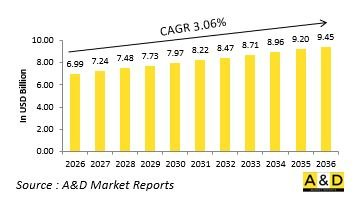
The Global Airborne SATCOM market is estimated at USD 6.99 billion in 2026, projected to grow to USD 9.45 billion by 2036 at a Compound Annual Growth Rate (CAGR) of 3.06% over the forecast period 2026-2036.
Introduction
Airborne satellite communication capabilities are fundamental to modern military operations, enabling secure and reliable connectivity for airborne platforms operating beyond the reach of terrestrial networks. These systems support voice, data, and video transmission for aircraft, unmanned aerial systems, and airborne command posts across vast and often remote operational theaters. Airborne SATCOM ensures continuity of command and control, intelligence sharing, and mission coordination during high-tempo operations. Its role has expanded as air platforms increasingly serve as information hubs rather than isolated assets. Modern military operations depend on uninterrupted communication to synchronize actions across air, land, and sea domains. Airborne SATCOM enables long-endurance missions, real-time intelligence dissemination, and coordinated strike operations. It also supports non-combat missions such as humanitarian assistance, disaster response, and strategic transport. As operational reliance on data connectivity grows, airborne SATCOM has become an indispensable enabler of mission success and operational resilience.
Technology Impact in Airborne SATCOM
Technological progress is driving significant enhancements in airborne SATCOM performance and reliability. Advances in antenna design improve signal stability during high-speed maneuvers. Enhanced modulation and coding techniques increase data throughput while maintaining link robustness. Digital beamforming enables dynamic allocation of satellite resources. Improved encryption safeguards sensitive communications against interception. Platform integration technologies reduce size, weight, and power requirements. Multi-band compatibility enhances operational flexibility across different satellite networks. Software-defined architectures allow rapid updates and adaptability. These technological developments strengthen airborne SATCOM as a resilient and adaptable communication backbone.
Key Drivers in Airborne SATCOM
Several factors are driving demand for advanced airborne SATCOM capabilities. The need for beyond-line-of-sight communication is critical for modern air operations. Network-centric warfare concepts rely on persistent data exchange. Expansion of unmanned aerial operations increases reliance on satellite links. Joint and coalition operations require interoperable communication systems. The need for secure and resilient connectivity in contested environments further supports investment. Additionally, increased data requirements for ISR and mission systems sustain demand. These drivers ensure airborne SATCOM remains a strategic priority.
Regional Trends in Airborne SATCOM
Regional approaches to airborne SATCOM reflect different operational priorities. North American forces emphasize integration with global satellite networks and advanced encryption. European defense organizations focus on interoperability and sovereign communication capabilities. Asia-Pacific regions prioritize coverage across vast maritime and remote areas. Middle Eastern forces emphasize secure connectivity for rapid response missions. African defense organizations increasingly adopt airborne SATCOM to extend communication reach. Across regions, investments in domestic capabilities and partnerships are expanding. These trends highlight the global importance of airborne SATCOM in modern defense operations.
Key Airborne SATCOM Program:
Boeing received a $2.8 billion U.S. Space Force contract in July 2025 for the Evolved Strategic Satellite Communications program, covering development and production of two nuclear command-and-control satellites with enhanced jam resistance. Separately, Gogo's SD Government division won a five-year federal contract in October 2025 to deliver multi-band, multi-orbit airborne satellite communications systems to a U.S. government agency, enabling global connectivity for executive transport and special mission aircraft fleets.
Table of Contents
Airborne SATCOM Market - Table of Contents
Airborne SATCOM Market Report Definition
Airborne SATCOM Market Segmentation
By Region
By End - User
By Application
Airborne SATCOM Market Analysis for next 10 Years
The 10-year Airborne SATCOM Market analysis would give a detailed overview of Airborne SATCOM Market growth, changing dynamics, technology adoption overviews and the overall market attractiveness is covered in this chapter.
Market Technologies of Airborne SATCOM Market
This segment covers the top 10 technologies that is expected to impact this market and the possible implications these technologies would have on the overall market.
Global Airborne SATCOM Market Forecast
The 10-year Airborne SATCOM Market forecast of this market is covered in detailed across the segments which are mentioned above.
Regional Airborne SATCOM Market Trends & Forecast
The regional Airborne SATCOM Market trends, drivers, restraints and Challenges of this market, the Political, Economic, Social and Technology aspects are covered in this segment. The market forecast and scenario analysis across regions are also covered in detailed in this segment. The last part of the regional analysis includes profiling of the key companies, supplier landscape and company benchmarking. The current market size is estimated based on the normal scenario.
North America
Drivers, Restraints and Challenges
PEST
Market Forecast & Scenario Analysis
Key Companies
Supplier Tier Landscape
Company Benchmarking
Europe
Middle East
APAC
South America
Country Analysis of Airborne SATCOM Market
This chapter deals with the key defense programs in this market, it also covers the latest news and patents which have been filed in this market. Country level 10 year market forecast and scenario analysis are also covered in this chapter.
US
Defense Programs
Latest News
Patents
Current levels of technology maturation in this market
Market Forecast & Scenario Analysis
Canada
Italy
France
Germany
Netherlands
Belgium
Spain
Sweden
Greece
Australia
South Africa
India
China
Russia
South Korea
Japan
Malaysia
Singapore
Brazil
Opportunity Matrix for Airborne SATCOM Market
The opportunity matrix helps the readers understand the high opportunity segments in this market.
Expert Opinions on Airborne SATCOM Market Report
Hear from our experts their opinion of the possible analysis for this market.
Conclusions
About Aviation and Defense Market Reports
List of Tables
- Table 1: 10 Year Market Outlook, 2026-2036
- Table 2: Drivers, Impact Analysis, North America
- Table 3: Restraints, Impact Analysis, North America
- Table 4: Challenges, Impact Analysis, North America
- Table 5: Drivers, Impact Analysis, Europe
- Table 6: Restraints, Impact Analysis, Europe
- Table 7: Challenges, Impact Analysis, Europe
- Table 8: Drivers, Impact Analysis, Middle East
- Table 9: Restraints, Impact Analysis, Middle East
- Table 10: Challenges, Impact Analysis, Middle East
- Table 11: Drivers, Impact Analysis, APAC
- Table 12: Restraints, Impact Analysis, APAC
- Table 13: Challenges, Impact Analysis, APAC
- Table 14: Drivers, Impact Analysis, South America
- Table 15: Restraints, Impact Analysis, South America
- Table 16: Challenges, Impact Analysis, South America
- Table 17: Scenario Analysis, Scenario 1, By Region, 2026-2036
- Table 18: Scenario Analysis, Scenario 1, By End - User, 2026-2036
- Table 19: Scenario Analysis, Scenario 1, By Application, 2026-2036
- Table 20: Scenario Analysis, Scenario 2, By Region, 2026-2036
- Table 21: Scenario Analysis, Scenario 2, By End - User, 2026-2036
- Table 22: Scenario Analysis, Scenario 2, By Application, 2026-2036
List of Figures
- Figure 1: Global Airborne SATCOM Market Forecast, 2026-2036
- Figure 2: Global Airborne SATCOM Market Forecast, By Region, 2026-2036
- Figure 3: Global Airborne SATCOM Market Forecast, By End - User, 2026-2036
- Figure 4: Global Airborne SATCOM Market Forecast, By Application, 2026-2036
- Figure 5: North America, Airborne SATCOM Market, Market Forecast, 2026-2036
- Figure 6: Europe, Airborne SATCOM Market, Market Forecast, 2026-2036
- Figure 7: Middle East, Airborne SATCOM Market, Market Forecast, 2026-2036
- Figure 8: APAC, Airborne SATCOM Market, Market Forecast, 2026-2036
- Figure 9: South America, Airborne SATCOM Market, Market Forecast, 2026-2036
- Figure 10: United States, Airborne SATCOM Market, Technology Maturation, 2026-2036
- Figure 11: United States, Airborne SATCOM Market, Market Forecast, 2026-2036
- Figure 12: Canada, Airborne SATCOM Market, Technology Maturation, 2026-2036
- Figure 13: Canada, Airborne SATCOM Market, Market Forecast, 2026-2036
- Figure 14: Italy, Airborne SATCOM Market, Technology Maturation, 2026-2036
- Figure 15: Italy, Airborne SATCOM Market, Market Forecast, 2026-2036
- Figure 16: France, Airborne SATCOM Market, Technology Maturation, 2026-2036
- Figure 17: France, Airborne SATCOM Market, Market Forecast, 2026-2036
- Figure 18: Germany, Airborne SATCOM Market, Technology Maturation, 2026-2036
- Figure 19: Germany, Airborne SATCOM Market, Market Forecast, 2026-2036
- Figure 20: Netherlands, Airborne SATCOM Market, Technology Maturation, 2026-2036
- Figure 21: Netherlands, Airborne SATCOM Market, Market Forecast, 2026-2036
- Figure 22: Belgium, Airborne SATCOM Market, Technology Maturation, 2026-2036
- Figure 23: Belgium, Airborne SATCOM Market, Market Forecast, 2026-2036
- Figure 24: Spain, Airborne SATCOM Market, Technology Maturation, 2026-2036
- Figure 25: Spain, Airborne SATCOM Market, Market Forecast, 2026-2036
- Figure 26: Sweden, Airborne SATCOM Market, Technology Maturation, 2026-2036
- Figure 27: Sweden, Airborne SATCOM Market, Market Forecast, 2026-2036
- Figure 28: Brazil, Airborne SATCOM Market, Technology Maturation, 2026-2036
- Figure 29: Brazil, Airborne SATCOM Market, Market Forecast, 2026-2036
- Figure 30: Australia, Airborne SATCOM Market, Technology Maturation, 2026-2036
- Figure 31: Australia, Airborne SATCOM Market, Market Forecast, 2026-2036
- Figure 32: India, Airborne SATCOM Market, Technology Maturation, 2026-2036
- Figure 33: India, Airborne SATCOM Market, Market Forecast, 2026-2036
- Figure 34: China, Airborne SATCOM Market, Technology Maturation, 2026-2036
- Figure 35: China, Airborne SATCOM Market, Market Forecast, 2026-2036
- Figure 36: Saudi Arabia, Airborne SATCOM Market, Technology Maturation, 2026-2036
- Figure 37: Saudi Arabia, Airborne SATCOM Market, Market Forecast, 2026-2036
- Figure 38: South Korea, Airborne SATCOM Market, Technology Maturation, 2026-2036
- Figure 39: South Korea, Airborne SATCOM Market, Market Forecast, 2026-2036
- Figure 40: Japan, Airborne SATCOM Market, Technology Maturation, 2026-2036
- Figure 41: Japan, Airborne SATCOM Market, Market Forecast, 2026-2036
- Figure 42: Malaysia, Airborne SATCOM Market, Technology Maturation, 2026-2036
- Figure 43: Malaysia, Airborne SATCOM Market, Market Forecast, 2026-2036
- Figure 44: Singapore, Airborne SATCOM Market, Technology Maturation, 2026-2036
- Figure 45: Singapore, Airborne SATCOM Market, Market Forecast, 2026-2036
- Figure 46: United Kingdom, Airborne SATCOM Market, Technology Maturation, 2026-2036
- Figure 47: United Kingdom, Airborne SATCOM Market, Market Forecast, 2026-2036
- Figure 48: Opportunity Analysis, Airborne SATCOM Market, By Region (Cumulative Market), 2026-2036
- Figure 49: Opportunity Analysis, Airborne SATCOM Market, By Region (CAGR), 2026-2036
- Figure 50: Opportunity Analysis, Airborne SATCOM Market, By End - User (Cumulative Market), 2026-2036
- Figure 51: Opportunity Analysis, Airborne SATCOM Market, By End - User (CAGR), 2026-2036
- Figure 52: Opportunity Analysis, Airborne SATCOM Market, By Application (Cumulative Market), 2026-2036
- Figure 53: Opportunity Analysis, Airborne SATCOM Market, By Application (CAGR), 2026-2036
- Figure 54: Scenario Analysis, Airborne SATCOM Market, Cumulative Market, 2026-2036
- Figure 55: Scenario Analysis, Airborne SATCOM Market, Global Market, 2026-2036
- Figure 56: Scenario 1, Airborne SATCOM Market, Total Market, 2026-2036
- Figure 57: Scenario 1, Airborne SATCOM Market, By Region, 2026-2036
- Figure 58: Scenario 1, Airborne SATCOM Market, By End - User, 2026-2036
- Figure 59: Scenario 1, Airborne SATCOM Market, By Application, 2026-2036
- Figure 60: Scenario 2, Airborne SATCOM Market, Total Market, 2026-2036
- Figure 61: Scenario 2, Airborne SATCOM Market, By Region, 2026-2036
- Figure 62: Scenario 2, Airborne SATCOM Market, By End - User, 2026-2036
- Figure 63: Scenario 2, Airborne SATCOM Market, By Application, 2026-2036
- Figure 64: Company Benchmark, Airborne SATCOM Market, 2026-2036

