
PUBLISHER: Aviation & Defense Market Reports (A&D) | PRODUCT CODE: 1951143

PUBLISHER: Aviation & Defense Market Reports (A&D) | PRODUCT CODE: 1951143
Global Defense Internal Comms / Announcing Systems Market 2026-2036
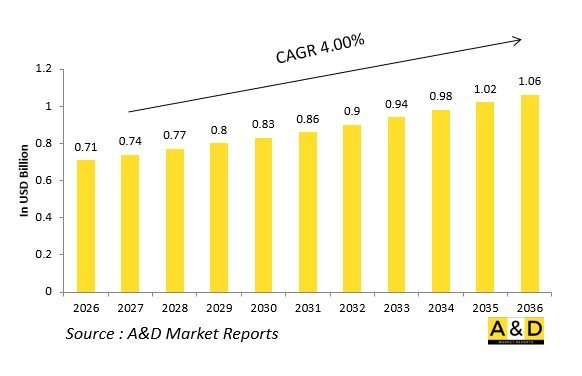
The Global Defense Internal Comms / Announcing Systems Market is estimated at USD 0.71 billion in 2026, projected to grow to USD 1.06 billion by 2036 at a Compound Annual Growth Rate (CAGR) of 4.00% over the forecast period 2026-2036.
Introduction:
The Global defense internal comms and announcing systems market underpins crew coordination and situational awareness across ships, aircraft, and ground vehicles. These systems deliver clear voice alerts, damage control instructions, and tactical updates amid chaos, integrating microphones, speakers, and intercoms into rugged platforms. As platforms grow more complex with automation and multi-crewed ops, demand rises for networked solutions blending wired reliability with wireless flexibility. Key features include noise-cancelling tech for high-decibel environments and multilingual broadcasting for diverse forces. Naval vessels lead adoption, followed by armored units and rotary-wing aircraft. Innovations fuse these with battle management systems for automated alerts. The market expands with fleet modernizations worldwide, emphasizing cybersecurity to shield against onboard intrusions. Ultimately, robust internal comms prove vital for mission success, reducing human error in high-stakes scenarios.
Technology Impact in Defense Internal Comms / Announcing Systems
Technological strides transform defense internal comms and announcing systems, enhancing clarity and integration. Digital signal processing eliminates echo and background roar, ensuring crisp directives in engine bays or flight decks. IP-based architectures enable seamless VoIP linking with external radios and sensors. Artificial intelligence prioritizes urgent alerts, like fire or collision warnings, via voice synthesis in multiple languages. Bone-conduction headsets bypass ambient noise for pilots and submariners. Wireless mesh networks provide redundancy, surviving cable damage from blasts. Integration with augmented reality visors overlays audio cues on visuals. Self-healing amplifiers maintain output during power fluctuations. Cybersecurity layers encrypt channels against spoofing. These advances shrink footprints, cut cabling, and boost interoperability, turning comms into proactive tools that accelerate response times and crew cohesion under duress.
Key Drivers in Defense Internal Comms / Announcing Systems
Critical drivers accelerate the defense internal comms and announcing systems market. Platform life extensions demand retrofits replacing analog gear with digital networks. Crew size reductions heighten reliance on automated, hands-free alerts. Electrification trends require EMI-resistant designs for all-electric ships and vehicles. Joint operations mandate multilingual, interoperable systems across allied forces. Human factors research underscores noise mitigation to combat fatigue. Cybersecurity threats spur hardened protocols amid rising insider risks. Unmanned teaming integrates comms for remote crew oversight. Harsh environment durability addresses Arctic patrols and desert ops. Budget efficiencies favor scalable COTS upgrades. Collectively, these propel adoption of smart systems as force multipliers, safeguarding lives and enabling split-second decisions in contested battlespaces.
Regional Trends in Defense Internal Comms / Announcing Systems
Regional variations shape defense internal comms and announcing systems deployment. North America prioritizes carrier and sub refits with AI-driven alerts for carrier air wings. Europe focuses on collaborative standards for frigate intercoms in multinational task forces. Asia-Pacific sees rapid naval builds integrating bilingual systems for archipelagic ops. Indo-Pacific navies emphasize wireless redundancy for typhoon-prone waters. Middle East trends favor blast-resistant speakers for littoral combatants. Africa and South America adapt affordable digital kits for patrol boats and helos. Cross-regional alliances drive common protocols, blending U.S. innovation with Asian scale. Emerging emphasis on green materials supports sustainability mandates. These trends reflect localized threats, from sub-Arctic noise challenges to urban anti-terror alerts.
Key Defense Internal Comms / Announcing Systems Programs
Signature programs highlight defense internal comms and announcing systems evolution. Naval carriers upgrade to fiber-optic networks piping alerts to every compartment. Submarine overhauls embed underwater-tolerant wireless intercoms. Armored vehicle fleets receive digital battlephones linking crew stations. Air force helos integrate helmet-fed audio with flight controls. Allied initiatives standardize protocols for seamless multinational boarding teams. Damage control sims validate systems in live-fire drills. Unmanned carrier programs test remote announcing for drone ops centers. Key advancements include haptic feedback vests augmenting audio cues. Developmental phases feature field trials in extreme climates. These efforts deliver modular, upgradeable platforms, fortifying internal cohesion as the linchpin of operational tempo.
Table of Contents
Defense Internal Comms / Announcing Systems Market - Table of Contents
Defense Internal Comms / Announcing Systems Market Report Definition
Defense Internal Comms / Announcing Systems Market Segmentation
By Region
By Platform
By System Type
By Function
Defense Internal Comms / Announcing Systems Market Analysis for next 10 Years
The 10-year Defense Internal Comms / Announcing Systems Market analysis would give a detailed overview of Defense Internal Comms / Announcing Systems Market growth, changing dynamics, technology adoption overviews and the overall market attractiveness is covered in this chapter.
Market Technologies of Defense Internal Comms / Announcing Systems Market
This segment covers the top 10 technologies that is expected to impact this market and the possible implications these technologies would have on the overall market.
Global Defense Internal Comms / Announcing Systems Market Forecast
The 10-year Defense Internal Comms / Announcing Systems Market forecast of this market is covered in detailed across the segments which are mentioned above.
Regional Defense Internal Comms / Announcing Systems Market Trends & Forecast
The regional counter drone market trends, drivers, restraints and Challenges of this market, the Political, Economic, Social and Technology aspects are covered in this segment. The market forecast and scenario analysis across regions are also covered in detailed in this segment. The last part of the regional analysis includes profiling of the key companies, supplier landscape and company benchmarking. The current market size is estimated based on the normal scenario.
North America
Drivers, Restraints and Challenges
PEST
Market Forecast & Scenario Analysis
Key Companies
Supplier Tier Landscape
Company Benchmarking
Europe
Middle East
APAC
South America
Country Analysis of Defense Internal Comms / Announcing Systems Market
This chapter deals with the key defense programs in this market, it also covers the latest news and patents which have been filed in this market. Country level 10 year market forecast and scenario analysis are also covered in this chapter.
US
Defense Programs
Latest News
Patents
Current levels of technology maturation in this market
Market Forecast & Scenario Analysis
Canada
Italy
France
Germany
Netherlands
Belgium
Spain
Sweden
Greece
Australia
South Africa
India
China
Russia
South Korea
Japan
Malaysia
Singapore
Brazil
Opportunity Matrix for Defense Internal Comms / Announcing Systems Market
The opportunity matrix helps the readers understand the high opportunity segments in this market.
Expert Opinions on Defense Internal Comms / Announcing Systems Market Report
Hear from our experts their opinion of the possible analysis for this market.
Conclusions
About Aviation and Defense Market Reports
List of Tables
- Table 1: 10 Year Market Outlook, 2026-2036
- Table 2: Drivers, Impact Analysis, North America
- Table 3: Restraints, Impact Analysis, North America
- Table 4: Challenges, Impact Analysis, North America
- Table 5: Drivers, Impact Analysis, Europe
- Table 6: Restraints, Impact Analysis, Europe
- Table 7: Challenges, Impact Analysis, Europe
- Table 8: Drivers, Impact Analysis, Middle East
- Table 9: Restraints, Impact Analysis, Middle East
- Table 10: Challenges, Impact Analysis, Middle East
- Table 11: Drivers, Impact Analysis, APAC
- Table 12: Restraints, Impact Analysis, APAC
- Table 13: Challenges, Impact Analysis, APAC
- Table 14: Drivers, Impact Analysis, South America
- Table 15: Restraints, Impact Analysis, South America
- Table 16: Challenges, Impact Analysis, South America
- Table 17: Scenario Analysis, Scenario 1, By System Type, 2026-2036
- Table 18: Scenario Analysis, Scenario 1, By Platform, 2026-2036
- Table 19: Scenario Analysis, Scenario 1, By Region, 2026-2036
- Table 20: Scenario Analysis, Scenario 2, By System Type, 2026-2036
- Table 21: Scenario Analysis, Scenario 2, By Platform, 2026-2036
- Table 22: Scenario Analysis, Scenario 2, By Region, 2026-2036
List of Figures
- Figure 1: Global Defense Internal Comms / Announcing Systems Market Forecast, 2026-2036
- Figure 2: Global Defense Internal Comms / Announcing Systems Market Forecast, By System Type, 2026-2036
- Figure 3: Global Defense Internal Comms / Announcing Systems Market Forecast, By Platform, 2026-2036
- Figure 4: Global Defense Internal Comms / Announcing Systems Market Forecast, By Region, 2026-2036
- Figure 5: North America, Defense Internal Comms / Announcing Systems Market, Forecast, 2026-2036
- Figure 6: Europe, Defense Internal Comms / Announcing Systems Market, Forecast, 2026-2036
- Figure 7: Middle East, Defense Internal Comms / Announcing Systems Market, Forecast, 2026-2036
- Figure 8: APAC, Defense Internal Comms / Announcing Systems Market, Forecast, 2026-2036
- Figure 9: South America, Defense Internal Comms / Announcing Systems Market, Forecast, 2026-2036
- Figure 10: United States, Defense Internal Comms / Announcing Systems Market, Technology Maturation, 2026-2036
- Figure 11: United States, Defense Internal Comms / Announcing Systems Market, Forecast, 2026-2036
- Figure 12: Canada, Defense Internal Comms / Announcing Systems Market, Technology Maturation, 2026-2036
- Figure 13: Canada, Defense Internal Comms / Announcing Systems Market, Forecast, 2026-2036
- Figure 14: Italy, Defense Internal Comms / Announcing Systems Market, Technology Maturation, 2026-2036
- Figure 15: Italy, Defense Internal Comms / Announcing Systems Market, Market Forecast, 2026-2036
- Figure 16: France, Defense Internal Comms / Announcing Systems Market, Technology Maturation, 2026-2036
- Figure 17: France, Defense Internal Comms / Announcing Systems Market, Market Forecast, 2026-2036
- Figure 18: Germany, Defense Internal Comms / Announcing Systems Market, Technology Maturation, 2026-2036
- Figure 19: Germany, Defense Internal Comms / Announcing Systems Market, Market Forecast, 2026-2036
- Figure 20: Netherlands, Defense Internal Comms / Announcing Systems Market, Technology Maturation, 2026-2036
- Figure 21: Netherlands, Defense Internal Comms / Announcing Systems Market, Market Forecast, 2026-2036
- Figure 22: Belgium, Defense Internal Comms / Announcing Systems Market, Technology Maturation, 2026-2036
- Figure 23: Belgium, Defense Internal Comms / Announcing Systems Market, Market Forecast, 2026-2036
- Figure 24: Spain, Defense Internal Comms / Announcing Systems Market, Technology Maturation, 2026-2036
- Figure 25: Spain, Defense Internal Comms / Announcing Systems Market, Market Forecast, 2026-2036
- Figure 26: Sweden, Defense Internal Comms / Announcing Systems Market, Technology Maturation, 2026-2036
- Figure 27: Sweden, Defense Internal Comms / Announcing Systems Market, Forecast, 2026-2036
- Figure 28: Brazil, Defense Internal Comms / Announcing Systems Market, Technology Maturation, 2026-2036
- Figure 29: Brazil, Defense Internal Comms / Announcing Systems Market, Market Forecast, 2026-2036
- Figure 30: Australia, Defense Internal Comms / Announcing Systems Market, Technology Maturation, 2026-2036
- Figure 31: Australia, Defense Internal Comms / Announcing Systems Market, Market Forecast, 2026-2036
- Figure 32: India, Defense Internal Comms / Announcing Systems Market, Technology Maturation, 2026-2036
- Figure 33: India, Defense Internal Comms / Announcing Systems Market, Market Forecast, 2026-2036
- Figure 34: China, Defense Internal Comms / Announcing Systems Market, Technology Maturation, 2026-2036
- Figure 35: China, Defense Internal Comms / Announcing Systems Market, Market Forecast, 2026-2036
- Figure 36: Saudi Arabia, Defense Internal Comms / Announcing Systems Market, Technology Maturation, 2026-2036
- Figure 37: Saudi Arabia, Defense Internal Comms / Announcing Systems Market, Market Forecast, 2026-2036
- Figure 38: South Korea, Defense Internal Comms / Announcing Systems Market, Technology Maturation, 2026-2036
- Figure 39: South Korea, Defense Internal Comms / Announcing Systems Market, Market Forecast, 2026-2036
- Figure 40: Japan, Defense Internal Comms / Announcing Systems Market, Technology Maturation, 2026-2036
- Figure 41: Japan, Defense Internal Comms / Announcing Systems Market, Market Forecast, 2026-2036
- Figure 42: Malaysia, Defense Internal Comms / Announcing Systems Market, Technology Maturation, 2026-2036
- Figure 43: Malaysia, Defense Internal Comms / Announcing Systems Market, Market Forecast, 2026-2036
- Figure 44: Singapore, Defense Internal Comms / Announcing Systems Market, Technology Maturation, 2026-2036
- Figure 45: Singapore, Defense Internal Comms / Announcing Systems Market, Market Forecast, 2026-2036
- Figure 46: United Kingdom, Defense Internal Comms / Announcing Systems Market, Technology Maturation, 2026-2036
- Figure 47: United Kingdom, Defense Internal Comms / Announcing Systems Market, Market Forecast, 2026-2036
- Figure 48: Opportunity Analysis, Defense Internal Comms / Announcing Systems Market, By System Type(Cumulative Market), 2026-2036
- Figure 49: Opportunity Analysis, Defense Internal Comms / Announcing Systems Market, By System Type(CAGR), 2026-2036
- Figure 50: Opportunity Analysis, Defense Internal Comms / Announcing Systems Market, By (Cumulative Market), 2026-2036
- Figure 51: Opportunity Analysis, Defense Internal Comms / Announcing Systems Market, By Platform(CAGR), 2026-2036
- Figure 52: Opportunity Analysis, Defense Internal Comms / Announcing Systems Market, By Region (Cumulative Market), 2026-2036
- Figure 53: Opportunity Analysis, Defense Internal Comms / Announcing Systems Market, By Region (CAGR), 2026-2036
- Figure 54: Scenario Analysis, Defense Internal Comms / Announcing Systems Market, Cumulative Market, 2026-2036
- Figure 55: Scenario Analysis, Defense Internal Comms / Announcing Systems Market, Global Market, 2026-2036
- Figure 56: Scenario 1, Defense Internal Comms / Announcing Systems Market, Total Market, 2026-2036
- Figure 57: Scenario 1, Defense Internal Comms / Announcing Systems Market, By System Type, 2026-2036
- Figure 58: Scenario 1, Defense Internal Comms / Announcing Systems Market, By Platform, 2026-2036
- Figure 59: Scenario 1, Defense Internal Comms / Announcing Systems Market, By Region, 2026-2036
- Figure 60: Scenario 2, Defense Internal Comms / Announcing Systems Market, Total Market, 2026-2036
- Figure 61: Scenario 2, Defense Internal Comms / Announcing Systems Market, By System Type, 2026-2036
- Figure 62: Scenario 2, Defense Internal Comms / Announcing Systems Market, By Platform, 2026-2036
- Figure 63: Scenario 2, Defense Internal Comms / Announcing Systems Market, By Region, 2026-2036
- Figure 64: Company Benchmark, Defense Internal Comms / Announcing Systems Market, 2026-2036

