
PUBLISHER: Aviation & Defense Market Reports (A&D) | PRODUCT CODE: 1951145

PUBLISHER: Aviation & Defense Market Reports (A&D) | PRODUCT CODE: 1951145
Global Defense SATCOM Domes Market 2026-2036
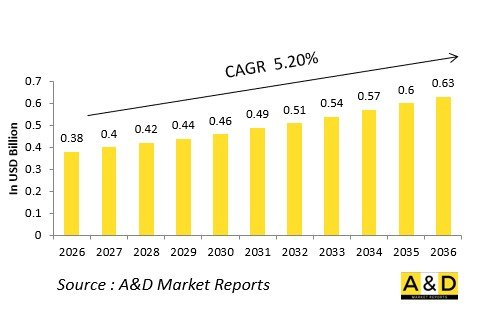
The Global Defense SATCOM domes market is estimated at USD 0.38 billion in 2026, projected to grow to USD 0.63 billion by 2036 at a Compound Annual Growth Rate (CAGR) of 5.20% over the forecast period 2026-2036.
Introduction:
The Global defense SATCOM domes market stands at the forefront of secure military communications, enabling resilient satellite links for command, control, and intelligence operations. These specialized enclosures protect antennas from harsh environments while ensuring uninterrupted connectivity in contested battlespaces. As geopolitical tensions escalate and multi-domain warfare evolves, demand surges for advanced domes integrating phased-array technologies and low-observable designs. Key innovations include adaptive beamforming and anti-jam capabilities, vital for naval vessels, ground stations, and airborne platforms. Major players invest heavily in ruggedized materials like radomes with enhanced RF transparency and stealth features to counter electronic warfare threats. The market benefits from rising defense budgets worldwide, prioritizing network-centric operations. Emerging applications extend to hypersonic platforms and unmanned systems, where compact, high-throughput domes maintain superiority. Overall, this sector promises sustained growth, driven by the need for seamless, secure SATCOM in increasingly complex operational theaters.
Technology Impact in Defense SATCOM Domes
Technological advancements profoundly shape defense SATCOM domes, elevating performance in bandwidth-intensive missions. Phased-array antennas embedded within domes enable electronic beam steering, eliminating mechanical gimbals for faster tracking and reduced vulnerability. Multi-band operations support simultaneous X, Ku, and Ka frequencies, optimizing spectrum use amid spectrum congestion. Materials science breakthroughs yield lightweight composites with superior dielectric properties, minimizing signal loss and boosting gain. Anti-jam and low-probability-of-intercept features integrate into dome designs, incorporating gallium nitride amplifiers for high-power resilience. Artificial intelligence enhances dome autonomy, predicting interference and dynamically adjusting waveforms. Integration with software-defined radios allows seamless upgrades, extending lifecycle utility. These innovations reduce size, weight, and power demands, critical for mobile platforms like warships and UAVs. Consequently, SATCOM domes evolve from passive shields to active enablers of tactical superiority, transforming how forces maintain information dominance in denied environments.
Key Drivers in Defense SATCOM Domes
Several forces propel the defense SATCOM domes market forward. Heightened great-power competition demands robust, jam-resistant communications to sustain joint operations across air, land, sea, and space domains. Modernization programs replace legacy systems with next-generation domes featuring wideband capabilities for real-time data sharing. Electrification of naval fleets and expansion of drone swarms necessitate compact, conformal designs enduring extreme conditions. Regulatory pushes for spectrum efficiency and cybersecurity standards spur adoption of advanced radome technologies. Supply chain resilience emerges as a driver, with nations diversifying sourcing to mitigate geopolitical risks. Interoperability requirements under allied frameworks like NATO accelerate standardized dome deployments. Climate-resilient materials address rising operational demands in polar and desert theaters. Investment in counter-space capabilities indirectly boosts dome sales, as adversaries target satellites, heightening needs for proliferated low-Earth orbit terminals. Collectively, these drivers position SATCOM domes as indispensable for future-proofed defense architectures.
Regional Trends in Defense SATCOM Domes
Regional dynamics reveal distinct trends in the defense SATCOM domes landscape. North America leads with aggressive procurement for carrier strike groups and expeditionary forces, emphasizing stealthy, high-frequency domes. Europe focuses on collaborative programs enhancing NATO interoperability, prioritizing multi-orbit compatibility amid Eastern flank tensions. Asia-Pacific sees rapid expansion, fueled by maritime disputes and indigenous production ramps in key powers. Indo-Pacific allies invest in mobile domes for island-hopping scenarios, integrating 5G-augmented links. Middle East markets prioritize desert-hardened variants for persistent surveillance networks. Emerging trends include localization efforts in South America and Africa, driven by peacekeeping mandates and border security. Cross-regional partnerships accelerate technology transfers, blending U.S. innovation with European manufacturing prowess. Overall, proliferation of low-cost proliferated constellations spurs demand for affordable, scalable domes tailored to regional threats.
Key Defense SATCOM Domes Programs
Prominent defense SATCOM domes programs underscore strategic priorities worldwide. Naval initiatives feature enterprise-wide upgrades for destroyer and submarine fleets, deploying flat-panel domes with automated tracking for blue-water dominance. Airborne programs equip strategic bombers and tankers with low-drag enclosures supporting beyond-line-of-sight relays. Ground-based efforts include tactical vehicle kits with rapid-deploy radomes for special operations. Collaborative allied ventures develop common apertures interoperable across constellations, reducing logistical burdens. Hypersonic testbeds integrate experimental domes resilient to aero-thermal stresses. Unmanned systems programs embed miniaturized variants in loyal wingman drones and undersea vehicles. Key milestones involve live-fire survivability demos and multi-domain exercises validating performance. These programs not only field cutting-edge hardware but also pioneer sustainment models like modular upgrades, ensuring long-term relevance amid evolving threats.
Table of Contents
Defense SATCOM Domes Market - Table of Contents
Defense SATCOM Domes Market Report Definition
Defense SATCOM Domes Market Segmentation
By Region
By Platform
By Size
By Material
Defense SATCOM Domes Market Analysis for next 10 Years
The 10-year Defense SATCOM Domes Market analysis would give a detailed overview of Defense SATCOM Domes Market growth, changing dynamics, technology adoption overviews and the overall market attractiveness is covered in this chapter.
Market Technologies of Defense SATCOM Domes Market
This segment covers the top 10 technologies that is expected to impact this market and the possible implications these technologies would have on the overall market.
Global Defense SATCOM Domes Market Forecast
The 10-year Defense SATCOM Domes Market forecast of this market is covered in detailed across the segments which are mentioned above.
Regional Defense SATCOM Domes Market Trends & Forecast
The regional counter drone market trends, drivers, restraints and Challenges of this market, the Political, Economic, Social and Technology aspects are covered in this segment. The market forecast and scenario analysis across regions are also covered in detailed in this segment. The last part of the regional analysis includes profiling of the key companies, supplier landscape and company benchmarking. The current market size is estimated based on the normal scenario.
North America
Drivers, Restraints and Challenges
PEST
Market Forecast & Scenario Analysis
Key Companies
Supplier Tier Landscape
Company Benchmarking
Europe
Middle East
APAC
South America
Country Analysis of Defense SATCOM Domes Market
This chapter deals with the key defense programs in this market, it also covers the latest news and patents which have been filed in this market. Country level 10 year market forecast and scenario analysis are also covered in this chapter.
US
Defense Programs
Latest News
Patents
Current levels of technology maturation in this market
Market Forecast & Scenario Analysis
Canada
Italy
France
Germany
Netherlands
Belgium
Spain
Sweden
Greece
Australia
South Africa
India
China
Russia
South Korea
Japan
Malaysia
Singapore
Brazil
Opportunity Matrix for Defense SATCOM Domes Market
The opportunity matrix helps the readers understand the high opportunity segments in this market.
Expert Opinions on Defense SATCOM Domes Market Report
Hear from our experts their opinion of the possible analysis for this market.
Conclusions
About Aviation and Defense Market Reports
List of Tables
- Table 1: 10 Year Market Outlook, 2026-2036
- Table 2: Drivers, Impact Analysis, North America
- Table 3: Restraints, Impact Analysis, North America
- Table 4: Challenges, Impact Analysis, North America
- Table 5: Drivers, Impact Analysis, Europe
- Table 6: Restraints, Impact Analysis, Europe
- Table 7: Challenges, Impact Analysis, Europe
- Table 8: Drivers, Impact Analysis, Middle East
- Table 9: Restraints, Impact Analysis, Middle East
- Table 10: Challenges, Impact Analysis, Middle East
- Table 11: Drivers, Impact Analysis, APAC
- Table 12: Restraints, Impact Analysis, APAC
- Table 13: Challenges, Impact Analysis, APAC
- Table 14: Drivers, Impact Analysis, South America
- Table 15: Restraints, Impact Analysis, South America
- Table 16: Challenges, Impact Analysis, South America
- Table 17: Scenario Analysis, Scenario 1, By Size, 2026-2036
- Table 18: Scenario Analysis, Scenario 1, By Platform, 2026-2036
- Table 19: Scenario Analysis, Scenario 1, By Region, 2026-2036
- Table 20: Scenario Analysis, Scenario 2, By Size, 2026-2036
- Table 21: Scenario Analysis, Scenario 2, By Platform, 2026-2036
- Table 22: Scenario Analysis, Scenario 2, By Region, 2026-2036
List of Figures
- Figure 1: Global Defense Satcom Domes Market Forecast, 2026-2036
- Figure 2: Global Defense Satcom Domes Market Forecast, By Size, 2026-2036
- Figure 3: Global Defense Satcom Domes Market Forecast, By Platform, 2026-2036
- Figure 4: Global Defense Satcom Domes Market Forecast, By Region, 2026-2036
- Figure 5: North America, Defense Satcom Domes Market, Forecast, 2026-2036
- Figure 6: Europe, Defense Satcom Domes Market, Forecast, 2026-2036
- Figure 7: Middle East, Defense Satcom Domes Market, Forecast, 2026-2036
- Figure 8: APAC, Defense Satcom Domes Market, Forecast, 2026-2036
- Figure 9: South America, Defense Satcom Domes Market, Forecast, 2026-2036
- Figure 10: United States, Defense Satcom Domes Market, Technology Maturation, 2026-2036
- Figure 11: United States, Defense Satcom Domes Market, Forecast, 2026-2036
- Figure 12: Canada, Defense Satcom Domes Market, Technology Maturation, 2026-2036
- Figure 13: Canada, Defense Satcom Domes Market, Forecast, 2026-2036
- Figure 14: Italy, Defense Satcom Domes Market, Technology Maturation, 2026-2036
- Figure 15: Italy, Defense Satcom Domes Market, Market Forecast, 2026-2036
- Figure 16: France, Defense Satcom Domes Market, Technology Maturation, 2026-2036
- Figure 17: France, Defense Satcom Domes Market, Market Forecast, 2026-2036
- Figure 18: Germany, Defense Satcom Domes Market, Technology Maturation, 2026-2036
- Figure 19: Germany, Defense Satcom Domes Market, Market Forecast, 2026-2036
- Figure 20: Netherlands, Defense Satcom Domes Market, Technology Maturation, 2026-2036
- Figure 21: Netherlands, Defense Satcom Domes Market, Market Forecast, 2026-2036
- Figure 22: Belgium, Defense Satcom Domes Market, Technology Maturation, 2026-2036
- Figure 23: Belgium, Defense Satcom Domes Market, Market Forecast, 2026-2036
- Figure 24: Spain, Defense Satcom Domes Market, Technology Maturation, 2026-2036
- Figure 25: Spain, Defense Satcom Domes Market, Market Forecast, 2026-2036
- Figure 26: Sweden, Defense Satcom Domes Market, Technology Maturation, 2026-2036
- Figure 27: Sweden, Defense Satcom Domes Market, Forecast, 2026-2036
- Figure 28: Brazil, Defense Satcom Domes Market, Technology Maturation, 2026-2036
- Figure 29: Brazil, Defense Satcom Domes Market, Market Forecast, 2026-2036
- Figure 30: Australia, Defense Satcom Domes Market, Technology Maturation, 2026-2036
- Figure 31: Australia, Defense Satcom Domes Market, Market Forecast, 2026-2036
- Figure 32: India, Defense Satcom Domes Market, Technology Maturation, 2026-2036
- Figure 33: India, Defense Satcom Domes Market, Market Forecast, 2026-2036
- Figure 34: China, Defense Satcom Domes Market, Technology Maturation, 2026-2036
- Figure 35: China, Defense Satcom Domes Market, Market Forecast, 2026-2036
- Figure 36: Saudi Arabia, Defense Satcom Domes Market, Technology Maturation, 2026-2036
- Figure 37: Saudi Arabia, Defense Satcom Domes Market, Market Forecast, 2026-2036
- Figure 38: South Korea, Defense Satcom Domes Market, Technology Maturation, 2026-2036
- Figure 39: South Korea, Defense Satcom Domes Market, Market Forecast, 2026-2036
- Figure 40: Japan, Defense Satcom Domes Market, Technology Maturation, 2026-2036
- Figure 41: Japan, Defense Satcom Domes Market, Market Forecast, 2026-2036
- Figure 42: Malaysia, Defense Satcom Domes Market, Technology Maturation, 2026-2036
- Figure 43: Malaysia, Defense Satcom Domes Market, Market Forecast, 2026-2036
- Figure 44: Singapore, Defense Satcom Domes Market, Technology Maturation, 2026-2036
- Figure 45: Singapore, Defense Satcom Domes Market, Market Forecast, 2026-2036
- Figure 46: United Kingdom, Defense Satcom Domes Market, Technology Maturation, 2026-2036
- Figure 47: United Kingdom, Defense Satcom Domes Market, Market Forecast, 2026-2036
- Figure 48: Opportunity Analysis, Defense Satcom Domes Market, By Size(Cumulative Market), 2026-2036
- Figure 49: Opportunity Analysis, Defense Satcom Domes Market, By Size(CAGR), 2026-2036
- Figure 50: Opportunity Analysis, Defense Satcom Domes Market, By (Cumulative Market), 2026-2036
- Figure 51: Opportunity Analysis, Defense Satcom Domes Market, By Platform(CAGR), 2026-2036
- Figure 52: Opportunity Analysis, Defense Satcom Domes Market, By Region (Cumulative Market), 2026-2036
- Figure 53: Opportunity Analysis, Defense Satcom Domes Market, By Region (CAGR), 2026-2036
- Figure 54: Scenario Analysis, Defense Satcom Domes Market, Cumulative Market, 2026-2036
- Figure 55: Scenario Analysis, Defense Satcom Domes Market, Global Market, 2026-2036
- Figure 56: Scenario 1, Defense Satcom Domes Market, Total Market, 2026-2036
- Figure 57: Scenario 1, Defense Satcom Domes Market, By Size, 2026-2036
- Figure 58: Scenario 1, Defense Satcom Domes Market, By Platform, 2026-2036
- Figure 59: Scenario 1, Defense Satcom Domes Market, By Region, 2026-2036
- Figure 60: Scenario 2, Defense Satcom Domes Market, Total Market, 2026-2036
- Figure 61: Scenario 2, Defense Satcom Domes Market, By Size, 2026-2036
- Figure 62: Scenario 2, Defense Satcom Domes Market, By Platform, 2026-2036
- Figure 63: Scenario 2, Defense Satcom Domes Market, By Region, 2026-2036
- Figure 64: Company Benchmark, Defense Satcom Domes Market, 2026-2036

