
PUBLISHER: Aviation & Defense Market Reports (A&D) | PRODUCT CODE: 1966915

PUBLISHER: Aviation & Defense Market Reports (A&D) | PRODUCT CODE: 1966915
Global Defense Slat / Cage Armor Market 2026-2036
Global Defense Slat / Cage Armor Market
The Global Defense Slat / Cage Armor Market is estimated at USD 0.74 billion in 2026, projected to grow to USD 1.1 billion by 2036 at a Compound Annual Growth Rate (CAGR) of 4.10% over the forecast period 2026-2036.
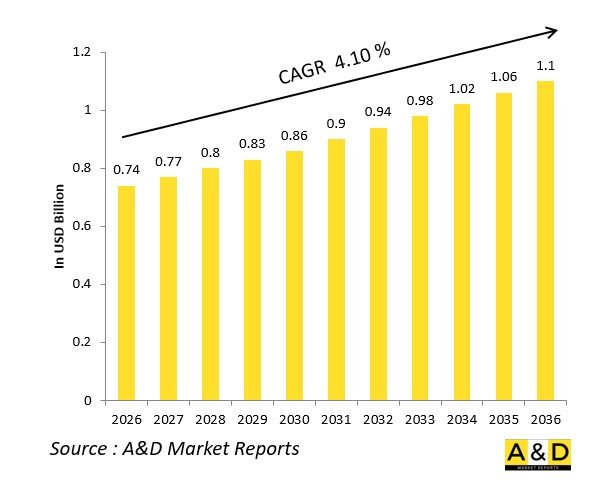
Introduction: Global Defense Slat / Cage Armor Market
The Global Defense Slat or Cage Armor Market is gaining prominence as military forces seek cost-effective solutions to improve armored vehicle survivability against prevalent battlefield threats. Slat or cage armor systems are designed to disrupt the fuzing and penetration mechanism of rocket-propelled grenades and similar weapons before they reach the vehicle hull. Their relatively simple design, ease of installation, and adaptability across multiple platforms make them attractive for both new vehicles and retrofit programs. As modern conflicts increasingly involve asymmetric warfare and urban combat environments, the demand for practical protective measures has intensified. Defense organizations value slat and cage armor for their balance between protection, weight, and operational flexibility. Manufacturers are focusing on modular designs that allow rapid deployment and maintenance in forward areas. The market continues to evolve as armed forces prioritize survivability enhancements while managing cost and mobility constraints.
Technology Impact in Defense Slat / Cage Armor
Technological progress has refined the effectiveness and adaptability of defense slat and cage armor systems. Advances in high-strength steels, aluminum alloys, and composite materials have improved structural resilience while reducing overall weight. Modern design approaches focus on optimized spacing, geometry, and mounting systems to increase disruption efficiency against incoming projectiles. Digital modeling and simulation tools enable engineers to evaluate armor performance under diverse threat scenarios, accelerating development cycles and reducing testing costs. Improved manufacturing techniques enhance consistency, durability, and ease of field repair. Integration with other protection solutions, including passive armor and active protection systems, is also becoming more common, creating layered defense architectures. Additionally, attention is being given to minimizing vehicle width increase and maintaining mobility in confined environments. These technological improvements ensure that slat and cage armor remain a relevant and effective protection option in evolving combat conditions.
Key Drivers in Defense Slat / Cage Armor
Several factors are driving the adoption of defense slat and cage armor systems across global armed forces. The widespread use of rocket-propelled grenades in irregular and urban warfare has created an urgent need for practical countermeasures. Military vehicle modernization programs frequently prioritize survivability upgrades that can be implemented quickly and economically. Slat and cage armor offer an attractive balance between cost, effectiveness, and ease of integration, especially for legacy platforms. Increasing deployments in peacekeeping, counterinsurgency, and border security operations further reinforce demand. Defense planners also value the rapid production and installation timelines associated with these systems. Budgetary constraints encourage the selection of proven, low-complexity solutions that deliver immediate protective benefits. Collaboration between defense agencies and local manufacturers supports customization to specific operational needs. Together, these drivers sustain consistent demand for slat and cage armor solutions worldwide.
Regional Trends in Defense Slat / Cage Armor
Regional trends in the defense slat and cage armor market reflect diverse threat environments and defense priorities. In North America, emphasis is placed on enhancing vehicle protection for expeditionary and urban operations, supporting continued integration of cage armor on tactical vehicles. European forces focus on upgrading existing armored fleets to address evolving security challenges and coalition deployment requirements. The Asia-Pacific region shows growing interest due to increasing defense readiness and the need for adaptable protection in varied terrains. Middle Eastern countries prioritize slat and cage armor as a response to persistent asymmetric threats and high exposure to rocket-propelled weapons. Emerging defense markets adopt these systems through technology partnerships and localized production initiatives. Regional procurement strategies are influenced by operational experience, budget considerations, and domestic industrial capabilities, resulting in varied design preferences and deployment scales across global markets.
Key Defense Slat / Cage Armor Program
Key defense slat and cage armor programs are centered on improving vehicle survivability through rapid and scalable protection solutions. Many armed forces have implemented retrofit initiatives to equip existing armored vehicles with modular cage armor kits. These programs emphasize ease of installation, minimal vehicle modification, and compatibility with multiple platforms. Collaborative efforts between defense ministries and industry partners focus on refining designs to address specific operational threats. Field feedback plays a critical role in iterative improvements, ensuring armor effectiveness in real combat conditions. Domestic manufacturing programs support supply chain resilience and enable faster delivery to deployed units. Some initiatives also aim to standardize armor kits across vehicle fleets to simplify logistics and maintenance. Export-oriented programs contribute to defense cooperation among allied nations. Collectively, these programs highlight the continued relevance of slat and cage armor in modern military protection strategies.
Table of Contents
Global Defense Slat / Cage Armor Market - Table of Contents
Global Defense Slat / Cage Armor Market Report Definition
Global Defense Slat / Cage Armor Market Segmentation
By Region
By Platform
By Material Type
By Design Type
Global Defense Slat / Cage Armor Market Analysis for next 10 Years
The 10-year Global Defense Slat / Cage Armor Market analysis would give a detailed overview of Global Defense Slat / Cage Armor Market growth, changing dynamics, technology adoption overviews and the overall market attractiveness is covered in this chapter.
Market Technologies of Global Defense Slat / Cage Armor Market
This segment covers the top 10 technologies that is expected to impact this market and the possible implications these technologies would have on the overall market.
Global Defense Slat / Cage Armor Market Forecast
The 10-year Global Defense Slat / Cage Armor Market forecast of this market is covered in detailed across the segments which are mentioned above.
Regional Global Defense Slat / Cage Armor Market Trends & Forecast
The regional counter drone market trends, drivers, restraints and Challenges of this market, the Political, Economic, Social and Technology aspects are covered in this segment. The market forecast and scenario analysis across regions are also covered in detailed in this segment. The last part of the regional analysis includes profiling of the key companies, supplier landscape and company benchmarking. The current market size is estimated based on the normal scenario.
North America
Drivers, Restraints and Challenges
PEST
Market Forecast & Scenario Analysis
Key Companies
Supplier Tier Landscape
Company Benchmarking
Europe
Middle East
APAC
South America
Country Analysis of Global Defense Slat / Cage Armor Market
This chapter deals with the key defense programs in this market, it also covers the latest news and patents which have been filed in this market. Country level 10 year market forecast and scenario analysis are also covered in this chapter.
US
Defense Programs
Latest News
Patents
Current levels of technology maturation in this market
Market Forecast & Scenario Analysis
Canada
Italy
France
Germany
Netherlands
Belgium
Spain
Sweden
Greece
Australia
South Africa
India
China
Russia
South Korea
Japan
Malaysia
Singapore
Brazil
Opportunity Matrix for Global Defense Slat / Cage Armor Market
The opportunity matrix helps the readers understand the high opportunity segments in this market.
Expert Opinions on Global Defense Slat / Cage Armor Market Report
Hear from our experts their opinion of the possible analysis for this market.
Conclusions
About Aviation and Defense Market Reports
List of Tables
- Table 1: 10 Year Market Outlook, 2026-2036
- Table 2: Drivers, Impact Analysis, North America
- Table 3: Restraints, Impact Analysis, North America
- Table 4: Challenges, Impact Analysis, North America
- Table 5: Drivers, Impact Analysis, Europe
- Table 6: Restraints, Impact Analysis, Europe
- Table 7: Challenges, Impact Analysis, Europe
- Table 8: Drivers, Impact Analysis, Middle East
- Table 9: Restraints, Impact Analysis, Middle East
- Table 10: Challenges, Impact Analysis, Middle East
- Table 11: Drivers, Impact Analysis, APAC
- Table 12: Restraints, Impact Analysis, APAC
- Table 13: Challenges, Impact Analysis, APAC
- Table 14: Drivers, Impact Analysis, South America
- Table 15: Restraints, Impact Analysis, South America
- Table 16: Challenges, Impact Analysis, South America
- Table 17: Scenario Analysis, Scenario 1, By Material Type, 2026-2036
- Table 18: Scenario Analysis, Scenario 1, By Platform, 2026-2036
- Table 19: Scenario Analysis, Scenario 1, By Region, 2026-2036
- Table 20: Scenario Analysis, Scenario 2, By Material Type, 2026-2036
- Table 21: Scenario Analysis, Scenario 2, By Platform, 2026-2036
- Table 22: Scenario Analysis, Scenario 2, By Region, 2026-2036
List of Figures
- Figure 1: Global Defense Slat / Cage Armor Market Forecast, 2026-2036
- Figure 2: Global Defense Slat / Cage Armor Market Forecast, By Material Type, 2026-2036
- Figure 3: Global Defense Slat / Cage Armor Market Forecast, By Platform, 2026-2036
- Figure 4: Global Defense Slat / Cage Armor Market Forecast, By Region, 2026-2036
- Figure 5: North America, Defense Slat / Cage Armor Market, Forecast, 2026-2036
- Figure 6: Europe, Defense Slat / Cage Armor Market, Forecast, 2026-2036
- Figure 7: Middle East, Defense Slat / Cage Armor Market, Forecast, 2026-2036
- Figure 8: APAC, Defense Slat / Cage Armor Market, Forecast, 2026-2036
- Figure 9: South America, Defense Slat / Cage Armor Market, Forecast, 2026-2036
- Figure 10: United States, Defense Slat / Cage Armor Market, Material Type Maturation, 2026-2036
- Figure 11: United States, Defense Slat / Cage Armor Market, Forecast, 2026-2036
- Figure 12: Canada, Defense Slat / Cage Armor Market, Material Type Maturation, 2026-2036
- Figure 13: Canada, Defense Slat / Cage Armor Market, Forecast, 2026-2036
- Figure 14: Italy, Defense Slat / Cage Armor Market, Material Type Maturation, 2026-2036
- Figure 15: Italy, Defense Slat / Cage Armor Market, Market Forecast, 2026-2036
- Figure 16: France, Defense Slat / Cage Armor Market, Material Type Maturation, 2026-2036
- Figure 17: France, Defense Slat / Cage Armor Market, Market Forecast, 2026-2036
- Figure 18: Germany, Defense Slat / Cage Armor Market, Material Type Maturation, 2026-2036
- Figure 19: Germany, Defense Slat / Cage Armor Market, Market Forecast, 2026-2036
- Figure 20: Netherlands, Defense Slat / Cage Armor Market, Material Type Maturation, 2026-2036
- Figure 21: Netherlands, Defense Slat / Cage Armor Market, Market Forecast, 2026-2036
- Figure 22: Belgium, Defense Slat / Cage Armor Market, Material Type Maturation, 2026-2036
- Figure 23: Belgium, Defense Slat / Cage Armor Market, Market Forecast, 2026-2036
- Figure 24: Spain, Defense Slat / Cage Armor Market, Material Type Maturation, 2026-2036
- Figure 25: Spain, Defense Slat / Cage Armor Market, Market Forecast, 2026-2036
- Figure 26: Sweden, Defense Slat / Cage Armor Market, Material Type Maturation, 2026-2036
- Figure 27: Sweden, Defense Slat / Cage Armor Market, Forecast, 2026-2036
- Figure 28: Brazil, Defense Slat / Cage Armor Market, Material Type Maturation, 2026-2036
- Figure 29: Brazil, Defense Slat / Cage Armor Market, Market Forecast, 2026-2036
- Figure 30: Australia, Defense Slat / Cage Armor Market, Material Type Maturation, 2026-2036
- Figure 31: Australia, Defense Slat / Cage Armor Market, Market Forecast, 2026-2036
- Figure 32: India, Defense Slat / Cage Armor Market, Material Type Maturation, 2026-2036
- Figure 33: India, Defense Slat / Cage Armor Market, Market Forecast, 2026-2036
- Figure 34: China, Defense Slat / Cage Armor Market, Material Type Maturation, 2026-2036
- Figure 35: China, Defense Slat / Cage Armor Market, Market Forecast, 2026-2036
- Figure 36: Saudi Arabia, Defense Slat / Cage Armor Market, Material Type Maturation, 2026-2036
- Figure 37: Saudi Arabia, Defense Slat / Cage Armor Market, Market Forecast, 2026-2036
- Figure 38: South Korea, Defense Slat / Cage Armor Market, Material Type Maturation, 2026-2036
- Figure 39: South Korea, Defense Slat / Cage Armor Market, Market Forecast, 2026-2036
- Figure 40: Japan, Defense Slat / Cage Armor Market, Material Type Maturation, 2026-2036
- Figure 41: Japan, Defense Slat / Cage Armor Market, Market Forecast, 2026-2036
- Figure 42: Malaysia, Defense Slat / Cage Armor Market, Material Type Maturation, 2026-2036
- Figure 43: Malaysia, Defense Slat / Cage Armor Market, Market Forecast, 2026-2036
- Figure 44: Singapore, Defense Slat / Cage Armor Market, Material Type Maturation, 2026-2036
- Figure 45: Singapore, Defense Slat / Cage Armor Market, Market Forecast, 2026-2036
- Figure 46: United Kingdom, Defense Slat / Cage Armor Market, Material Type Maturation, 2026-2036
- Figure 47: United Kingdom, Defense Slat / Cage Armor Market, Market Forecast, 2026-2036
- Figure 48: Opportunity Analysis, Defense Slat / Cage Armor Market, By Material Type(Cumulative Market), 2026-2036
- Figure 49: Opportunity Analysis, Defense Slat / Cage Armor Market, By Material Type(CAGR), 2026-2036
- Figure 50: Opportunity Analysis, Defense Slat / Cage Armor Market, By (Cumulative Market), 2026-2036
- Figure 51: Opportunity Analysis, Defense Slat / Cage Armor Market, By Platform(CAGR), 2026-2036
- Figure 52: Opportunity Analysis, Defense Slat / Cage Armor Market, By Region (Cumulative Market), 2026-2036
- Figure 53: Opportunity Analysis, Defense Slat / Cage Armor Market, By Region (CAGR), 2026-2036
- Figure 54: Scenario Analysis, Defense Slat / Cage Armor Market, Cumulative Market, 2026-2036
- Figure 55: Scenario Analysis, Defense Slat / Cage Armor Market, Global Market, 2026-2036
- Figure 56: Scenario 1, Defense Slat / Cage Armor Market, Total Market, 2026-2036
- Figure 57: Scenario 1, Defense Slat / Cage Armor Market, By Material Type, 2026-2036
- Figure 58: Scenario 1, Defense Slat / Cage Armor Market, By Platform, 2026-2036
- Figure 59: Scenario 1, Defense Slat / Cage Armor Market, By Region, 2026-2036
- Figure 60: Scenario 2, Defense Slat / Cage Armor Market, Total Market, 2026-2036
- Figure 61: Scenario 2, Defense Slat / Cage Armor Market, By Material Type, 2026-2036
- Figure 62: Scenario 2, Defense Slat / Cage Armor Market, By Platform, 2026-2036
- Figure 63: Scenario 2, Defense Slat / Cage Armor Market, By Region, 2026-2036
- Figure 64: Company Benchmark, Defense Slat / Cage Armor Market, 2026-2036

