PUBLISHER: Aviation & Defense Market Reports (A&D) | PRODUCT CODE: 1966920

PUBLISHER: Aviation & Defense Market Reports (A&D) | PRODUCT CODE: 1966920
Global Defense Fire Suppression Systems (Halon) Market 2026-2036
Global Defense Fire Suppression Systems (Halon) Market
The Global Defense Fire Suppression Systems (Halon) Market is estimated at USD 0.92 billion in 2026, projected to grow to USD 1.37 billion by 2036 at a Compound Annual Growth Rate (CAGR) of 4.10 % over the forecast period 2026-2036.
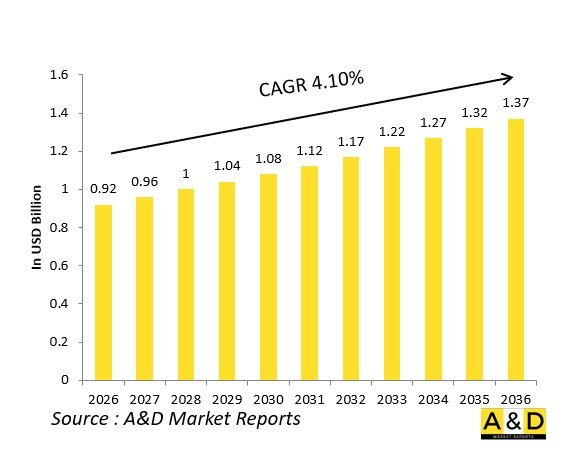
Introduction: Global Defense Fire Suppression Systems (Halon) Market
The Global Defense Fire Suppression Systems Market based on halon agents remains a critical segment within military safety and survivability infrastructure. Halon fire suppression systems are widely used across defense platforms due to their rapid flame knockdown capability, effectiveness in confined spaces, and minimal residue impact on sensitive equipment. These systems are deployed in armored vehicles, aircraft, naval vessels, command centers, and ammunition storage areas where rapid fire control is essential. Defense forces continue to rely on halon-based solutions to protect personnel, mission-critical electronics, and high-value assets. Despite environmental concerns, halon systems remain in service due to their proven reliability and lack of equally effective direct replacements for certain defense applications. Ongoing maintenance, refurbishment, and controlled use programs support sustained demand. The market is shaped by safety regulations, platform modernization initiatives, and the enduring need for fast-acting fire suppression in combat and operational environments.
Technology Impact in Defense Fire Suppression Systems (Halon)
Technological advancements have improved the reliability and efficiency of halon-based fire suppression systems used in defense applications. Enhancements in detection sensors allow faster identification of fire or overheating conditions, enabling immediate system activation. Improved discharge mechanisms ensure precise agent release, optimizing fire suppression while minimizing agent consumption. Integration with automated control systems allows coordinated response across multiple compartments or platforms. Advances in system diagnostics and monitoring enhance maintenance efficiency and operational readiness. Modern container designs improve storage safety and resistance to vibration, shock, and extreme environmental conditions. Additionally, hybrid system architectures combine halon with alternative agents or inert gases to reduce environmental impact while maintaining performance. Digital simulation tools support system optimization for platform-specific requirements. These technological improvements help extend the operational life of halon systems while aligning them with evolving defense safety and performance standards.
Key Drivers in Defense Fire Suppression Systems (Halon)
Several key factors continue to drive demand for halon-based fire suppression systems in the defense sector. The need for rapid and effective fire control in confined and high-risk environments remains paramount. Military platforms increasingly rely on advanced electronics and munitions that are highly sensitive to heat and fire damage, reinforcing the value of clean-agent suppression solutions. Existing fleets equipped with halon systems require ongoing servicing, replacement parts, and certified refilling programs. Regulatory exemptions for critical defense applications allow continued use where no suitable alternatives exist. Modernization and life-extension programs for aircraft, naval vessels, and armored vehicles further sustain market demand. Emphasis on crew safety, mission continuity, and asset protection supports continued investment. Additionally, global defense operations in extreme environments heighten the importance of proven, fast-response fire suppression technologies.
Regional Trends in Defense Fire Suppression Systems (Halon)
Regional trends in the defense halon fire suppression systems market reflect differences in fleet composition, regulatory frameworks, and operational requirements. North America maintains strong demand due to large inventories of legacy aircraft and armored platforms requiring halon system support. European defense forces focus on maintaining existing systems while gradually integrating environmentally compliant alternatives where feasible. In the Asia-Pacific region, expanding defense capabilities and fleet modernization programs drive demand for both maintenance and new installations. Middle Eastern defense forces prioritize fire suppression reliability due to extreme operating conditions and high-value assets. Emerging defense markets rely on imported systems and service agreements to support operational readiness. Regional access to halon banking programs and certified recycling facilities influences supply continuity. Overall, regional trends highlight the ongoing reliance on halon systems for critical defense fire protection needs.
Key Defense Fire Suppression Systems (Halon) Program
Key defense fire suppression system programs centered on halon focus on sustaining operational safety across diverse military platforms. These programs emphasize inspection, certification, refurbishment, and controlled replenishment of halon systems already in service. Defense ministries collaborate with certified suppliers to ensure compliance with safety standards and environmental regulations. Platform upgrade initiatives often include fire detection and suppression system enhancements to improve response speed and reliability. Programs also support halon recycling and banking to ensure long-term availability for essential defense applications. Research initiatives explore hybrid and transitional solutions that maintain halon-level performance while reducing environmental impact. Domestic maintenance and servicing programs strengthen supply chain security and readiness. Collectively, these programs underscore the continued strategic importance of halon-based fire suppression systems in safeguarding personnel, equipment, and mission-critical defense assets.
Table of Contents
Global Defense Fire Suppression Systems (Halon) Market - Table of Contents
Global Defense Fire Suppression Systems (Halon) Market Report Definition
Global Defense Fire Suppression Systems (Halon) Market Segmentation
By Region
By Platform
By System Type
By Extinguishing Agent
Global Defense Fire Suppression Systems (Halon) Market Analysis for next 10 Years
The 10-year Global Defense Fire Suppression Systems (Halon) Market analysis would give a detailed overview of Global Defense Fire Suppression Systems (Halon) Market growth, changing dynamics, technology adoption overviews and the overall market attractiveness is covered in this chapter.
Market Technologies of Global Defense Fire Suppression Systems (Halon) Market
This segment covers the top 10 technologies that is expected to impact this market and the possible implications these technologies would have on the overall market.
Global Defense Fire Suppression Systems (Halon) Market Forecast
The 10-year Global Defense Fire Suppression Systems (Halon) Market forecast of this market is covered in detailed across the segments which are mentioned above.
Regional Global Defense Fire Suppression Systems (Halon) Market Trends & Forecast
The regional counter drone market trends, drivers, restraints and Challenges of this market, the Political, Economic, Social and Technology aspects are covered in this segment. The market forecast and scenario analysis across regions are also covered in detailed in this segment. The last part of the regional analysis includes profiling of the key companies, supplier landscape and company benchmarking. The current market size is estimated based on the normal scenario.
North America
Drivers, Restraints and Challenges
PEST
Market Forecast & Scenario Analysis
Key Companies
Supplier Tier Landscape
Company Benchmarking
Europe
Middle East
APAC
South America
Country Analysis of Global Defense Fire Suppression Systems (Halon) Market
This chapter deals with the key defense programs in this market, it also covers the latest news and patents which have been filed in this market. Country level 10 year market forecast and scenario analysis are also covered in this chapter.
US
Defense Programs
Latest News
Patents
Current levels of technology maturation in this market
Market Forecast & Scenario Analysis
Canada
Italy
France
Germany
Netherlands
Belgium
Spain
Sweden
Greece
Australia
South Africa
India
China
Russia
South Korea
Japan
Malaysia
Singapore
Brazil
Opportunity Matrix for Global Defense Fire Suppression Systems (Halon) Market
The opportunity matrix helps the readers understand the high opportunity segments in this market.
Expert Opinions on Global Defense Fire Suppression Systems (Halon) Market Report
Hear from our experts their opinion of the possible analysis for this market.
Conclusions
About Aviation and Defense Market Reports
List of Tables
- Table 1: 10 Year Market Outlook, 2026-2036
- Table 2: Drivers, Impact Analysis, North America
- Table 3: Restraints, Impact Analysis, North America
- Table 4: Challenges, Impact Analysis, North America
- Table 5: Drivers, Impact Analysis, Europe
- Table 6: Restraints, Impact Analysis, Europe
- Table 7: Challenges, Impact Analysis, Europe
- Table 8: Drivers, Impact Analysis, Middle East
- Table 9: Restraints, Impact Analysis, Middle East
- Table 10: Challenges, Impact Analysis, Middle East
- Table 11: Drivers, Impact Analysis, APAC
- Table 12: Restraints, Impact Analysis, APAC
- Table 13: Challenges, Impact Analysis, APAC
- Table 14: Drivers, Impact Analysis, South America
- Table 15: Restraints, Impact Analysis, South America
- Table 16: Challenges, Impact Analysis, South America
- Table 17: Scenario Analysis, Scenario 1, By System Type, 2026-2036
- Table 18: Scenario Analysis, Scenario 1, By Platform, 2026-2036
- Table 19: Scenario Analysis, Scenario 1, By Region, 2026-2036
- Table 20: Scenario Analysis, Scenario 2, By System Type, 2026-2036
- Table 21: Scenario Analysis, Scenario 2, By Platform, 2026-2036
- Table 22: Scenario Analysis, Scenario 2, By Region, 2026-2036
List of Figures
- Figure 1: Global Defense Fire Suppression Systems (Halon) Market Forecast, 2026-2036
- Figure 2: Global Defense Fire Suppression Systems (Halon) Market Forecast, By System Type, 2026-2036
- Figure 3: Global Defense Fire Suppression Systems (Halon) Market Forecast, By Platform, 2026-2036
- Figure 4: Global Defense Fire Suppression Systems (Halon) Market Forecast, By Region, 2026-2036
- Figure 5: North America, Defense Fire Suppression Systems (Halon) Market, Forecast, 2026-2036
- Figure 6: Europe, Defense Fire Suppression Systems (Halon) Market, Forecast, 2026-2036
- Figure 7: Middle East, Defense Fire Suppression Systems (Halon) Market, Forecast, 2026-2036
- Figure 8: APAC, Defense Fire Suppression Systems (Halon) Market, Forecast, 2026-2036
- Figure 9: South America, Defense Fire Suppression Systems (Halon) Market, Forecast, 2026-2036
- Figure 10: United States, Defense Fire Suppression Systems (Halon) Market, System Type Maturation, 2026-2036
- Figure 11: United States, Defense Fire Suppression Systems (Halon) Market, Forecast, 2026-2036
- Figure 12: Canada, Defense Fire Suppression Systems (Halon) Market, System Type Maturation, 2026-2036
- Figure 13: Canada, Defense Fire Suppression Systems (Halon) Market, Forecast, 2026-2036
- Figure 14: Italy, Defense Fire Suppression Systems (Halon) Market, System Type Maturation, 2026-2036
- Figure 15: Italy, Defense Fire Suppression Systems (Halon) Market, Market Forecast, 2026-2036
- Figure 16: France, Defense Fire Suppression Systems (Halon) Market, System Type Maturation, 2026-2036
- Figure 17: France, Defense Fire Suppression Systems (Halon) Market, Market Forecast, 2026-2036
- Figure 18: Germany, Defense Fire Suppression Systems (Halon) Market, System Type Maturation, 2026-2036
- Figure 19: Germany, Defense Fire Suppression Systems (Halon) Market, Market Forecast, 2026-2036
- Figure 20: Netherlands, Defense Fire Suppression Systems (Halon) Market, System Type Maturation, 2026-2036
- Figure 21: Netherlands, Defense Fire Suppression Systems (Halon) Market, Market Forecast, 2026-2036
- Figure 22: Belgium, Defense Fire Suppression Systems (Halon) Market, System Type Maturation, 2026-2036
- Figure 23: Belgium, Defense Fire Suppression Systems (Halon) Market, Market Forecast, 2026-2036
- Figure 24: Spain, Defense Fire Suppression Systems (Halon) Market, System Type Maturation, 2026-2036
- Figure 25: Spain, Defense Fire Suppression Systems (Halon) Market, Market Forecast, 2026-2036
- Figure 26: Sweden, Defense Fire Suppression Systems (Halon) Market, System Type Maturation, 2026-2036
- Figure 27: Sweden, Defense Fire Suppression Systems (Halon) Market, Forecast, 2026-2036
- Figure 28: Brazil, Defense Fire Suppression Systems (Halon) Market, System Type Maturation, 2026-2036
- Figure 29: Brazil, Defense Fire Suppression Systems (Halon) Market, Market Forecast, 2026-2036
- Figure 30: Australia, Defense Fire Suppression Systems (Halon) Market, System Type Maturation, 2026-2036
- Figure 31: Australia, Defense Fire Suppression Systems (Halon) Market, Market Forecast, 2026-2036
- Figure 32: India, Defense Fire Suppression Systems (Halon) Market, System Type Maturation, 2026-2036
- Figure 33: India, Defense Fire Suppression Systems (Halon) Market, Market Forecast, 2026-2036
- Figure 34: China, Defense Fire Suppression Systems (Halon) Market, System Type Maturation, 2026-2036
- Figure 35: China, Defense Fire Suppression Systems (Halon) Market, Market Forecast, 2026-2036
- Figure 36: Saudi Arabia, Defense Fire Suppression Systems (Halon) Market, System Type Maturation, 2026-2036
- Figure 37: Saudi Arabia, Defense Fire Suppression Systems (Halon) Market, Market Forecast, 2026-2036
- Figure 38: South Korea, Defense Fire Suppression Systems (Halon) Market, System Type Maturation, 2026-2036
- Figure 39: South Korea, Defense Fire Suppression Systems (Halon) Market, Market Forecast, 2026-2036
- Figure 40: Japan, Defense Fire Suppression Systems (Halon) Market, System Type Maturation, 2026-2036
- Figure 41: Japan, Defense Fire Suppression Systems (Halon) Market, Market Forecast, 2026-2036
- Figure 42: Malaysia, Defense Fire Suppression Systems (Halon) Market, System Type Maturation, 2026-2036
- Figure 43: Malaysia, Defense Fire Suppression Systems (Halon) Market, Market Forecast, 2026-2036
- Figure 44: Singapore, Defense Fire Suppression Systems (Halon) Market, System Type Maturation, 2026-2036
- Figure 45: Singapore, Defense Fire Suppression Systems (Halon) Market, Market Forecast, 2026-2036
- Figure 46: United Kingdom, Defense Fire Suppression Systems (Halon) Market, System Type Maturation, 2026-2036
- Figure 47: United Kingdom, Defense Fire Suppression Systems (Halon) Market, Market Forecast, 2026-2036
- Figure 48: Opportunity Analysis, Defense Fire Suppression Systems (Halon) Market, By System Type(Cumulative Market), 2026-2036
- Figure 49: Opportunity Analysis, Defense Fire Suppression Systems (Halon) Market, By System Type(CAGR), 2026-2036
- Figure 50: Opportunity Analysis, Defense Fire Suppression Systems (Halon) Market, By (Cumulative Market), 2026-2036
- Figure 51: Opportunity Analysis, Defense Fire Suppression Systems (Halon) Market, By Platform(CAGR), 2026-2036
- Figure 52: Opportunity Analysis, Defense Fire Suppression Systems (Halon) Market, By Region (Cumulative Market), 2026-2036
- Figure 53: Opportunity Analysis, Defense Fire Suppression Systems (Halon) Market, By Region (CAGR), 2026-2036
- Figure 54: Scenario Analysis, Defense Fire Suppression Systems (Halon) Market, Cumulative Market, 2026-2036
- Figure 55: Scenario Analysis, Defense Fire Suppression Systems (Halon) Market, Global Market, 2026-2036
- Figure 56: Scenario 1, Defense Fire Suppression Systems (Halon) Market, Total Market, 2026-2036
- Figure 57: Scenario 1, Defense Fire Suppression Systems (Halon) Market, By System Type, 2026-2036
- Figure 58: Scenario 1, Defense Fire Suppression Systems (Halon) Market, By Platform, 2026-2036
- Figure 59: Scenario 1, Defense Fire Suppression Systems (Halon) Market, By Region, 2026-2036
- Figure 60: Scenario 2, Defense Fire Suppression Systems (Halon) Market, Total Market, 2026-2036
- Figure 61: Scenario 2, Defense Fire Suppression Systems (Halon) Market, By System Type, 2026-2036
- Figure 62: Scenario 2, Defense Fire Suppression Systems (Halon) Market, By Platform, 2026-2036
- Figure 63: Scenario 2, Defense Fire Suppression Systems (Halon) Market, By Region, 2026-2036
- Figure 64: Company Benchmark, Defense Fire Suppression Systems (Halon) Market, 2026-2036

