
PUBLISHER: Aviation & Defense Market Reports (A&D) | PRODUCT CODE: 1977164

PUBLISHER: Aviation & Defense Market Reports (A&D) | PRODUCT CODE: 1977164
Global Defense Ejection Seats Market 2026-2036
Global Defense Ejection Seats Market 2026-2036
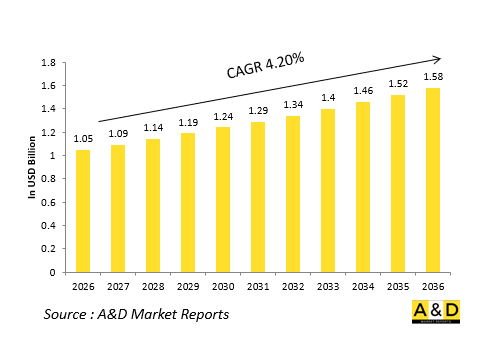
The Global Defense Ejection Seats Market is estimated at USD 1.05 billion in 2026, projected to grow to USD 1.58 billion by 2036 at a Compound Annual Growth Rate (CAGR) of 4.20% over the forecast period 2026-2036.
Introduction:
Ejection seats form the backbone of aircrew survivability in high-risk defense aviation, offering zero-zero capability to safely extract pilots from disabled aircraft at low speeds and altitudes. These sophisticated rocket-propelled systems, integrated into fighters, trainers, and attack jets, deploy parachutes, stabilization rockets, and survival kits in milliseconds, bridging the gap between catastrophe and rescue. The global market for ejection seats is primed for steady advancement, fueled by relentless pursuit of pilot retention amid intensifying aerial combat.
Core variants include canopy-separation and canopy-through designs, with emphasis on lightweight titanium frames, electronic sequencing, and personalized harnesses. Manufacturers target seamless retrofits for legacy platforms while pioneering seats for next-generation stealth aircraft. As missions evolve toward urban close air support and hypersonic regimes, ejection seats evolve into smart escape pods, incorporating beacons and auto-injectors. This market embodies the defense priority of human capital preservation, ensuring experienced aviators return to fight another day.
Technology Impact in Defense Ejection Seats Market
Cutting-edge technologies are transforming the defense ejection seat market, prioritizing precision, adaptability, and post-ejection survival. Microprocessor-controlled ballistics adjust thrust profiles in real-time based on airspeed, altitude, and g-forces, enabling safe ejections from envelopes once deemed unsurvivable. Leg restraint reels and auto-inflating flotation devices mitigate injury risks, while integrated heads-up displays provide navigation during descent.
Additive-manufactured components slash weight and enable custom anthropometrics for diverse aircrews, including women and smaller pilots. AI-driven health monitors assess pilot condition pre-ejection, sequencing oxygen and anti-g suits. Electronic arming logic prevents ground accidents, and GPS-linked beacons with encrypted comms expedite recovery in denied areas. Hybrid rocket-solid fuel motors offer variable impulse for drones and urban ops. These breakthroughs extend safe ejection envelopes to near-vertical attitudes and low-level hovers, redefining crew safety as an active combat multiplier.
Key Drivers in Defense Ejection Seats Market
Critical drivers accelerate the defense ejection seat market's momentum. Heightened operational tempos in contested airspace demand robust escape systems to safeguard skilled pilots, whose training costs rival aircraft procurement. Fleet modernization waves retrofit upgraded seats into aging platforms, extending service life without full replacements.
Diversity initiatives in air forces push inclusive designs accommodating varied body types, enhancing recruitment and retention. Regulatory mandates for zero-zero compliance in advanced trainers spur widespread adoption. Export controls loosen for allies, boosting collaborative development under security pacts. Advances in unmanned systems create hybrid seats for optional manned modes in loyal wingmen. Human factors research, informed by accident data, refines sequencing to counter spatial disorientation. These forces collectively elevate ejection seats from reactive devices to proactive enablers of aggressive tactics and sustained air superiority.
Regional Trends in Defense Ejection Seats Market
Regional priorities shape the ejection seat market, mirroring operational doctrines. North America dominates with fully sequenced zero-zero seats for carrier jets and fifth-gen fighters, emphasizing night recovery and arctic compatibility. Europe advances modular designs through joint ventures, standardizing seats for multinational fleets defending expansive borders.
Asia-Pacific focuses on lightweight variants for high-maneuverability fighters in dense air traffic, with auto-rotation parachutes for monsoon climates. The Middle East prioritizes desert-hardened seats with extended survival kits for prolonged searches. Emerging markets in Latin America and Africa emphasize affordable retrofits for counter-narcotics and peacekeeping trainers, leveraging local overhauls. Cross-regional collaborations, like technology transfers to Indo-Pacific partners, foster indigenous capabilities. Trends highlight integration with whole-airframe escape systems, tailoring survivability to threats from manpads to cyber-induced failures.
Key Defense Ejection Seats Market Programs
Signature programs spotlight the ejection seat market's forefront. The U.S. Air Force's Next Generation Seat upgrade for F-35s incorporates biometric sequencing and drone-recovery hooks, enhancing joint operations. Europe's Future Combat Air System (FCAS) demonstrator tests capsule-style ejections with enclosed survival modules for high-altitude aborts.
India's indigenous K-36 derivative refines zero-zero performance for light combat aircraft, addressing hot-and-high plateaus. Australia's collaborative trainer seat program integrates VR training interfaces, boosting pilot confidence. Sweden's Gripen evolution features electronic zero-delay arming for rapid scrambles. Israel's advanced urban escape pod bundles ECM jammers with the seat, countering shoulder-fired threats. These initiatives harness simulation fidelity for certification, pioneering soft-landing rockets and swarm-rescue protocols. They position ejection seats as networked lifelines in distributed battlefield architectures.
Table of Contents
Defense Ejection Seats Market - Table of Contents
Defense Ejection Seats Market Report Definition
Defense Ejection Seats Market Segmentation
By Region
By Platform
By Type
Defense Ejection Seats Market Analysis for next 10 Years
The 10-year Defense Ejection Seats Market analysis would give a detailed overview of Defense Ejection Seats Market growth, changing dynamics, technology adoption overviews and the overall market attractiveness is covered in this chapter.
Market Technologies of Defense Ejection Seats Market
This segment covers the top 10 technologies that is expected to impact this market and the possible implications these technologies would have on the overall market.
Global Defense Ejection Seats Market Forecast
The 10-year Defense Ejection Seats Market forecast of this market is covered in detailed across the segments which are mentioned above.
Regional Defense Ejection Seats Market Trends & Forecast
The regional counter drone market trends, drivers, restraints and Challenges of this market, the Political, Economic, Social and Technology aspects are covered in this segment. The market forecast and scenario analysis across regions are also covered in detailed in this segment. The last part of the regional analysis includes profiling of the key companies, supplier landscape and company benchmarking. The current market size is estimated based on the normal scenario.
North America
Drivers, Restraints and Challenges
PEST
Market Forecast & Scenario Analysis
Key Companies
Supplier Tier Landscape
Company Benchmarking
Europe
Middle East
APAC
South America
Country Analysis of Defense Ejection Seats Market
This chapter deals with the key defense programs in this market, it also covers the latest news and patents which have been filed in this market. Country level 10 year market forecast and scenario analysis are also covered in this chapter.
US
Defense Programs
Latest News
Patents
Current levels of technology maturation in this market
Market Forecast & Scenario Analysis
Canada
Italy
France
Germany
Netherlands
Belgium
Spain
Sweden
Greece
Australia
South Africa
India
China
Russia
South Korea
Japan
Malaysia
Singapore
Brazil
Opportunity Matrix for Defense Ejection Seats Market
The opportunity matrix helps the readers understand the high opportunity segments in this market.
Expert Opinions on Defense Ejection Seats Market Report
Hear from our experts their opinion of the possible analysis for this market.
Conclusions
About Aviation and Defense Market Reports
List of Tables
- Table 1: 10 Year Market Outlook, 2026-2036
- Table 2: Drivers, Impact Analysis, North America
- Table 3: Restraints, Impact Analysis, North America
- Table 4: Challenges, Impact Analysis, North America
- Table 5: Drivers, Impact Analysis, Europe
- Table 6: Restraints, Impact Analysis, Europe
- Table 7: Challenges, Impact Analysis, Europe
- Table 8: Drivers, Impact Analysis, Middle East
- Table 9: Restraints, Impact Analysis, Middle East
- Table 10: Challenges, Impact Analysis, Middle East
- Table 11: Drivers, Impact Analysis, APAC
- Table 12: Restraints, Impact Analysis, APAC
- Table 13: Challenges, Impact Analysis, APAC
- Table 14: Drivers, Impact Analysis, South America
- Table 15: Restraints, Impact Analysis, South America
- Table 16: Challenges, Impact Analysis, South America
- Table 17: Scenario Analysis, Scenario 1, By Region, 2026-2036
- Table 18: Scenario Analysis, Scenario 1, By Platform, 2026-2036
- Table 19: Scenario Analysis, Scenario 1, By Type, 2026-2036
- Table 20: Scenario Analysis, Scenario 2, By Region, 2026-2036
- Table 21: Scenario Analysis, Scenario 2, By Platform, 2026-2036
- Table 22: Scenario Analysis, Scenario 2, By Type, 2026-2037
List of Figures
- Figure 1: Global Defense Ejection Seats Market Forecast, 2026-2036
- Figure 2: Global Defense Ejection Seats Market Forecast, By Region, 2026-2036
- Figure 3: Global Defense Ejection Seats Market Forecast, By Platform, 2026-2036
- Figure 4: Global Defense Ejection Seats Market Forecast, By Type, 2026-2036
- Figure 5: North America, Defense Ejection Seats Market, Market Forecast, 2026-2036
- Figure 6: Europe, Defense Ejection Seats Market, Market Forecast, 2026-2036
- Figure 7: Middle East, Defense Ejection Seats Market, Market Forecast, 2026-2036
- Figure 8: APAC, Defense Ejection Seats Market, Market Forecast, 2026-2036
- Figure 9: South America, Defense Ejection Seats Market, Market Forecast, 2026-2036
- Figure 10: United States, Defense Ejection Seats Market, Technology Maturation, 2026-2036
- Figure 11: United States, Defense Ejection Seats Market, Market Forecast, 2026-2036
- Figure 12: Canada, Defense Ejection Seats Market, Technology Maturation, 2026-2036
- Figure 13: Canada, Defense Ejection Seats Market, Market Forecast, 2026-2036
- Figure 14: Italy, Defense Ejection Seats Market, Technology Maturation, 2026-2036
- Figure 15: Italy, Defense Ejection Seats Market, Market Forecast, 2026-2036
- Figure 16: France, Defense Ejection Seats Market, Technology Maturation, 2026-2036
- Figure 17: France, Defense Ejection Seats Market, Market Forecast, 2026-2036
- Figure 18: Germany, Defense Ejection Seats Market, Technology Maturation, 2026-2036
- Figure 19: Germany, Defense Ejection Seats Market, Market Forecast, 2026-2036
- Figure 20: Netherlands, Defense Ejection Seats Market, Technology Maturation, 2026-2036
- Figure 21: Netherlands, Defense Ejection Seats Market, Market Forecast, 2026-2036
- Figure 22: Belgium, Defense Ejection Seats Market, Technology Maturation, 2026-2036
- Figure 23: Belgium, Defense Ejection Seats Market, Market Forecast, 2026-2036
- Figure 24: Spain, Defense Ejection Seats Market, Technology Maturation, 2026-2036
- Figure 25: Spain, Defense Ejection Seats Market, Market Forecast, 2026-2036
- Figure 26: Sweden, Defense Ejection Seats Market, Technology Maturation, 2026-2036
- Figure 27: Sweden, Defense Ejection Seats Market, Market Forecast, 2026-2036
- Figure 28: Brazil, Defense Ejection Seats Market, Technology Maturation, 2026-2036
- Figure 29: Brazil, Defense Ejection Seats Market, Market Forecast, 2026-2036
- Figure 30: Australia, Defense Ejection Seats Market, Technology Maturation, 2026-2036
- Figure 31: Australia, Defense Ejection Seats Market, Market Forecast, 2026-2036
- Figure 32: India, Defense Ejection Seats Market, Technology Maturation, 2026-2036
- Figure 33: India, Defense Ejection Seats Market, Market Forecast, 2026-2036
- Figure 34: China, Defense Ejection Seats Market, Technology Maturation, 2026-2036
- Figure 35: China, Defense Ejection Seats Market, Market Forecast, 2026-2036
- Figure 36: Saudi Arabia, Defense Ejection Seats Market, Technology Maturation, 2026-2036
- Figure 37: Saudi Arabia, Defense Ejection Seats Market, Market Forecast, 2026-2036
- Figure 38: South Korea, Defense Ejection Seats Market, Technology Maturation, 2026-2036
- Figure 39: South Korea, Defense Ejection Seats Market, Market Forecast, 2026-2036
- Figure 40: Japan, Defense Ejection Seats Market, Technology Maturation, 2026-2036
- Figure 41: Japan, Defense Ejection Seats Market, Market Forecast, 2026-2036
- Figure 42: Malaysia, Defense Ejection Seats Market, Technology Maturation, 2026-2036
- Figure 43: Malaysia, Defense Ejection Seats Market, Market Forecast, 2026-2036
- Figure 44: Singapore, Defense Ejection Seats Market, Technology Maturation, 2026-2036
- Figure 45: Singapore, Defense Ejection Seats Market, Market Forecast, 2026-2036
- Figure 46: United Kingdom, Defense Ejection Seats Market, Technology Maturation, 2026-2036
- Figure 47: United Kingdom, Defense Ejection Seats Market, Market Forecast, 2026-2036
- Figure 48: Opportunity Analysis, Defense Ejection Seats Market, By Region (Cumulative Market), 2026-2036
- Figure 49: Opportunity Analysis, Defense Ejection Seats Market, By Region (CAGR), 2026-2036
- Figure 50: Opportunity Analysis, Defense Ejection Seats Market, By Platform (Cumulative Market), 2026-2036
- Figure 51: Opportunity Analysis, Defense Ejection Seats Market, By Platform (CAGR), 2026-2036
- Figure 52: Opportunity Analysis, Defense Ejection Seats Market, By Type (Cumulative Market), 2026-2036
- Figure 53: Opportunity Analysis, Defense Ejection Seats Market, By Type (CAGR), 2026-2036
- Figure 54: Scenario Analysis, Defense Ejection Seats Market, Cumulative Market, 2026-2036
- Figure 55: Scenario Analysis, Defense Ejection Seats Market, Global Market, 2026-2036
- Figure 56: Scenario 1, Defense Ejection Seats Market, Total Market, 2026-2036
- Figure 57: Scenario 1, Defense Ejection Seats Market, By Region, 2026-2036
- Figure 58: Scenario 1, Defense Ejection Seats Market, By Platform, 2026-2036
- Figure 59: Scenario 1, Defense Ejection Seats Market, By Type, 2026-2036
- Figure 60: Scenario 2, Defense Ejection Seats Market, Total Market, 2026-2036
- Figure 61: Scenario 2, Defense Ejection Seats Market, By Region, 2026-2036
- Figure 62: Scenario 2, Defense Ejection Seats Market, By Platform, 2026-2036
- Figure 63: Scenario 2, Defense Ejection Seats Market, By Type, 2026-2036
- Figure 64: Company Benchmark, Defense Ejection Seats Market, 2026-2036

