
PUBLISHER: Aviation & Defense Market Reports (A&D) | PRODUCT CODE: 1989921

PUBLISHER: Aviation & Defense Market Reports (A&D) | PRODUCT CODE: 1989921
Global Defense Missile Approach Warning Systems (MAWS) Market 2026-2036
Global Defense Missile Approach Warning Systems (MAWS) Market
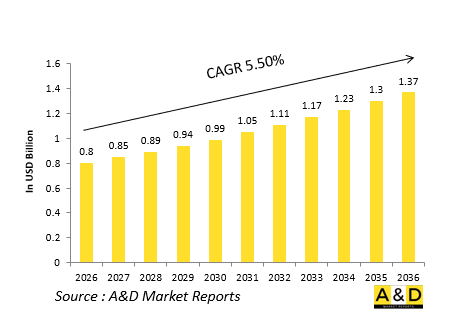
The Global Defense Missile Approach Warning Systems (MAWS) Market is estimated at USD 0.8 billion in 2026, projected to grow to USD 1.37 billion by 2036 at a Compound Annual Growth Rate (CAGR) of 5.50% over the forecast period 2026-2036.
Introduction:
The global defense Missile Approach Warning Systems market is a vital segment of modern electronic warfare, focused on protecting military platforms from incoming missile threats. These systems are designed to detect the launch or approach of missiles and provide timely alerts, enabling crews to deploy countermeasures such as flares, chaff, or electronic jamming. Widely used across fighter aircraft, helicopters, transport platforms, unmanned systems, and even ground and naval assets, MAWS have become essential for platform survivability. The increasing sophistication of missile technologies, including stealth and high-speed capabilities, has elevated the importance of early warning systems in combat scenarios. Defense forces worldwide are integrating MAWS into both legacy and next-generation platforms as part of broader self-protection suites. Growing geopolitical tensions and the need for enhanced situational awareness continue to drive demand, positioning MAWS as a core component in modern defense strategies.
Technology Impact in Defense Missile Approach Warning Systems (MAWS) Market
Technological advancements are transforming MAWS into highly intelligent and integrated defense solutions. Modern systems are evolving from basic ultraviolet detection to advanced multispectral and imaging technologies that combine infrared, ultraviolet, and other sensor inputs for improved accuracy. These systems use advanced signal processing and artificial intelligence to distinguish real threats from false alarms and provide precise tracking of incoming missiles. Distributed sensor architectures allow full spherical coverage around platforms, ensuring no blind spots during operations. Integration with directed infrared countermeasure systems and electronic warfare suites enables automatic and rapid response to threats. Additionally, miniaturization and modular design are expanding deployment across a wider range of platforms, including unmanned systems. These innovations are enhancing detection speed, reducing pilot workload, and improving overall mission survivability, making MAWS a central element in next-generation defensive aids systems.
Key Drivers in Defense Missile Approach Warning Systems (MAWS) Market
The MAWS market is driven by the increasing complexity and lethality of modern missile threats. The proliferation of advanced missile systems, including those with improved guidance and stealth capabilities, is pushing defense forces to adopt more effective early warning solutions. Ongoing military modernization programs are also a major driver, as countries upgrade existing fleets with advanced self-protection technologies rather than replacing entire platforms. The growing emphasis on electronic warfare and multi-domain operations further supports the integration of MAWS into broader defense systems. Additionally, rising defense budgets and the need to protect high-value assets such as aircraft and naval vessels are accelerating adoption. The demand for interoperability among allied forces is another key factor, encouraging the development of standardized and compatible warning systems. Together, these drivers are contributing to sustained market expansion and continuous innovation.
Regional Trends in Defense Missile Approach Warning Systems (MAWS) Market
Regional trends indicate strong global demand for MAWS, with leading defense nations driving innovation and adoption. North America remains a dominant region due to significant defense investments, advanced technological capabilities, and ongoing modernization initiatives. Europe is also witnessing steady growth, supported by collaborative defense programs and a focus on strengthening regional security frameworks. The Asia-Pacific region is emerging as a key growth area, driven by rising defense spending and increasing security concerns among major countries. Nations in this region are actively enhancing their military capabilities with advanced threat detection and protection systems. The Middle East continues to show strong demand due to ongoing regional conflicts and the need for robust air defense capabilities. Other regions are gradually adopting MAWS as part of broader defense upgrades, reflecting a global emphasis on improving survivability and situational awareness across military platforms.
Key Defense Missile Approach Warning Systems (MAWS) Market Program
Key defense programs worldwide are playing a crucial role in shaping the MAWS market. Military organizations are increasingly integrating advanced MAWS into both new and existing platforms to enhance operational readiness and survivability. Upgrade programs for aircraft, helicopters, and transport fleets are incorporating digital and multispectral warning systems to counter evolving missile threats. Collaborative programs between governments and defense contractors are focusing on developing interoperable and scalable MAWS solutions that can be deployed across multiple platforms. Indigenous development initiatives are also gaining momentum, as countries aim to strengthen domestic defense capabilities and reduce reliance on external suppliers. These programs emphasize real-time threat detection, improved accuracy, and seamless integration with countermeasure systems. As global defense strategies continue to evolve, such initiatives are expected to drive technological innovation and ensure sustained growth in the MAWS market.
Table of Contents
Defense Missile Approach Warning Systems (MAWS) Market - Table of Contents
Defense Missile Approach Warning Systems (MAWS) Market Report Definition
Defense Missile Approach Warning Systems (MAWS) Market Segmentation
By Platform
By Threat Coverage
By Technology
By Alert Type
By Integration
Defense Missile Approach Warning Systems (MAWS) Market Analysis for next 10 Years
The 10-year Defense Missile Approach Warning Systems (MAWS) Market analysis would give a detailed overview of Defense Missile Approach Warning Systems (MAWS) Market growth, changing dynamics, technology adoption overviews and the overall market attractiveness is covered in this chapter.
Market Technologies of Defense Missile Approach Warning Systems (MAWS) Market
This segment covers the top 10 technologies that is expected to impact this market and the possible implications these technologies would have on the overall market.
Global Defense Missile Approach Warning Systems (MAWS) Market Forecast
The 10-year Defense Missile Approach Warning Systems (MAWS) Market forecast of this market is covered in detailed across the segments which are mentioned above.
Regional Defense Missile Approach Warning Systems (MAWS) Market Trends & Forecast
The regional counter drone market trends, drivers, restraints and Challenges of this market, the Political, Economic, Social and Technology aspects are covered in this segment. The market forecast and scenario analysis across regions are also covered in detailed in this segment. The last part of the regional analysis includes profiling of the key companies, supplier landscape and company benchmarking. The current market size is estimated based on the normal scenario.
North America
Drivers, Restraints and Challenges
PEST
Market Forecast & Scenario Analysis
Key Companies
Supplier Tier Landscape
Company Benchmarking
Europe
Middle East
APAC
South America
Country Analysis of Defense Missile Approach Warning Systems (MAWS) Market
This chapter deals with the key defense programs in this market, it also covers the latest news and patents which have been filed in this market. Country level 10 year market forecast and scenario analysis are also covered in this chapter.
US
Defense Programs
Latest News
Patents
Current levels of technology maturation in this market
Market Forecast & Scenario Analysis
Canada
Italy
France
Germany
Netherlands
Belgium
Spain
Sweden
Greece
Australia
South Africa
India
China
Russia
South Korea
Japan
Malaysia
Singapore
Brazil
Opportunity Matrix for Defense Missile Approach Warning Systems (MAWS) Market
The opportunity matrix helps the readers understand the high opportunity segments in this market.
Expert Opinions on Defense Missile Approach Warning Systems (MAWS) Market Report
Hear from our experts their opinion of the possible analysis for this market.
Conclusions
About Aviation and Defense Market Reports
List of Tables
- Table 1: 10 Year Market Outlook, 2026-2036
- Table 2: Drivers, Impact Analysis, North America
- Table 3: Restraints, Impact Analysis, North America
- Table 4: Challenges, Impact Analysis, North America
- Table 5: Drivers, Impact Analysis, Europe
- Table 6: Restraints, Impact Analysis, Europe
- Table 7: Challenges, Impact Analysis, Europe
- Table 8: Drivers, Impact Analysis, Middle East
- Table 9: Restraints, Impact Analysis, Middle East
- Table 10: Challenges, Impact Analysis, Middle East
- Table 11: Drivers, Impact Analysis, APAC
- Table 12: Restraints, Impact Analysis, APAC
- Table 13: Challenges, Impact Analysis, APAC
- Table 14: Drivers, Impact Analysis, South America
- Table 15: Restraints, Impact Analysis, South America
- Table 16: Challenges, Impact Analysis, South America
- Table 17: Scenario Analysis, Scenario 1, By Technology, 2026-2036
- Table 18: Scenario Analysis, Scenario 1, By Platform, 2026-2036
- Table 19: Scenario Analysis, Scenario 1, By Threat Coverage, 2026-2036
- Table 20: Scenario Analysis, Scenario 2, By Technology, 2026-2036
- Table 21: Scenario Analysis, Scenario 2, By Platform, 2026-2036
- Table 22: Scenario Analysis, Scenario 2, By Threat Coverage, 2026-2036
List of Figures
- Figure 1: Global Defense Missile Approach Warning Systems (MAWS) Market Forecast, 2026-2036
- Figure 2: Global Defense Missile Approach Warning Systems (MAWS) Market Forecast, By Technology, 2026-2036
- Figure 3: Global Defense Missile Approach Warning Systems (MAWS) Market Forecast, By Platform, 2026-2036
- Figure 4: Global Defense Missile Approach Warning Systems (MAWS) Market Forecast, By Threat Coverage, 2026-2036
- Figure 5: North America, Defense Missile Approach Warning Systems (MAWS) Market, Market Forecast, 2026-2036
- Figure 6: Europe, Defense Missile Approach Warning Systems (MAWS) Market, Market Forecast, 2026-2036
- Figure 7: Middle East, Defense Missile Approach Warning Systems (MAWS) Market, Market Forecast, 2026-2036
- Figure 8: APAC, Defense Missile Approach Warning Systems (MAWS) Market, Market Forecast, 2026-2036
- Figure 9: South America, Defense Missile Approach Warning Systems (MAWS) Market, Market Forecast, 2026-2036
- Figure 10: United States, Defense Missile Approach Warning Systems (MAWS) Market, Technology Maturation, 2026-2036
- Figure 11: United States, Defense Missile Approach Warning Systems (MAWS) Market, Market Forecast, 2026-2036
- Figure 12: Canada, Defense Missile Approach Warning Systems (MAWS) Market, Technology Maturation, 2026-2036
- Figure 13: Canada, Defense Missile Approach Warning Systems (MAWS) Market, Market Forecast, 2026-2036
- Figure 14: Italy, Defense Missile Approach Warning Systems (MAWS) Market, Technology Maturation, 2026-2036
- Figure 15: Italy, Defense Missile Approach Warning Systems (MAWS) Market, Market Forecast, 2026-2036
- Figure 16: France, Defense Missile Approach Warning Systems (MAWS) Market, Technology Maturation, 2026-2036
- Figure 17: France, Defense Missile Approach Warning Systems (MAWS) Market, Market Forecast, 2026-2036
- Figure 18: Germany, Defense Missile Approach Warning Systems (MAWS) Market, Technology Maturation, 2026-2036
- Figure 19: Germany, Defense Missile Approach Warning Systems (MAWS) Market, Market Forecast, 2026-2036
- Figure 20: Netherlands, Defense Missile Approach Warning Systems (MAWS) Market, Technology Maturation, 2026-2036
- Figure 21: Netherlands, Defense Missile Approach Warning Systems (MAWS) Market, Market Forecast, 2026-2036
- Figure 22: Belgium, Defense Missile Approach Warning Systems (MAWS) Market, Technology Maturation, 2026-2036
- Figure 23: Belgium, Defense Missile Approach Warning Systems (MAWS) Market, Market Forecast, 2026-2036
- Figure 24: Spain, Defense Missile Approach Warning Systems (MAWS) Market, Technology Maturation, 2026-2036
- Figure 25: Spain, Defense Missile Approach Warning Systems (MAWS) Market, Market Forecast, 2026-2036
- Figure 26: Sweden, Defense Missile Approach Warning Systems (MAWS) Market, Technology Maturation, 2026-2036
- Figure 27: Sweden, Defense Missile Approach Warning Systems (MAWS) Market, Market Forecast, 2026-2036
- Figure 28: Brazil, Defense Missile Approach Warning Systems (MAWS) Market, Technology Maturation, 2026-2036
- Figure 29: Brazil, Defense Missile Approach Warning Systems (MAWS) Market, Market Forecast, 2026-2036
- Figure 30: Australia, Defense Missile Approach Warning Systems (MAWS) Market, Technology Maturation, 2026-2036
- Figure 31: Australia, Defense Missile Approach Warning Systems (MAWS) Market, Market Forecast, 2026-2036
- Figure 32: India, Defense Missile Approach Warning Systems (MAWS) Market, Technology Maturation, 2026-2036
- Figure 33: India, Defense Missile Approach Warning Systems (MAWS) Market, Market Forecast, 2026-2036
- Figure 34: China, Defense Missile Approach Warning Systems (MAWS) Market, Technology Maturation, 2026-2036
- Figure 35: China, Defense Missile Approach Warning Systems (MAWS) Market, Market Forecast, 2026-2036
- Figure 36: Saudi Arabia, Defense Missile Approach Warning Systems (MAWS) Market, Technology Maturation, 2026-2036
- Figure 37: Saudi Arabia, Defense Missile Approach Warning Systems (MAWS) Market, Market Forecast, 2026-2036
- Figure 38: South Korea, Defense Missile Approach Warning Systems (MAWS) Market, Technology Maturation, 2026-2036
- Figure 39: South Korea, Defense Missile Approach Warning Systems (MAWS) Market, Market Forecast, 2026-2036
- Figure 40: Japan, Defense Missile Approach Warning Systems (MAWS) Market, Technology Maturation, 2026-2036
- Figure 41: Japan, Defense Missile Approach Warning Systems (MAWS) Market, Market Forecast, 2026-2036
- Figure 42: Malaysia, Defense Missile Approach Warning Systems (MAWS) Market, Technology Maturation, 2026-2036
- Figure 43: Malaysia, Defense Missile Approach Warning Systems (MAWS) Market, Market Forecast, 2026-2036
- Figure 44: Singapore, Defense Missile Approach Warning Systems (MAWS) Market, Technology Maturation, 2026-2036
- Figure 45: Singapore, Defense Missile Approach Warning Systems (MAWS) Market, Market Forecast, 2026-2036
- Figure 46: United Kingdom, Defense Missile Approach Warning Systems (MAWS) Market, Technology Maturation, 2026-2036
- Figure 47: United Kingdom, Defense Missile Approach Warning Systems (MAWS) Market, Market Forecast, 2026-2036
- Figure 48: Opportunity Analysis, Defense Missile Approach Warning Systems (MAWS) Market, By Technology (Cumulative Market), 2026-2036
- Figure 49: Opportunity Analysis, Defense Missile Approach Warning Systems (MAWS) Market, By Technology (CAGR), 2026-2036
- Figure 50: Opportunity Analysis, Defense Missile Approach Warning Systems (MAWS) Market, By Platform (Cumulative Market), 2026-2036
- Figure 51: Opportunity Analysis, Defense Missile Approach Warning Systems (MAWS) Market, By Platform (CAGR), 2026-2036
- Figure 52: Opportunity Analysis, Defense Missile Approach Warning Systems (MAWS) Market, By Threat Coverage (Cumulative Market), 2026-2036
- Figure 53: Opportunity Analysis, Defense Missile Approach Warning Systems (MAWS) Market, By Threat Coverage (CAGR), 2026-2036
- Figure 54: Scenario Analysis, Defense Missile Approach Warning Systems (MAWS) Market, Cumulative Market, 2026-2036
- Figure 55: Scenario Analysis, Defense Missile Approach Warning Systems (MAWS) Market, Global Market, 2026-2036
- Figure 56: Scenario 1, Defense Missile Approach Warning Systems (MAWS) Market, Total Market, 2026-2036
- Figure 57: Scenario 1, Defense Missile Approach Warning Systems (MAWS) Market, By Technology, 2026-2036
- Figure 58: Scenario 1, Defense Missile Approach Warning Systems (MAWS) Market, By Platform, 2026-2036
- Figure 59: Scenario 1, Defense Missile Approach Warning Systems (MAWS) Market, By Threat Coverage, 2026-2036
- Figure 60: Scenario 2, Defense Missile Approach Warning Systems (MAWS) Market, Total Market, 2026-2036
- Figure 61: Scenario 2, Defense Missile Approach Warning Systems (MAWS) Market, By Technology, 2026-2036
- Figure 62: Scenario 2, Defense Missile Approach Warning Systems (MAWS) Market, By Platform, 2026-2036
- Figure 63: Scenario 2, Defense Missile Approach Warning Systems (MAWS) Market, By Threat Coverage, 2026-2036
- Figure 64: Company Benchmark, Defense Missile Approach Warning Systems (MAWS) Market, 2026-2036

