
PUBLISHER: Aviation & Defense Market Reports (A&D) | PRODUCT CODE: 1989937

PUBLISHER: Aviation & Defense Market Reports (A&D) | PRODUCT CODE: 1989937
Global Defense Internal Fuel Bladders / Tanks Market 2026-2036
Global Defense Internal Fuel Bladders / Tanks Market
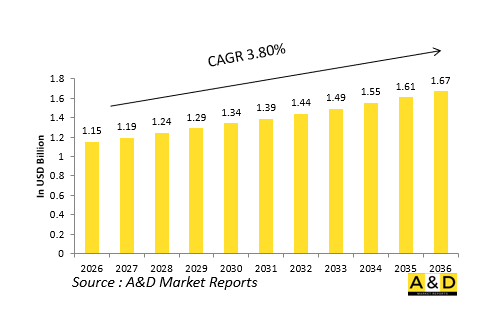
The Global Defense Internal Fuel Bladders / Tanks Market is estimated at USD 1.15 billion in 2026, projected to grow to USD 1.67 billion by 2036 at a Compound Annual Growth Rate (CAGR) of 3.80% over the forecast period 2026-2036.
Introduction:
The global defense internal fuel bladders and tanks market is a vital segment of military platform design, supporting safe and efficient fuel storage within aircraft, land vehicles, and naval systems. Internal fuel systems are broadly categorized into integral tanks, rigid removable tanks, and flexible fuel bladders, each designed to meet specific operational and structural requirements. Fuel bladders, also known as fuel cells, are flexible, reinforced containers installed داخل aircraft or vehicle structures to store fuel securely while adapting to available space.
These systems play a critical role in ensuring mission endurance, platform range, and operational reliability. In modern defense platforms, internal fuel solutions are designed to withstand harsh environments, vibrations, and combat conditions. Increasing demand for lightweight, space-efficient, and survivable fuel storage solutions is driving innovation, making internal fuel bladders and tanks essential components in next-generation military systems.
Technology Impact in Defense Internal Fuel Bladders / Tanks Market
Technological advancements are significantly enhancing the performance, safety, and durability of internal fuel storage systems. Modern fuel bladders are constructed using multi-layer, rubberized composite materials that offer flexibility, corrosion resistance, and high strength.
One of the most important innovations is the development of self-sealing fuel tanks, which automatically close punctures caused by ballistic impacts, preventing fuel leakage and reducing fire risk.
Advanced coatings and internal foam technologies are also being used to suppress fuel vapor ignition and improve explosion resistance.
Additionally, modular and custom-fit designs allow fuel bladders to be integrated into complex aircraft structures, optimizing space utilization without compromising structural integrity.
Digital monitoring systems are increasingly being incorporated to track fuel levels, pressure, and system health in real time. These technological improvements are transforming internal fuel systems into safer, lighter, and more efficient solutions for modern defense applications.
Key Drivers in Defense Internal Fuel Bladders / Tanks Market
The primary driver of this market is the growing demand for enhanced fuel efficiency, extended operational range, and improved survivability in military platforms. Internal fuel systems directly impact mission duration and effectiveness, making them critical for both combat and support operations.
The increasing adoption of advanced fighter aircraft, helicopters, and unmanned systems is driving demand for lightweight and space-optimized fuel storage solutions. Flexible fuel bladders are particularly valued for their adaptability and ease of installation in confined or irregular spaces.
Another key driver is the need for improved safety in combat environments, where self-sealing and crash-resistant fuel tanks help reduce fire hazards and enhance crew survivability.
Additionally, modernization and retrofit programs are replacing older rigid tanks with advanced bladder systems. These factors collectively support continuous growth and innovation in the internal fuel storage market.
Regional Trends in Defense Internal Fuel Bladders / Tanks Market
Regional trends indicate strong global demand, with major defense nations leading development and adoption. North America remains a dominant region due to its advanced aerospace sector and continuous investment in military modernization programs.
Europe is witnessing steady growth supported by strong defense manufacturing capabilities and collaborative aircraft development initiatives. The Asia-Pacific region is emerging as a significant growth hub, driven by rising defense budgets, expanding fleets, and increasing focus on indigenous production capabilities.
Countries in this region are investing in advanced fuel storage technologies to enhance operational range and platform survivability. The Middle East also shows notable demand due to ongoing procurement of modern defense systems and harsh operating environments.
Overall, regional dynamics reflect a global emphasis on improving efficiency, safety, and mission readiness through advanced internal fuel storage solutions.
Key Defense Internal Fuel Bladders / Tanks Market Program
Several defense programs are shaping the evolution of internal fuel bladders and tanks. Modern military aircraft programs integrate advanced internal fuel systems to support extended range, aerial refueling compatibility, and mission flexibility.
Upgrade and retrofit initiatives for legacy platforms are incorporating self-sealing and crash-resistant fuel bladders to enhance safety and extend service life.
Defense organizations are also investing in indigenous development programs to strengthen domestic capabilities in fuel system technologies and reduce reliance on external suppliers.
Additionally, forward deployment and expeditionary operations increasingly rely on flexible fuel bladder systems for rapid setup and fuel logistics in remote locations. Future programs emphasize lightweight materials, digital monitoring, and enhanced survivability features, ensuring that internal fuel bladders and tanks remain a critical component of modern defense platform design and operational effectiveness.
Table of Contents
Defense Internal Fuel Bladders / Tanks Market - Table of Contents
Defense Internal Fuel Bladders / Tanks Market Report Definition
Defense Internal Fuel Bladders / Tanks Market Segmentation
By Platform
By Type
By Region
By Capacity
Defense Internal Fuel Bladders / Tanks Market Analysis for next 10 Years
The 10-year Defense Internal Fuel Bladders / Tanks Market analysis would give a detailed overview of Defense Internal Fuel Bladders / Tanks Market growth, changing dynamics, technology adoption overviews and the overall market attractiveness is covered in this chapter.
Market Technologies of Defense Internal Fuel Bladders / Tanks Market
This segment covers the top 10 technologies that is expected to impact this market and the possible implications these technologies would have on the overall market.
Global Defense Internal Fuel Bladders / Tanks Market Forecast
The 10-year Defense Internal Fuel Bladders / Tanks Market forecast of this market is covered in detailed across the segments which are mentioned above.
Regional Defense Internal Fuel Bladders / Tanks Market Trends & Forecast
The regional counter drone market trends, drivers, restraints and Challenges of this market, the Political, Economic, Social and Technology aspects are covered in this segment. The market forecast and scenario analysis across regions are also covered in detailed in this segment. The last part of the regional analysis includes profiling of the key companies, supplier landscape and company benchmarking. The current market size is estimated based on the normal scenario.
North America
Drivers, Restraints and Challenges
PEST
Market Forecast & Scenario Analysis
Key Companies
Supplier Tier Landscape
Company Benchmarking
Europe
Middle East
APAC
South America
Country Analysis of Defense Internal Fuel Bladders / Tanks Market
This chapter deals with the key defense programs in this market, it also covers the latest news and patents which have been filed in this market. Country level 10 year market forecast and scenario analysis are also covered in this chapter.
US
Defense Programs
Latest News
Patents
Current levels of technology maturation in this market
Market Forecast & Scenario Analysis
Canada
Italy
France
Germany
Netherlands
Belgium
Spain
Sweden
Greece
Australia
South Africa
India
China
Russia
South Korea
Japan
Malaysia
Singapore
Brazil
Opportunity Matrix for Defense Internal Fuel Bladders / Tanks Market
The opportunity matrix helps the readers understand the high opportunity segments in this market.
Expert Opinions on Defense Internal Fuel Bladders / Tanks Market Report
Hear from our experts their opinion of the possible analysis for this market.
Conclusions
About Aviation and Defense Market Reports
List of Tables
- Table 1: 10 Year Market Outlook, 2026-2036
- Table 2: Drivers, Impact Analysis, North America
- Table 3: Restraints, Impact Analysis, North America
- Table 4: Challenges, Impact Analysis, North America
- Table 5: Drivers, Impact Analysis, Europe
- Table 6: Restraints, Impact Analysis, Europe
- Table 7: Challenges, Impact Analysis, Europe
- Table 8: Drivers, Impact Analysis, Middle East
- Table 9: Restraints, Impact Analysis, Middle East
- Table 10: Challenges, Impact Analysis, Middle East
- Table 11: Drivers, Impact Analysis, APAC
- Table 12: Restraints, Impact Analysis, APAC
- Table 13: Challenges, Impact Analysis, APAC
- Table 14: Drivers, Impact Analysis, South America
- Table 15: Restraints, Impact Analysis, South America
- Table 16: Challenges, Impact Analysis, South America
- Table 17: Scenario Analysis, Scenario 1, By Region, 2026-2036
- Table 18: Scenario Analysis, Scenario 1, By Platform, 2026-2036
- Table 19: Scenario Analysis, Scenario 1, By Type, 2026-2036
- Table 20: Scenario Analysis, Scenario 2, By Region, 2026-2036
- Table 21: Scenario Analysis, Scenario 2, By Platform, 2026-2036
- Table 22: Scenario Analysis, Scenario 2, By Type, 2026-2036
List of Figures
- Figure 1: Global Defense Internal Fuel Bladders / Tanks Market Forecast, 2026-2036
- Figure 2: Global Defense Internal Fuel Bladders / Tanks Market Forecast, By Region, 2026-2036
- Figure 3: Global Defense Internal Fuel Bladders / Tanks Market Forecast, By Platform, 2026-2036
- Figure 4: Global Defense Internal Fuel Bladders / Tanks Market Forecast, By Type, 2026-2036
- Figure 5: North America, Defense Internal Fuel Bladders / Tanks Market, Market Forecast, 2026-2036
- Figure 6: Europe, Defense Internal Fuel Bladders / Tanks Market, Market Forecast, 2026-2036
- Figure 7: Middle East, Defense Internal Fuel Bladders / Tanks Market, Market Forecast, 2026-2036
- Figure 8: APAC, Defense Internal Fuel Bladders / Tanks Market, Market Forecast, 2026-2036
- Figure 9: South America, Defense Internal Fuel Bladders / Tanks Market, Market Forecast, 2026-2036
- Figure 10: United States, Defense Internal Fuel Bladders / Tanks Market, Region Maturation, 2026-2036
- Figure 11: United States, Defense Internal Fuel Bladders / Tanks Market, Market Forecast, 2026-2036
- Figure 12: Canada, Defense Internal Fuel Bladders / Tanks Market, Region Maturation, 2026-2036
- Figure 13: Canada, Defense Internal Fuel Bladders / Tanks Market, Market Forecast, 2026-2036
- Figure 14: Italy, Defense Internal Fuel Bladders / Tanks Market, Region Maturation, 2026-2036
- Figure 15: Italy, Defense Internal Fuel Bladders / Tanks Market, Market Forecast, 2026-2036
- Figure 16: France, Defense Internal Fuel Bladders / Tanks Market, Region Maturation, 2026-2036
- Figure 17: France, Defense Internal Fuel Bladders / Tanks Market, Market Forecast, 2026-2036
- Figure 18: Germany, Defense Internal Fuel Bladders / Tanks Market, Region Maturation, 2026-2036
- Figure 19: Germany, Defense Internal Fuel Bladders / Tanks Market, Market Forecast, 2026-2036
- Figure 20: Netherlands, Defense Internal Fuel Bladders / Tanks Market, Region Maturation, 2026-2036
- Figure 21: Netherlands, Defense Internal Fuel Bladders / Tanks Market, Market Forecast, 2026-2036
- Figure 22: Belgium, Defense Internal Fuel Bladders / Tanks Market, Region Maturation, 2026-2036
- Figure 23: Belgium, Defense Internal Fuel Bladders / Tanks Market, Market Forecast, 2026-2036
- Figure 24: Spain, Defense Internal Fuel Bladders / Tanks Market, Region Maturation, 2026-2036
- Figure 25: Spain, Defense Internal Fuel Bladders / Tanks Market, Market Forecast, 2026-2036
- Figure 26: Sweden, Defense Internal Fuel Bladders / Tanks Market, Region Maturation, 2026-2036
- Figure 27: Sweden, Defense Internal Fuel Bladders / Tanks Market, Market Forecast, 2026-2036
- Figure 28: Brazil, Defense Internal Fuel Bladders / Tanks Market, Region Maturation, 2026-2036
- Figure 29: Brazil, Defense Internal Fuel Bladders / Tanks Market, Market Forecast, 2026-2036
- Figure 30: Australia, Defense Internal Fuel Bladders / Tanks Market, Region Maturation, 2026-2036
- Figure 31: Australia, Defense Internal Fuel Bladders / Tanks Market, Market Forecast, 2026-2036
- Figure 32: India, Defense Internal Fuel Bladders / Tanks Market, Region Maturation, 2026-2036
- Figure 33: India, Defense Internal Fuel Bladders / Tanks Market, Market Forecast, 2026-2036
- Figure 34: China, Defense Internal Fuel Bladders / Tanks Market, Region Maturation, 2026-2036
- Figure 35: China, Defense Internal Fuel Bladders / Tanks Market, Market Forecast, 2026-2036
- Figure 36: Saudi Arabia, Defense Internal Fuel Bladders / Tanks Market, Region Maturation, 2026-2036
- Figure 37: Saudi Arabia, Defense Internal Fuel Bladders / Tanks Market, Market Forecast, 2026-2036
- Figure 38: South Korea, Defense Internal Fuel Bladders / Tanks Market, Region Maturation, 2026-2036
- Figure 39: South Korea, Defense Internal Fuel Bladders / Tanks Market, Market Forecast, 2026-2036
- Figure 40: Japan, Defense Internal Fuel Bladders / Tanks Market, Region Maturation, 2026-2036
- Figure 41: Japan, Defense Internal Fuel Bladders / Tanks Market, Market Forecast, 2026-2036
- Figure 42: Malaysia, Defense Internal Fuel Bladders / Tanks Market, Region Maturation, 2026-2036
- Figure 43: Malaysia, Defense Internal Fuel Bladders / Tanks Market, Market Forecast, 2026-2036
- Figure 44: Singapore, Defense Internal Fuel Bladders / Tanks Market, Region Maturation, 2026-2036
- Figure 45: Singapore, Defense Internal Fuel Bladders / Tanks Market, Market Forecast, 2026-2036
- Figure 46: United Kingdom, Defense Internal Fuel Bladders / Tanks Market, Region Maturation, 2026-2036
- Figure 47: United Kingdom, Defense Internal Fuel Bladders / Tanks Market, Market Forecast, 2026-2036
- Figure 48: Opportunity Analysis, Defense Internal Fuel Bladders / Tanks Market, By Region (Cumulative Market), 2026-2036
- Figure 49: Opportunity Analysis, Defense Internal Fuel Bladders / Tanks Market, By Region (CAGR), 2026-2036
- Figure 50: Opportunity Analysis, Defense Internal Fuel Bladders / Tanks Market, By Platform (Cumulative Market), 2026-2036
- Figure 51: Opportunity Analysis, Defense Internal Fuel Bladders / Tanks Market, By Platform (CAGR), 2026-2036
- Figure 52: Opportunity Analysis, Defense Internal Fuel Bladders / Tanks Market, By Type (Cumulative Market), 2026-2036
- Figure 53: Opportunity Analysis, Defense Internal Fuel Bladders / Tanks Market, By Type (CAGR), 2026-2036
- Figure 54: Scenario Analysis, Defense Internal Fuel Bladders / Tanks Market, Cumulative Market, 2026-2036
- Figure 55: Scenario Analysis, Defense Internal Fuel Bladders / Tanks Market, Global Market, 2026-2036
- Figure 56: Scenario 1, Defense Internal Fuel Bladders / Tanks Market, Total Market, 2026-2036
- Figure 57: Scenario 1, Defense Internal Fuel Bladders / Tanks Market, By Region, 2026-2036
- Figure 58: Scenario 1, Defense Internal Fuel Bladders / Tanks Market, By Platform, 2026-2036
- Figure 59: Scenario 1, Defense Internal Fuel Bladders / Tanks Market, By Type, 2026-2036
- Figure 60: Scenario 2, Defense Internal Fuel Bladders / Tanks Market, Total Market, 2026-2036
- Figure 61: Scenario 2, Defense Internal Fuel Bladders / Tanks Market, By Region, 2026-2036
- Figure 62: Scenario 2, Defense Internal Fuel Bladders / Tanks Market, By Platform, 2026-2036
- Figure 63: Scenario 2, Defense Internal Fuel Bladders / Tanks Market, By Type, 2026-2036
- Figure 64: Company Benchmark, Defense Internal Fuel Bladders / Tanks Market, 2026-2036

