PUBLISHER: Aviation & Defense Market Reports (A&D) | PRODUCT CODE: 1996992

PUBLISHER: Aviation & Defense Market Reports (A&D) | PRODUCT CODE: 1996992
Global Defense Pitot-Static Probes Market 2026-2036
Global Defense Pitot Static Probes Market
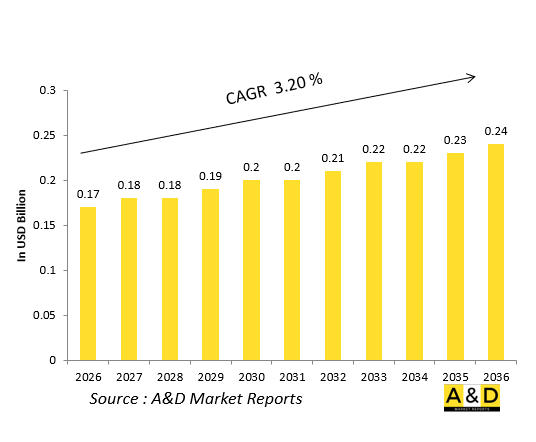
The Global Defense Pitot Static Probes Market is estimated at USD 0.17 billion in 2026, projected to grow to USD 0.24 billion by 2036 at a Compound Annual Growth Rate (CAGR) of 3.20% over the forecast period 2026-2036.
1. Introduction:
Defense pitot static probes are critical aerodynamic sensors mounted on military aircraft, UAVs, and certain missiles to measure dynamic and static air pressure, from which key flight parameters such as airspeed, altitude, vertical speed, and Mach number are derived. These probes feed data to air data computers and flight control systems, forming one of the primary inputs for safe and accurate flight management across the operational envelope. Over the 2026-2036 horizon, the defense pitot static probe market is being shaped by the continued operation and modernization of manned and unmanned platforms that rely on reliable, high fidelity pressure sensing.
As air forces adopt advanced fighters, trainers, maritime patrol aircraft, and unmanned combat air systems, demand persists for rugged, aerodynamically optimized probes that can operate across extreme speeds, altitudes, and environmental conditions. Older fleets undergoing life extension upgrades also require replacement probes compatible with modern air data and flight control architectures. At the same time, safety focused incident mitigation and redundancy enhancement programs are driving the adoption of multi sensor pitot static assemblies and heated, de iced variants that reduce the risk of measurement source failures. These attributes position pitot static probes as fundamental, though often overlooked, elements of the defense avionics ecosystem.
2. Technology Impact in Defense Pitot Static Probes Market
Technology is enhancing defense pitot static probes through improved materials, aerodynamic shaping, and integrated sensor electronics rather than replacing them with alternative measurement methods. Modern probes employ advanced alloys and composite housings that resist corrosion, thermal stress, and ice accretion, enabling reliable operation in harsh maritime, high altitude, and arid environments. Heated probe designs and embedded ice detection circuits help mitigate blockage related failures, especially in cold weather and high humidity operations, thereby improving data integrity and safety margins.
Miniaturization and multi port configurations allow a single probe assembly to serve multiple air data channels, supporting redundancy and fault tolerant architectures without adding excessive external drag or complexity. Integration with digital air data computers enables continuous health monitoring, calibration, and position error correction, improving the accuracy of derived parameters. Advanced manufacturing techniques, such as precision machining and additive process components, support tighter tolerances and repeatable performance across production runs. At the same time, designers are increasingly optimizing probe shape and location to minimize sensor interference effects with other aircraft antennas and antennae fields. These advancements collectively raise reliability, measurement fidelity, and operational safety, particularly for high performance and unmanned platforms.
3. Key Drivers in Defense Pitot Static Probes Market
The defense pitot static probe market is driven primarily by the need to sustain safe and accurate flight data acquisition across a diverse and aging fleet of military aircraft and unmanned systems. As air forces continue to operate legacy platforms while introducing next generation fighters, trainers, and UAVs, there remains an enduring requirement for calibrated, high integrity pitot static sensing that feeds air data computers and flight control systems. Safety related incidents tied to blocked or faulty probes have reinforced the importance of robust, redundant, and heated probe designs, especially for maritime and high altitude operations.
Another key driver is the ongoing modernization and life extension of older fleets, which involves replacing worn or obsolete probe hardware with units compatible with upgraded avionics and digital fly by wire architectures. The growth of unmanned combat air and long endurance UAV programs is also creating demand for compact, lightweight pitot static probes that can be integrated into small airframes without compromising aerodynamic efficiency. Export oriented platforms often require probes that meet international certification and interoperability standards, encouraging standardized form factors and interface definitions. At the same time, safety regulations and military aviation standards are pushing for higher reliability designs, health monitoring capabilities, and failure detection schemes, making pitot static probes an integral part of broader air safety architectures.
4. Regional Trends in Defense Pitot Static Probes Market
Regionally, North America remains a leading hub for advanced pitot static probe design and production, supported by large scale fighter, trainer, maritime patrol, and unmanned air programs that emphasize safety, redundancy, and integration with modern air data systems. The United States and its partners operate wide ranging fleets that rely on standardized probe architectures, fostering demand for robust, multi port, and heated designs compatible with both legacy and next generation platforms.
In Europe, collaborative combat air and multi role programs are encouraging the adoption of common pitot static probe standards to support interoperability and shared logistics across national fleets. The Asia Pacific region is witnessing increased demand as several air forces modernize their inventories and expand indigenous UAV and trainer production, prompting local and co development efforts around pitot static probe integration and certification. Middle Eastern and Gulf states, which operate mixed generation fleets in harsh desert and maritime climates, are investing in durable, heated, and ice resistant probes to sustain reliable airspeed and altitude data. Across regions, there is a growing preference for modular, replaceable probe units that can be swapped or upgraded without major airframe modifications, alongside designs that minimize electromagnetic interference with nearby avionics and antennas.
5. Key Defense Pitot Static Probes Market Program
Several flagship defense programs are shaping the evolution of the pitot static probe market over the 2026-2036 period. Next generation fighter and multi role combat air initiatives are specifying advanced pitot static probe assemblies that integrate tightly with digital air data computers and flight control systems, supporting high fidelity inputs for envelope protection and maneuver enhancement features. Naval aviation and carrier based strike programs require robust, corrosion resistant probes capable of operating reliably in salt laden maritime environments and during high angle of attack deck approaches.
Unmanned combat air and long endurance UAV programs are adopting compact, lightweight pitot static probes that maintain accuracy across wide speed and altitude ranges while minimizing drag and installation complexity. Trainer aircraft programs emphasize standardized probe designs that mirror frontline platforms, enabling realistic air data behavior and reducing pilot transition time overhead. Multinational and coalition level programs are encouraging common probe interfaces and data formats, supporting shared logistics, certification packages, and replacement in theater strategies. Rotary wing and special mission programs also rely on pitot static probes for low level and austere field operations where reliable airspeed and altitude information are essential for safety. Through these programs, pitot static probes are evolving from simple pressure sensors into engineered, safety critical subcomponents of the broader digital flight and mission data architecture.
Table of Contents
Defense Pitot-Static Probes Market - Table of Contents
Defense Pitot-Static Probes Market Report Definition
Defense Pitot-Static Probes Market Segmentation
By Region
By Aircraft Type
By Heating
By Material
By Certification
Defense Pitot-Static Probes Market Analysis for next 10 Years
The 10-year Defense Pitot-Static Probes Market analysis would give a detailed overview of Defense Pitot-Static Probes Market growth, changing dynamics, technology adoption overviews and the overall market attractiveness is covered in this chapter.
Market Technologies of Defense Pitot-Static Probes Market
This segment covers the top 10 technologies that is expected to impact this market and the possible implications these technologies would have on the overall market.
Global Defense Pitot-Static Probes Market Forecast
The 10-year Defense Pitot-Static Probes Market forecast of this market is covered in detailed across the segments which are mentioned above.
Regional Defense Pitot-Static Probes Market Trends & Forecast
The regional counter drone market trends, drivers, restraints and Challenges of this market, the Political, Economic, Social and Technology aspects are covered in this segment. The market forecast and scenario analysis across regions are also covered in detailed in this segment. The last part of the regional analysis includes profiling of the key companies, supplier landscape and company benchmarking. The current market size is estimated based on the normal scenario.
North America
Drivers, Restraints and Challenges
PEST
Market Forecast & Scenario Analysis
Key Companies
Supplier Tier Landscape
Company Benchmarking
Europe
Middle East
APAC
South America
Country Analysis of Defense Pitot-Static Probes Market
This chapter deals with the key defense programs in this market, it also covers the latest news and patents which have been filed in this market. Country level 10 year market forecast and scenario analysis are also covered in this chapter.
US
Defense Programs
Latest News
Patents
Current levels of technology maturation in this market
Market Forecast & Scenario Analysis
Canada
Italy
France
Germany
Netherlands
Belgium
Spain
Sweden
Greece
Australia
South Africa
India
China
Russia
South Korea
Japan
Malaysia
Singapore
Brazil
Opportunity Matrix for Defense Pitot-Static Probes Market
The opportunity matrix helps the readers understand the high opportunity segments in this market.
Expert Opinions on Defense Pitot-Static Probes Market Report
Hear from our experts their opinion of the possible analysis for this market.
Conclusions
About Aviation and Defense Market Reports
List of Tables
- Table 1: 10 Year Market Outlook, 2026-2036
- Table 2: Drivers, Impact Analysis, North America
- Table 3: Restraints, Impact Analysis, North America
- Table 4: Challenges, Impact Analysis, North America
- Table 5: Drivers, Impact Analysis, Europe
- Table 6: Restraints, Impact Analysis, Europe
- Table 7: Challenges, Impact Analysis, Europe
- Table 8: Drivers, Impact Analysis, Middle East
- Table 9: Restraints, Impact Analysis, Middle East
- Table 10: Challenges, Impact Analysis, Middle East
- Table 11: Drivers, Impact Analysis, APAC
- Table 12: Restraints, Impact Analysis, APAC
- Table 13: Challenges, Impact Analysis, APAC
- Table 14: Drivers, Impact Analysis, South America
- Table 15: Restraints, Impact Analysis, South America
- Table 16: Challenges, Impact Analysis, South America
- Table 17: Scenario Analysis, Scenario 1, By Region, 2026-2036
- Table 18: Scenario Analysis, Scenario 1, By Aircraft Type, 2026-2036
- Table 19: Scenario Analysis, Scenario 1, By Heating Type, 2026-2036
- Table 20: Scenario Analysis, Scenario 2, By Region, 2026-2036
- Table 21: Scenario Analysis, Scenario 2, By Aircraft Type, 2026-2036
- Table 22: Scenario Analysis, Scenario 2, By Heating Type, 2026-2036
List of Figures
- Figure 1: Global Defense Pitot-Static Probes Market Forecast, 2026-2036
- Figure 2: Global Defense Pitot-Static Probes Market Forecast, By Region, 2026-2036
- Figure 3: Global Defense Pitot-Static Probes Market Forecast, By Aircraft Type, 2026-2036
- Figure 4: Global Defense Pitot-Static Probes Market Forecast, By Heating Type, 2026-2036
- Figure 5: North America, Defense Pitot-Static Probes Market, Market Forecast, 2026-2036
- Figure 6: Europe, Defense Pitot-Static Probes Market, Market Forecast, 2026-2036
- Figure 7: Middle East, Defense Pitot-Static Probes Market, Market Forecast, 2026-2036
- Figure 8: APAC, Defense Pitot-Static Probes Market, Market Forecast, 2026-2036
- Figure 9: South America, Defense Pitot-Static Probes Market, Market Forecast, 2026-2036
- Figure 10: United States, Defense Pitot-Static Probes Market, Region Maturation, 2026-2036
- Figure 11: United States, Defense Pitot-Static Probes Market, Market Forecast, 2026-2036
- Figure 12: Canada, Defense Pitot-Static Probes Market, Region Maturation, 2026-2036
- Figure 13: Canada, Defense Pitot-Static Probes Market, Market Forecast, 2026-2036
- Figure 14: Italy, Defense Pitot-Static Probes Market, Region Maturation, 2026-2036
- Figure 15: Italy, Defense Pitot-Static Probes Market, Market Forecast, 2026-2036
- Figure 16: France, Defense Pitot-Static Probes Market, Region Maturation, 2026-2036
- Figure 17: France, Defense Pitot-Static Probes Market, Market Forecast, 2026-2036
- Figure 18: Germany, Defense Pitot-Static Probes Market, Region Maturation, 2026-2036
- Figure 19: Germany, Defense Pitot-Static Probes Market, Market Forecast, 2026-2036
- Figure 20: Netherlands, Defense Pitot-Static Probes Market, Region Maturation, 2026-2036
- Figure 21: Netherlands, Defense Pitot-Static Probes Market, Market Forecast, 2026-2036
- Figure 22: Belgium, Defense Pitot-Static Probes Market, Region Maturation, 2026-2036
- Figure 23: Belgium, Defense Pitot-Static Probes Market, Market Forecast, 2026-2036
- Figure 24: Spain, Defense Pitot-Static Probes Market, Region Maturation, 2026-2036
- Figure 25: Spain, Defense Pitot-Static Probes Market, Market Forecast, 2026-2036
- Figure 26: Sweden, Defense Pitot-Static Probes Market, Region Maturation, 2026-2036
- Figure 27: Sweden, Defense Pitot-Static Probes Market, Market Forecast, 2026-2036
- Figure 28: Brazil, Defense Pitot-Static Probes Market, Region Maturation, 2026-2036
- Figure 29: Brazil, Defense Pitot-Static Probes Market, Market Forecast, 2026-2036
- Figure 30: Australia, Defense Pitot-Static Probes Market, Region Maturation, 2026-2036
- Figure 31: Australia, Defense Pitot-Static Probes Market, Market Forecast, 2026-2036
- Figure 32: India, Defense Pitot-Static Probes Market, Region Maturation, 2026-2036
- Figure 33: India, Defense Pitot-Static Probes Market, Market Forecast, 2026-2036
- Figure 34: China, Defense Pitot-Static Probes Market, Region Maturation, 2026-2036
- Figure 35: China, Defense Pitot-Static Probes Market, Market Forecast, 2026-2036
- Figure 36: Saudi Arabia, Defense Pitot-Static Probes Market, Region Maturation, 2026-2036
- Figure 37: Saudi Arabia, Defense Pitot-Static Probes Market, Market Forecast, 2026-2036
- Figure 38: South Korea, Defense Pitot-Static Probes Market, Region Maturation, 2026-2036
- Figure 39: South Korea, Defense Pitot-Static Probes Market, Market Forecast, 2026-2036
- Figure 40: Japan, Defense Pitot-Static Probes Market, Region Maturation, 2026-2036
- Figure 41: Japan, Defense Pitot-Static Probes Market, Market Forecast, 2026-2036
- Figure 42: Malaysia, Defense Pitot-Static Probes Market, Region Maturation, 2026-2036
- Figure 43: Malaysia, Defense Pitot-Static Probes Market, Market Forecast, 2026-2036
- Figure 44: Singapore, Defense Pitot-Static Probes Market, Region Maturation, 2026-2036
- Figure 45: Singapore, Defense Pitot-Static Probes Market, Market Forecast, 2026-2036
- Figure 46: United Kingdom, Defense Pitot-Static Probes Market, Region Maturation, 2026-2036
- Figure 47: United Kingdom, Defense Pitot-Static Probes Market, Market Forecast, 2026-2036
- Figure 48: Opportunity Analysis, Defense Pitot-Static Probes Market, By Region (Cumulative Market), 2026-2036
- Figure 49: Opportunity Analysis, Defense Pitot-Static Probes Market, By Region (CAGR), 2026-2036
- Figure 50: Opportunity Analysis, Defense Pitot-Static Probes Market, By Aircraft Type (Cumulative Market), 2026-2036
- Figure 51: Opportunity Analysis, Defense Pitot-Static Probes Market, By Aircraft Type (CAGR), 2026-2036
- Figure 52: Opportunity Analysis, Defense Pitot-Static Probes Market, By Heating Type(Cumulative Market), 2026-2036
- Figure 53: Opportunity Analysis, Defense Pitot-Static Probes Market, By Heating Type(CAGR), 2026-2036
- Figure 54: Scenario Analysis, Defense Pitot-Static Probes Market, Cumulative Market, 2026-2036
- Figure 55: Scenario Analysis, Defense Pitot-Static Probes Market, Global Market, 2026-2036
- Figure 56: Scenario 1, Defense Pitot-Static Probes Market, Total Market, 2026-2036
- Figure 57: Scenario 1, Defense Pitot-Static Probes Market, By Region, 2026-2036
- Figure 58: Scenario 1, Defense Pitot-Static Probes Market, By Aircraft Type, 2026-2036
- Figure 59: Scenario 1, Defense Pitot-Static Probes Market, By Heating Type, 2026-2036
- Figure 60: Scenario 2, Defense Pitot-Static Probes Market, Total Market, 2026-2036
- Figure 61: Scenario 2, Defense Pitot-Static Probes Market, By Region, 2026-2036
- Figure 62: Scenario 2, Defense Pitot-Static Probes Market, By Aircraft Type, 2026-2036
- Figure 63: Scenario 2, Defense Pitot-Static Probes Market, By Heating Type, 2026-2036
- Figure 64: Company Benchmark, Defense Pitot-Static Probes Market, 2026-2036

