PUBLISHER: Aviation & Defense Market Reports (A&D) | PRODUCT CODE: 2004304

PUBLISHER: Aviation & Defense Market Reports (A&D) | PRODUCT CODE: 2004304
Global Defense Afterburner / Reheat Systems Market 2026-2036
Global Defense Afterburner / Reheat Systems Market
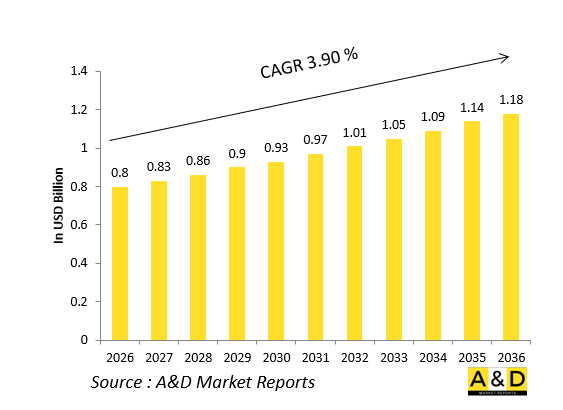
The Global Defense Afterburner / Reheat Systems Market is estimated at USD 0.8 billion in 2026, projected to grow to USD 1.18 billion by 2036 at a Compound Annual Growth Rate (CAGR) of 3.90% over the forecast period 2026-2036.
Introduction:
The global defense afterburner, or reheat systems, market is a specialized segment within military aircraft propulsion systems, primarily used to provide short bursts of additional thrust. Afterburners function as secondary combustion chambers installed downstream of the turbine, where additional fuel is injected and ignited to significantly increase exhaust velocity and thrust.
These systems are widely used in supersonic fighter aircraft to support rapid acceleration, takeoff, and combat maneuvers. While afterburners can nearly double engine thrust, they are typically used for limited durations due to high fuel consumption.
Between 2026 and 2036, the market is expected to grow steadily, driven by the development of next-generation fighter jets and increasing demand for high-performance propulsion systems. As air forces prioritize speed, agility, and combat readiness, afterburner systems remain a critical component in achieving air superiority.
Technology Impact in Global Defense Afterburner / Reheat Systems Market
Technological advancements are significantly enhancing afterburner system performance, efficiency, and stealth characteristics. Modern systems incorporate advanced fuel injection technologies such as staged combustion and optimized spray patterns to improve thrust augmentation while reducing visible emissions and smoke signatures.
Variable geometry nozzles are another major innovation, allowing dynamic adjustment of exhaust flow to optimize performance across different flight conditions. These systems improve engine stability and prevent issues such as flameout during high-speed maneuvers.
The use of high-temperature materials, including ceramic matrix composites and thermal barrier coatings, is enabling afterburners to withstand extreme heat and extend operational life. Digital engine control systems (FADEC) and predictive maintenance technologies are also being integrated, allowing real-time monitoring and improved reliability.
Additionally, emerging technologies such as plasma ignition and adaptive cycle engines are shaping the next generation of reheat systems, supporting enhanced efficiency and reduced infrared signatures for stealth aircraft.
Key Drivers in Global Defense Afterburner / Reheat Systems Market
The primary driver of the market is the increasing demand for high-thrust propulsion systems in modern fighter aircraft. Afterburners provide critical performance advantages, including rapid acceleration, supersonic capability, and enhanced maneuverability, which are essential in combat scenarios.
Rising global defense spending and the development of next-generation aircraft programs are further fueling market growth. Countries are investing in advanced propulsion technologies to maintain air superiority and respond to evolving threats.
Another key driver is the growing emphasis on mission flexibility and operational readiness. Afterburners enable aircraft to perform a wide range of missions, from interception to deep strike operations.
Additionally, modernization of existing aircraft fleets and increasing maintenance, repair, and overhaul (MRO) activities are contributing to sustained demand. The expansion of unmanned combat aerial vehicles (UCAVs) and advanced propulsion research also presents new growth opportunities for the market.
Regional Trends in Global Defense Afterburner / Reheat Systems Market
North America dominates the global afterburner systems market, driven by strong defense budgets, advanced aerospace infrastructure, and ongoing development of next-generation fighter aircraft. The region leads in propulsion system innovation and integration of advanced engine technologies.
Europe holds a significant share, supported by collaborative defense programs and investments in advanced combat aircraft. The region emphasizes technological innovation, particularly in fuel efficiency and emission reduction.
The Asia-Pacific region is expected to witness the fastest growth during the forecast period, fueled by rising defense expenditures and increasing indigenous aircraft development programs in countries such as India, China, and Japan.
The Middle East is also emerging as a key market due to ongoing procurement of advanced fighter jets and modernization of military aviation capabilities. Overall, regional trends indicate a growing focus on self-reliance, technology transfer, and next-generation propulsion systems.
Key Global Defense Afterburner / Reheat Systems Market Program
Key defense programs are playing a crucial role in driving innovation and demand in the afterburner systems market. Next-generation fighter aircraft programs are incorporating advanced reheat systems designed to support supercruise capabilities, improved fuel efficiency, and reduced thermal signatures.
Programs focusing on adaptive cycle engines are integrating advanced afterburner technologies to enable seamless transition between different operating modes, enhancing both performance and efficiency.
Additionally, modernization initiatives for existing aircraft fleets are leading to upgrades in afterburner systems, including improved materials, digital controls, and enhanced durability.
Collaborations between defense agencies and leading aerospace companies such as Pratt & Whitney, Safran, and Rolls-Royce are accelerating the development of next-generation propulsion technologies. These programs highlight the strategic importance of afterburners in maintaining combat effectiveness, enabling supersonic performance, and supporting future air dominance strategies.
Table of Contents
Defense Afterburner / Reheat Systems Market - Table of Contents
Defense Afterburner / Reheat Systems Market Report Definition
Defense Afterburner / Reheat Systems Market Segmentation
By Platform
By Nozzle Type
By Actuation
Defense Afterburner / Reheat Systems Market Analysis for next 10 Years
The 10-year Defense Afterburner / Reheat Systems market analysis would give a detailed overview of Defense Afterburner / Reheat Systems market growth, changing dynamics, technology adoption overviews and the overall market attractiveness is covered in this chapter.
Market Technologies of Defense Afterburner / Reheat Systems Market
This segment covers the top 10 technologies that is expected to impact this market and the possible implications these technologies would have on the overall market.
Global Defense Afterburner / Reheat Systems Market Forecast
The 10-year Defense Afterburner / Reheat Systems market forecast of this market is covered in detailed across the segments which are mentioned above.
Regional Defense Afterburner / Reheat Systems Market Trends & Forecast
The regional counter drone market trends, drivers, restraints and Challenges of this market, the Political, Economic, Social and Technology aspects are covered in this segment. The market forecast and scenario analysis across regions are also covered in detailed in this segment. The last part of the regional analysis includes profiling of the key companies, supplier landscape and company benchmarking. The current market size is estimated based on the normal scenario.
North America
Drivers, Restraints and Challenges
PEST
Market Forecast & Scenario Analysis
Key Companies
Supplier Tier Landscape
Company Benchmarking
Europe
Middle East
APAC
South America
Country Analysis of Defense Afterburner / Reheat Systems Market
This chapter deals with the key defense programs in this market, it also covers the latest news and patents which have been filed in this market. Country level 10 year market forecast and scenario analysis are also covered in this chapter.
US
Defense Programs
Latest News
Patents
Current levels of technology maturation in this market
Market Forecast & Scenario Analysis
Canada
Italy
France
Germany
Netherlands
Belgium
Spain
Sweden
Greece
Australia
South Africa
India
China
Russia
South Korea
Japan
Malaysia
Singapore
Brazil
Opportunity Matrix for Defense Afterburner / Reheat Systems Market
The opportunity matrix helps the readers understand the high opportunity segments in this market.
Expert Opinions on Defense Afterburner / Reheat Systems Market Report
Hear from our experts their opinion of the possible analysis for this market.
Conclusions
About Aviation and Defense Market Reports
List of Tables
- Table 1: 10 Year Market Outlook, 2026-2036
- Table 2: Drivers, Impact Analysis, North America
- Table 3: Restraints, Impact Analysis, North America
- Table 4: Challenges, Impact Analysis, North America
- Table 5: Drivers, Impact Analysis, Europe
- Table 6: Restraints, Impact Analysis, Europe
- Table 7: Challenges, Impact Analysis, Europe
- Table 8: Drivers, Impact Analysis, Middle East
- Table 9: Restraints, Impact Analysis, Middle East
- Table 10: Challenges, Impact Analysis, Middle East
- Table 11: Drivers, Impact Analysis, APAC
- Table 12: Restraints, Impact Analysis, APAC
- Table 13: Challenges, Impact Analysis, APAC
- Table 14: Drivers, Impact Analysis, South America
- Table 15: Restraints, Impact Analysis, South America
- Table 16: Challenges, Impact Analysis, South America
- Table 17: Scenario Analysis, Scenario 1, By Actuation, 2026-2036
- Table 18: Scenario Analysis, Scenario 1, By Platform, 2026-2036
- Table 19: Scenario Analysis, Scenario 1,By Nozzle Type, 2026-2036
- Table 20: Scenario Analysis, Scenario 2, By Actuation, 2026-2036
- Table 21: Scenario Analysis, Scenario 2, By Platform, 2026-2036
- Table 22: Scenario Analysis, Scenario 2,By Nozzle Type, 2026-2036
List of Figures
- Figure 1: Global Defense Afterburner / Reheat Systems Market Forecast, 2026-2036
- Figure 2: Global Defense Afterburner / Reheat Systems Market Forecast, By Actuation, 2026-2036
- Figure 3: Global Defense Afterburner / Reheat Systems Market Forecast, By Platform, 2026-2036
- Figure 4: Global Defense Afterburner / Reheat Systems Market Forecast, By Nozzle Type, 2026-2036
- Figure 5: North America, Defense Afterburner / Reheat Systems Market Forecast, 2026-2036
- Figure 6: Europe, Defense Afterburner / Reheat Systems Market Forecast, 2026-2036
- Figure 7: Middle East, Defense Afterburner / Reheat Systems Market Forecast, 2026-2036
- Figure 8: APAC, Defense Afterburner / Reheat Systems Market, Market Forecast, 2026-2036
- Figure 9: South America, Defense Afterburner / Reheat Systems Market Forecast, 2026-2036
- Figure 10: United States, Defense Afterburner / Reheat Systems Market, Region Maturation, 2026-2036
- Figure 11: United States, Defense Afterburner / Reheat Systems Market Forecast, 2026-2036
- Figure 12: Canada, Defense Afterburner / Reheat Systems Market, Region Maturation, 2026-2036
- Figure 13: Canada, Defense Afterburner / Reheat Systems Market Forecast, 2026-2036
- Figure 14: Italy, Defense Afterburner / Reheat Systems Market , Region Maturation, 2026-2036
- Figure 15: Italy, Defense Afterburner / Reheat Systems Market Forecast, 2026-2036
- Figure 16: France, Defense Afterburner / Reheat Systems Market , Region Maturation, 2026-2036
- Figure 17: France, Defense Afterburner / Reheat Systems Market Forecast, 2026-2036
- Figure 18: Germany, Defense Afterburner / Reheat Systems Market , Region Maturation, 2026-2036
- Figure 19: Germany, Defense Afterburner / Reheat Systems Market Forecast, 2026-2036
- Figure 20: Netherlands, Defense Afterburner / Reheat Systems Market , Region Maturation, 2026-2036
- Figure 21: Netherlands, Defense Afterburner / Reheat Systems Market Forecast, 2026-2036
- Figure 22: Belgium, Defense Afterburner / Reheat Systems Market , Region Maturation, 2026-2036
- Figure 23: Belgium, Defense Afterburner / Reheat Systems Market Forecast, 2026-2036
- Figure 24: Spain, Defense Afterburner / Reheat Systems Market , Region Maturation, 2026-2036
- Figure 25: Spain, Defense Afterburner / Reheat Systems Market Forecast, 2026-2036
- Figure 26: Sweden, Defense Afterburner / Reheat Systems Market , Region Maturation, 2026-2036
- Figure 27: Sweden, Defense Afterburner / Reheat Systems Market Forecast, 2026-2036
- Figure 28: Brazil, Defense Afterburner / Reheat Systems Market , Region Maturation, 2026-2036
- Figure 29: Brazil, Defense Afterburner / Reheat Systems Market Forecast, 2026-2036
- Figure 30: Australia, Defense Afterburner / Reheat Systems Market , Region Maturation, 2026-2036
- Figure 31: Australia, Defense Afterburner / Reheat Systems Market Forecast, 2026-2036
- Figure 32: India, Defense Afterburner / Reheat Systems Market , Region Maturation, 2026-2036
- Figure 33: India, Defense Afterburner / Reheat Systems Market Forecast, 2026-2036
- Figure 34: China, Defense Afterburner / Reheat Systems Market , Region Maturation, 2026-2036
- Figure 35: China, Defense Afterburner / Reheat Systems Market Forecast, 2026-2036
- Figure 36: Saudi Arabia, Defense Afterburner / Reheat Systems Market , Region Maturation, 2026-2036
- Figure 37: Saudi Arabia, Defense Afterburner / Reheat Systems Market Forecast, 2026-2036
- Figure 38: South Korea, Defense Afterburner / Reheat Systems Market , Region Maturation, 2026-2036
- Figure 39: South Korea, Defense Afterburner / Reheat Systems Market Forecast, 2026-2036
- Figure 40: Japan, Defense Afterburner / Reheat Systems Market , Region Maturation, 2026-2036
- Figure 41: Japan, Defense Afterburner / Reheat Systems Market Forecast, 2026-2036
- Figure 42: Malaysia, Defense Afterburner / Reheat Systems Market , Region Maturation, 2026-2036
- Figure 43: Malaysia, Defense Afterburner / Reheat Systems Market Forecast, 2026-2036
- Figure 44: Singapore, Defense Afterburner / Reheat Systems Market , Region Maturation, 2026-2036
- Figure 45: Singapore, Defense Afterburner / Reheat Systems Market Forecast, 2026-2036
- Figure 46: United Kingdom, Defense Afterburner / Reheat Systems Market , Region Maturation, 2026-2036
- Figure 47: United Kingdom, Defense Afterburner / Reheat Systems Market Forecast, 2026-2036
- Figure 48: Opportunity Analysis, Defense Afterburner / Reheat Systems Market , By Actuation (Cumulative Market), 2026-2036
- Figure 49: Opportunity Analysis, Defense Afterburner / Reheat Systems Market , By Actuation (CAGR), 2026-2036
- Figure 50: Opportunity Analysis, Defense Afterburner / Reheat Systems Market , By Platform (Cumulative Market), 2026-2036
- Figure 51: Opportunity Analysis, Defense Afterburner / Reheat Systems Market , By Platform (CAGR), 2026-2036
- Figure 52: Opportunity Analysis, Defense Afterburner / Reheat Systems Market ,By Nozzle Type(Cumulative Market), 2026-2036
- Figure 53: Opportunity Analysis, Defense Afterburner / Reheat Systems Market ,By Nozzle Type(CAGR), 2026-2036
- Figure 54: Scenario Analysis, Defense Afterburner / Reheat Systems Market , Cumulative Market, 2026-2036
- Figure 55: Scenario Analysis, Defense Afterburner / Reheat Systems Market , Global Market, 2026-2036
- Figure 56: Scenario 1, Defense Afterburner / Reheat Systems Market , Total Market, 2026-2036
- Figure 57: Scenario 1, Defense Afterburner / Reheat Systems Market , Region, 2026-2036
- Figure 58: Scenario 1, Defense Afterburner / Reheat Systems Market , By Platform, 2026-2036
- Figure 59: Scenario 1, Defense Afterburner / Reheat Systems Market ,By Nozzle Type, 2026-2036
- Figure 60: Scenario 2, Defense Afterburner / Reheat Systems Market , Total Market, 2026-2036
- Figure 61: Scenario 2, Defense Afterburner / Reheat Systems Market , By Actuation, 2026-2036
- Figure 62: Scenario 2, Defense Afterburner / Reheat Systems Market , By Platform, 2026-2036
- Figure 63: Scenario 2, Defense Afterburner / Reheat Systems Market ,By Nozzle Type, 2026-2036
- Figure 64: Company Benchmark, Defense Afterburner / Reheat Systems Market , 2026-2036

