PUBLISHER: Aviation & Defense Market Reports (A&D) | PRODUCT CODE: 2004314

PUBLISHER: Aviation & Defense Market Reports (A&D) | PRODUCT CODE: 2004314
Global Defense Auxiliary Power Units (APU) Market 2026-2036
Global Defense Auxiliary Power Units (APU) Market
The Global Defense Auxiliary Power Units (APU) Market is estimated at USD 1.11 billion in 2026, projected to grow to USD 1.65 billion by 2036 at a Compound Annual Growth Rate (CAGR) of 4.00% over the forecast period 2026-2036.
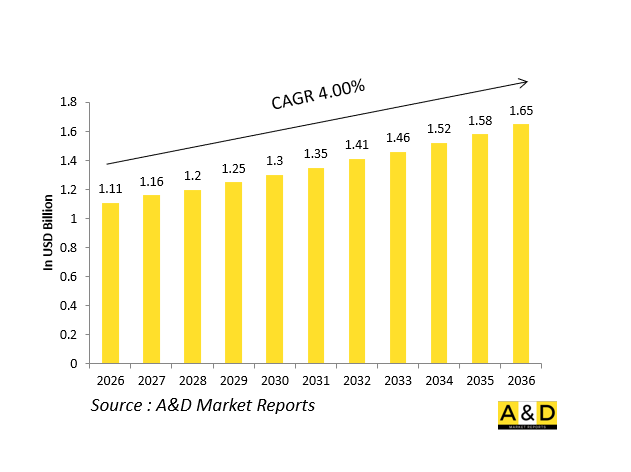
Introduction:
The global defense Auxiliary Power Units (APU) market is a critical segment within military aircraft power and propulsion support systems. An APU is a small gas turbine or auxiliary engine that provides electrical power, pneumatic pressure, and mechanical energy to support aircraft systems when the main engines are not operating or during specific flight phases. APUs are essential for functions such as engine starting, cabin conditioning, avionics operation, and ground support independence.
The market is projected to grow from approximately USD 1.9 billion in 2026 to around USD 2.9 billion by 2036, at a CAGR of about 4.3%. Growth is driven by increasing procurement of advanced military aircraft, rising demand for autonomous operations, and ongoing fleet modernization programs. As defense forces emphasize operational readiness and reduced reliance on ground infrastructure, APUs are becoming increasingly vital for both fixed-wing aircraft and helicopters across diverse mission environments.
Technology Impact in Global Defense APU Market
Technological advancements are significantly enhancing APU performance, efficiency, and reliability. Modern APUs are increasingly incorporating lightweight materials such as titanium alloys and advanced composites, reducing overall aircraft weight and improving fuel efficiency.
The shift toward more-electric aircraft (MEA) architectures is driving the development of APUs capable of delivering higher electrical output while maintaining compact size and efficiency. Digital control systems and advanced electronics are enabling precise power management, improved diagnostics, and seamless integration with aircraft avionics.
Additionally, innovations in noise reduction, emissions control, and fuel efficiency are improving environmental performance. The integration of health monitoring systems and predictive maintenance technologies is further enhancing reliability and reducing lifecycle costs.
Hybrid-electric and next-generation APU concepts are also emerging, focusing on improved energy efficiency and compatibility with sustainable aviation fuels. These technological developments are positioning APUs as intelligent and highly efficient onboard power solutions.
Key Drivers in Global Defense APU Market
The primary driver of the market is the increasing demand for advanced military aircraft equipped with autonomous power capabilities. APUs enable aircraft to operate independently of ground support equipment, enhancing flexibility and mission readiness.
Rising global defense spending and the procurement of next-generation fighter jets, transport aircraft, and helicopters are also fueling market growth. APUs are essential for engine starting, onboard system operation, and ground operations.
Another key driver is the growing emphasis on operational efficiency and reduced turnaround time. APUs allow rapid deployment and quick system activation, which is critical in combat and emergency scenarios.
Fleet modernization programs and the replacement of aging aircraft are further contributing to demand. Additionally, increasing maintenance, repair, and overhaul (MRO) activities support the aftermarket segment, as APUs require regular servicing due to continuous usage and operational stress.
Regional Trends in Global Defense APU Market
North America dominates the global defense APU market due to strong defense spending, advanced aerospace infrastructure, and the presence of major aircraft and engine manufacturers. The region leads in the adoption of advanced power and propulsion technologies.
Europe holds a significant share, driven by collaborative defense programs and modernization initiatives across NATO countries. The region focuses on innovation in efficient and environmentally sustainable APU systems.
The Asia-Pacific region is expected to witness the fastest growth during the forecast period, fueled by rising defense budgets and expanding indigenous aircraft manufacturing capabilities in countries such as India, China, and Japan. Increasing procurement of military aircraft is a key growth driver.
The Middle East is also emerging as a notable market due to ongoing investments in military aviation and the acquisition of advanced aircraft platforms. These regional trends reflect a global shift toward modernization, self-reliance, and enhanced operational capabilities.
Key Global Defense APU Market Program
Key defense aircraft programs are significantly driving demand for APU systems. Next-generation fighter aircraft, transport platforms, and helicopters increasingly rely on advanced APUs to support onboard systems, engine starting, and ground operations.
Modernization initiatives for existing aircraft fleets are also contributing to market growth, as older APU systems are upgraded with more efficient and reliable technologies.
Additionally, the development of more-electric aircraft architectures is influencing APU design, requiring higher power output and improved integration with onboard electrical systems.
Collaborations between aerospace OEMs and system manufacturers such as Honeywell, Safran, Pratt & Whitney, and Collins Aerospace are accelerating innovation in APU technologies. These efforts focus on improving efficiency, reducing emissions, and enhancing system reliability.
These programs highlight the strategic importance of APUs in ensuring aircraft readiness, supporting mission-critical operations, and enabling autonomous functionality in modern defense aviation.
Table of Contents
Defense Auxiliary Power Units (APU) Market - Table of Contents
Defense Auxiliary Power Units (APU) Market Report Definition
Defense Auxiliary Power Units (APU) Market Segmentation
By Platform
By Power Output
By Start Method
Defense Auxiliary Power Units (APU) Market Analysis for next 10 Years
The 10-year Defense Auxiliary Power Units (APU) Market analysis would give a detailed overview of Defense Auxiliary Power Units (APU) Market growth, changing dynamics, technology adoption overviews and the overall market attractiveness is covered in this chapter.
Market Technologies of Defense Auxiliary Power Units (APU) Market
This segment covers the top 10 technologies that is expected to impact this market and the possible implications these technologies would have on the overall market.
Global Defense Auxiliary Power Units (APU) Market Forecast
The 10-year Defense Auxiliary Power Units (APU) Market forecast of this market is covered in detailed across the segments which are mentioned above.
Regional Defense Auxiliary Power Units (APU) Market Trends & Forecast
The regional counter drone market trends, drivers, restraints and Challenges of this market, the Political, Economic, Social and Technology aspects are covered in this segment. The market forecast and scenario analysis across regions are also covered in detailed in this segment. The last part of the regional analysis includes profiling of the key companies, supplier landscape and company benchmarking. The current market size is estimated based on the normal scenario.
North America
Drivers, Restraints and Challenges
PEST
Market Forecast & Scenario Analysis
Key Companies
Supplier Tier Landscape
Company Benchmarking
Europe
Middle East
APAC
South America
Country Analysis of Defense Auxiliary Power Units (APU) Market
This chapter deals with the key defense programs in this market, it also covers the latest news and patents which have been filed in this market. Country level 10 year market forecast and scenario analysis are also covered in this chapter.
US
Defense Programs
Latest News
Patents
Current levels of technology maturation in this market
Market Forecast & Scenario Analysis
Canada
Italy
France
Germany
Netherlands
Belgium
Spain
Sweden
Greece
Australia
South Africa
India
China
Russia
South Korea
Japan
Malaysia
Singapore
Brazil
Opportunity Matrix for Defense Auxiliary Power Units (APU) Market
The opportunity matrix helps the readers understand the high opportunity segments in this market.
Expert Opinions on Defense Auxiliary Power Units (APU) Market Report
Hear from our experts their opinion of the possible analysis for this market.
Conclusions
About Aviation and Defense Market Reports
List of Tables
- Table 1: 10 Year Market Outlook, 2026-2036
- Table 2: Drivers, Impact Analysis, North America
- Table 3: Restraints, Impact Analysis, North America
- Table 4: Challenges, Impact Analysis, North America
- Table 5: Drivers, Impact Analysis, Europe
- Table 6: Restraints, Impact Analysis, Europe
- Table 7: Challenges, Impact Analysis, Europe
- Table 8: Drivers, Impact Analysis, Middle East
- Table 9: Restraints, Impact Analysis, Middle East
- Table 10: Challenges, Impact Analysis, Middle East
- Table 11: Drivers, Impact Analysis, APAC
- Table 12: Restraints, Impact Analysis, APAC
- Table 13: Challenges, Impact Analysis, APAC
- Table 14: Drivers, Impact Analysis, South America
- Table 15: Restraints, Impact Analysis, South America
- Table 16: Challenges, Impact Analysis, South America
- Table 17: Scenario Analysis, Scenario 1,By Power Output, 2026-2036
- Table 18: Scenario Analysis, Scenario 1, By Platform, 2026-2036
- Table 19: Scenario Analysis, Scenario 1,By Start Method, 2026-2036
- Table 20: Scenario Analysis, Scenario 2,By Power Output, 2026-2036
- Table 21: Scenario Analysis, Scenario 2, By Platform, 2026-2036
- Table 22: Scenario Analysis, Scenario 2,By Start Method, 2026-2036
List of Figures
- Figure 1: Global Defense Auxiliary Power Units (APU) Market Forecast, 2026-2036
- Figure 2: Global Defense Auxiliary Power Units (APU) Market Forecast, By Start Method, 2026-2036
- Figure 3: Global Defense Auxiliary Power Units (APU) Market Forecast, By Platform, 2026-2036
- Figure 4: Global Defense Auxiliary Power Units (APU) Market Forecast, By Power Output, 2026-2036
- Figure 5: North America, Defense Auxiliary Power Units (APU) Market Forecast, 2026-2036
- Figure 6: Europe, Defense Auxiliary Power Units (APU) Market Forecast, 2026-2036
- Figure 7: Middle East, Defense Auxiliary Power Units (APU) Market Forecast, 2026-2036
- Figure 8: APAC, Defense Auxiliary Power Units (APU) Market, Market Forecast, 2026-2036
- Figure 9: South America, Defense Auxiliary Power Units (APU) Market Forecast, 2026-2036
- Figure 10: United States, Defense Auxiliary Power Units (APU) Market, Region Maturation, 2026-2036
- Figure 11: United States, Defense Auxiliary Power Units (APU) Market Forecast, 2026-2036
- Figure 12: Canada, Defense Auxiliary Power Units (APU) Market, Region Maturation, 2026-2036
- Figure 13: Canada, Defense Auxiliary Power Units (APU) Market Forecast, 2026-2036
- Figure 14: Italy, Defense Auxiliary Power Units (APU) Market , Region Maturation, 2026-2036
- Figure 15: Italy, Defense Auxiliary Power Units (APU) Market Forecast, 2026-2036
- Figure 16: France, Defense Auxiliary Power Units (APU) Market , Region Maturation, 2026-2036
- Figure 17: France, Defense Auxiliary Power Units (APU) Market Forecast, 2026-2036
- Figure 18: Germany, Defense Auxiliary Power Units (APU) Market , Region Maturation, 2026-2036
- Figure 19: Germany, Defense Auxiliary Power Units (APU) Market Forecast, 2026-2036
- Figure 20: Netherlands, Defense Auxiliary Power Units (APU) Market , Region Maturation, 2026-2036
- Figure 21: Netherlands, Defense Auxiliary Power Units (APU) Market Forecast, 2026-2036
- Figure 22: Belgium, Defense Auxiliary Power Units (APU) Market , Region Maturation, 2026-2036
- Figure 23: Belgium, Defense Auxiliary Power Units (APU) Market Forecast, 2026-2036
- Figure 24: Spain, Defense Auxiliary Power Units (APU) Market , Region Maturation, 2026-2036
- Figure 25: Spain, Defense Auxiliary Power Units (APU) Market Forecast, 2026-2036
- Figure 26: Sweden, Defense Auxiliary Power Units (APU) Market , Region Maturation, 2026-2036
- Figure 27: Sweden, Defense Auxiliary Power Units (APU) Market Forecast, 2026-2036
- Figure 28: Brazil, Defense Auxiliary Power Units (APU) Market , Region Maturation, 2026-2036
- Figure 29: Brazil, Defense Auxiliary Power Units (APU) Market Forecast, 2026-2036
- Figure 30: Australia, Defense Auxiliary Power Units (APU) Market , Region Maturation, 2026-2036
- Figure 31: Australia, Defense Auxiliary Power Units (APU) Market Forecast, 2026-2036
- Figure 32: India, Defense Auxiliary Power Units (APU) Market , Region Maturation, 2026-2036
- Figure 33: India, Defense Auxiliary Power Units (APU) Market Forecast, 2026-2036
- Figure 34: China, Defense Auxiliary Power Units (APU) Market , Region Maturation, 2026-2036
- Figure 35: China, Defense Auxiliary Power Units (APU) Market Forecast, 2026-2036
- Figure 36: Saudi Arabia, Defense Auxiliary Power Units (APU) Market , Region Maturation, 2026-2036
- Figure 37: Saudi Arabia, Defense Auxiliary Power Units (APU) Market Forecast, 2026-2036
- Figure 38: South Korea, Defense Auxiliary Power Units (APU) Market , Region Maturation, 2026-2036
- Figure 39: South Korea, Defense Auxiliary Power Units (APU) Market Forecast, 2026-2036
- Figure 40: Japan, Defense Auxiliary Power Units (APU) Market , Region Maturation, 2026-2036
- Figure 41: Japan, Defense Auxiliary Power Units (APU) Market Forecast, 2026-2036
- Figure 42: Malaysia, Defense Auxiliary Power Units (APU) Market , Region Maturation, 2026-2036
- Figure 43: Malaysia, Defense Auxiliary Power Units (APU) Market Forecast, 2026-2036
- Figure 44: Singapore, Defense Auxiliary Power Units (APU) Market , Region Maturation, 2026-2036
- Figure 45: Singapore, Defense Auxiliary Power Units (APU) Market Forecast, 2026-2036
- Figure 46: United Kingdom, Defense Auxiliary Power Units (APU) Market , Region Maturation, 2026-2036
- Figure 47: United Kingdom, Defense Auxiliary Power Units (APU) Market Forecast, 2026-2036
- Figure 48: Opportunity Analysis, Defense Auxiliary Power Units (APU) Market , By Start Method (Cumulative Market), 2026-2036
- Figure 49: Opportunity Analysis, Defense Auxiliary Power Units (APU) Market , By Start Method (CAGR), 2026-2036
- Figure 50: Opportunity Analysis, Defense Auxiliary Power Units (APU) Market , By Platform (Cumulative Market), 2026-2036
- Figure 51: Opportunity Analysis, Defense Auxiliary Power Units (APU) Market , By Platform (CAGR), 2026-2036
- Figure 52: Opportunity Analysis, Defense Auxiliary Power Units (APU) Market ,By Power Output(Cumulative Market), 2026-2036
- Figure 53: Opportunity Analysis, Defense Auxiliary Power Units (APU) Market ,By Power Output(CAGR), 2026-2036
- Figure 54: Scenario Analysis, Defense Auxiliary Power Units (APU) Market , Cumulative Market, 2026-2036
- Figure 55: Scenario Analysis, Defense Auxiliary Power Units (APU) Market , Global Market, 2026-2036
- Figure 56: Scenario 1, Defense Auxiliary Power Units (APU) Market , Total Market, 2026-2036
- Figure 57: Scenario 1, Defense Auxiliary Power Units (APU) Market , Region, 2026-2036
- Figure 58: Scenario 1, Defense Auxiliary Power Units (APU) Market , By Platform, 2026-2036
- Figure 59: Scenario 1, Defense Auxiliary Power Units (APU) Market ,By Power Output, 2026-2036
- Figure 60: Scenario 2, Defense Auxiliary Power Units (APU) Market , Total Market, 2026-2036
- Figure 61: Scenario 2, Defense Auxiliary Power Units (APU) Market , By Start Method, 2026-2036
- Figure 62: Scenario 2, Defense Auxiliary Power Units (APU) Market , By Platform, 2026-2036
- Figure 63: Scenario 2, Defense Auxiliary Power Units (APU) Market ,By Power Output, 2026-2036
- Figure 64: Company Benchmark, Defense Auxiliary Power Units (APU) Market , 2026-2036

