
PUBLISHER: Aviation & Defense Market Reports (A&D) | PRODUCT CODE: 2030191

PUBLISHER: Aviation & Defense Market Reports (A&D) | PRODUCT CODE: 2030191
Global Defense MRO - Naval Platforms Market 2026-2036
Global Defense MRO - Naval Platforms Market
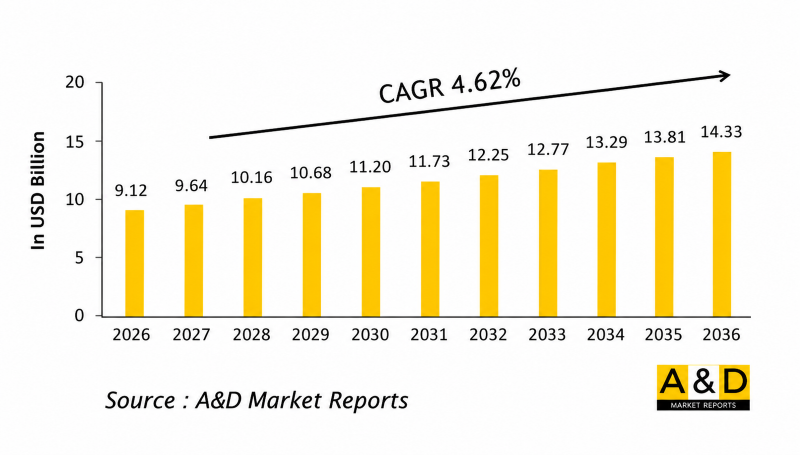
The Global Defense MRO - Naval Platforms Market is estimated at USD 9.12 billion in 2026, projected to grow to USD 14.33 billion by 2036 at a Compound Annual Growth Rate (CAGR) of 4.62% over the forecast period 2026-2036.
1. Introduction
The Global Defense MRO - Naval Platforms Market represents a critical segment of the defense ecosystem focused on maintaining, repairing, and upgrading naval assets such as surface combatants, submarines, and auxiliary vessels. These platforms operate in harsh maritime environments that accelerate wear and corrosion, making continuous maintenance essential for operational readiness. Naval MRO services include routine inspections, system upgrades, dry-docking, hull repairs, and life-extension programs. The increasing complexity of naval systems, including advanced propulsion, combat management systems, and onboard aviation facilities, has made MRO activities more specialized and technologically demanding. Governments and naval forces rely on a combination of public shipyards, private contractors, and original equipment manufacturers to ensure fleet availability. The market is also shaped by long service lifecycles of naval vessels, which require periodic modernization to remain mission-capable. As maritime security concerns grow globally, naval MRO continues to play a vital role in sustaining defense preparedness and extending fleet longevity.
2. Technology Impact in Global Defense MRO - Naval Platforms Market
Technological advancements are transforming naval MRO operations by improving efficiency, accuracy, and safety. Digitalization plays a central role, with predictive maintenance systems using sensor data and analytics to anticipate failures before they occur. Digital twin technology enables virtual modeling of vessels, allowing engineers to simulate maintenance scenarios and optimize repair schedules. Robotics and automation are increasingly used for hazardous tasks such as hull cleaning, welding, and confined space inspections, reducing risks to personnel. Advanced non-destructive testing techniques enhance defect detection in critical structures, ensuring structural integrity without dismantling components. Underwater drones and remotely operated vehicles allow inspection of submerged sections without requiring dry-docking, significantly reducing downtime. Augmented reality tools assist technicians during complex repairs by providing real-time guidance and schematics. These innovations collectively reduce turnaround time, lower operational costs, and enhance fleet availability, making naval MRO more proactive and data-driven rather than reactive.
3. Key Drivers in Global Defense MRO - Naval Platforms Market
The growth of the naval MRO market is driven primarily by the increasing need to maintain aging fleets. Many naval vessels remain in service for extended periods, requiring continuous upgrades and repairs to ensure operational effectiveness. Rising geopolitical tensions and maritime security challenges are also prompting governments to maintain high fleet readiness, increasing demand for reliable MRO services. Another significant driver is the growing complexity of modern naval systems, including integrated combat systems, advanced propulsion technologies, and electronic warfare capabilities, all of which require specialized maintenance expertise.
Budget constraints in many countries encourage lifecycle extension programs rather than immediate replacement of vessels, further boosting MRO demand. Additionally, the shift toward outsourcing maintenance activities to private sector players and specialized contractors is enhancing efficiency and expanding market opportunities. The integration of advanced technologies such as predictive maintenance and automation is also driving adoption, as navies seek to reduce downtime and optimize operational performance. Furthermore, the expansion of naval fleets in emerging economies and increased investments in maritime defense infrastructure are supporting sustained demand. Together, these factors create a strong foundation for long-term growth in the naval MRO sector.
4. Regional Trends in Global Defense MRO - Naval Platforms Market
Regional dynamics in the naval MRO market reflect varying defense priorities, fleet compositions, and industrial capabilities. North America remains a dominant region due to its advanced naval infrastructure, strong defense budget, and continuous modernization programs. The presence of established shipyards and technology providers supports high levels of MRO activity. Europe also plays a significant role, with several countries focusing on upgrading existing fleets and enhancing maritime security capabilities through collaborative defense initiatives.
The Asia-Pacific region is witnessing rapid growth driven by expanding naval fleets, rising maritime disputes, and increasing investments in indigenous shipbuilding and maintenance capabilities. Countries in this region are strengthening their naval presence and developing domestic MRO ecosystems to reduce reliance on foreign service providers. The Middle East is another emerging market, where naval modernization programs and strategic maritime interests are boosting demand for maintenance and overhaul services.
Latin America and Africa show moderate growth, primarily driven by fleet sustainment needs and gradual modernization efforts. Overall, regional trends highlight a shift toward localized MRO capabilities, technological adoption, and increased collaboration between governments and private industry to enhance naval readiness and operational sustainability.
5. Key Programs in Global Defense MRO - Naval Platforms Market
Key programs in the naval MRO market focus on fleet sustainment, modernization, and lifecycle extension initiatives undertaken by naval forces worldwide. These programs typically include scheduled maintenance cycles, mid-life upgrades, and capability enhancement projects aimed at extending vessel service life and improving operational performance. Dry-docking programs are essential components, involving structural repairs, propulsion system overhauls, and hull maintenance to ensure seaworthiness.
Modernization programs often integrate advanced combat systems, communication technologies, and electronic warfare capabilities into existing platforms. Submarine overhaul programs are particularly complex, requiring specialized facilities and expertise due to the critical nature of underwater operations and propulsion systems. Additionally, digital transformation initiatives are being incorporated into MRO programs, enabling predictive maintenance and real-time monitoring of vessel health.
Public-private partnerships are increasingly common, with governments collaborating with shipbuilders, defense contractors, and technology firms to enhance efficiency and reduce costs. These programs also emphasize sustainability, incorporating environmentally compliant maintenance practices and energy-efficient upgrades. Overall, key MRO programs are evolving to address the dual challenge of maintaining aging fleets while integrating next-generation technologies, ensuring that naval forces remain mission-ready in a rapidly changing security environment.
Table of Contents
Defense MRO - Naval Platforms Market - Table of Contents
Defense MRO - Naval Platforms Market Report Definition
Defense MRO - Naval Platforms Market Segmentation
By Region
By Component
By Vessel Type
Defense MRO - Naval Platforms Market Analysis for next 10 Years
The 10-year Defense MRO - Naval Platforms Market analysis would give a detailed overview of Defense MRO - Naval Platforms Market growth, changing dynamics, technology adoption overviews and the overall market attractiveness is covered in this chapter.
Market Technologies of Defense MRO - Naval Platforms Market
This segment covers the top 10 technologies that is expected to impact this market and the possible implications these technologies would have on the overall market.
Global Defense MRO - Naval Platforms Market Forecast
The 10-year Defense MRO - Naval Platforms Market forecast of this market is covered in detailed across the segments which are mentioned above.
Regional Defense MRO - Naval Platforms Market Trends & Forecast
The regional Defense MRO - Naval Platforms Market trends, drivers, restraints and Challenges of this market, the Political, Economic, Social and Technology aspects are covered in this segment. The market forecast and scenario analysis across regions are also covered in detailed in this segment. The last part of the regional analysis includes profiling of the key companies, supplier landscape and company benchmarking. The current market size is estimated based on the normal scenario.
North America
Drivers, Restraints and Challenges
PEST
Market Forecast & Scenario Analysis
Key Companies
Supplier Tier Landscape
Company Benchmarking
Europe
Middle East
APAC
South America
Country Analysis of Defense MRO - Naval Platforms Market
This chapter deals with the key defense programs in this market, it also covers the latest news and patents which have been filed in this market. Country level 10 year market forecast and scenario analysis are also covered in this chapter.
US
Defense Programs
Latest News
Patents
Current levels of technology maturation in this market
Market Forecast & Scenario Analysis
Canada
Italy
France
Germany
Netherlands
Belgium
Spain
Sweden
Greece
Australia
South Africa
India
China
Russia
South Korea
Japan
Malaysia
Singapore
Brazil
Opportunity Matrix for Defense MRO - Naval Platforms Market
The opportunity matrix helps the readers understand the high opportunity segments in this market.
Expert Opinions on Defense MRO - Naval Platforms Market Report
Hear from our experts their opinion of the possible analysis for this market.
Conclusions
About Aviation and Defense Market Reports
List of Tables
- Table 1: 10 Year Market Outlook, 2026-2036
- Table 2: Drivers, Impact Analysis, North America
- Table 3: Restraints, Impact Analysis, North America
- Table 4: Challenges, Impact Analysis, North America
- Table 5: Drivers, Impact Analysis, Europe
- Table 6: Restraints, Impact Analysis, Europe
- Table 7: Challenges, Impact Analysis, Europe
- Table 8: Drivers, Impact Analysis, Middle East
- Table 9: Restraints, Impact Analysis, Middle East
- Table 10: Challenges, Impact Analysis, Middle East
- Table 11: Drivers, Impact Analysis, Apac
- Table 12: Restraints, Impact Analysis, Apac
- Table 13: Challenges, Impact Analysis, Apac
- Table 14: Drivers, Impact Analysis, South America
- Table 15: Restraints, Impact Analysis, South America
- Table 16: Challenges, Impact Analysis, South America
- Table 17: Scenario Analysis, Scenario 1, By Region, 2026-2036
- Table 18: Scenario Analysis, Scenario 1, By Component 2026-2036
- Table 19: Scenario Analysis, Scenario 1, By Vessel Type, 2026-2036
- Table 20: Scenario Analysis, Scenario 2, By Region, 2026-2036
- Table 21: Scenario Analysis, Scenario 2, By Component2026-2036
- Table 22: Scenario Analysis, Scenario 2, By Vessel Type, 2026-2036
List of Figures
- Figure 1: Global Defense MRO - Naval Platforms Market Forecast, 2026-2036
- Figure 2: Global Defense MRO - Naval Platforms Market Forecast, By Region, 2026-2036
- Figure 3: Global Defense MRO - Naval Platforms Market Forecast, By Component 2026-2036
- Figure 4: Global Defense MRO - Naval Platforms Market Forecast, By Vessel Type, 2026-2036
- Figure 5: North America, Defense MRO - Naval Platforms Market , Market Forecast, 2026-2036
- Figure 6: Europe, Defense MRO - Naval Platforms Market , Market Forecast, 2026-2036
- Figure 7: Middle East, Defense MRO - Naval Platforms Market , Market Forecast, 2026-2036
- Figure 8: Apac, Defense MRO - Naval Platforms Market , Market Forecast, 2026-2036
- Figure 9: South America, Defense MRO - Naval Platforms Market , Market Forecast, 2026-2036
- Figure 10: United States, Defense MRO - Naval Platforms Market , Region Maturation, 2026-2036
- Figure 11: United States, Defense MRO - Naval Platforms Market , Market Forecast, 2026-2036
- Figure 12: Canada, Defense MRO - Naval Platforms Market , Region Maturation, 2026-2036
- Figure 13: Canada, Defense MRO - Naval Platforms Market , Market Forecast, 2026-2036
- Figure 14: Italy, Defense MRO - Naval Platforms Market , Region Maturation, 2026-2036
- Figure 15: Italy, Defense MRO - Naval Platforms Market , Market Forecast, 2026-2036
- Figure 16: France, Defense MRO - Naval Platforms Market , Region Maturation, 2026-2036
- Figure 17: France, Defense MRO - Naval Platforms Market , Market Forecast, 2026-2036
- Figure 18: Germany, Defense MRO - Naval Platforms Market , Region Maturation, 2026-2036
- Figure 19: Germany, Defense MRO - Naval Platforms Market , Market Forecast, 2026-2036
- Figure 20: Netherlands, Defense MRO - Naval Platforms Market , Region Maturation, 2026-2036
- Figure 21: Netherlands, Defense MRO - Naval Platforms Market , Market Forecast, 2026-2036
- Figure 22: Belgium, Defense MRO - Naval Platforms Market , Region Maturation, 2026-2036
- Figure 23: Belgium, Defense MRO - Naval Platforms Market , Market Forecast, 2026-2036
- Figure 24: Spain, Defense MRO - Naval Platforms Market , Region Maturation, 2026-2036
- Figure 25: Spain, Defense MRO - Naval Platforms Market , Market Forecast, 2026-2036
- Figure 26: Sweden, Defense MRO - Naval Platforms Market , Region Maturation, 2026-2036
- Figure 27: Sweden, Defense MRO - Naval Platforms Market , Market Forecast, 2026-2036
- Figure 28: Brazil, Defense MRO - Naval Platforms Market , Region Maturation, 2026-2036
- Figure 29: Brazil, Defense MRO - Naval Platforms Market , Market Forecast, 2026-2036
- Figure 30: Australia, Defense MRO - Naval Platforms Market , Region Maturation, 2026-2036
- Figure 31: Australia, Defense MRO - Naval Platforms Market , Market Forecast, 2026-2036
- Figure 32: India, Defense MRO - Naval Platforms Market , Region Maturation, 2026-2036
- Figure 33: India, Defense MRO - Naval Platforms Market , Market Forecast, 2026-2036
- Figure 34: China, Defense MRO - Naval Platforms Market , Region Maturation, 2026-2036
- Figure 35: China, Defense MRO - Naval Platforms Market , Market Forecast, 2026-2036
- Figure 36: Saudi Arabia, Defense MRO - Naval Platforms Market , Region Maturation, 2026-2036
- Figure 37: Saudi Arabia, Defense MRO - Naval Platforms Market , Market Forecast, 2026-2036
- Figure 38: South Korea, Defense MRO - Naval Platforms Market , Region Maturation, 2026-2036
- Figure 39: South Korea, Defense MRO - Naval Platforms Market , Market Forecast, 2026-2036
- Figure 40: Japan, Defense MRO - Naval Platforms Market , Region Maturation, 2026-2036
- Figure 41: Japan, Defense MRO - Naval Platforms Market , Market Forecast, 2026-2036
- Figure 42: Malaysia, Defense MRO - Naval Platforms Market , Region Maturation, 2026-2036
- Figure 43: Malaysia, Defense MRO - Naval Platforms Market , Market Forecast, 2026-2036
- Figure 44: Singapore, Defense MRO - Naval Platforms Market , Region Maturation, 2026-2036
- Figure 45: Singapore, Defense MRO - Naval Platforms Market , Market Forecast, 2026-2036
- Figure 46: United Kingdom, Defense MRO - Naval Platforms Market , Region Maturation, 2026-2036
- Figure 47: United Kingdom, Defense MRO - Naval Platforms Market , Market Forecast, 2026-2036
- Figure 48: Opportunity Analysis, Defense MRO - Naval Platforms Market , By Region (Cumulative Market), 2026-2036
- Figure 49: Opportunity Analysis, Defense MRO - Naval Platforms Market , By Region (Cagr), 2026-2036
- Figure 50: Opportunity Analysis, Defense MRO - Naval Platforms Market , By Component Cumulative Market), 2026-2036
- Figure 51: Opportunity Analysis, Defense MRO - Naval Platforms Market , By Component(Cagr), 2026-2036
- Figure 52: Opportunity Analysis, Defense MRO - Naval Platforms Market , By Vessel Type(Cumulative Market), 2026-2036
- Figure 53: Opportunity Analysis, Defense MRO - Naval Platforms Market , By Vessel Type(Cagr), 2026-2036
- Figure 54: Scenario Analysis, Defense MRO - Naval Platforms Market , Cumulative Market, 2026-2036
- Figure 55: Scenario Analysis, Defense MRO - Naval Platforms Market , Global Market, 2026-2036
- Figure 56: Scenario 1, Defense MRO - Naval Platforms Market , Total Market, 2026-2036
- Figure 57: Scenario 1, Defense MRO - Naval Platforms Market , By Region, 2026-2036
- Figure 58: Scenario 1, Defense MRO - Naval Platforms Market , By Component 2026-2036
- Figure 59: Scenario 1, Defense MRO - Naval Platforms Market , By Vessel Type, 2026-2036
- Figure 60: Scenario 2, Defense MRO - Naval Platforms Market , Total Market, 2026-2036
- Figure 61: Scenario 2, Defense MRO - Naval Platforms Market , By Region, 2026-2036
- Figure 62: Scenario 2, Defense MRO - Naval Platforms Market , By Component 2026-2036
- Figure 63: Scenario 2, Defense MRO - Naval Platforms Market , By Vessel Type, 2026-2036
- Figure 64: Company Benchmark, Defense MRO - Naval Platforms Market , 2026-2036

