PUBLISHER: Mordor Intelligence | PRODUCT CODE: 2073461

PUBLISHER: Mordor Intelligence | PRODUCT CODE: 2073461
North America Pet Food Nutraceuticals - Market Share Analysis, Industry Trends & Statistics, Growth Forecasts (2026 - 2031)
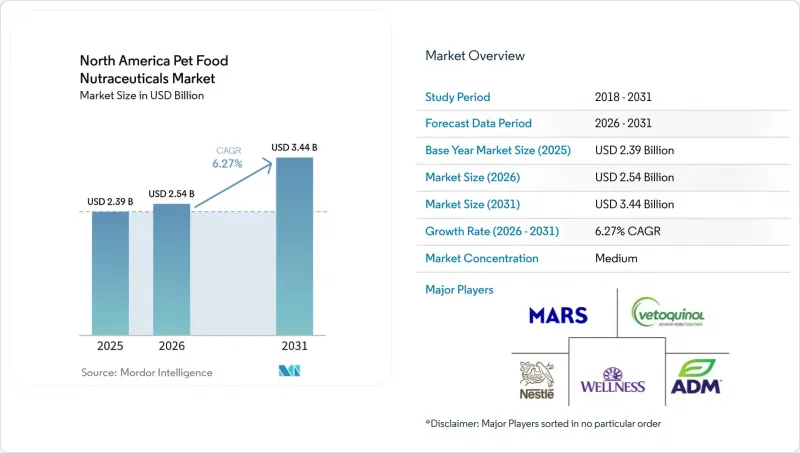
According to Mordor Intelligence, the north america pet food nutraceuticals market size was valued at USD 2.39 billion in 2025 and estimated to grow from USD 2.54 billion in 2026 to reach USD 3.44 billion by 2031, at a CAGR of 6.27% during the forecast period (2026-2031).
This report is Segmented by Sub Product (Milk Bioactives, Omega-3 Fatty Acids, Probiotics, and More), by Pets (Cats, Dogs, and Other Pets), by Distribution Channel (Convenience Stores, Online Channel, and More), and by Geography (Canada, Mexico, and More). The Market Forecasts are Provided in Terms of Value (USD) and Volume (Metric Tons).
North America Pet Food Nutraceuticals Market Trends and Insights
Humanization of Pets Elevates Spending on Preventive Supplements
Pet owners are increasingly treating their companions as family members, fundamentally reshaping their purchasing decisions toward premium preventive healthcare products. The American Pet Products Association projects total pet industry spending will reach USD 207 billion by 2030, with supplements capturing a disproportionate share of this growth as owners prioritize longevity and quality of life interventions . This behavioral shift is most evident in urban markets, where high disposable income levels support the adoption of premium products. The trend is also spreading to suburban and rural areas through increased e-commerce accessibility. The humanization trend creates opportunities for brands that successfully communicate scientific backing and health outcomes, rather than relying solely on ingredient marketing.
Aging Companion-Animal Population Drives Joint and Cognitive Nutraceutical Demand
Demographic shifts in pet populations create a sustained demand for age-related health interventions, with senior pets (7 years and older) accounting for 20-40% of the companion animal population, depending on the species and geographic location. This aging cohort requires specialized nutrition support for joint mobility, cognitive function, and digestive health that traditional pet foods cannot adequately address. The trend is most pronounced in the United States and Canada, where established pet ownership patterns result in higher concentrations of senior animals. In contrast, Mexico's younger pet demographic suggests future growth potential as these animals age. Joint health supplements containing glucosamine, chondroitin, and omega-3 fatty acids represent the largest segment within the age-related nutrition market. The aging pet population also drives innovation in delivery formats, with soft chews and liquid supplements gaining traction among owners managing pets with reduced appetite or swallowing difficulties.
FDA-AAFCO Regulatory Ambiguity Raises Compliance Costs
Overlapping jurisdictions between the Food and Drug Administration and the Association of American Feed Control Officials create compliance uncertainties that inflate development costs and delay product launches for supplement manufacturers. The expiration of the FDA-AAFCO (Food and Drug Administration - Association of American Feed Control Officials) memorandum of understanding in 2024 left unclear boundaries regarding ingredient approval pathways, with some manufacturers facing dual regulatory requirements that extend approval timelines by 12-18 months . This regulatory complexity particularly affects innovative ingredients, such as precision-fermented compounds and novel bioactives, which lack established approval precedents. Smaller companies face disproportionate impacts from regulatory uncertainty, as they often lack the resources to navigate complex approval processes or absorb extended development timelines. The FDA's new Animal Food Ingredient Center, launched in 2024, aims to streamline approvals, yet implementation remains inconsistent across ingredient categories.
Other drivers and restraints analyzed in the detailed report include:
- Rapid E-commerce Adoption Enables Direct-to-Consumer Distribution
- Veterinary Endorsements Enhance Product Credibility and Uptake
- Price Sensitivity Amid Inflation Causes Trade-Down to Basic Diets
For complete list of drivers and restraints, kindly check the Table Of Contents.
Segment Analysis
Vitamins and minerals hold the largest market share at 26.05% in 2025, while also leading growth at a 6.72% CAGR through 2031, reflecting sustained demand for foundational nutritional support across all pet demographics. This dual dominance stems from the category's broad applicability, spanning everything from puppy development to senior wellness, combined with relatively straightforward regulatory pathways that enable rapid product innovation.
The leadership position of this segment is primarily driven by the increasing endorsement of pet nutritional supplements by veterinarians to maintain overall pet health. The United States accounts for the largest share of the vitamins and minerals market, with pet owners demonstrating a growing awareness of preventive healthcare. Dogs are the primary consumers of vitamins and minerals in North America, with pet owners increasingly focusing on supplementing their pets' diets with essential nutrients for optimal health and wellness.
Complete Report Scope:
- Sub Product
- Milk Bioactives
- Omega-3 Fatty Acids
- Probiotics
- Proteins and Peptides
- Vitamins and Minerals
- Other Nutraceuticals
- Pets
- Dogs
- Cats
- Other Pets
- Distribution Channel
- Convenience Stores
- Online Channel
- Specialty Stores
- Supermarkets/Hypermarkets
- Other Channels
- Geography
- United States
- Canada
- Mexico
- Rest of North America
List of Companies Covered in this Report:
- Mars, Incorporated
- Vetoquinol
- Nutramax Laboratories, Inc.
- ADM
- Wellness Pet Company, Inc. (Clearlake Capital Group, L.P.)
- Nestle (Purina)
- Alltech
- Dechra Pharmaceuticals PLC
- Virbac
- Schell & Kampeter, Inc. (Diamond Pet Foods)
- Nutramax Laboratories
- PetHonesty
- Zesty Paws
- Zoetis
- Alltech
Additional Benefits:
- The market estimate (ME) sheet in Excel format
- 3 months of analyst support
TABLE OF CONTENTS
1 INTRODUCTION
- 1.1 Study Assumptions and Market Definition
- 1.2 Scope of the Study
- 1.3 Research Methodology
2 REPORT OFFERS
3 EXECUTIVE SUMMARY AND KEY FINDINGS
4 KEY INDUSTRY TRENDS
- 4.1 Pet Population
- 4.1.1 Cats
- 4.1.2 Dogs
- 4.1.3 Other Pets
- 4.2 Pet Expenditure
- 4.3 Consumer Trends
5 SUPPLY AND PRODUCTION DYNAMICS
- 5.1 Trade Analysis
- 5.2 Ingredient Trends
- 5.3 Value Chain and Distribution Channel Analysis
- 5.4 Regulatory Framework
- 5.5 Market Drivers
- 5.5.1 Humanization of pets elevates spend on preventive supplements
- 5.5.2 Aging companion-animal population drives joint and cognitive nutraceutical demand
- 5.5.3 Rapid e-commerce adoption enables direct-to-consumer distribution
- 5.5.4 Veterinary endorsements enhance product credibility and uptake
- 5.5.5 Subscription-based personalized nutrition models gain traction
- 5.5.6 Precision-fermented and post-biotic ingredients improve cost stability
- 5.6 Market Restraints
- 5.6.1 FDA-AAFCO regulatory ambiguity raises compliance costs
- 5.6.2 Price sensitivity amid inflation causes trade-down to basic diets
- 5.6.3 Shrinking marine-omega-3 quotas tighten key input supply
- 5.6.4 Pet-data privacy concerns curb uptake of DNA-driven formulations
6 MARKET SIZE AND GROWTH FORECASTS (VALUE AND VOLUME)
- 6.1 Sub Product
- 6.1.1 Milk Bioactives
- 6.1.2 Omega-3 Fatty Acids
- 6.1.3 Probiotics
- 6.1.4 Proteins and Peptides
- 6.1.5 Vitamins and Minerals
- 6.1.6 Other Nutraceuticals
- 6.2 Pets
- 6.2.1 Dogs
- 6.2.2 Cats
- 6.2.3 Other Pets
- 6.3 Distribution Channel
- 6.3.1 Convenience Stores
- 6.3.2 Online Channel
- 6.3.3 Specialty Stores
- 6.3.4 Supermarkets/Hypermarkets
- 6.3.5 Other Channels
- 6.4 Geography
- 6.4.1 United States
- 6.4.2 Canada
- 6.4.3 Mexico
- 6.4.4 Rest of North America
7 COMPETITIVE LANDSCAPE
- 7.1 Key Strategic Moves
- 7.2 Market Share Analysis
- 7.3 Brand Positioning Matrix
- 7.4 Market Claim Analysis
- 7.5 Company Landscape
- 7.6 Company Profiles (Includes Global Level Overview, Market Level Overview, Core Business Segments, Financials, Key Information, Market Rank, Market Share, Products and Services, and Analysis of Recent Developments).
- 7.6.1 Mars, Incorporated
- 7.6.2 Vetoquinol
- 7.6.3 Nutramax Laboratories, Inc.
- 7.6.4 ADM
- 7.6.5 Wellness Pet Company, Inc. (Clearlake Capital Group, L.P.)
- 7.6.6 Nestle (Purina)
- 7.6.7 Alltech
- 7.6.8 Dechra Pharmaceuticals PLC
- 7.6.9 Virbac
- 7.6.10 Schell & Kampeter, Inc. (Diamond Pet Foods)
- 7.6.11 Nutramax Laboratories
- 7.6.12 PetHonesty
- 7.6.13 Zesty Paws
- 7.6.14 Zoetis
- 7.6.15 Alltech
8 KEY STRATEGIC QUESTIONS FOR PET FOOD CEOS

