PUBLISHER: Mordor Intelligence | PRODUCT CODE: 2113365

PUBLISHER: Mordor Intelligence | PRODUCT CODE: 2113365
Europe Probiotics - Market Share Analysis, Industry Trends & Statistics, Growth Forecasts (2026 - 2031)
According to Mordor Intelligence, the Europe food probiotics market stood at USD 15.12 billion in 2026 and is projected to reach USD 18.48 billion by 2031, expanding at a 4.82% CAGR.
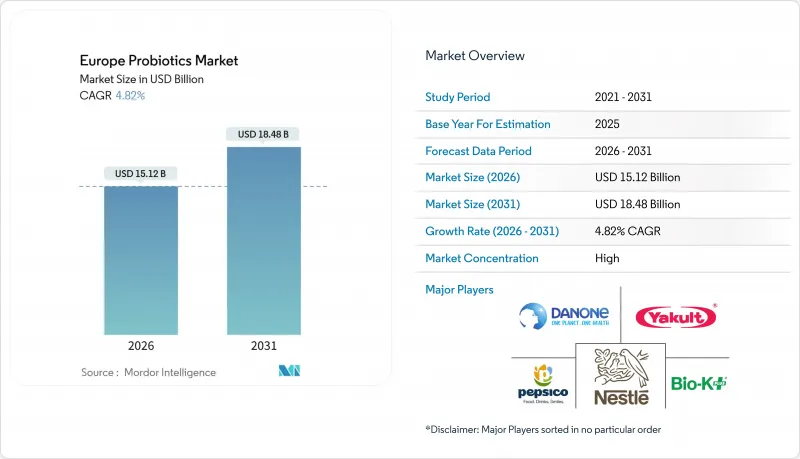
This report is Segmented by Product Type (Probiotic Foods, Probiotic Drinks, and Dietary Supplements), Distribution Channels (Supermarkets/Hypermarkets, Pharmacies/Drug Stores, Convenience/Grocery Stores, Online Stores, and Others), and Geography (United Kingdom, Germany, France, Italy, Spain, Russia, Netherlands, Poland, and Rest of Europe). Market Forecasts are Provided in Terms of Value (USD).
Europe Probiotics Market Trends and Insights
Rising Consumer Focus on Gut Microbiota for Immunity, Digestion, and Mental Wellness
Research on the gut-brain axis has redefined probiotics, elevating them from digestive aids to interventions with multi-system benefits. Peer-reviewed studies have associated specific probiotic strains with reduced anxiety, improved cognitive performance, and strengthened immune function. A 2024 meta-analysis in Nutrients revealed that Lactobacillus and Bifidobacterium strains influence cytokine production and short-chain fatty acid synthesis. These mechanisms are essential for mucosal immunity and neurotransmitter precursor availability. This growing body of evidence is shaping consumer behavior: 25% of United Kingdom adults now consume probiotic drinks regularly, with this figure rising to 39% among individuals aged 55 and older, a demographic focused on preventive health strategies, as per YouGov UK 2025. The convergence of mental wellness and immune health narratives fueled by increased health awareness in the post-pandemic era positions gut microbiota optimization as a key growth driver. This trend is particularly prominent in markets where healthcare systems encourage preventive nutrition. However, the absence of EFSA-approved claims for psychobiotic or immunomodulatory effects restricts marketing language. Consequently, brands rely on indirect messaging and third-party clinical summaries rather than direct on-pack claims.
High Consumption of Dairy-Based Probiotics
Fermented dairy products hold a significant place in European diets, combining tradition with functional benefits that existed long before modern probiotic science. According to longitudinal data from the European Prospective Investigation into Cancer and Nutrition, yogurt consumption in Mediterranean populations is linked to a 24% reduction in hip fracture risk, with each 200-gram serving associated with a 10-15% decrease in fracture incidence. Italian participants in the highest yogurt consumption group, approximately 85-98 grams per day, showed a 35% lower risk of colorectal cancer. Researchers credit this benefit to the combined effects of calcium, protein, and live cultures rather than probiotics alone. These epidemiological insights strengthen consumer trust in dairy-based products, even as plant-based alternatives gain momentum. France, Italy, and Spain collectively dominate the fermented dairy market, driven by the retail success of branded yogurts and fresh cheeses, both of which are perceived as inherently healthy. However, manufacturers face the challenge of converting this cultural preference into premium-priced functional products without alienating cost-conscious consumers who view yogurt as an everyday staple rather than a premium supplement.
High Cost of Research and Development
Introducing a new probiotic strain to the European market requires significant multi-year investments in strain characterization, safety documentation, and randomized controlled trials that comply with the European Food Safety Authority's stringent standards. This regulatory process gives an advantage to multinational ingredient suppliers, such as Novonesis and DSM-Firmenich, who can distribute research and development costs across their global operations and utilize their existing strain libraries. On the other hand, smaller players face a difficult decision: either license established strains, which reduces margins due to royalty fees, or invest in proprietary strain development, a high-risk endeavor with uncertain returns. The November 2024 merger of Chr. Hansen and Novozymes into Novonesis highlights the industry's emphasis on scale. As a result of this consolidation, Novonesis now holds the largest strain catalog and the most comprehensive regulatory expertise in the industry. Brands targeting niche markets, such as pediatric probiotics or psychobiotics, face additional challenges. Without the ability to make direct claims, they must depend on indirect marketing and third-party endorsements, which significantly increase customer acquisition costs.
Other drivers and restraints analyzed in the detailed report include:
- Shift Toward Functional Foods and Beverages
- Increasing Prevalence of Lifestyle Diseases Like Obesity and Digestive Disorders
- Competition from Alternative Health Products
For complete list of drivers and restraints, kindly check the Table Of Contents.
Segment Analysis
In 2025, Probiotic Foods Europe held a 58.25% market share, primarily driven by the widespread availability of yogurt, fermented dairy, and fortified breakfast cereals in retail outlets. Yogurt remains the leading subcategory, supported by years of consumer trust and an exclusive European Food Safety Authority (EFSA)-approved claim linking its cultures to improved lactose digestion. In Germany and the Netherlands, bakery products and breakfast cereals enriched with probiotics are expanding their presence. Microencapsulation technologies enable these products to maintain ambient stability, withstand baking temperatures, and achieve longer shelf lives. Infant formulas and baby foods containing probiotic strains like Bifidobacterium lactis undergo rigorous European Food Safety Authority safety evaluations, requiring manufacturers to provide strain-specific safety data for vulnerable populations. While this regulatory process slows innovation, it also creates a significant barrier to entry for approved products. Snacks and confections, such as probiotic gummies and chocolate, are gaining traction among younger consumers and driving trials, though their health claims remain limited due to the absence of approved assertions.
Dietary Supplements are the fastest-growing segment, with a 6.28% CAGR projected through 2031. This growth is supported by Germany's pharmacy-focused distribution model and increasing consumer interest in targeted gut-health solutions. In 2025, probiotic supplements aimed at digestive health generated USD 173 million in sales, representing approximately 8% of the pharmacy supplement market and growing at 7% annually, according to the Federal Office of Consumer Protection and Food Safety. Innovations in formats such as delayed-release capsules, effervescent tablets, and high-CFU single-strain formulations are enabling brands to command premium pricing and differentiate themselves with clinical evidence. Probiotic Drinks, which include dairy-based options like kefir and non-dairy alternatives such as oat and coconut beverages, occupy a niche position. Non-dairy options are gaining popularity among lactose-intolerant and vegan consumers but still account for a smaller share of the overall volume. The shift toward supplements reflects a broader trend of consumers increasingly viewing gut health as a proactive therapeutic focus, favoring pharmacist-recommended capsules over traditional refrigerated dairy products.
Complete Report Scope:
- By Product Type
- Probiotic Foods
- Yogurt
- Bakery and Breakfast Cereals
- Infant Formula and Baby Foods
- Snacks and Confectionery
- Others
- Probiotic Drinks
- Dairy-based
- Non-dairy
- Dietary Supplements
- Probiotic Foods
- By Distribution Channels
- Supermarket/Hypermarkets
- Pharmacies and Drug Stores
- Convinience/Grocery Stores
- Online Stores
- Others
- By Geography
- United Kingdom
- Germany
- France
- Italy
- Spain
- Russia
- Netherlands
- Poland
- Rest of Europe
List of Companies Covered in this Report:
- Danone S.A.
- Nestle S.A.
- Yakult Honsha Co., Ltd.
- Chr. Hansen/Novonesis
- Archer Daniels Midland Company(ADM)
- Probi AB
- BioGaia AB
- Winclove Probiotics
- OptiBac Probiotics
- AB-Biotics
- Institut AllergoSan (OMNi-BiOTiC)
- Lallemand Health Solutions
- DSM-Firmenich
- IFF Health
- Novozymes A/S
- Sacco System
- Lesaffre International
- General Mills Inc.
- PepsiCo Inc. (KeVita)
- Morinaga Milk Industry
- Reckitt Benckiser Group (Bio-Kult)
- Sanofi SA (Enterogermina)
- Teva Pharmaceutical Industries
- Procter and Gamble Company (Align)
- Church and Dwight Co. Inc. (Culturelle)
Additional Benefits:
- The market estimate (ME) sheet in Excel format
- 3 months of analyst support
TABLE OF CONTENTS
1 INTRODUCTION
- 1.1 Study Assumptions and Market Definition
- 1.2 Scope of the Study
2 RESEARCH METHODOLOGY
3 EXECUTIVE SUMMARY
4 MARKET LANDSCAPE
- 4.1 Market Overview
- 4.2 Market Drivers
- 4.2.1 Rising Consumer Focus on Gut Microbiota for Immunity, Digestion, and Mental Wellness
- 4.2.2 High Consumption of Dairy-Based Probiotics
- 4.2.3 Shift Toward Functional Foods and Beverages
- 4.2.4 Increasing Prevalence of Lifestyle Diseases Like Obesity and Digestive Disorders
- 4.2.5 Strong retail Infrastructure, Including Supermarkets and E-Commerce
- 4.2.6 Cultural Affinity for Fermented Foods
- 4.3 Market Restraints
- 4.3.1 High Cost of Research and Development
- 4.3.2 Competition from Alternative Health Products
- 4.3.3 Lack of Consumer Awareness in Some Regions
- 4.3.4 Regulatory Challenges and Product Claims Restrictions
- 4.4 Consumer Behavior Analysis
- 4.5 Regulatory Outlook
- 4.6 Porter's Five Forces
- 4.6.1 Threat of New Entrants
- 4.6.2 Bargaining Power of Buyers/Consumers
- 4.6.3 Bargaining Power of Suppliers
- 4.6.4 Threat of Substitute Products
- 4.6.5 Intensity of Competitive Rivalry
5 MARKET SIZE AND GROWTH FORECAST (VALUE)
- 5.1 By Product Type
- 5.1.1 Probiotic Foods
- 5.1.1.1 Yogurt
- 5.1.1.2 Bakery and Breakfast Cereals
- 5.1.1.3 Infant Formula and Baby Foods
- 5.1.1.4 Snacks and Confectionery
- 5.1.1.5 Others
- 5.1.2 Probiotic Drinks
- 5.1.2.1 Dairy-based
- 5.1.2.2 Non-dairy
- 5.1.3 Dietary Supplements
- 5.1.1 Probiotic Foods
- 5.2 By Distribution Channels
- 5.2.1 Supermarket/Hypermarkets
- 5.2.2 Pharmacies and Drug Stores
- 5.2.3 Convinience/Grocery Stores
- 5.2.4 Online Stores
- 5.2.5 Others
- 5.3 By Geography
- 5.3.1 United Kingdom
- 5.3.2 Germany
- 5.3.3 France
- 5.3.4 Italy
- 5.3.5 Spain
- 5.3.6 Russia
- 5.3.7 Netherlands
- 5.3.8 Poland
- 5.3.9 Rest of Europe
6 COMPETITIVE LANDSCAPE
- 6.1 Market Concentration
- 6.2 Strategic Moves
- 6.3 Market Ranking Analysis
- 6.4 Company Profiles (includes Global-level Overview, Market-level Overview, Core Segments, Financials (if available), Strategic Information, Market Rank/Share, Products and Services, Recent Developments)
- 6.4.1 Danone S.A.
- 6.4.2 Nestle S.A.
- 6.4.3 Yakult Honsha Co., Ltd.
- 6.4.4 Chr. Hansen/Novonesis
- 6.4.5 Archer Daniels Midland Company(ADM)
- 6.4.6 Probi AB
- 6.4.7 BioGaia AB
- 6.4.8 Winclove Probiotics
- 6.4.9 OptiBac Probiotics
- 6.4.10 AB-Biotics
- 6.4.11 Institut AllergoSan (OMNi-BiOTiC)
- 6.4.12 Lallemand Health Solutions
- 6.4.13 DSM-Firmenich
- 6.4.14 IFF Health
- 6.4.15 Novozymes A/S
- 6.4.16 Sacco System
- 6.4.17 Lesaffre International
- 6.4.18 General Mills Inc.
- 6.4.19 PepsiCo Inc. (KeVita)
- 6.4.20 Morinaga Milk Industry
- 6.4.21 Reckitt Benckiser Group (Bio-Kult)
- 6.4.22 Sanofi SA (Enterogermina)
- 6.4.23 Teva Pharmaceutical Industries
- 6.4.24 Procter and Gamble Company (Align)
- 6.4.25 Church and Dwight Co. Inc. (Culturelle)
7 MARKET OPPORTUNITITES AND FUTURE OUTLOOK

