PUBLISHER: Mordor Intelligence | PRODUCT CODE: 2114289

PUBLISHER: Mordor Intelligence | PRODUCT CODE: 2114289
Tonic Water - Market Share Analysis, Industry Trends & Statistics, Growth Forecasts (2026 - 2031)
According to Mordor Intelligence, the tonic water market size is USD 1.30 billion in 2025, USD 1.38 billion in 2026, and it is projected to reach USD 1.82 billion by 2031, advancing at a 5.71% CAGR over 2026-2031.
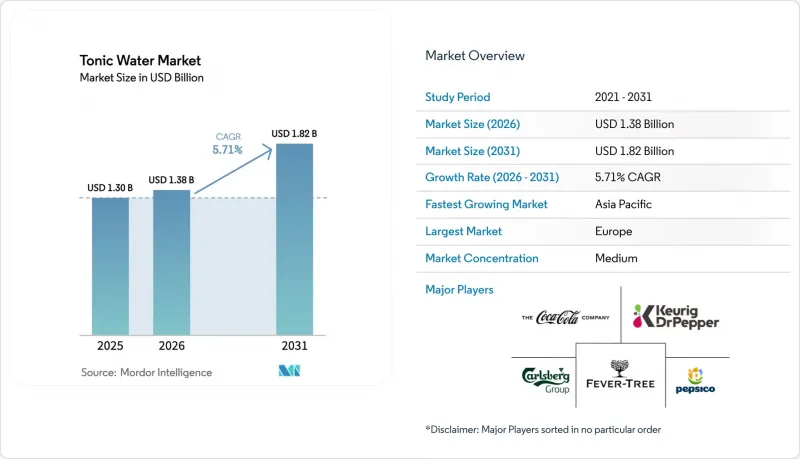
This report is Segmented by Type (Regular, Low-Calorie, and Slimline/Light), Packaging Type (PET/Glass Bottles, and Metal Can), Distribution Channel (HoReCa, and Retail), and Geography (North America, Europe, Asia-Pacific, South America, Middle East, and Africa). The Market Forecasts are Provided in Terms of Value (USD) and Volume (Liters).
Global Tonic Water Market Trends and Insights
Premiumization of at-home mixology culture
Consumers are now crafting bar-quality drinks at home, seeking mixers that boast the same botanical intricacies as those in upscale lounges. drinkers purchased bar tools or premium spirits for home use, underscoring a notable shift from bar-centric to home-based cocktail preparation. This trend highlights a growing consumer preference for premiumization and personalization in their drinking experiences. Brands, by investing in design-centric glass bottles and weaving in heritage narratives, have successfully commanded a 40-60% premium on tonics. These strategies not only enhance brand perception but also cater to the evolving tastes of consumers who value aesthetics and storytelling. While a home-prepared gin-and-tonic sets one back about USD 3-4, ordering the same at a bar costs roughly USD 12-15. This price disparity has fueled demand, even amidst tightening disposable incomes, ensuring the Tonic Water market remains resilient to broader economic fluctuations.
Growing low/no-alcohol sober-curious trend
For many adults, moderation has evolved from a fleeting phase of abstinence to a deliberate lifestyle choice. In Q1 2025, Circana highlighted that United States retail sales of low- and no-alcohol beverages surged by 8.2%, outpacing the growth of traditional soft drinks. This growth reflects a broader shift in consumer preferences toward healthier and more mindful drinking habits. Tonic's intricate bitterness now finds favor in moments once reserved for beer or spirits, offering a sophisticated alternative for social and casual drinking occasions. In 2024, retailers boosted shelf space for premium mixers by 22%, a clear testament to their confidence in the category's potential for expansion and profitability. Notably, younger Gen Z drinkers, consuming 30% less alcohol than Millennials did at the same age, are poised to drive sustained growth in the Tonic Water market, as their preferences align with the rising demand for non-alcoholic and premium beverage options.
Sugar-tax induced retail price inflation
More than 50 jurisdictions have implemented taxes on sugary drinks, aiming to curb sugar consumption and promote healthier choices. In the fiscal year 2023-2024, the U.K.'s Soft Drinks Industry Levy generated a revenue of GBP 340 million, prompting regular tonic brands to either reformulate their products to reduce sugar content or raise their shelf prices to offset the tax burden. In 2024, South Africa's Health Promotion Levy resulted in an 11% increase in beverage prices, impacting consumer purchasing behavior. Mexico's tightened enforcement of the IEPS led to a 6% decline in regular tonic volumes as consumers opted for cheaper alternatives, highlighting the sensitivity of this market to price changes. While brands positioned as premium can absorb these taxes due to their higher price points and perceived value, mass-market players are increasingly turning to reformulations with sugar substitutes like stevia or monk fruit. However, these alternatives often introduce aftertaste challenges, which can affect consumer acceptance and brand loyalty.
Other drivers and restraints analyzed in the detailed report include:
- Craft gin distillery expansion in emerging markets
- Rising penetration of e-commerce alcohol marketplaces
- Carbonation-related sustainability scrutiny
For complete list of drivers and restraints, kindly check the Table Of Contents.
Segment Analysis
In 2025, regular tonic water clinched a dominant 47.12% market share, solidifying its status as the go-to mixer for gin and vodka cocktails in both bars and homes. Its widespread appeal is attributed to its signature bold quinine profile, harmoniously balanced with sweetness, making it a reliable companion for premium spirits. In Brazil and Mexico, where cultural preferences lean towards indulgent flavors, a sweeter profile commands an even more impressive 62% local market share. Brands capitalize on this reliability, ensuring consistent availability in supermarkets and HoReCa channels, which in turn drives high unit volumes. Standard formulas, offering 70-80 calories per 200 ml, cater to everyday refreshment needs without compromising on calorie counts. This segment's robust revenue underscores its foundational role in the tonic water market.
Light and slimline tonics are emerging as the fastest-growing category, boasting a 7.91% CAGR projected through 2031. This surge is largely driven by the imposition of sugar taxes, a growing emphasis on wellness, and a rising number of calorie-conscious consumers. Following levy hikes, the United Kingdom witnessed a 14% spike in light tonic volumes in 2024. Fever-Tree's Naturally Light range alone raked in a notable GBP 42 million, accounting for 18% of the company's total revenue. These lighter variants, achieving just 20-30 calories per 200 ml, utilize blends of stevia, erythritol, and cane sugar to maintain both mouthfeel and effervescence. Meanwhile, Asia-Pacific showcases its regional innovation with yuzu-infused low-cal options, and slimline variants are making their mark in HoReCa placements, striking a balance between flavor and calorie count. While functional additions like vitamins promise health benefits, they grapple with regulatory challenges concerning health claims, underscoring the industry's emphasis on transparency. Given this momentum, low-cal tonics are poised to seize a larger slice of the premium market in an increasingly health-conscious landscape.
Complete Report Scope:
- By Type
- Regular Tonic Water
- Low-Calorie Tonic Water
- Slimline/Light Tonic Water
- By Packaging Type
- PET/Glass Bottles
- Metal Can
- By Distribution Channel
- HoReCa
- Retail
- Supermarkets/Hypermarkets
- Convenience/Grocery Stores
- Online Retail Stores
- Other Distribution Channels
- By Geography
- North America
- United States
- Canada
- Mexico
- Rest of North America
- Europe
- Germany
- United Kingdom
- France
- Italy
- Spain
- Russia
- Netherlands
- Poland
- Belgium
- Sweden
- Rest of Europe
- Asia-Pacific
- China
- India
- Japan
- South Korea
- Australia
- Indonesia
- Thailand
- Singapore
- Rest of Asia-Pacific
- South America
- Brazil
- Argentina
- Colombia
- Chile
- Peru
- Rest of South America
- Middle East and Africa
- Saudi Arabia
- United Arab Emirates
- Nigeria
- Egypt
- Morocco
- Turkey
- South Africa
- Rest of Middle East and Africa
- North America
Geography Analysis
In 2025, Europe held a 37.14% market share, led by the U.K., Germany, and Spain, where gin-and-tonic traditions are deeply woven into the social fabric. Within the soft drinks market, tonic water enjoys a premium, with Fever-Tree often commanding prices 40-60% higher than mainstream mixers. However, sugar levies in the U.K. and France have steered consumers towards zero-calorie options, creating opportunities for reformulated products. The strong presence of private labels keeps branded companies on their toes, driving them towards innovation and aggressive marketing to maintain their competitive edge. This dynamic environment has encouraged brands to focus on premiumization and health-oriented offerings to cater to evolving consumer preferences.
Asia-Pacific is on track to grow at a robust 8.34% CAGR, reaching 2031. As urban incomes rise and Western cocktail culture takes root in China, India, and Southeast Asia, consumption occasions multiply, particularly in urban centers where younger demographics are adopting these trends. Suntory's plant upgrades and HiteJinro's expansion in Vietnam highlight regional spirits companies co-developing tonic pairings, enhancing their appeal to local tastes and preferences. In Japan, convenience stores serve as testing grounds for botanical tonics targeting health-conscious consumers, reflecting a growing demand for functional beverages. Meanwhile, India's push for sugar reduction accelerates the acceptance of stevia-sweetened tonics, with local manufacturers increasingly aligning their portfolios with government policies and consumer health trends.
North America experiences steady, albeit modest, growth. Fever-Tree's partnership with Molson Coors opens doors to a 550-member sales force and enhanced supermarket visibility, enabling deeper market penetration. In California, Texas, and Pennsylvania, new regulations permit RTD cocktail deliveries, presenting Schweppes with a chance to introduce canned gin-and-tonic products and expand its footprint in the ready-to-drink segment. While Mexico's sugar tax limits regular tonic sales, there's potential for revival through flavor innovations and functional marketing, as brands explore ways to meet consumer demand for healthier and more diverse options. Meanwhile, South America, the Middle East, and Africa, though in nascent stages, are witnessing double-digit growth as urbanization and tourism introduce global bar trends to emerging cities. These regions are increasingly becoming focal points for international brands seeking to tap into untapped markets and capitalize on the growing interest in premium beverages.
- Fever-Tree Drinks plc
- The Coca-Cola Co (Schweppes)
- PepsiCo Inc. (Q Mixer)
- Keurig Dr Pepper Inc. (Canada Dry)
- Britvic plc (The London Essence Co.)
- Fentimans Ltd
- East Imperial Beverage Corp.
- Franklin & Sons Ltd
- White Rock Beverage Ltd
- New Orleans Beverage Group LLC (El Guapo)
- Bickford & Sons
- Sepoy & Co.
- Thomas Henry GmbH
- Q Mixers LLC
- East India Tonic Co.
- Luscombe Drinks
- Double Dutch Drinks Ltd
- Organics by Red Bull
- Goldberg & Sons
- Bundaberg Brewed Drinks
Additional Benefits:
- The market estimate (ME) sheet in Excel format
- 3 months of analyst support
TABLE OF CONTENTS
1 INTRODUCTION
- 1.1 Study Assumptions and Market Definition
- 1.2 Scope of the Study
2 RESEARCH METHODOLOGY
3 EXECUTIVE SUMMARY
4 MARKET LANDSCAPE
- 4.1 Market Overview
- 4.2 Market Drivers
- 4.2.1 Premiumization of at-home mixology culture
- 4.2.2 Growing low-/no-alcohol "sober-curious" movement
- 4.2.3 Expansion of craft gin distilleries in emerging markets
- 4.2.4 Rising penetration of e-commerce alcohol marketplaces
- 4.2.5 Novel botanical quinine substitutes reducing bitterness
- 4.2.6 Regulatory easing on RTD cocktail delivery services
- 4.3 Market Restraints
- 4.3.1 Sugar-tax induced retail price inflation
- 4.3.2 Carbonation-related sustainability scrutiny
- 4.3.3 Supply-chain pressure on cinchona bark sourcing
- 4.3.4 Private-label encroachment in supermarkets
- 4.4 Consumer Behaviour Analysis
- 4.5 Regulatory Landscape
- 4.6 Porter's Five Forces
- 4.6.1 Bargaining Power of Suppliers
- 4.6.2 Bargaining Power of Buyers
- 4.6.3 Threat of New Entrants
- 4.6.4 Threat of Substitutes
- 4.6.5 Competitive Rivalry
5 MARKET SIZE AND GROWTH FORECASTS (VALUE AND VOLUME)
- 5.1 By Type
- 5.1.1 Regular Tonic Water
- 5.1.2 Low-Calorie Tonic Water
- 5.1.3 Slimline/Light Tonic Water
- 5.2 By Packaging Type
- 5.2.1 PET/Glass Bottles
- 5.2.2 Metal Can
- 5.3 By Distribution Channel
- 5.3.1 HoReCa
- 5.3.2 Retail
- 5.3.2.1 Supermarkets/Hypermarkets
- 5.3.2.2 Convenience/Grocery Stores
- 5.3.2.3 Online Retail Stores
- 5.3.2.4 Other Distribution Channels
- 5.4 By Geography
- 5.4.1 North America
- 5.4.1.1 United States
- 5.4.1.2 Canada
- 5.4.1.3 Mexico
- 5.4.1.4 Rest of North America
- 5.4.2 Europe
- 5.4.2.1 Germany
- 5.4.2.2 United Kingdom
- 5.4.2.3 France
- 5.4.2.4 Italy
- 5.4.2.5 Spain
- 5.4.2.6 Russia
- 5.4.2.7 Netherlands
- 5.4.2.8 Poland
- 5.4.2.9 Belgium
- 5.4.2.10 Sweden
- 5.4.2.11 Rest of Europe
- 5.4.3 Asia-Pacific
- 5.4.3.1 China
- 5.4.3.2 India
- 5.4.3.3 Japan
- 5.4.3.4 South Korea
- 5.4.3.5 Australia
- 5.4.3.6 Indonesia
- 5.4.3.7 Thailand
- 5.4.3.8 Singapore
- 5.4.3.9 Rest of Asia-Pacific
- 5.4.4 South America
- 5.4.4.1 Brazil
- 5.4.4.2 Argentina
- 5.4.4.3 Colombia
- 5.4.4.4 Chile
- 5.4.4.5 Peru
- 5.4.4.6 Rest of South America
- 5.4.5 Middle East and Africa
- 5.4.5.1 Saudi Arabia
- 5.4.5.2 United Arab Emirates
- 5.4.5.3 Nigeria
- 5.4.5.4 Egypt
- 5.4.5.5 Morocco
- 5.4.5.6 Turkey
- 5.4.5.7 South Africa
- 5.4.5.8 Rest of Middle East and Africa
- 5.4.1 North America
6 COMPETITIVE LANDSCAPE
- 6.1 Market Concentration
- 6.2 Strategic Moves
- 6.3 Market Share Analysis
- 6.4 Company Profiles (includes Global level Overview, Market level overview, Core Segments, Financials as available, Strategic Information, Market Rank/Share for key companies, Products and Services, and Recent Developments)
- 6.4.1 Fever-Tree Drinks plc
- 6.4.2 The Coca-Cola Co (Schweppes)
- 6.4.3 PepsiCo Inc. (Q Mixer)
- 6.4.4 Keurig Dr Pepper Inc. (Canada Dry)
- 6.4.5 Britvic plc (The London Essence Co.)
- 6.4.6 Fentimans Ltd
- 6.4.7 East Imperial Beverage Corp.
- 6.4.8 Franklin & Sons Ltd
- 6.4.9 White Rock Beverage Ltd
- 6.4.10 New Orleans Beverage Group LLC (El Guapo)
- 6.4.11 Bickford & Sons
- 6.4.12 Sepoy & Co.
- 6.4.13 Thomas Henry GmbH
- 6.4.14 Q Mixers LLC
- 6.4.15 East India Tonic Co.
- 6.4.16 Luscombe Drinks
- 6.4.17 Double Dutch Drinks Ltd
- 6.4.18 Organics by Red Bull
- 6.4.19 Goldberg & Sons
- 6.4.20 Bundaberg Brewed Drinks
7 MARKET OPPORTUNITIES AND FUTURE OUTLOOK

