PUBLISHER: Mordor Intelligence | PRODUCT CODE: 2116120

PUBLISHER: Mordor Intelligence | PRODUCT CODE: 2116120
United States Wine Packaging - Market Share Analysis, Industry Trends & Statistics, Growth Forecasts (2026 - 2031)
According to Mordor Intelligence, the United States wine packaging market size was valued at USD 1.06 billion in 2025 and estimated to grow from USD 1.12 billion in 2026 to reach USD 1.46 billion by 2031, at a CAGR of 5.47% during the forecast period (2026-2031).
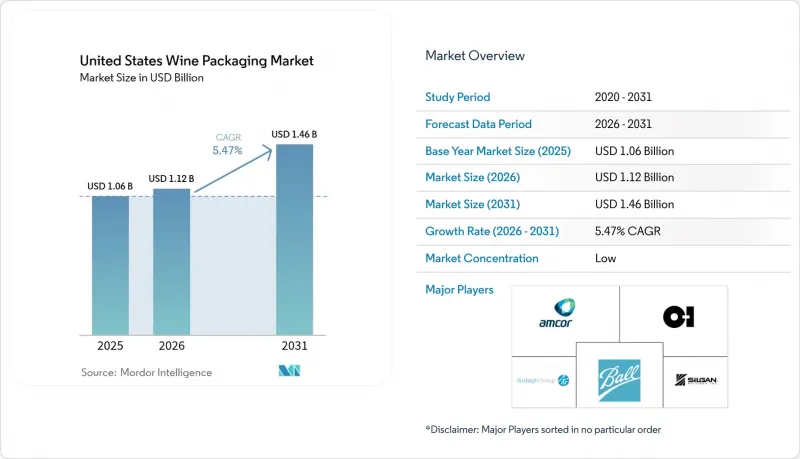
This report is Segmented by Material Type (Glass, Plastic, Metal, Paper), Product Type (Glass Bottles, and More), Closure Type (Natural Cork, Technical/Synthetic Cork, and More), Wine Type (Still Wine, Sparkling Wine, and More), Capacity (Less Than 375 ML, and More), Distribution Channel (Direct Sales, and Indirect Sales), and Geography. The Market Forecasts are Provided in Terms of Value (USD).
United States Wine Packaging Market Trends and Insights
Rising Demand for Lightweight Eco-Glass
Glass suppliers are cutting bottle weight to curb freight emissions and control surging input costs. O-I's Estampe bottle dropped to 390 g while pushing recycled content to 82%, lowering its carbon impact by 25% relative to legacy 500 g designs. Napa and Sonoma wineries saw glass-container price indexes jump 16% in 2024, reinforcing the economic case for lighter stock. Verallia's new all-electric furnace cut process CO2 by 60%, signaling long-term commitment to decarbonized glass supply. As freight makes up roughly 35% of delivered glass-package emissions, each 10% weight reduction can trim shipping emissions by nearly 3%, a compelling trade-off for premium wineries that must now publish Scope 3 footprints.
Booming Canned-Wine Sales in Off-Premise Channels
Aluminum's 100% recyclability, low mass, and venue acceptance have lifted the format from novelty to mainstream. Ball shipped 48 billion aluminum beverage containers across North America in 2024, crossing the 30% penetration mark for the first time. Consumer trials show younger drinkers value portability over tradition, and venues from stadiums to beaches prefer non-breakable packages. Quality hurdles linked to hydrogen-sulfide formation are being mitigated by improved liners that vary by manufacturer. Brands such as Bogle's Element[AL] have launched 90 g aluminum bottles that ship at one-fifth the mass of glass while retailing at premium price points.
Volatile Natural-Gas Costs Inflating Domestic Glass Production
Energy expenses account for roughly 20% of glass plant overhead, and spikes in natural-gas prices have prompted closures such as Ardagh's Houston facility, which idled 220 workers in 2024. O-I disclosed a 4.5% drop in 2024 sales volume as buyers shifted toward cheaper or lighter alternatives. While companies are retrofitting furnaces with oxy-fuel or electric systems, capital requirements slow fleet turnover, keeping price volatility in play for the near term.
Other drivers and restraints analyzed in the detailed report include:
- DtC Shipping Liberalisation Across 47 States
- Bottle-Deposit Laws Increasing Recycled-Content Requirements
- Premium-Segment Scepticism Toward PET Quality Perception
For complete list of drivers and restraints, kindly check the Table Of Contents.
Segment Analysis
Glass accounted for 66.65% of the United States wine packaging market share in 2025, equal to about USD 706.5 million within the United States wine packaging market size. Metal, led by aluminum, is projected to post an 8.31% CAGR through 2031 as brands prioritize lighter weights and closed-loop recycling credentials. Glass suppliers are countering with 390 g eco-bottle launches and higher cullet ratios that lower furnace energy use while preserving premium shelf presence. Paper composites and refillable-glass systems remain niche but signal the next wave of low-carbon formats that could erode glass share if supply chains scale.
Aluminum's ascent hinges on reduced freight cost, 100% recyclability, and venue acceptance where breakage is a concern, while glass retains an authenticity advantage for premium cues. Ball's plan to reach 85% recycled content by 2030 exemplifies the aggressive sustainability targets that drive material substitution. Glass makers are investing in electric furnaces and oxy-fuel burners to shield margins from natural-gas volatility, yet capital intensity slows fleet turnover. Ultimately, wineries are weighing carbon disclosures against brand heritage, prompting a gradual mix shift rather than an abrupt material handoff.
Glass bottles captured 56.12% of the 2025 value, but cans are expanding at a 7.74% CAGR as portability, recyclability, and event-venue policies favor unbreakable formats. Hydrogen-sulfide risks linked to can liner chemistry are being mitigated through improved internal coatings, opening the door for broader varietal adoption. Bag-in-box remains entrenched for bulk and value wines because vineyard labor shortages push producers toward formats that minimize handling. Plastic bottles and pouches serve price-sensitive or single-serve occasions but face premium-image headwinds.
Canned presentations align with younger demographics that prioritize environmental responsibility over tradition, evidenced by Bogle's 90 g aluminum bottle introduction at USD 16.99 retail. Bottlers are also experimenting with resealable ends and secondary paper wraps to upgrade shelf visibility. For glass, lightweighting and emboss-free silhouettes are helping retain relevance by trimming freight emissions without compromising perceived quality. The result is a diversified product mix that lets wineries match pack type to channel, price tier, and consumption occasion.
Complete Report Scope:
- By Material Type
- Glass
- Plastic
- Metal
- Paper
- By Product Type
- Glass Bottles
- Plastic Bottles
- Bag-in-Box
- Cans
- Pouches
- By Closure Type
- Natural Cork
- Technical/Synthetic Cork
- Screw Caps
- Crown Caps
- Other Closure Types (T-stoppers, Vino-Lok)
- By Wine Type
- Still Wine
- Sparkling Wine
- Fortified and Dessert Wine
- Low and No-Alcohol Wine
- By Capacity
- Less than 375 mL
- 375-750 mL
- 750-1,500 mL
- More than 1,500 mL
- By Distribution Channel
- Direct Sales
- Indirect Sales
List of Companies Covered in this Report:
- Owens-Illinois Inc.
- Ardagh Group S.A.
- Gallo Glass Company
- Verallia North America
- Ball Corporation
- Amcor plc
- Crown Holdings Inc.
- Silgan Holdings Inc.
- Scholle IPN
- Tetra Laval International S.A.
- Plastipak Holdings Inc.
- CCL Industries Inc.
- Avery Dennison Corp.
- Berlin Packaging LLC
- TricorBraun Inc.
- Saxco International LLC
- Encore Glass Inc.
- Saverglass
- Guala Closure Group
- Smurfit Westrock
Additional Benefits:
- The market estimate (ME) sheet in Excel format
- 3 months of analyst support
TABLE OF CONTENTS
1 INTRODUCTION
- 1.1 Study Assumptions and Market Definition
- 1.2 Scope of the Study
2 RESEARCH METHODOLOGY
3 EXECUTIVE SUMMARY
4 MARKET LANDSCAPE
- 4.1 Market Overview
- 4.2 Market Drivers
- 4.2.1 Rising demand for lightweight eco-glass
- 4.2.2 Booming canned-wine sales in off-premise channels
- 4.2.3 DtC shipping liberalisation across 47 states spurring e-commerce-ready packs
- 4.2.4 Bottle-deposit laws (OR, MI) increasing recycled-content requirements
- 4.2.5 Vineyard labour shortages shifting bulk formats toward bag-in-box
- 4.2.6 Private-label retailers scaling cost-efficient PET/BIB volumes
- 4.3 Market Restraints
- 4.3.1 Volatile natural-gas costs inflating domestic glass production
- 4.3.2 Community resistance to new glass plants on emissions grounds
- 4.3.3 Premium-segment scepticism toward PET quality perception
- 4.3.4 Plateauing food-grade RPET supply bottlenecks
- 4.4 Supply-Chain Analysis
- 4.5 Regulatory Outlook
- 4.6 Technological Outlook
- 4.7 Porter's Five Forces Analysis
- 4.7.1 Threat of New Entrants
- 4.7.2 Bargaining Power of Suppliers
- 4.7.3 Bargaining Power of Consumers
- 4.7.4 Threat of Substitute Products
- 4.7.5 Intensity of Competitive Rivalry
- 4.8 Major Innovations in Wine Packaging
5 MARKET SIZE AND GROWTH FORECASTS (VALUE)
- 5.1 By Material Type
- 5.1.1 Glass
- 5.1.2 Plastic
- 5.1.3 Metal
- 5.1.4 Paper
- 5.2 By Product Type
- 5.2.1 Glass Bottles
- 5.2.2 Plastic Bottles
- 5.2.3 Bag-in-Box
- 5.2.4 Cans
- 5.2.5 Pouches
- 5.3 By Closure Type
- 5.3.1 Natural Cork
- 5.3.2 Technical/Synthetic Cork
- 5.3.3 Screw Caps
- 5.3.4 Crown Caps
- 5.3.5 Other Closure Types (T-stoppers, Vino-Lok)
- 5.4 By Wine Type
- 5.4.1 Still Wine
- 5.4.2 Sparkling Wine
- 5.4.3 Fortified and Dessert Wine
- 5.4.4 Low and No-Alcohol Wine
- 5.5 By Capacity
- 5.5.1 Less than 375 mL
- 5.5.2 375-750 mL
- 5.5.3 750-1,500 mL
- 5.5.4 More than 1,500 mL
- 5.6 By Distribution Channel
- 5.6.1 Direct Sales
- 5.6.2 Indirect Sales
6 COMPETITIVE LANDSCAPE
- 6.1 Market Concentration
- 6.2 Strategic Moves
- 6.3 Market Share Analysis
- 6.4 Company Profiles (includes Global level Overview, Market level overview, Core Segments, Financials as available, Strategic Information, Market Rank/Share for key companies, Products and Services, and Recent Developments)
- 6.4.1 Owens-Illinois Inc.
- 6.4.2 Ardagh Group S.A.
- 6.4.3 Gallo Glass Company
- 6.4.4 Verallia North America
- 6.4.5 Ball Corporation
- 6.4.6 Amcor plc
- 6.4.7 Crown Holdings Inc.
- 6.4.8 Silgan Holdings Inc.
- 6.4.9 Scholle IPN
- 6.4.10 Tetra Laval International S.A.
- 6.4.11 Plastipak Holdings Inc.
- 6.4.12 CCL Industries Inc.
- 6.4.13 Avery Dennison Corp.
- 6.4.14 Berlin Packaging LLC
- 6.4.15 TricorBraun Inc.
- 6.4.16 Saxco International LLC
- 6.4.17 Encore Glass Inc.
- 6.4.18 Saverglass
- 6.4.19 Guala Closure Group
- 6.4.20 Smurfit Westrock
7 MARKET OPPORTUNITIES AND FUTURE OUTLOOK
- 7.1 White-space and Unmet-need Assessment

