PUBLISHER: Mordor Intelligence | PRODUCT CODE: 2116839

PUBLISHER: Mordor Intelligence | PRODUCT CODE: 2116839
North America Pasta And Noodles - Market Share Analysis, Industry Trends & Statistics, Growth Forecasts (2026 - 2031)
According to Mordor Intelligence, North America pasta and noodles market size in 2026 is estimated at USD 8.12 billion, growing from 2025 value of USD 7.80 billion with 2031 projections showing USD 9.9 billion, growing at 4.1% CAGR over 2026-2031.
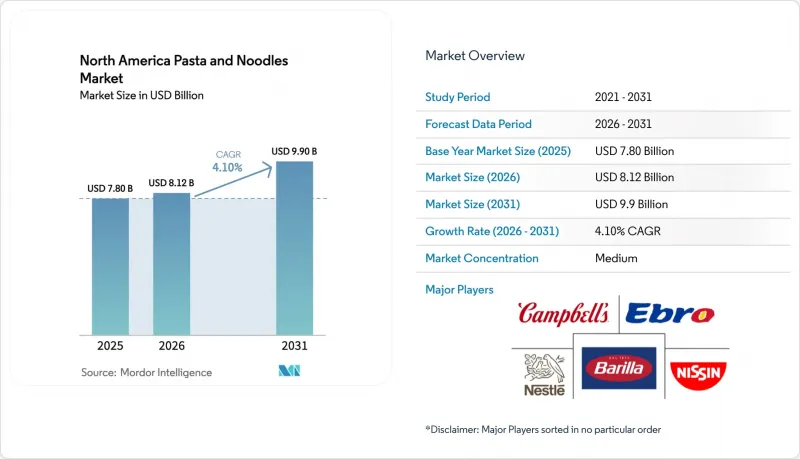
This report is Segmented by Product Type (Dried, Instant, and More), Ingredient (Rice, Corn, and More), Nature (Conventional and Organic), Packaging Type (Packets/Bags, Boxes, and More), Distribution Channel (Online Retail Channels, Convenience Stores, and More), and Country (United States, Canada, Mexico and More). The Market Forecasts are Provided in Terms of Value (USD) and Volume (Tons).
North America Pasta And Noodles Market Trends and Insights
Rising consumption of convenience food
The pasta and noodles market in North America is growing steadily, driven by the increasing demand for convenient and quick meal options. Many urban households, especially those with dual incomes, are looking for easy-to-prepare food that fits into their busy schedules. Pasta has become a staple, with a survey by the Share The Pasta Organization, revealing that 86% of respondents eat pasta at least once a week. This highlights how deeply pasta is integrated into everyday meals. Companies are introducing innovative products that enhance both convenience and enjoyment. For example, in 2024, Barilla launched a limited-edition pasta shape called 'Snowfall.' This unique pasta features intricate snowflake designs with poinsettia-like ridges and a heart at the center, symbolizing the brand's tagline, 'A Sign of Love.' The product was designed to bring a sense of togetherness during the holiday season. Such creative offerings resonate with consumers, as nearly half of Americans have shown interest in fun and seasonal pasta shapes.
Shift toward plant-based diets
The increasing popularity of plant-based diets is influencing the North American pasta and noodles market as consumers are looking for healthier and nutritious options beyond traditional wheat-based products. Noodles made from lentils and chickpeas are gaining traction because they are high in protein. This trend aligns with the broader adoption of plant-based foods. According to the Good Food Institute, as of 2024, 53% of Americans have tried plant-based meat at some point, and 40% consumed it in the past year, indicating interest in plant-based alternatives. In response to this demand, Veggiecraft relaunched its products nationwide in 2024 with improved recipes and updated packaging. Their offerings, such as Veggiecraft Zucchini Penne and Veggiecraft Sweet Potato Spaghetti, showcase innovation in plant-based pasta. Coastal states, in particular, are seeing higher adoption rates, which is helping the market diversify its ingredient options and cater to changing dietary preferences across the region.
Health concerns over refined carbs and sodium
Health concerns are becoming a significant factor affecting the North American pasta and noodles market, as more consumers prioritize whole-grain options and lower sodium levels to align with health recommendations. In August 2024, the United States' Food and Drug Administration (FDA) introduced draft guidelines for Phase II sodium reduction targets. These guidelines aim to reduce the average sodium intake from 3,400 mg/day to about 2,750 mg/day over 3 years. This effort is part of the FDA's broader initiative to lower sodium levels in processed, packaged, and prepared foods. In response, manufacturers are introducing healthier alternatives. For example, General Mills launched Carbe Diem pasta, which contains 55% fewer net carbs while maintaining the same texture as traditional pasta. Similarly, Fiber Gourmet offers high-fiber pasta options that cut calorie density by nearly half. However, these healthier products often come with higher price tags, making them less accessible to some consumers.
Other drivers and restraints analyzed in the detailed report include:
- Innovation and gourmet premiumization
- Increasing demand for gluten-free pasta and noodles
- Intense competition from alternatives
For complete list of drivers and restraints, kindly check the Table Of Contents.
Segment Analysis
Dried pasta remains the leading segment in the North American pasta and noodles market, holding 67.10% of the total market share in 2025. Its popularity stems from its long shelf life, easy storage, and versatility, making it a staple in households. Consumers value dried pasta for its consistent quality, quick cooking time, and ability to be used in a wide range of dishes, from simple meals to elaborate recipes. Major brands continue to offer a variety of shapes and blends, catering to both traditional preferences and health-conscious trends. This segment's dominance highlights its role as a dependable and convenient option for meal planning, maintaining its relevance despite shifting consumer preferences.
On the other hand, canned and frozen pasta products are gaining traction, with a projected CAGR of 6.55% through 2031, growing faster than the dried segment. These options appeal to consumers looking for convenience, as they eliminate the need for boiling and draining while offering precise portion control. This makes them ideal for smaller households or individuals seeking quick, ready-to-eat meals. Improved packaging technologies ensure freshness and flavor, making these products suitable for busy lifestyles. The rising demand for canned and frozen pasta reflects the needs of time-strapped urban consumers and dual-income families, who prioritize efficiency without sacrificing taste.
Wheat-based pasta remains the most popular choice in the North American pasta and noodles market in 2025, accounting for 56.20% of the total market share. This dominance is due to the well-established infrastructure for wheat processing, affordable raw materials, and consumer trust in the quality and texture of semolina-based products. Wheat pasta is widely available in both retail stores and foodservice outlets, making it a convenient option for everyday meals. Its familiarity in traditional recipes and consistent quality from trusted brands further strengthen its position. Its versatility in various cuisines ensures it remains a staple in households across the region.
Rice-based pasta is steadily gaining popularity and is projected to grow at a CAGR of 5.55% from 2026 to 2031. This growth is driven by increasing demand from consumers with gluten sensitivities and a growing interest in Asian cuisine, where rice noodles are a key ingredient. Improvements in product quality, such as better texture and taste, along with wider availability in stores, are encouraging more consumers to try rice-based options. The rising awareness of gluten-free diets is also contributing to its growth. As a result, rice-based pasta is gradually expanding its market share, offering consumers more variety and catering to diverse dietary preferences.
Complete Report Scope:
- By Product Type
- Dried
- Instant
- Canned and Frozen
- By Ingredient
- Rice
- Corn
- Millet
- Wheat
- Other Ingredients
- By Nature
- Conventional
- Organic
- By Packaging Type
- Packets/Bags
- Cups/Bowls
- Boxes
- By Distribution Channel
- Supermarkets/Hypermarkets
- Convenience Stores
- Online Retail Stores
- Other Channels
- By Country
- United States
- Canada
- Mexico
- Rest of North America
List of Companies Covered in this Report:
- Barilla Holding SpA
- Nestle SA
- Ebro Foods SA
- Campbell Soup Company
- Winland Foods, Inc.
- Unilever PLC
- Nissin Foods Holdings Co. Ltd
- Toyo Suisan Kaisha Ltd
- Nongshim Holdings
- Samyang Foods Co. Ltd
- General Mills Inc.
- Jovial Foods Inc.
- De Cecco SpA
- Colavita SpA
- Kraft Heinz Company
- B&G Foods Inc.
- Brynwood Partners (Chef Boyardee)
- Banza, Inc.
- Nuovo Pasta Productions Ltd
- La Pasta Inc.
Additional Benefits:
- The market estimate (ME) sheet in Excel format
- 3 months of analyst support
TABLE OF CONTENTS
1 INTRODUCTION
- 1.1 Study Assumptions and Market Definition
- 1.2 Scope of the Study
2 RESEARCH METHODOLOGY
3 EXECUTIVE SUMMARY
4 MARKET LANDSCAPE
- 4.1 Market Overview
- 4.2 Market Drivers
- 4.2.1 Rising consumption of convenience food
- 4.2.2 Increasing demand for gluten-free pasta and noodles
- 4.2.3 Innovation and gourmet premiumization
- 4.2.4 Shift toward plant-based diets
- 4.2.5 Rising popularity of meal kits and ready meals
- 4.2.6 Strong preference for clean-label ingredients in noodles and pasta
- 4.3 Market Restraints
- 4.3.1 Intense competition from alternatives
- 4.3.2 Health concerns over refined carbs and sodium
- 4.3.3 Growing consumer shift toward low-carb/keto diets
- 4.3.4 Climate-induced wheat supply volatility
- 4.4 Regulatory Outlook
- 4.5 Consumer Behaviour Analysis
- 4.6 Porter's Five Forces
- 4.6.1 Threat of New Entrants
- 4.6.2 Bargaining Power of Buyers
- 4.6.3 Bargaining Power of Suppliers
- 4.6.4 Threat of Substitute Products
- 4.6.5 Intensity of Competitive Rivalry
5 MARKET SIZE AND GROWTH FORECASTS (VALUE)
- 5.1 By Product Type
- 5.1.1 Dried
- 5.1.2 Instant
- 5.1.3 Canned and Frozen
- 5.2 By Ingredient
- 5.2.1 Rice
- 5.2.2 Corn
- 5.2.3 Millet
- 5.2.4 Wheat
- 5.2.5 Other Ingredients
- 5.3 By Nature
- 5.3.1 Conventional
- 5.3.2 Organic
- 5.4 By Packaging Type
- 5.4.1 Packets/Bags
- 5.4.2 Cups/Bowls
- 5.4.3 Boxes
- 5.5 By Distribution Channel
- 5.5.1 Supermarkets/Hypermarkets
- 5.5.2 Convenience Stores
- 5.5.3 Online Retail Stores
- 5.5.4 Other Channels
- 5.6 By Country
- 5.6.1 United States
- 5.6.2 Canada
- 5.6.3 Mexico
- 5.6.4 Rest of North America
6 COMPETITIVE LANDSCAPE
- 6.1 Market Concentration
- 6.2 Strategic Moves
- 6.3 Market Share Analysis
- 6.4 Company Profiles (includes Global-level Overview, Market-level Overview, Core Segments, Financials (if available), Strategic Information, Market Rank/Share, Products and Services, Recent Developments)
- 6.4.1 Barilla Holding SpA
- 6.4.2 Nestle SA
- 6.4.3 Ebro Foods SA
- 6.4.4 Campbell Soup Company
- 6.4.5 Winland Foods, Inc.
- 6.4.6 Unilever PLC
- 6.4.7 Nissin Foods Holdings Co. Ltd
- 6.4.8 Toyo Suisan Kaisha Ltd
- 6.4.9 Nongshim Holdings
- 6.4.10 Samyang Foods Co. Ltd
- 6.4.11 General Mills Inc.
- 6.4.12 Jovial Foods Inc.
- 6.4.13 De Cecco SpA
- 6.4.14 Colavita SpA
- 6.4.15 Kraft Heinz Company
- 6.4.16 B&G Foods Inc.
- 6.4.17 Brynwood Partners (Chef Boyardee)
- 6.4.18 Banza, Inc.
- 6.4.19 Nuovo Pasta Productions Ltd
- 6.4.20 La Pasta Inc.
7 MARKET OPPORTUNITIES AND FUTURE OUTLOOK

