PUBLISHER: Mordor Intelligence | PRODUCT CODE: 2124688

PUBLISHER: Mordor Intelligence | PRODUCT CODE: 2124688
ASEAN Probiotic Supplements - Market Share Analysis, Industry Trends & Statistics, Growth Forecasts (2026 - 2031)
According to Mordor Intelligence, the ASEAN probiotic supplements market size was valued at USD 165.44 million in 2025, and estimated to grow from USD 180.23 million in 2026 to reach USD 279.64 million by 2031, registering a CAGR of 9.18% during 2026-2031.
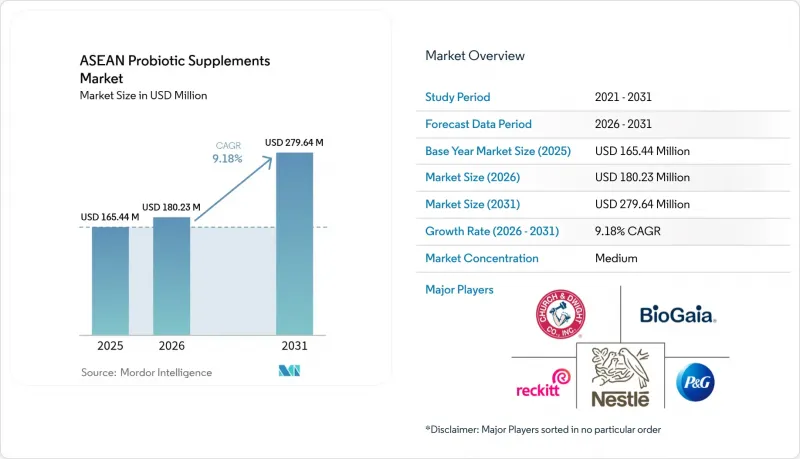
This report is Segmented by Product Type (Tablets, Capsules, Gummies and Chews, Liquids, Others), Distribution Channel (Pharmacies and Drug Stores, Online Retail Stores, Other Distribution Channels), and Geography (Indonesia, Malaysia, Thailand, Vietnam, Singapore, Philippines, Rest of ASEAN). The Market Forecasts are Provided in Terms of Value (USD).
ASEAN Probiotic Supplements Market Trends and Insights
Growing consumer focus on health and overall wellbeing
The growing focus on personal wellness across ASEAN countries is significantly driving the adoption of probiotic supplements, as consumers increasingly prioritize preventive care over treatment-based healthcare. Urban populations are actively seeking to maintain immunity, digestion, and energy levels through daily nutritional support, particularly following heightened health awareness in recent years. This shift is reflected in rising healthcare expenditures; for instance, Singapore's health expenditure per capita reached USD 3,921.60 in 2023, demonstrating a greater willingness to invest in products that support long-term health. Consequently, probiotics are becoming an integral part of routine self-care, promoting gut balance, metabolic health, and overall well-being, thereby sustaining demand across the region.
Rising incidence of gastrointestinal disorders
The increasing prevalence of digestive issues in ASEAN countries is driving the demand for probiotic supplements, as consumers seek non-pharmaceutical solutions to address gut discomfort, bloating, and irregular bowel movements. In Indonesia, rapid urbanization and the adoption of Western dietary habits have led to a rise in lactose intolerance and microbiome imbalances, prompting greater use of gut-supportive products. In line with this trend, the national regulator BPOM introduced Peraturan No. 15 in September 2024, mandating clearer labeling of probiotic strain names and colony-forming unit (CFU) counts to help consumers select appropriate formulations. This regulatory focus underscores the significance of digestive health concerns and enhances consumer trust, thereby supporting the growth of probiotic supplement adoption across the ASEAN market.
Competition from functional and fortified food products
The ASEAN probiotic supplements market is challenged by the increasing presence of functional and fortified foods that naturally include beneficial bacteria in daily diets. Items such as probiotic yogurt, fermented beverages, fortified dairy alternatives, and nutrition bars offer comparable digestive and immunity benefits while being viewed as more convenient and familiar compared to pills or powders. These products integrate seamlessly into regular meals and snacks, making them a preferred choice for many consumers, particularly in price-sensitive markets. This preference reduces the adoption of standalone supplements and hampers repeat purchases, thereby constraining overall market growth.
Other drivers and restraints analyzed in the detailed report include:
- Shift toward natural, preventive healthcare solutions
- Continuous product innovation and varied formulations
- Presence of counterfeit and substandard products
For complete list of drivers and restraints, kindly check the Table Of Contents.
Segment Analysis
Capsules held a 41.53% market share in 2025, reflecting their established position as the default delivery format for probiotic supplements, yet gummies and chews are projected to grow at 10.46% CAGR through 2031, signaling a fundamental shift in consumer preferences toward palatability and convenience. The demand for capsule-based probiotic supplements in ASEAN is influenced by consumer preferences for precise dosage, clinical reliability, and extended shelf life. Capsules are commonly associated with pharmacy-grade products, appealing to adults and older consumers seeking targeted digestive or immunity support as recommended by healthcare professionals. They are also convenient for daily use, easy to carry during travel, and suitable for formulations that require protection from moisture and heat, particularly in tropical climates. Furthermore, increasing awareness of specific probiotic strains and CFU counts drives consumers to prefer capsules, as they are perceived to offer consistent potency and therapeutic efficacy.
The growth of probiotic gummies and chewable formats in ASEAN is driven by rising demand for convenient and enjoyable wellness products, particularly among children, teenagers, and young adults. These formats address the discomfort of swallowing pills and align with the regional preference for functional foods and snack-like nutrition. Features such as appealing flavors, vibrant presentation, and options with reduced sugar or added vitamins promote regular consumption and spur impulse purchases, especially through online retail platforms. Additionally, busy urban lifestyles and increasing interest in preventive health further bolster this segment, as consumers look for supplements that easily fit into their daily routines.
Complete Report Scope:
- By Product Type
- Tablets
- Capsules
- Gummies and Chews
- Liquids
- Others
- By Distribution Channel
- Pharmacies and Drug Stores
- Online Retail Stores
- Other Distribution Channels
- By Geography
- Indonesia
- Malaysia
- Thailand
- Vietnam
- Singapore
- Philippines
- Rest of ASEAN
List of Companies Covered in this Report:
- BioGaia AB
- Reckitt Benckiser Group plc
- Procter & Gamble Co.
- Amway Corporation (Nutrilite)
- Church & Dwight Co., Inc.
- PharmaCare Laboratories Pty Ltd (Life-Space)
- Nature's Way Products, LLC
- GNC Holdings, LLC
- DSM-Firmenich (i-Health / Culturelle)
- Nestle S.A. (Garden of Life)
- Yakult Honsha Co., Ltd.
- Danone Nutricia
- Chr. Hansen Holding A/S
- Kerry Group plc (Ganeden)
- Probi AB
- Lallemand Health Solutions
- NOW Foods
- Morinaga Milk Industry Co., Ltd.
- Meiji Holdings Co., Ltd.
- Activated Probiotics (Biome Australia)
Additional Benefits:
- The market estimate (ME) sheet in Excel format
- 3 months of analyst support
TABLE OF CONTENTS
1 INTRODUCTION
- 1.1 Study Assumptions and Market Definition
- 1.2 Scope of the Study
2 RESEARCH METHODOLOGY
3 EXECUTIVE SUMMARY
4 MARKET LANDSCAPE
- 4.1 Market Overview
- 4.2 Market Drivers
- 4.2.1 Growing consumer focus on health and overall wellbeing
- 4.2.2 Rising incidence of gastrointestinal disorders
- 4.2.3 Shift toward natural, preventive healthcare solutions
- 4.2.4 Continuous product innovation and varied formulations
- 4.2.5 Promotion through influencers and digital platforms
- 4.2.6 Increasing recognition of the gut-brain connection
- 4.3 Market Restraints
- 4.3.1 Elevated R&D and manufacturing expenses
- 4.3.2 Competition from functional and fortified food products
- 4.3.3 Limited consumer understanding and trust issues
- 4.3.4 Presence of counterfeit and substandard products
- 4.4 Consumer Behaviour Analysis
- 4.5 Regulatory Landscape
- 4.6 Technological Outlook
- 4.7 Porter's Five Forces
- 4.7.1 Threat of New Entrants
- 4.7.2 Bargaining Power of Buyers
- 4.7.3 Bargaining Power of Suppliers
- 4.7.4 Threat of Substitutes
- 4.7.5 Competitive Rivalry
5 MARKET SIZE AND GROWTH FORECASTS (VALUE)
- 5.1 By Product Type
- 5.1.1 Tablets
- 5.1.2 Capsules
- 5.1.3 Gummies and Chews
- 5.1.4 Liquids
- 5.1.5 Others
- 5.2 By Distribution Channel
- 5.2.1 Pharmacies and Drug Stores
- 5.2.2 Online Retail Stores
- 5.2.3 Other Distribution Channels
- 5.3 By Geography
- 5.3.1 Indonesia
- 5.3.2 Malaysia
- 5.3.3 Thailand
- 5.3.4 Vietnam
- 5.3.5 Singapore
- 5.3.6 Philippines
- 5.3.7 Rest of ASEAN
6 COMPETITIVE LANDSCAPE
- 6.1 Market Concentration
- 6.2 Strategic Moves
- 6.3 Market Rank Analysis
- 6.4 Company Profiles (includes Global level Overview, Market level overview, Core Segments, Financials (if available), Strategic Information, Market Rank for key companies, Products, and Recent Developments)
- 6.4.1 BioGaia AB
- 6.4.2 Reckitt Benckiser Group plc
- 6.4.3 Procter & Gamble Co.
- 6.4.4 Amway Corporation (Nutrilite)
- 6.4.5 Church & Dwight Co., Inc.
- 6.4.6 PharmaCare Laboratories Pty Ltd (Life-Space)
- 6.4.7 Nature's Way Products, LLC
- 6.4.8 GNC Holdings, LLC
- 6.4.9 DSM-Firmenich (i-Health / Culturelle)
- 6.4.10 Nestle S.A. (Garden of Life)
- 6.4.11 Yakult Honsha Co., Ltd.
- 6.4.12 Danone Nutricia
- 6.4.13 Chr. Hansen Holding A/S
- 6.4.14 Kerry Group plc (Ganeden)
- 6.4.15 Probi AB
- 6.4.16 Lallemand Health Solutions
- 6.4.17 NOW Foods
- 6.4.18 Morinaga Milk Industry Co., Ltd.
- 6.4.19 Meiji Holdings Co., Ltd.
- 6.4.20 Activated Probiotics (Biome Australia)
7 MARKET OPPORTUNITIES AND FUTURE OUTLOOK

