PUBLISHER: Mordor Intelligence | PRODUCT CODE: 2154211

PUBLISHER: Mordor Intelligence | PRODUCT CODE: 2154211
North America Whey Protein Ingredients - Market Share Analysis, Industry Trends & Statistics, Growth Forecasts (2026 - 2031)
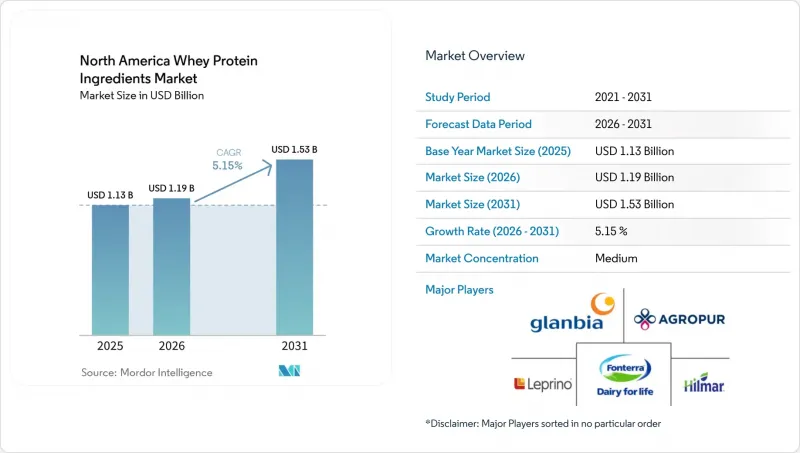
According to Mordor Intelligence, the North America whey protein ingredients market size was valued at USD 1.13 billion in 2025 and estimated to grow from USD 1.19 billion in 2026 to reach USD 1.53 billion by 2031, at a CAGR of 5.15% during the forecast period (2026-2031).
North America Whey Protein Ingredients Market Trends and Insights
Rising health and fitness awareness is increasing demand for high-quality protein ingredients to support muscle growth
The demand for whey protein in North America is steadily increasing as awareness of health and fitness grows. According to the 2024 Food and Health Survey conducted by the International Food Information Council, 71% of Americans were actively trying to increase their protein intake. This indicates that protein has become as critical as calorie content when making food purchase decisions. The trend is further supported by the rising use of GLP-1 weight-loss drugs, which encourage higher protein consumption to preserve lean muscle mass. The popularity of fitness apps that help users track their daily macronutrient intake has normalized regular protein consumption. These factors are driving consumers toward premium whey protein products, as they are willing to pay higher prices for products that offer proven benefits, such as improved bioavailability and muscle support.
Increased focus on healthy aging is supporting demand for whey protein in clinical nutrition and senior nutrition products
The growing focus on healthy aging is driving the demand for whey protein in North America, as older adults increasingly prioritize maintaining muscle strength, mobility, and overall immune health. In 2024, individuals aged 65 and above make up approximately 18% of the United States population, according to the World Bank. This equates to nearly 10,000 Americans entering this age group daily. Whey protein is particularly beneficial for seniors due to its quick digestion and high leucine content, which helps prevent muscle loss associated with aging. As a result, it is widely used in senior-focused nutrition products, including ready-to-drink protein shakes, fortified foods, and convenient options like high-protein soups. The growing elderly population provides a consistent, long-term demand for whey protein products, offering stability to the North American whey protein ingredients market even amid fluctuations in short-term fitness trends.
Rising popularity of plant-based and alternative proteins
The increasing popularity of plant-based and alternative proteins is limiting growth in the North American whey protein ingredients market. Proteins derived from sources such as pea, soy, and the emerging fava bean are growing rapidly, with double-digit expansion rates expected in 2024 and 2025. This growth is largely driven by their sustainability benefits, such as lower greenhouse gas emissions and reduced water usage, which appeal to environmentally conscious consumers. While these plant-based proteins generally have lower leucine content compared to whey, they are gaining traction, especially among younger consumers who prioritize climate-friendly choices. The market is seeing a rise in hybrid products combining whey and plant-based proteins, reflecting a partial shift in consumer preferences. Food and beverage manufacturers are also diversifying their protein sources to reduce supply chain risks and meet environmental, social, and governance (ESG) goals.
Other drivers and restraints analyzed in the detailed report include:
- Increasing protein fortification across everyday food categories such as bakery, dairy, snacks, and cereals
- Continued growth of infant nutrition and medical food applications
- Increasing scrutiny around animal agriculture and sustainability concerns
For complete list of drivers and restraints, kindly check the Table Of Contents.
Segment Analysis
Whey protein concentrates are expected to hold a significant 51.27% share of the North America whey protein ingredients market in 2025, making them the primary driver of market volume. These concentrates are popular for their affordability and versatility, making them suitable for a wide range of applications, including bakery items, snacks, and beverages. Manufacturers in the food and beverage industry prefer whey protein concentrates for protein fortification in mass-market products because they provide substantial protein content without significantly increasing production costs. As more consumers seek protein-enriched everyday foods, whey protein concentrates continue to dominate the market demand.
Whey protein hydrolysates, while representing a smaller portion of the market, are experiencing rapid growth, with a projected CAGR of 6.47% through 2031. These hydrolysates are highly valued for their rapid absorption and ease of digestion, making them ideal for specialized applications such as infant formula, medical nutrition, and premium sports nutrition products. Their superior performance benefits allow them to command higher prices and profit margins. As clinical and specialized nutrition applications expand, the role of whey protein hydrolysates in the market is steadily increasing, contributing to their growing importance in the overall whey protein ingredients market.
Complete Report Scope:
- By Product Type
- Whey Protein Concentrates
- Whey Protein Isolates
- Whey Protein Hydrolysate
- By Form
- Powder
- Liquid
- By Application
- Animal Feed
- Food and Beverages
- Bakery
- Beverages
- Breakfast Cereals
- Condiments/Sauces
- Dairy and Dairy Alternatives Products
- RTE/RTC/ Food Products
- Snacks
- Personal Care and Cosmetics
- Nutritional Supplements
- Baby Food and Infant Formula
- Elderly and Medical Nutrition
- Sports/Performance Nutrition
- By Country
- United States
- Canada
- Mexico
- Rest of North America
List of Companies Covered in this Report:
- Agropur Dairy Cooperative
- Arla Foods amba
- Carbery Group Ltd.
- Actus Nutrition
- Fonterra Co-operative Group Ltd.
- FrieslandCampina Ingredients
- Glanbia plc
- Groupe Lactalis
- Hilmar Cheese Company Inc.
- Northwest Dairy Association (Darigold)
- Saputo Inc.
- Leprino Foods Company
- Dairy Farmers of America Inc.
- Land O'Lakes Inc.
- Westland Milk Products
- Idaho Milk Products
- United Dairymen of Arizona
- AMCO Proteins
- Grande Cheese Company
- Nagase America LLC
Additional Benefits:
- The market estimate (ME) sheet in Excel format
- 3 months of analyst support
TABLE OF CONTENTS
1 INTRODUCTION
- 1.1 Study Assumptions and Market Definition
- 1.2 Scope of the Study
2 RESEARCH METHODOLOGY
3 EXECUTIVE SUMMARY
4 MARKET LANDSCAPE
- 4.1 Market Overview
- 4.2 Market Drivers
- 4.2.1 Rising health and fitness awareness is increasing demand for high-quality protein ingredients to support muscle growth
- 4.2.2 Expanding use of whey protein in functional foods and beverages
- 4.2.3 Continued growth of infant nutrition and medical food applications
- 4.2.4 Increased focus on healthy aging is supporting demand for whey protein in clinical nutrition and senior nutrition products
- 4.2.5 Product innovation, including clean-label formulations, flavored proteins, low-lactose variants, and ready-to-drink formats
- 4.2.6 Increasing protein fortification across everyday food categories such as bakery, dairy, snacks, and cereals
- 4.3 Market Restraints
- 4.3.1 Regulatory complexity for infant nutrition and medical food application
- 4.3.2 Rising popularity of plant-based and alternative proteins
- 4.3.3 Lactose intolerance and dairy sensitivity among a portion of the population
- 4.3.4 Increasing scrutiny around animal agriculture and sustainability concerns
- 4.4 Value Chain Analysis
- 4.5 Regulatory Outlook
- 4.6 Technological Outlook
- 4.7 Porter's Five Forces
- 4.7.1 Threat of New Entrants
- 4.7.2 Bargaining Power of Buyers
- 4.7.3 Bargaining Power of Suppliers
- 4.7.4 Threat of Substitute Products
- 4.7.5 Intensity of Competitive Rivalry
5 MARKET SIZE AND GROWTH FORECASTS (VALUE)
- 5.1 By Product Type
- 5.1.1 Whey Protein Concentrates
- 5.1.2 Whey Protein Isolates
- 5.1.3 Whey Protein Hydrolysate
- 5.2 By Form
- 5.2.1 Powder
- 5.2.2 Liquid
- 5.3 By Application
- 5.3.1 Animal Feed
- 5.3.2 Food and Beverages
- 5.3.2.1 Bakery
- 5.3.2.2 Beverages
- 5.3.2.3 Breakfast Cereals
- 5.3.2.4 Condiments/Sauces
- 5.3.2.5 Dairy and Dairy Alternatives Products
- 5.3.2.6 RTE/RTC/ Food Products
- 5.3.2.7 Snacks
- 5.3.3 Personal Care and Cosmetics
- 5.3.4 Nutritional Supplements
- 5.3.4.1 Baby Food and Infant Formula
- 5.3.4.2 Elderly and Medical Nutrition
- 5.3.4.3 Sports/Performance Nutrition
- 5.4 By Country
- 5.4.1 United States
- 5.4.2 Canada
- 5.4.3 Mexico
- 5.4.4 Rest of North America
6 COMPETITIVE LANDSCAPE
- 6.1 Market Concentration
- 6.2 Strategic Moves
- 6.3 Market Share Analysis
- 6.4 Company Profiles (includes Global-level Overview, Market-level Overview, Core Segments, Financials (if available), Strategic Information, Market Rank/Share, Products and Services, Recent Developments)
- 6.4.1 Agropur Dairy Cooperative
- 6.4.2 Arla Foods amba
- 6.4.3 Carbery Group Ltd.
- 6.4.4 Actus Nutrition
- 6.4.5 Fonterra Co-operative Group Ltd.
- 6.4.6 FrieslandCampina Ingredients
- 6.4.7 Glanbia plc
- 6.4.8 Groupe Lactalis
- 6.4.9 Hilmar Cheese Company Inc.
- 6.4.10 Northwest Dairy Association (Darigold)
- 6.4.11 Saputo Inc.
- 6.4.12 Leprino Foods Company
- 6.4.13 Dairy Farmers of America Inc.
- 6.4.14 Land O'Lakes Inc.
- 6.4.15 Westland Milk Products
- 6.4.16 Idaho Milk Products
- 6.4.17 United Dairymen of Arizona
- 6.4.18 AMCO Proteins
- 6.4.19 Grande Cheese Company
- 6.4.20 Nagase America LLC
7 MARKET OPPORTUNITIES AND FUTURE OUTLOOK

