PUBLISHER: Roots Analysis | PRODUCT CODE: 2125136

PUBLISHER: Roots Analysis | PRODUCT CODE: 2125136
Europe Cancer Metabolism Based Therapeutics Market - Trends and Forecast Till 2035
EUROPE CANCER METABOLISM BASED THERAPEUTICS MARKET: OVERVIEW
As per Roots Analysis, the Europe cancer metabolism based therapeutics market is estimated to grow from USD 1.12 billion in the current year to USD 8.54 billion by 2035, at a CAGR of 25.3% during the forecast period, till 2035.
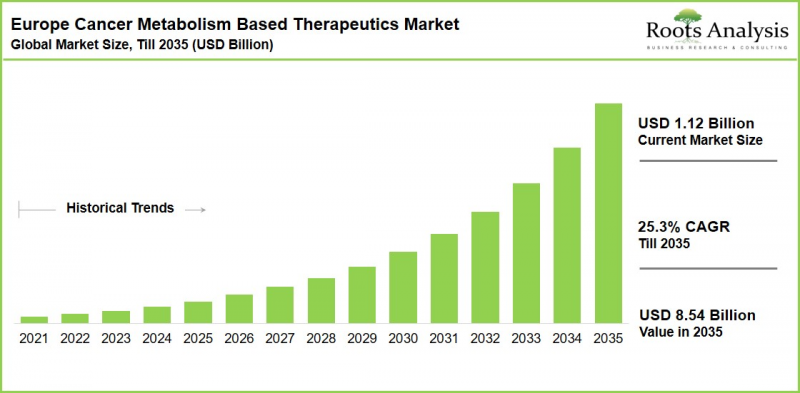
Europe Cancer Metabolism Based Therapeutics Market: Growth and Trends
Cancer cells undergo substantial metabolic reprogramming to sustain proliferation, resist apoptosis, adapt to hypoxic and nutrient-deprived tumor microenvironments, and evade immune detection. These metabolic adaptations extend well beyond the classical Warburg effect, encompassing broader alterations in glucose, lipid and amino acid metabolism that enable cancer cells to meet their increased energy and biosynthetic demands. Metabolic flexibility is now recognized as a core hallmark of cancer and a significant therapeutic target.
Advances in tumor biology, metabolomics, and molecular profiling have identified actionable metabolic vulnerabilities. This has enabled the development of targeted therapies that disrupt tumor-specific metabolic pathways while sparing normal tissue. Cancer metabolism-based therapeutics are emerging as a key component of precision oncology, complementing chemotherapy, molecularly targeted agents, immunotherapies, and combination regimens. Sustained investment in translational research and expanding clinical pipelines targeting metabolic enzymes and transporters continue to drive innovation across cancer indications.
Europe is one of the most significant markets for cancer metabolism-based therapeutics. This position is supported by a high cancer incidence, established oncology care infrastructure, and broad adoption of precision medicine initiatives. According to the World Health Organization, Europe accounts for roughly 9% of the global population but contributes approximately 23.4% of new cancer cases and 20.3% of cancer-related deaths worldwide, underscoring the region's disproportionate disease burden.
Favorable reimbursement frameworks in several Western European countries and the presence of leading academic cancer centers have further accelerated the integration of precision oncology into routine clinical practice. Regulatory approvals have reinforced metabolic targets as clinically actionable therapeutic strategies. A key milestone was the European Commission's approval of Voranigo (vorasidenib) for patients with IDH1- or IDH2-mutant diffuse glioma. This marked one of the first therapies specifically designed to inhibit mutant isocitrate dehydrogenase enzymes responsible for producing the oncometabolite 2-hydroxyglutarate (2-HG). The approval confirms the clinical relevance of targeting altered tumor metabolism and reflects the successful translation of decades of metabolic research into precision oncology practice.
The Europe cancer metabolism-based therapeutics market is expected to sustain growth, driven by expanding biomarker testing, increasing clinical trial activity, and continued regulatory support for personalized oncology. The European Medicines Agency continues to emphasize molecularly guided treatment approaches that enable therapy selection based on the genetic and metabolic characteristics of individual tumors, rather than conventional histological classification alone.
Initiatives such as Europe's Beating Cancer Plan, national precision medicine programs, and collaborative oncology research networks are improving access to molecular diagnostics and accelerating the development of targeted therapies. As understanding of tumor metabolic heterogeneity advances and companion diagnostic capabilities expand, metabolism-based therapeutics are expected to play an increasingly important role in managing solid tumors and hematological malignancies, particularly within biomarker-defined patient populations.
Growth Drivers: Factors Fueling Market Expansion
Growth of the Europe cancer metabolism based therapeutics market is being driven by the rising cancer incidence across this region. National cancer registries report a steady increase in new cancer diagnoses, driven by population aging and expanded screening coverage. This rising disease burden, combined with growing clinical evidence supporting the efficacy of metabolically targeted agents in tumor types such as breast cancer and non-small cell lung cancer, is prompting oncologists to increasingly incorporate these therapies into treatment algorithms.
Further, the European Union's continued investment in cancer research through coordinated funding initiatives, alongside expedited regulatory pathways for innovative oncology therapies, is enabling faster market entry. Advances in metabolomics, high-throughput screening and AI-enabled biomarker discovery are also improving patient selection for metabolically targeted therapies, which in turn is expected to support stronger clinical trial success rates and sustained investment across the region.
Market Challenges: Critical Barriers Hindering Progress
Despite the progressive outlook, several challenges could hamper the market growth. Many cancer metabolism based therapeutic candidates have limited target specificity because several metabolic pathways are shared by both cancer cells and healthy cells. As a result, these therapies may cause tolerability issues, limiting the dose that can be administered and potentially reducing their therapeutic efficacy.
Additionally, the inherent metabolic plasticity and heterogeneity of tumors make single-pathway inhibition insufficient for many patients, necessitating combination approaches that add regulatory and commercial complexity. Reimbursement policies vary considerably across European countries, and each nation has its own health technology assessment (HTA) requirements. These differences can delay market access and increase pricing pressure for newly approved cancer metabolism based therapies.
Europe Cancer Metabolism Based Therapeutics Market: Key Insights
The report delves into the current state of the Europe cancer metabolism based therapeutics market and identifies potential growth opportunities within the industry, particularly from a distributor and channel-partner perspective. Some key insights include:
- Driven by the rising cancer burden and the limitations of conventional cytotoxic therapies, several European and multinational developers are prioritizing research on tumor-specific metabolic vulnerabilities as a differentiated approach to oncology drug development.
- Several cancer metabolisms based therapies are currently marketed / under investigation across various stages of development for use within Europe; small molecules continue to dominate the pipeline given their favorable manufacturing economics and oral dosing convenience.
- A growing proportion of clinical trials evaluating cancer metabolism based therapies are being registered across European sites, with academic medical centers and multinational pharmaceutical sponsors jointly driving enrollment.
- Recent licensing and distribution deals, including cross-regional agreements covering Europe alongside the Middle East and North Africa, indicate that developers are increasingly using partnership-led models to access the European market rather than direct commercialization alone.
- Patent filing activity related to cancer metabolism based interventions has remained robust in Europe, with a meaningful share of recent filings originating from industry players seeking to protect novel target combinations and formulation approaches.
- Given the region's expanding pipeline, favorable regulatory posture toward orphan and rare cancer indications, and strengthening venture and pharma-backed investment activity, the Europe cancer metabolism based therapeutics market is well positioned for sustained double-digit growth through the forecast period.
Europe Cancer Metabolism Based Therapeutics Market Segments
Roots Analysis segments the Europe cancer metabolism based therapeutics opportunity across the following parameters:
By Type of Modality
- Small Molecules
- Biologics
By Route of Administration
- Oral
- Intravenous
- Intramuscular
By Target Disease Indication
- Breast Cancer
- Non-small Cell Lung Cancer
- Acute Myeloid Leukemia
- Brain Cancer
- Cholangiocarcinoma
- Bile Duct Cancer
- Myelodysplastic Syndromes
- Malignant Mesothelioma
- Soft Tissue Sarcoma
- Hepatocellular Carcinoma
- Pancreatic Cancer
By Sales Forecast of Therapies
- Daraxonrasib
- Gedatolisib
- Olomorasib
- Inavolisib
- Vorasidenib
- STX-478
- AZD 5363
- AG-120
- Selpercatinib
- ADI-PEG 20
- Augtyro
- Taletrectinib
- Piqray
- TAS-120
Europe Cancer Metabolism Based Therapeutics Market: Key Segment Insights
Small Molecules Continue to Lead the Europe Market
Small molecule cancer metabolism inhibitors currently hold the largest segment of the Europe cancer metabolism based therapeutics market and are expected to maintain their leadership during the forecast period. Their dominance is driven by several scientific, commercial, and healthcare system advantages. Unlike complex biologics, small molecules can penetrate tumor cells efficiently to inhibit intracellular metabolic enzymes and signaling pathways, including glutaminase, IDH1/2, PI3K/AKT/mTOR, and oxidative phosphorylation targets, making them particularly suitable for metabolic intervention.
Further, their favorable oral bioavailability enables outpatient treatment, reducing hospital visits and lowering the overall cost of care for European healthcare systems that increasingly prioritize value-based reimbursement. In addition, small molecules benefit from well-established manufacturing processes, scalable production, longer product shelf life, and comparatively lower development and commercialization costs than biologics or cell-based therapies.
Oral Route of Administration Continues to Dominate the Europe Market
The oral route of administration is expected to account for the largest share of the market. This dominance is primarily driven by the fact that the current pipeline and commercially available cancer metabolism therapeutics are predominantly small-molecule agents designed for oral administration. Oral therapies offer substantial advantages in oncology practice, including improved patient convenience, reduced dependence on hospital-based infusion services, and enhanced treatment adherence, particularly for patients receiving long-term maintenance therapy.
On the other hand, intramuscular route of administration is anticipated to witness the highest CAGR during the forecast period. This lucrative growth is supported by the growing development of injectable biologics, nucleic acid-based therapeutics, cancer vaccines, and cell-based therapies targeting tumor metabolism. Unlike conventional oral small molecules, many emerging biologics and advanced therapeutic modalities possess complex molecular structures that require parenteral administration to preserve therapeutic activity and achieve predictable pharmacokinetic profiles. Intramuscular delivery offers reliable systemic absorption, improved bioavailability, and the potential for sustained drug release, making it an attractive option for next-generation metabolism-targeted therapies designed for prolonged therapeutic activity.
Breast Cancer and NSCLC Hold the Highest Share
Breast cancer and non-small cell lung cancer (NSCLC) are expected to remain the largest indication segments within the Europe cancer metabolism based therapeutics market. This leadership is primarily driven by the high incidence and prevalence of both malignancies across European countries. Further, substantial clinical evidence demonstrates the role of metabolic reprogramming in disease progression and therapeutic resistance.
Tumors associated with breast cancer and NSCLC exhibit pronounced metabolic alterations involving glucose metabolism, glutamine utilization, lipid biosynthesis, and mitochondrial energy production, making them attractive targets for metabolism-directed therapies. These indications have also attracted considerable investment in clinical research, resulting in a larger pipeline of metabolism-targeting candidates evaluated either as monotherapies or in combination with immunotherapies and targeted agents. Moreover, increasing implementation of molecular diagnostics and biomarker-guided patient stratification is improving the identification of patients most likely to benefit from metabolic interventions.
Example Players in Europe Cancer Metabolism Based Therapeutics Market
- AstraZeneca
- Bayer
- Novartis
- Roche
- Servier
- Sprint Bioscience
Expert Interview and Industry Insights
The opinions and insights presented in this study were shaped by discussions with multiple stakeholders across the value chain. The research report features detailed transcripts of interviews held with the following industry participants:
- Former Vice President, Business Development and Partnerships, Small Company, US
- Former Global Business Development Manager, Clinical Operations, Mid-sized Company, France
- Researcher, Mid-sized Company, Chile
In addition, the market report includes transcripts of the following other third-party discussions:
- President and Chief Executive Officer, Mid-sized Company, US
- President and Chief Executive Officer, Mid-sized Company, US
- Chief Executive Officer, Mid-sized Company, US
- Chief Financial Officer, Mid-sized Company, US
- Associate Professor, Very Large Company, US
- Medical Oncologist, Very Large Company, US
- Associate Professor, Large Company, Germany
- Former Vice President, Head of Research and Translational Sciences, Large Company, US
- Postdoctoral Researcher, Very Large Company, US
- Consultant Dietitian
EUROPE CANCER METABOLISM BASED THERAPEUTICS MARKET: RESEARCH COVERAGE
- Market Sizing and Opportunity Analysis: The report features an in-depth analysis of the Europe cancer metabolism based therapeutics market, focusing on key market segments, including [A] type of modality, [B] route of administration, [C] target disease indication, and [D] sales forecast of therapies.
- Europe Cancer Metabolism Based Therapeutics Landscape: A detailed assessment of the overall therapeutics landscape relevant to Europe, featuring information on parameters such as stage of development, target disease indication, type of modality, route of administration and mechanism of action, along with analysis of developers based on year of establishment, company size and location of headquarters.
- Company Profiles: In-depth profiles of prominent players engaged in the Europe cancer metabolism based therapeutics industry, featuring information on their year of establishment, location of headquarters, company size, management team, product portfolio and key initiatives.
- Clinical Trial Analysis: An analysis of completed and ongoing clinical trials relevant to Europe, based on parameters such as trial registration year, enrolled patient population, trial phase, trial status, type of sponsor / collaborator, study design and country.
- Drug Failure Analysis: An insightful analysis of discontinued cancer metabolism based therapy trials, based on parameters such as trial phase, trial status, reason for discontinuation, study start year and year of discontinuation.
- Success Protocol Analysis: An analysis of recently approved cancer metabolism based therapies relevant to Europe, based on parameters such as dosing frequency, safety and efficacy, geographical reach, line of treatment and existing competition among developers.
- Patent Analysis: An analysis of patents filed / granted related to cancer metabolism based interventions relevant to Europe, based on parameters such as type of patent, patent application year, patent jurisdiction, CPC symbols and type of applicant.
- Recent Developments: A detailed analysis of recent partnerships and collaborations, funding and investments, and other developments relevant to the Europe cancer metabolism based therapeutics industry.
- Porter's Five Forces Analysis: A qualitative analysis of the five competitive forces relevant to this domain within Europe, namely threat of new entrants, bargaining power of buyers, bargaining power of suppliers, threat of substitute products and rivalry among existing competitors.
- Market Impact Analysis: The report analyzes various drivers, restraints, opportunities and challenges affecting growth of the Europe cancer metabolism based therapeutics market.
- Country-wise Market Opportunity Analysis: A dedicated opportunity analysis for Germany, the UK, France, Italy, Spain and Rest of Europe, highlighting country-specific growth drivers, regulatory considerations and competitive intensity.
Key Questions Answered in this Report
- Which are the leading companies active in the Europe cancer metabolism based therapeutics market?
- Which country dominates the Europe cancer metabolism based therapeutics market?
- What are the key trends observed in the Europe cancer metabolism based therapeutics market?
- What factors are likely to influence the evolution of this market across Europe?
- What are the primary challenges faced by cancer metabolism based therapy developers in Europe?
- What is the current and future size of the Europe cancer metabolism based therapeutics market?
- What is the CAGR of this market through 2035?
- How is the current and future market opportunity likely to be distributed across key market segments and countries?
Reasons to Buy this Report
This report has been specifically developed to support distributors, channel partners, and business development teams evaluating entry into the Europe cancer metabolism based therapeutics market.
- The report provides a comprehensive market analysis, offering detailed revenue projections of the overall Europe market and its specific sub-segments, valuable to both established market leaders and emerging entrants.
- The report offers stakeholders a comprehensive overview of the market, including key drivers, barriers, opportunities and challenges, empowering data-driven decision-making.
- The report can aid businesses in identifying future opportunities across European markets and in understanding whether those opportunities are worth pursuing.
- The report helps in identifying customer demand by understanding the needs, preferences and behavior of the target audience in order to tailor products or services effectively.
- The report equips new entrants with the requisite country-level information to help them build successful European market entry strategies.
- The report allows for more effective communication with the audience and in building strong business relationships across the region.
Additional Benefits
- Complementary PPT Insights Pack
- Complementary Excel Data Packs for all Analytical Modules in the Report
- 15% Free Content Customization
- Detailed Report Walkthrough Session with Research Team
- Free Updated report if the report is 6-12 months old or older
TABLE OF CONTENTS
1. BACKGROUND
- 1.1. Context
- 1.2. Project Objectives
2. RESEARCH METHODOLOGY
- 2.1. Chapter Overview
- 2.2. Research Assumptions
- 2.2.1. Market Landscape and Market Trends
- 2.2.2. Market Forecast and Opportunity Analysis
- 2.2.3. Comparative Analysis
- 2.3. Database Building
- 2.3.1. Data Collection
- 2.3.2. Data Validation
- 2.3.3. Data Analysis
- 2.4. Project Methodology
- 2.4.1. Secondary Research
- 2.4.1.1. Annual Reports
- 2.4.1.2. Academic Research Papers
- 2.4.1.3. Company Websites
- 2.4.1.4. Investor Presentations
- 2.4.1.5. Regulatory Filings
- 2.4.1.6. White Papers
- 2.4.1.7. Industry Publications
- 2.4.1.8. Conferences and Seminars
- 2.4.1.9. Government Portals
- 2.4.1.10. Media and Press Releases
- 2.4.1.11. Newsletters
- 2.4.1.12. Industry Databases
- 2.4.1.13. Roots Proprietary Databases
- 2.4.1.14. Paid Databases and Sources
- 2.4.1.15. Social Media Portals
- 2.4.1.16. Other Secondary Sources
- 2.4.2. Primary Research
- 2.4.2.1. Types of Primary Research
- 2.4.2.1.1. Qualitative Research
- 2.4.2.1.2. Quantitative Research
- 2.4.2.1.3. Hybrid Approach
- 2.4.2.2. Advantages of Primary Research
- 2.4.2.3. Techniques for Primary Research
- 2.4.2.3.1. Interviews
- 2.4.2.3.2. Surveys
- 2.4.2.3.3. Focus Groups
- 2.4.2.3.4. Observational Research
- 2.4.2.3.5. Social Media Interactions
- 2.4.2.4. Key Opinion Leaders Considered in Primary Research
- 2.4.2.4.1. Company Executives (CXOs)
- 2.4.2.4.2. Board of Directors
- 2.4.2.4.3. Company Presidents and Vice Presidents
- 2.4.2.4.4. Research and Development Heads
- 2.4.2.4.5. Technical Experts
- 2.4.2.4.6. Subject Matter Experts
- 2.4.2.4.7. Scientists
- 2.4.2.4.8. Doctors and Other Healthcare Providers
- 2.4.2.5. Ethics and Integrity
- 2.4.2.5.1. Research Ethics
- 2.4.2.5.2. Data Integrity
- 2.4.2.1. Types of Primary Research
- 2.4.3. Analytical Tools and Databases
- 2.4.1. Secondary Research
- 2.5. Robust Quality Control
3. MARKET DYNAMICS
- 3.1. Chapter Overview
- 3.2. Forecast Methodology
- 3.2.1. Top-down Approach
- 3.2.2. Bottom-up Approach
- 3.2.3. Hybrid Approach
- 3.3. Market Assessment Framework
- 3.3.1. Total Addressable Market (TAM)
- 3.3.2. Serviceable Addressable Market (SAM)
- 3.3.3. Serviceable Obtainable Market (SOM)
- 3.3.4. Currently Acquired Market (CAM)
- 3.4. Forecasting Tools and Techniques
- 3.4.1. Qualitative Forecasting
- 3.4.2. Correlation
- 3.4.3. Regression
- 3.4.4. Extrapolation
- 3.4.5. Convergence
- 3.4.6. Sensitivity Analysis
- 3.4.7. Scenario Planning
- 3.4.8. Data Visualization
- 3.4.9. Time Series Analysis
- 3.4.10. Forecast Error Analysis
- 3.5. Key Considerations
- 3.5.1. Demographics
- 3.5.2. Government Regulations
- 3.5.3. Reimbursement Scenarios
- 3.5.4. Market Access
- 3.5.5. Supply Chain
- 3.5.6. Industry Consolidation
- 3.5.7. Pandemic / Unforeseen Disruptions Impact
- 3.6. Limitations
4. MACRO-ECONOMIC INDICATORS
- 4.1. Chapter Overview
- 4.2. Market Dynamics
- 4.2.1. Time Period
- 4.2.1.1. Historical Trends
- 4.2.1.2. Current and Forecasted Estimates
- 4.2.2. Currency Coverage
- 4.2.2.1. Major Currencies Affecting the Market
- 4.2.2.2. Factors Affecting Currency Fluctuations
- 4.2.2.3. Impact of Currency Fluctuations on the Industry
- 4.2.3. Foreign Currency Exchange Rate
- 4.2.3.1. Impact of Foreign Exchange Rate Volatility on the Market
- 4.2.3.2. Strategies for Mitigating Foreign Exchange Risk
- 4.2.4. Recession
- 4.2.4.1. Assessment of Current Economic Conditions and Potential Impact on the Market
- 4.2.4.2. Historical Analysis of Past Recessions and Lessons Learnt
- 4.2.5. Inflation
- 4.2.5.1. Measurement and Analysis of Inflationary Pressures in the Economy
- 4.2.5.2. Potential Impact of Inflation on the Market Evolution
- 4.2.6. Interest Rates
- 4.2.6.1. Interest Rates and Their Impact on the Market
- 4.2.6.2. Strategies for Managing Interest Rate Risk
- 4.2.7. Commodity Flow Analysis
- 4.2.7.1. Type of Commodity
- 4.2.7.2. Origins and Destinations
- 4.2.7.3. Values and Weights
- 4.2.7.4. Modes of Transportation
- 4.2.8. Global Trade Dynamics
- 4.2.8.1. Import Scenario
- 4.2.8.2. Export Scenario
- 4.2.8.3. Trade Policies
- 4.2.8.4. Strategies for Mitigating the Risks Associated with Trade Barriers
- 4.2.8.5. Impact of Trade Barriers on the Market
- 4.2.9. War Impact Analysis
- 4.2.9.1. Russian-Ukraine War
- 4.2.9.2. Israel-Hamas War
- 4.2.10. COVID Impact / Related Factors
- 4.2.10.1. Global Economic Impact
- 4.2.10.2. Industry-specific Impact
- 4.2.10.3. Government Response and Stimulus Measures
- 4.2.10.4. Future Outlook and Adaptation Strategies
- 4.2.11. Other Indicators
- 4.2.11.1. Fiscal Policy
- 4.2.11.2. Consumer Spending
- 4.2.11.3. Gross Domestic Product
- 4.2.11.4. Employment
- 4.2.11.5. Taxes
- 4.2.11.6. Stock Market Performance
- 4.2.11.7. Cross Border Dynamics
- 4.2.1. Time Period
- 4.3. Conclusion
5. EXECUTIVE SUMMARY
- 5.1. Executive Summary: Market Landscape
- 5.2. Executive Summary: Market Trends
- 5.3. Executive Summary: Market Forecast and Opportunity Analysis
6. INTRODUCTION
- 6.1. Overview of Cancer Metabolism-Based Therapies
- 6.2. Key Metabolic Alterations Associated with Cancer Cells
- 6.3. Core Metabolic Pathways Associated with Cancer
- 6.4. Advantages of Cancer Metabolism-Based Therapies
- 6.5. Challenges Associated with Cancer Metabolism-Based Therapies
- 6.6. Future Outlook
7. MARKET LANDSCAPE
- 7.1. Methodology and Key Parameters
- 7.2. Europe Cancer Metabolism Based Therapeutics: Overall Market Landscape
- 7.2.1. Analysis by Stage of Development
- 7.2.2. Analysis by Metabolic Pathway
- 7.2.3. Analysis by Target
- 7.2.4. Analysis by Target Disease Indication
- 7.2.5. Analysis by Route of Administration
- 7.2.6. Analysis by Type of Modality
- 7.2.7. Analysis by Type of Therapy
- 7.2.8. Analysis by Drug Designation
- 7.3. Europe Cancer Metabolism Based Therapeutics: Developer Landscape
- 7.3.1. Analysis by Year of Establishment
- 7.3.2. Analysis by Company Size
- 7.3.3. Analysis by Location of Headquarters
- 7.3.4. Analysis by Company Size and Location of Headquarters
- 7.3.5. Most Active Players: Analysis by Number of Therapies Developed
8. COMPANY PROFILES
- 8.1. Chapter Overview
- 8.2. AstraZeneca*
- 8.2.1. Company Details
- 8.2.2. Cancer Metabolism-Based Drugs Portfolio
- 8.2.3. Key Initiatives
- Similar details are presented for other companies mentioned below (based on information in the public domain)
- 8.3. Bayer
- 8.4. Novartis
- 8.5. Roche
- 8.6. Servier
- 8.7. Sprint Bioscience
9. CLINICAL TRIAL ANALYSIS
- 9.1. Methodology and Key Parameters
- 9.2. Europe Cancer Metabolism Based Therapeutics: Clinical Trial Analysis
- 9.2.1. Analysis by Trial Registration Year
- 9.2.2. Analysis by Trial Status
- 9.2.3. Analysis by Trial Registration Year and Trial Status
- 9.2.4. Analysis by Number of Patients Enrolled and Trial Registration Year
- 9.2.5. Analysis by Number of Patients Enrolled and Trial Status
- 9.2.6. Analysis by Trial Phase
- 9.2.7. Analysis by Number of Patients Enrolled and Trial Phase
- 9.2.8. Analysis by Study Design
- 9.2.8.1. Analysis by Design Masking
- 9.2.8.2. Analysis by Type of Intervention Model
- 9.2.8.3. Analysis by Trial Purpose
- 9.2.8.4. Analysis by Type of Allocation
- 9.2.9. Analysis by Type of Sponsor / Collaborator
- 9.2.10. Analysis by Patient Gender
- 9.2.11. Most Active Industry Players: Analysis by Number of Clinical Trials
- 9.2.12. Most Active Non-Industry Players: Analysis by Number of Clinical Trials
- 9.2.13. Geographical Distribution of Trials and Number of Patients Enrolled
10. PARTNERSHIPS AND COLLABORATIONS
- 10.1. Partnership Models
- 10.2. Europe Cancer Metabolism Based Therapeutics: Partnerships and Collaborations
- 10.2.1. Analysis by Year of Partnership
- 10.2.2. Analysis by Type of Partnership
- 10.2.3. Analysis by Year and Type of Partnership
- 10.2.4. Analysis by Target Disease Indication
- 10.2.5. Most Active Players: Analysis by Number of Partnerships
- 10.2.6. Analysis by Geography
- 10.2.6.1. Local and International Deals
- 10.2.6.2. Intercontinental and Intracontinental Deals
11. MARKET IMPACT ANALYSIS
- 11.1. Chapter Overview
- 11.2. Market Drivers
- 11.3. Market Restraints
- 11.4. Market Opportunities
- 11.5. Market Challenges
12. EUROPE CANCER METABOLISM BASED THERAPEUTICS MARKET
- 12.1. Chapter Overview
- 12.2. Key Assumptions
- 12.3. Forecast Methodology
- 12.4. Europe Cancer Metabolism Based Therapeutics Market, Historical Trends (Since 2021) and Forecasted Estimates (Till 2035)
- 12.5. Multivariate Scenario Analysis
- 12.5.1. Europe Cancer Metabolism Based Therapeutics Market, Forecasted Estimates (Till 2035), Conservative Scenario
- 12.5.2. Europe Cancer Metabolism Based Therapeutics Market, Forecasted Estimates (Till 2035), Optimistic Scenario
- 12.6. Key Market Segmentations
13. EUROPE CANCER METABOLISM BASED THERAPEUTICS MARKET, BY TYPE OF MODALITY
- 13.1. Europe Cancer Metabolism Based Therapeutics Market: Distribution by Type of Modality
- 13.1.1. Europe Cancer Metabolism Based Therapeutics Market for Biologics: Historical Trends (Since 2021) and Forecasted Estimates (Till 2035)
- 13.1.2. Europe Cancer Metabolism Based Therapeutics Market for Small Molecules: Historical Trends (Since 2021) and Forecasted Estimates (Till 2035)
- 13.2. Data Triangulation and Validation
14. EUROPE CANCER METABOLISM BASED THERAPEUTICS MARKET, BY ROUTE OF ADMINISTRATION
- 14.1. Europe Cancer Metabolism Based Therapeutics Market: Distribution by Route of Administration
- 14.1.1. Europe Cancer Metabolism Based Therapeutics Market for Oral Route: Historical Trends (Since 2021) and Forecasted Estimates (Till 2035)
- 14.1.2. Europe Cancer Metabolism Based Therapeutics Market for Intramuscular Route: Forecasted Estimates (Till 2035)
- 14.1.3. Europe Cancer Metabolism Based Therapeutics Market for Intravenous Route: Forecasted Estimates (Till 2035)
- 14.2. Data Triangulation and Validation
15. EUROPE CANCER METABOLISM BASED THERAPEUTICS MARKET, BY TARGET DISEASE INDICATION
- 15.1. Europe Cancer Metabolism Based Therapeutics Market: Distribution by Target Disease Indication
- 15.1.1. Europe Cancer Metabolism Based Therapeutics Market for Breast Cancer: Historical Trends (Since 2021) and Forecasted Estimates (Till 2035)
- 15.1.2. Europe Cancer Metabolism Based Therapeutics Market for Non-small Cell Lung Cancer: Historical Trends (Since 2021) and Forecasted Estimates (Till 2035)
- 15.1.3. Europe Cancer Metabolism Based Therapeutics Market for Acute Myeloid Leukemia: Historical Trends (Since 2021) and Forecasted Estimates (Till 2035)
- 15.1.4. Europe Cancer Metabolism Based Therapeutics Market for Brain Cancer: Historical Trends (Since 2025) and Forecasted Estimates (Till 2035)
- 15.1.5. Europe Cancer Metabolism Based Therapeutics Market for Cholangiocarcinoma: Historical Trends (Since 2021) and Forecasted Estimates (Till 2035)
- 15.1.6. Europe Cancer Metabolism Based Therapeutics Market for Bile Duct Cancer: Historical Trends (Since 2022) and Forecasted Estimates (Till 2035)
- 15.1.7. Europe Cancer Metabolism Based Therapeutics Market for Myelodysplastic Syndromes: Historical Trends (Since 2021) and Forecasted Estimates (Till 2035)
- 15.1.8. Europe Cancer Metabolism Based Therapeutics Market for Malignant-mesothelioma: Forecasted Estimates (Till 2035)
- 15.1.9. Europe Cancer Metabolism Based Therapeutics Market for Pancreatic Cancer: Forecasted Estimates (Till 2035)
- 15.1.10. Europe Cancer Metabolism Based Therapeutics Market for Soft Tissue Sarcoma: Forecasted Estimates (Till 2035)
- 15.1.11. Europe Cancer Metabolism Based Therapeutics Market for Hepatocellular Carcinoma: Forecasted Estimates (Till 2035)
- 15.2. Data Triangulation and Validation
16. EUROPE CANCER METABOLISM BASED THERAPEUTICS MARKET, SALES FORECAST OF THERAPIES
- 16.1. Cancer Metabolism-Based Therapies: Sales Forecast
- 16.1.1. Daraxonrasib: Sales Forecast
- 16.1.2. Gedatolisib: Sales Forecast
- 16.1.3. Olomorasib: Sales Forecast
- 16.1.4. Inavolisib: Sales Forecast
- 16.1.5. Vorasidenib: Sales Forecast
- 16.1.6. STX-478: Sales Forecast
- 16.1.7. AZD 5363: Sales Forecast
- 16.1.8. AG-120: Sales Forecast
- 16.1.9. Selpercatinib: Sales Forecast
- 16.1.10. ADI-PEG 20: Sales Forecast
- 16.1.11. Augtyro: Sales Forecast
- 16.1.12. Taletrectinib: Sales Forecast
- 16.1.13. Piqray / Vijoice: Sales Forecast
- 16.1.14. TAS-120: Sales Forecast
17. CONCLUDING REMARKS
18. EXECUTIVE INSIGHTS
19. APPENDIX I: TABULATED DATA

