PUBLISHER: Zhar Research | PRODUCT CODE: 2029279

PUBLISHER: Zhar Research | PRODUCT CODE: 2029279
Passive Radiative Cooling, PRC, PDRC, Variants: Technology, Markets 2026-2046
Summary
Cooling is gradually following the trend to solid state versions because they tend to be more compact, easily fitted, reliable and long-lived, avoiding toxic, scarce or flammable materials. Some need no power input. Unlike today’s vapor compression cooling, these do not heat the surroundings, aggravating problems of both global warming and of cooling the hotter systems arriving such as AI datacenters, 6G Communications and 1kW microchips.
The most successful form of solid-state cooling is likely to be Passive Radiative Cooling PRC, sometimes called Passive Daylight Radiative Cooling PDRC. This combines two functions in one structure – reflection and radiation into space using the near-infrared atmospheric window band. Following the success of the Zhar Research report on solid state cooling in general, the 307-page, new report, “Passive radiative cooling, PRC, PDRC, variants: technology, markets 2026-2046” examines this, most-promising aspect in exclusive detail. Commercially-oriented, its cautious forecast provides a figure of over $18 billion for the PRC units in 20 years from now, up from around $0.2 billion today. Products containing PRC, such as apparel and building cladding, are a multiple of that. Many are already on sale. What are the implications of the remarkable advances resulting from the surging research pipeline? Which companies are your best partners or acquisitions? Winning materials and technologies? It is all here.
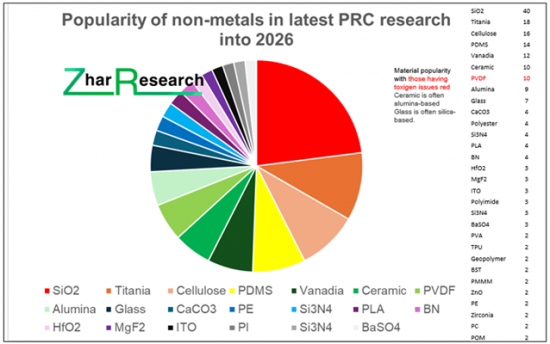
The Executive Summary and Conclusions (20 pages) is self-sufficient with basics, SOFT analyses, roadmaps, forecasts in tables and graphs with explanation, lucid graphics including measured relative importance of 30 material families employed. In 40 minutes you know how you can participate and what happens when.
The Introduction (58 pages) gives detail on burgeoning needs for cooling in many forms and locations, global warming being just part of this story. See how cooling technology will trend to smart solid materials 2026-2046 including attention vs maturity of cooling technologies in three curves 2026, 2036, 2046. Here are infograms, one concerning “Research pipeline of solid-state cooling and supportive solid technologies by topic vs technology readiness level”.
PRC basics are introduced as analysis not evangelism. Learn how the toolkit of such solids includes various multilayer structures, metamaterials, randomly distributed particles and voided structures. A SWOT appraisal and subsequent detail cover the many shortcomings of PRC and how they will be mitigated. See the troublesome materials involved in some solid-state cooling that give you the opportunity to prosper from your alternatives. In this and all subsequent chapters, there is particular emphasis on the remarkable advances in 2026 – old news can be misleading in this fast-moving field.
Chapter 3. Passive radiative cooling PRC and allied topics (100 pages) is the core of the report. It details the technology, possibilities and identifies work ahead such as creating standard test procedures. Understand the formats needed from paint to textiles and load-bearing building materials. Which formulations, compounds, composites particularly in 2026, such as progress with aerogel, voided, environmental and more-affordable versions? Which industries are addressed and which next? There is a close look at applications including facades, solar panels, windows, vehicles, wearable, textile and fabric forms of PRC with SWOT and latest advances and intentions such as color without compromise. See work on PRC boosting power of thermoelectric generators and coolers but understand why we counsel caution on those. The chapter ends by appraising a flood of new advances in PRC, metamaterial cooling and combinations and on adaptive and multifunctional radiative cooling and passive thermoregulation in 2025-6.
Chapter 4. Companies commercialising PRC and variants (50 pages) introduces the general situation with a comparison chart of PRC commercial focus. Then it closely profiles PRC activities of 14 companies in the USA, UK, Germany, Israel and Japan.
Chapter 5. Passive radiative cooling PRC using metamaterials (57 pages) gives more on this important specific including transparent versions for PRC windows, and the report closes with Chapter 6. Manufacturing technologies and materials for PRC (27 pages) spanning a necessarily wide range of options but with 3D printing becoming more important and some 4D printing presented. The Zhar Research report “Passive radiative cooling, PRC, PDRC, variants: technology, markets 2026-2046”, is your essential guide to these opportunities, whether as materials or device suppliers, product integrators or users.
Caption: Priority of non-metals in latest PRC research into 2026. Source, “Passive radiative cooling, PRC, PDRC, variants: technology, markets 2026-2046” Zhar research 2026.
1.Executive summary and conclusions
- 1.1 Purpose of this report
- 1.2 Methodology of this analysis
- 1.3 Primary conclusions and materials analysis
- 1.4 Three SWOT appraisals
- 1.4.1 SWOT appraisal of Passive Radiative Cooling PRC
- 1.4.2 SWOT of thermal metamaterials, metasurfaces and meta-devices
- 1.4.3 SWOT appraisal of self-cooling radiative metafabric
- 1.5 Thermal metamaterial and cooling roadmap by market and by technology 2026-2046
- 1.6 Market forecasts as tables and graphs 2026-2046 in 22 lines, tables, graphs, explanation
- 1.6.1 Meta-device market electromagnetic vs thermal with infrared in electromagnetic category $ billion 2025-2046
- 1.6.2 Thermal meta-device market $ billion 2025-2046 by application segment
- 1.6.3 Cooling module global market by seven technologies $ billion 2025-2046
- 1.6.4 Terrestrial radiative cooling performance in commercial products W/sq. m 2025-2046
- 1.6.5 Air conditioner value market $ billion 2024-2046
- 1.6.6 Global market for HVAC, refrigerators, freezers, other cooling $ billion 2025-2046
- 1.6.7 Refrigerator and freezer value market $ billion 2024-2046
- 1.6.8 Thermal management material and structure for 6G Communications infrastructure and client devices $ billion if 6G is successful 2026-2046
- 1.6.9 Dielectric and thermal materials for 6G value market % by location 2029-2046
2.Introduction
- 2.1 Overview
- 2.2 Cooling needs increase for many reasons 2026-2046
- 2.3 Escalation of demand for air conditioning and forthcoming changes in requirement
- 2.4 Comparison of traditional and emerging refrigeration technologies
- 2.5 Severe new microchip cooling requirements arriving
- 2.6 Much greater need for thermal materials in 6G Communications arriving in 2030
- 2.7 Other cooling problems and opportunities emerging in electronics and ICT
- 2.8 The nature of solid-state cooling and why it is now a priority
- 2.9 How cooling technology will trend to smart materials 2026-2046
- 2.10 Twelve solid-state cooling operating principles compared by 10 capabilities
- 2.11 Attention vs maturity of cooling technologies 3 curves 2025, 2035, 2045
- 2.12 The solid-state megatrend in more detail
- 2.13 SWOT appraisal of Passive Radiative Cooling PRC and overcoming disadvantages
- 2.14 Undesirable materials widely used and proposed: this is an opportunity for you
- 2.15 Adaptive radiative cooling and passive thermoregulation
3.Passive radiative cooling PRC and allied topics
- 3.1 Overview
- 3.2 PRC basics and examples in 2025 and 2026
- 3.3 Radiative cooling 2026 and 2025
- 3.3.1 General
- 3.3.2 Metamaterials (constructs) now feature strongly but there are other options
- 3.3.3 Materials analysis
- 3.4 Potential benefits and applications
- 3.4.1 Overall opportunity and progress
- 3.4.2 PRC for facades, solar panels, windows, vehicles: progress in 2025-6
- 3.4.3 Wearable PRC, textile and fabric with 18 advances in 2024-6 and SWOT
- 3.4.4 PRC cold side boosting power of thermoelectric generators
- 3.4.5 Color without compromise: advances in 2026 and earlier
- 3.4.6 Aerogel and voided material approaches
- 3.4.7 Environmental and inexpensive PRC materials development
- 3.5 Important advances in PRC, metamaterial cooling and combinations in 2025-6
- 3.5.1 General
- 3.5.2 Adaptive and multifunctional radiative cooling and passive thermoregulation
4. Companies commercialising PRC and variants
- 4.1 Overview
- 4.2 3M USA
- 4.3 BASF Germany
- 4.4 Cryo-X Co USA
- 4.5 i2Cool USA
- 4.6 Kizawa Kougyo Japan
- 4.7 LifeLabs USA
- 4.8 Pirta UK
- 4.9 Plasmonics USA
- 4.10 Radicool USA, Japan, Malaysia etc.
- 4.11 SkyCool Systems USA
- 4.12 SolCold Israel
- 4.13 Spacecool Inc USA
- 4.14 Spinoff from University of Massachusetts Amherst USA
- 4.15 SRI USA
5. Passive radiative cooling PRC using metamaterials
- 5.1 Overview with SWOT appraisal
- 5.1.1 Definition, types, versatility
- 5.1.2 Examples of thermal metamaterial structures
- 5.1.3 Static radiative cooling materials showing metamaterials as one of many options
- 5.1.4 SWOT appraisal of thermal metamaterials, metasurfaces and meta-devices
- 5.2 Examples of new theoretical approaches in 2026 leading to new applications
- 5.3 Examples of research on PRC metamaterials and alternatives in 2026 and earlier
- 5.4 Transparent and translucent thermal metamaterials
- 5.5 Metamaterial PRC cold side boosting power of thermoelectric generators
6. Manufacturing technologies and materials for PRC
- 6.1 Overview including needs, approaches, materials and additive vs subtractive options
- 6.2 Additive manufacturing design, fabrication, property and application
- 6.3 3D printing of thermal meta-devices
- 6.3.1 Metal 3D printing of thermal meta-devices
- 6.3.2 Metal polymer and metal graphene 3D printing of thermal meta-devices
- 6.3.3 Functionally graded materials in thermal meta-structures
- 6.3.4 Other materials options
- 6.4 Printing technologies for laminar PRC manipulating infrared radiation
- 6.5 Materials and manufacturing technologies for PRC using thermal metamaterials

