PUBLISHER: Aviation & Defense Market Reports (A&D) | PRODUCT CODE: 2023790

PUBLISHER: Aviation & Defense Market Reports (A&D) | PRODUCT CODE: 2023790
Global Civilian Ammunition Market 2026-2036
Global Civilian Ammunition Market
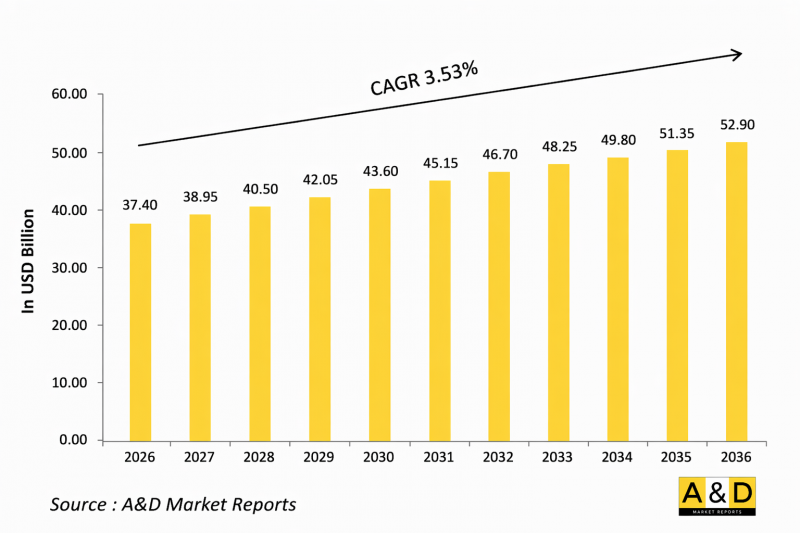
The Global Civilian Ammunition Market is estimated at USD 37.40 billion in 2026, projected to grow to USD 52.90 billion by 2036 at a Compound Annual Growth Rate (CAGR) of 3.53% over the forecast period 2026-2036.
1. Introduction
The Global Civilian Ammunition Market encompasses the production and distribution of ammunition for non-military use, including hunting, sport shooting, and personal defense. This market is influenced by a variety of factors, including regulatory frameworks, consumer preferences, and recreational trends. Civilian ammunition is widely used for shooting sports and hunting activities, which are popular in many regions. The market also includes ammunition for self-defense purposes, reflecting growing concerns about personal security. Manufacturers are focusing on producing high-quality and reliable ammunition to meet diverse consumer needs. The increasing popularity of shooting sports and outdoor recreational activities is contributing to market growth. Additionally, advancements in ammunition design and manufacturing processes are enhancing performance and safety. The market continues to evolve in response to changing regulations and consumer demand, making it a dynamic segment within the broader defense and security industry.
2. Technology Impact in Global Civilian Ammunition Market
Technological advancements are significantly influencing the Global Civilian Ammunition Market by improving performance, safety, and environmental sustainability. Innovations in materials and manufacturing processes are leading to the development of more reliable and consistent ammunition. Enhanced propellant technologies are improving accuracy and reducing recoil, making ammunition more suitable for a wide range of users. Additionally, the development of non-toxic and environmentally friendly ammunition is gaining traction, driven by regulatory requirements and environmental concerns. Smart manufacturing techniques, including automation and quality control systems, are ensuring higher production efficiency and consistency. Advances in ballistic design are also contributing to improved performance in terms of range and impact. These technological developments are helping manufacturers meet evolving consumer expectations while maintaining compliance with regulatory standards.
3. Key Drivers in Global Civilian Ammunition Market
The Global Civilian Ammunition Market is driven by the growing popularity of recreational shooting and hunting activities. Increasing awareness of personal safety and self-defense is also contributing to demand for civilian ammunition. Regulatory frameworks play a significant role in shaping the market, influencing production, distribution, and consumption patterns. The expansion of shooting sports and training facilities is further supporting market growth. Additionally, the rise in outdoor recreational activities is encouraging the use of ammunition for hunting and sport shooting. Consumer preferences for high-quality and reliable products are driving manufacturers to invest in advanced technologies and innovation. Economic factors and disposable income levels also influence purchasing behavior, contributing to market dynamics.
4. Regional Trends in Global Civilian Ammunition Market
Regional trends in the Global Civilian Ammunition Market vary based on cultural, regulatory, and economic factors. North America remains a key market due to the widespread popularity of shooting sports and hunting activities. Europe is characterized by strict regulatory frameworks, which influence market dynamics and product offerings. The Asia-Pacific region is experiencing gradual growth, driven by increasing interest in recreational shooting and outdoor activities. Latin America and Africa are also witnessing rising participation in hunting and shooting sports, contributing to market expansion. These regional trends highlight the diverse factors influencing the global civilian ammunition market and the importance of adapting to local regulations and consumer preferences.
5. Key Global Civilian Ammunition Market Program
Key programs in the Global Civilian Ammunition Market focus on product innovation, regulatory compliance, and consumer engagement. Manufacturers are investing in research and development to introduce advanced ammunition with improved performance and safety features. Initiatives aimed at promoting responsible usage and safety awareness are also gaining importance. Collaboration with shooting sports organizations and training institutions is helping to expand the market and enhance consumer education. Additionally, companies are focusing on sustainable manufacturing practices and environmentally friendly products to meet regulatory requirements. Distribution and supply chain optimization programs are also being implemented to ensure product availability and efficiency. These programs are shaping the future of the civilian ammunition market and supporting its continued growth and development.
Table of Contents
Global Civilian Ammunition Market - Table of Contents
Global Civilian Ammunition Market Report Definition
Global Civilian Ammunition Market Segmentation
By Type
By Region
By Application
Global Civilian Ammunition Market Analysis for next 10 Years
The 10-year Global Civilian Ammunition Market analysis would give a detailed overview of Civilian Ammunition Market growth, changing dynamics, technology adoption overviews and the overall market attractiveness is covered in this chapter.
Market Technologies of Civilian Ammunition Market
This segment covers the top 10 technologies that is expected to impact this market and the possible implications these technologies would have on the overall market.
Global Civilian Ammunition Market Forecast
The 10-year Civilian Ammunition Market forecast of this market is covered in detailed across the segments which are mentioned above.
Regional Civilian Ammunition Market Trends & Forecast
The regional Global Civilian Ammunition Market trends, drivers, restraints and Challenges of this market, the Political, Economic, Social and Technology aspects are covered in this segment. The market forecast and scenario analysis across regions are also covered in detailed in this segment. The last part of the regional analysis includes profiling of the key companies, supplier landscape and company benchmarking. The current market size is estimated based on the normal scenario.
North America
Drivers, Restraints and Challenges
PEST
Market Forecast & Scenario Analysis
Key Companies
Supplier Tier Landscape
Company Benchmarking
Europe
Middle East
APAC
South America
Country Analysis of Civilian Ammunition Market
This chapter deals with the key defense programs in this market, it also covers the latest news and patents which have been filed in this market. Country level 10 year market forecast and scenario analysis are also covered in this chapter.
US
Latest News
Patents
Current levels of technology maturation in this market
Market Forecast & Scenario Analysis
Canada
Italy
France
Germany
Netherlands
Belgium
Spain
Sweden
Greece
Australia
South Africa
India
China
Russia
South Korea
Japan
Malaysia
Singapore
Brazil
Opportunity Matrix for Civilian Ammunition Market
The opportunity matrix helps the readers understand the high opportunity segments in this market.
Expert Opinions on Civilian Ammunition Market Report
Hear from our experts their opinion of the possible analysis for this market.
Conclusions
About Aviation and Defense Market Reports
List of Tables
- Table 1: 10 Year Market Outlook, 2026-2036
- Table 2: Drivers, Impact Analysis, North America
- Table 3: Restraints, Impact Analysis, North America
- Table 4: Challenges, Impact Analysis, North America
- Table 5: Drivers, Impact Analysis, Europe
- Table 6: Restraints, Impact Analysis, Europe
- Table 7: Challenges, Impact Analysis, Europe
- Table 8: Drivers, Impact Analysis, Middle East
- Table 9: Restraints, Impact Analysis, Middle East
- Table 10: Challenges, Impact Analysis, Middle East
- Table 11: Drivers, Impact Analysis, APAC
- Table 12: Restraints, Impact Analysis, APAC
- Table 13: Challenges, Impact Analysis, APAC
- Table 14: Drivers, Impact Analysis, South America
- Table 15: Restraints, Impact Analysis, South America
- Table 16: Challenges, Impact Analysis, South America
- Table 17: Scenario Analysis, Scenario 1, By Region, 2026-2036
- Table 18: Scenario Analysis, Scenario 1, By Type 2026-2036
- Table 19: Scenario Analysis, Scenario 1, By Application, 2026-2036
- Table 20: Scenario Analysis, Scenario 2, By Region, 2026-2036
- Table 21: Scenario Analysis, Scenario 2, By Type2026-2036
- Table 22: Scenario Analysis, Scenario 2, By Application, 2026-2036
List of Figures
- Figure 1: Global Defense CIVILIAN AMMUNITION Market Forecast, 2026-2036
- Figure 2: Global Defense CIVILIAN AMMUNITION Market Forecast, By Region, 2026-2036
- Figure 3: Global Defense CIVILIAN AMMUNITION Market Forecast, By Type2026-2036
- Figure 4: Global Defense CIVILIAN AMMUNITION Market Forecast, By Application, 2026-2036
- Figure 5: North America, Defense CIVILIAN AMMUNITION Market , Market Forecast, 2026-2036
- Figure 6: Europe, Defense CIVILIAN AMMUNITION Market , Market Forecast, 2026-2036
- Figure 7: Middle East, Defense CIVILIAN AMMUNITION Market , Market Forecast, 2026-2036
- Figure 8: APAC, Defense CIVILIAN AMMUNITION Market , Market Forecast, 2026-2036
- Figure 9: South America, Defense CIVILIAN AMMUNITION Market , Market Forecast, 2026-2036
- Figure 10: United States, Defense CIVILIAN AMMUNITION Market , Region Maturation, 2026-2036
- Figure 11: United States, Defense CIVILIAN AMMUNITION Market , Market Forecast, 2026-2036
- Figure 12: Canada, Defense CIVILIAN AMMUNITION Market , Region Maturation, 2026-2036
- Figure 13: Canada, Defense CIVILIAN AMMUNITION Market , Market Forecast, 2026-2036
- Figure 14: Italy, Defense CIVILIAN AMMUNITION Market , Region Maturation, 2026-2036
- Figure 15: Italy, Defense CIVILIAN AMMUNITION Market , Market Forecast, 2026-2036
- Figure 16: France, Defense CIVILIAN AMMUNITION Market , Region Maturation, 2026-2036
- Figure 17: France, Defense CIVILIAN AMMUNITION Market , Market Forecast, 2026-2036
- Figure 18: Germany, Defense CIVILIAN AMMUNITION Market , Region Maturation, 2026-2036
- Figure 19: Germany, Defense CIVILIAN AMMUNITION Market , Market Forecast, 2026-2036
- Figure 20: Netherlands, Defense CIVILIAN AMMUNITION Market , Region Maturation, 2026-2036
- Figure 21: Netherlands, Defense CIVILIAN AMMUNITION Market , Market Forecast, 2026-2036
- Figure 22: Belgium, Defense CIVILIAN AMMUNITION Market , Region Maturation, 2026-2036
- Figure 23: Belgium, Defense CIVILIAN AMMUNITION Market , Market Forecast, 2026-2036
- Figure 24: Spain, Defense CIVILIAN AMMUNITION Market , Region Maturation, 2026-2036
- Figure 25: Spain, Defense CIVILIAN AMMUNITION Market , Market Forecast, 2026-2036
- Figure 26: Sweden, Defense CIVILIAN AMMUNITION Market , Region Maturation, 2026-2036
- Figure 27: Sweden, Defense CIVILIAN AMMUNITION Market , Market Forecast, 2026-2036
- Figure 28: Brazil, Defense CIVILIAN AMMUNITION Market , Region Maturation, 2026-2036
- Figure 29: Brazil, Defense CIVILIAN AMMUNITION Market , Market Forecast, 2026-2036
- Figure 30: Australia, Defense CIVILIAN AMMUNITION Market , Region Maturation, 2026-2036
- Figure 31: Australia, Defense CIVILIAN AMMUNITION Market , Market Forecast, 2026-2036
- Figure 32: India, Defense CIVILIAN AMMUNITION Market , Region Maturation, 2026-2036
- Figure 33: India, Defense CIVILIAN AMMUNITION Market , Market Forecast, 2026-2036
- Figure 34: China, Defense CIVILIAN AMMUNITION Market , Region Maturation, 2026-2036
- Figure 35: China, Defense CIVILIAN AMMUNITION Market , Market Forecast, 2026-2036
- Figure 36: Saudi Arabia, Defense CIVILIAN AMMUNITION Market , Region Maturation, 2026-2036
- Figure 37: Saudi Arabia, Defense CIVILIAN AMMUNITION Market , Market Forecast, 2026-2036
- Figure 38: South Korea, Defense CIVILIAN AMMUNITION Market , Region Maturation, 2026-2036
- Figure 39: South Korea, Defense CIVILIAN AMMUNITION Market , Market Forecast, 2026-2036
- Figure 40: Japan, Defense CIVILIAN AMMUNITION Market , Region Maturation, 2026-2036
- Figure 41: Japan, Defense CIVILIAN AMMUNITION Market , Market Forecast, 2026-2036
- Figure 42: Malaysia, Defense CIVILIAN AMMUNITION Market , Region Maturation, 2026-2036
- Figure 43: Malaysia, Defense CIVILIAN AMMUNITION Market , Market Forecast, 2026-2036
- Figure 44: Singapore, Defense CIVILIAN AMMUNITION Market , Region Maturation, 2026-2036
- Figure 45: Singapore, Defense CIVILIAN AMMUNITION Market , Market Forecast, 2026-2036
- Figure 46: United Kingdom, Defense CIVILIAN AMMUNITION Market , Region Maturation, 2026-2036
- Figure 47: United Kingdom, Defense CIVILIAN AMMUNITION Market , Market Forecast, 2026-2036
- Figure 48: Opportunity Analysis, Defense CIVILIAN AMMUNITION Market , By Region (Cumulative Market), 2026-2036
- Figure 49: Opportunity Analysis, Defense CIVILIAN AMMUNITION Market , By Region (CAGR), 2026-2036
- Figure 50: Opportunity Analysis, Defense CIVILIAN AMMUNITION Market , By Equipment Cumulative Market), 2026-2036
- Figure 51: Opportunity Analysis, Defense CIVILIAN AMMUNITION Market , By Equipment CAGR), 2026-2036
- Figure 52: Opportunity Analysis, Defense CIVILIAN AMMUNITION Market , By Application(Cumulative Market), 2026-2036
- Figure 53: Opportunity Analysis, Defense CIVILIAN AMMUNITION Market , By Application(CAGR), 2026-2036
- Figure 54: Scenario Analysis, Defense CIVILIAN AMMUNITION Market , Cumulative Market, 2026-2036
- Figure 55: Scenario Analysis, Defense CIVILIAN AMMUNITION Market , Global Market, 2026-2036
- Figure 56: Scenario 1, Defense CIVILIAN AMMUNITION Market , Total Market, 2026-2036
- Figure 57: Scenario 1, Defense CIVILIAN AMMUNITION Market , By Region, 2026-2036
- Figure 58: Scenario 1, Defense CIVILIAN AMMUNITION Market , By Type 2026-2036
- Figure 59: Scenario 1, Defense CIVILIAN AMMUNITION Market , By Application, 2026-2036
- Figure 60: Scenario 2, Defense CIVILIAN AMMUNITION Market , Total Market, 2026-2036
- Figure 61: Scenario 2, Defense CIVILIAN AMMUNITION Market , By Region, 2026-2036
- Figure 62: Scenario 2, Defense CIVILIAN AMMUNITION Market , By Type 2026-2036
- Figure 63: Scenario 2, Defense CIVILIAN AMMUNITION Market , By Application, 2026-2036
- Figure 64: Company Benchmark, Defense CIVILIAN AMMUNITION Market , 2026-2036

