
PUBLISHER: Aviation & Defense Market Reports (A&D) | PRODUCT CODE: 1936048

PUBLISHER: Aviation & Defense Market Reports (A&D) | PRODUCT CODE: 1936048
Global Defense Variable Exhaust Nozzles Market 2026-2036
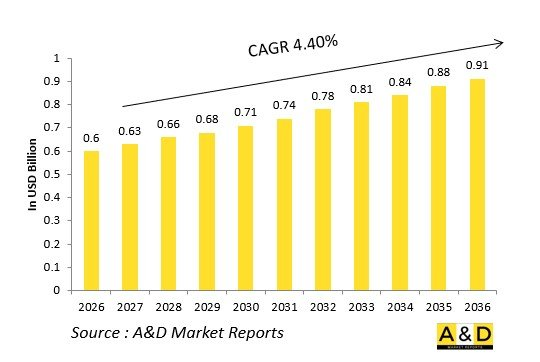
The Global Defense Variable Exhaust Nozzles Market is estimated at USD 0.6 billion in 2026, projected to grow to USD 0.91 billion by 2036 at a Compound Annual Growth Rate (CAGR) of 4.40% over the forecast period 2026-2036.
Introduction
The global Defense Variable Exhaust Nozzles market enhances tactical aircraft performance, modulating exhaust area and direction via hydraulic or electric actuators translating petal segments. Convergent-divergent throats accelerate post-combustor flow, while articulated flaps vector thrust for post-stall maneuvers and short takeoffs.
Market dynamics reflect sixth-generation requirements, where nozzles balance peak afterburner expansion with infrared suppression through cooled skins and chevrons. Core technologies include petal overlap seals, transpirational cooling, and FADEC-linked scheduling for seamless dry-to-wet transitions. Emphasis on low-observable serrations integrates with aircraft skins.
Geopolitical air dominance competitions drive development, prioritizing modular actuators for rapid fleet upgrades. Open architectures enable stealth retrofits without core redesigns. Supply chains focus on refractory superalloys and ceramic matrix composites. Competition features Pratt & Whitney, Rolls-Royce, and GE pioneering 3D-printed linkages.
Technology Impact in Defense Variable Exhaust Nozzles Market
2D nozzles with independent upper/lower actuators deliver pitch vectoring without pitch trim drag, enabling canardless designs. Cooled petal skins employ film cooling holes metering turbine air to withstand afterburner flameholders, preserving stealth shaping.
Electric actuators replace hydraulics, slashing vulnerability while enabling precise throat modulation across Mach regimes. Shape memory alloys contract under heat for self-actuating divergence. Plasma actuators eliminate mechanical gaps, reducing radar cross-section.
Adaptive chevrons deploy from nozzle skins, mixing bypass air to suppress jet plume infrared without thrust loss. Digital twins optimize petal trajectories against thermal flutter. Single-crystal petal leading edges resist oxidation during sustained reheat.
FADEC fusion schedules nozzle area with inlet ramps, preventing engine unstart during rapid decelerations. 3D-printed lattice structures lighten actuators while maintaining rigidity. These innovations extend super cruise envelopes, boost thrust vector angles, and enable tail-less stability.
Key Drivers in Defense Variable Exhaust Nozzles Market
Sixth-generation stealth mandates low-observable nozzles blending with fuselages while vectoring thrust. Super cruise requirements demand precise throat control preventing overexpansion shock trains.
Sustainment economics favor electric actuation minimizing hydraulic leaks. Export markets require modular petals compatible with diverse afterburner cycles. Carrier ops prioritize reliable divergence for catapult strokes.
Budget pressures favor 3D-printed nozzles slashing tooling costs. Supply chain resilience counters titanium shortages via alloy substitution. Interoperability enables common actuators across coalitions.
Post-stall maneuverability drives pitch authority independent of control surfaces. These imperatives position variable nozzles as agility enablers.
Regional Trends in Defense Variable Exhaust Nozzles Market
North America pioneers 2D/axisymmetric hybrids for NGAD, emphasizing electric actuation.
Europe upgrades Typhoon/Rafale with cooled chevrons for dispersed basing.
Asia-Pacific accelerates indigenous development-India's AMCA, China's J-35-tailored to carrier catapults.
Middle East pursues smoke-mixing nozzles for day intercepts.
Russia advances high-temperature petals for Su-57 super maneuverability.
South Korea integrates with KF-21 export packages.
Trends favor plasma-actuated designs; Asia-Pacific gains manufacturing share.
(196 words)
Key Defense Variable Exhaust Nozzles Market Programs
F-22's 2D nozzles vector thrust +-20° pitch via hydraulic clamshells.
NGAD adaptive nozzles schedule divergence with third-stream cores.
EJ200 upgrades deploy translating cascade petals for super cruise.
India's AMCA equips indigenous 2D vectoring for carrier ops.
WS-15 J-20 nozzles feature retractable chevrons for plume reduction.
Rafale M88 nozzle integrates with Snecma core for STOBAR.
Su-57 3D thrust vectoring enables Pugachev Cobra.
T-50 FADEC-driven petal actuation sustains post-stall angles.
Table of Contents
Defense Variable Exhaust Nozzles Market - Table of Contents
Defense Variable Exhaust Nozzles Market Report Definition
Defense Variable Exhaust Nozzles Market Segmentation
By Platform
By Nozzle Type
By Actuation
Defense Variable Exhaust Nozzles Market Analysis for next 10 Years
The 10-year Defense Variable Exhaust Nozzles market analysis would give a detailed overview of Defense Variable Exhaust Nozzles market growth, changing dynamics, technology adoption overviews and the overall market attractiveness is covered in this chapter.
Market Technologies of Defense Variable Exhaust Nozzles Market
This segment covers the top 10 technologies that is expected to impact this market and the possible implications these technologies would have on the overall market.
Global Defense Variable Exhaust Nozzles Market Forecast
The 10-year Defense Variable Exhaust Nozzles market forecast of this market is covered in detailed across the segments which are mentioned above.
Regional Defense Variable Exhaust Nozzles Market Trends & Forecast
The regional counter drone market trends, drivers, restraints and Challenges of this market, the Political, Economic, Social and Technology aspects are covered in this segment. The market forecast and scenario analysis across regions are also covered in detailed in this segment. The last part of the regional analysis includes profiling of the key companies, supplier landscape and company benchmarking. The current market size is estimated based on the normal scenario.
North America
Drivers, Restraints and Challenges
PEST
Market Forecast & Scenario Analysis
Key Companies
Supplier Tier Landscape
Company Benchmarking
Europe
Middle East
APAC
South America
Country Analysis of Defense Variable Exhaust Nozzles Market
This chapter deals with the key defense programs in this market, it also covers the latest news and patents which have been filed in this market. Country level 10 year market forecast and scenario analysis are also covered in this chapter.
US
Defense Programs
Latest News
Patents
Current levels of technology maturation in this market
Market Forecast & Scenario Analysis
Canada
Italy
France
Germany
Netherlands
Belgium
Spain
Sweden
Greece
Australia
South Africa
India
China
Russia
South Korea
Japan
Malaysia
Singapore
Brazil
Opportunity Matrix for Defense Variable Exhaust Nozzles Market
The opportunity matrix helps the readers understand the high opportunity segments in this market.
Expert Opinions on Defense Variable Exhaust Nozzles Market Report
Hear from our experts their opinion of the possible analysis for this market.
Conclusions
About Aviation and Defense Market Reports
List of Tables
- Table 1: 10 Year Market Outlook, 2026-2036
- Table 2: Drivers, Impact Analysis, North America
- Table 3: Restraints, Impact Analysis, North America
- Table 4: Challenges, Impact Analysis, North America
- Table 5: Drivers, Impact Analysis, Europe
- Table 6: Restraints, Impact Analysis, Europe
- Table 7: Challenges, Impact Analysis, Europe
- Table 8: Drivers, Impact Analysis, Middle East
- Table 9: Restraints, Impact Analysis, Middle East
- Table 10: Challenges, Impact Analysis, Middle East
- Table 11: Drivers, Impact Analysis, APAC
- Table 12: Restraints, Impact Analysis, APAC
- Table 13: Challenges, Impact Analysis, APAC
- Table 14: Drivers, Impact Analysis, South America
- Table 15: Restraints, Impact Analysis, South America
- Table 16: Challenges, Impact Analysis, South America
- Table 17: Scenario Analysis, Scenario 1, By Region, 2026-2036
- Table 18: Scenario Analysis, Scenario 1, By Platform, 2026-2036
- Table 19: Scenario Analysis, Scenario 1, By Nozzle Type, 2026-2036
- Table 20: Scenario Analysis, Scenario 2, By Region, 2026-2036
- Table 21: Scenario Analysis, Scenario 2, By Platform, 2026-2036
- Table 22: Scenario Analysis, Scenario 2, By Nozzle Type, 2026-2036
List of Figures
- Figure 1: Global Variable Exhaust Nozzles Market Forecast, 2026-2036
- Figure 2: Global Variable Exhaust Nozzles Market Forecast, By Region, 2026-2036
- Figure 3: Global Variable Exhaust Nozzles Market Forecast, By Platform, 2026-2036
- Figure 4: Global Variable Exhaust Nozzles Market Forecast, By Nozzle Type, 2026-2036
- Figure 5: North America, Variable Exhaust Nozzles Market , Forecast, 2026-2036
- Figure 6: Europe, Variable Exhaust Nozzles Market , Forecast, 2026-2036
- Figure 7: Middle East, Variable Exhaust Nozzles Market , Forecast, 2026-2036
- Figure 8: APAC, Variable Exhaust Nozzles Market , Forecast, 2026-2036
- Figure 9: South America, Variable Exhaust Nozzles Market , Forecast, 2026-2036
- Figure 10: United States, Variable Exhaust Nozzles Market , Technology Maturation, 2026-2036
- Figure 11: United States, Variable Exhaust Nozzles Market , Forecast, 2026-2036
- Figure 12: Canada, Variable Exhaust Nozzles Market , Technology Maturation, 2026-2036
- Figure 13: Canada, Variable Exhaust Nozzles Market , Forecast, 2026-2036
- Figure 14: Italy, Variable Exhaust Nozzles Market , Technology Maturation, 2026-2036
- Figure 15: Italy, Variable Exhaust Nozzles Market , Market Forecast, 2026-2036
- Figure 16: France, Variable Exhaust Nozzles Market , Technology Maturation, 2026-2036
- Figure 17: France, Variable Exhaust Nozzles Market , Market Forecast, 2026-2036
- Figure 18: Germany, Variable Exhaust Nozzles Market , Technology Maturation, 2026-2036
- Figure 19: Germany, Variable Exhaust Nozzles Market , Market Forecast, 2026-2036
- Figure 20: Netherlands, Variable Exhaust Nozzles Market , Technology Maturation, 2026-2036
- Figure 21: Netherlands, Variable Exhaust Nozzles Market , Market Forecast, 2026-2036
- Figure 22: Belgium, Variable Exhaust Nozzles Market , Technology Maturation, 2026-2036
- Figure 23: Belgium, Variable Exhaust Nozzles Market , Market Forecast, 2026-2036
- Figure 24: Spain, Variable Exhaust Nozzles Market , Technology Maturation, 2026-2036
- Figure 25: Spain, Variable Exhaust Nozzles Market , Market Forecast, 2026-2036
- Figure 26: Sweden, Variable Exhaust Nozzles Market , Technology Maturation, 2026-2036
- Figure 27: Sweden, Variable Exhaust Nozzles Market , Market Forecast, 2026-2036
- Figure 28: Brazil, Variable Exhaust Nozzles Market , Technology Maturation, 2026-2036
- Figure 29: Brazil, Variable Exhaust Nozzles Market , Market Forecast, 2026-2036
- Figure 30: Australia, Variable Exhaust Nozzles Market , Technology Maturation, 2026-2036
- Figure 31: Australia, Variable Exhaust Nozzles Market , Market Forecast, 2026-2036
- Figure 32: India, Variable Exhaust Nozzles Market , Technology Maturation, 2026-2036
- Figure 33: India, Variable Exhaust Nozzles Market , Market Forecast, 2026-2036
- Figure 34: China, Variable Exhaust Nozzles Market , Technology Maturation, 2026-2036
- Figure 35: China, Variable Exhaust Nozzles Market , Market Forecast, 2026-2036
- Figure 36: Saudi Arabia, Variable Exhaust Nozzles Market , Technology Maturation, 2026-2036
- Figure 37: Saudi Arabia, Variable Exhaust Nozzles Market , Market Forecast, 2026-2036
- Figure 38: South Korea, Variable Exhaust Nozzles Market , Technology Maturation, 2026-2036
- Figure 39: South Korea, Variable Exhaust Nozzles Market , Market Forecast, 2026-2036
- Figure 40: Japan, Variable Exhaust Nozzles Market , Technology Maturation, 2026-2036
- Figure 41: Japan, Variable Exhaust Nozzles Market , Market Forecast, 2026-2036
- Figure 42: Malaysia, Variable Exhaust Nozzles Market , Technology Maturation, 2026-2036
- Figure 43: Malaysia, Variable Exhaust Nozzles Market , Market Forecast, 2026-2036
- Figure 44: Singapore, Variable Exhaust Nozzles Market , Technology Maturation, 2026-2036
- Figure 45: Singapore, Variable Exhaust Nozzles Market , Market Forecast, 2026-2036
- Figure 46: United Kingdom, Variable Exhaust Nozzles Market , Technology Maturation, 2026-2036
- Figure 47: United Kingdom, Variable Exhaust Nozzles Market , Market Forecast, 2026-2036
- Figure 48: Opportunity Analysis, Variable Exhaust Nozzles Market , By Region (Cumulative Market), 2026-2036
- Figure 49: Opportunity Analysis, Variable Exhaust Nozzles Market , By Region (CAGR), 2026-2036
- Figure 50: Opportunity Analysis, Variable Exhaust Nozzles Market , By (Cumulative Market), 2026-2036
- Figure 51: Opportunity Analysis, Variable Exhaust Nozzles Market , By Platform(CAGR), 2026-2036
- Figure 52: Opportunity Analysis, Variable Exhaust Nozzles Market , By Nozzle Type (Cumulative Market), 2026-2036
- Figure 53: Opportunity Analysis, Variable Exhaust Nozzles Market , By Nozzle Type (CAGR), 2026-2036
- Figure 54: Scenario Analysis, Variable Exhaust Nozzles Market , Cumulative Market, 2026-2036
- Figure 55: Scenario Analysis, Variable Exhaust Nozzles Market , Global Market, 2026-2036
- Figure 56: Scenario 1, Variable Exhaust Nozzles Market , Total Market, 2026-2036
- Figure 57: Scenario 1, Variable Exhaust Nozzles Market , By Region, 2026-2036
- Figure 58: Scenario 1, Variable Exhaust Nozzles Market , By Platform, 2026-2036
- Figure 59: Scenario 1, Variable Exhaust Nozzles Market , By Nozzle Type, 2026-2036
- Figure 60: Scenario 2, Variable Exhaust Nozzles Market , Total Market, 2026-2036
- Figure 61: Scenario 2, Variable Exhaust Nozzles Market , By Region, 2026-2036
- Figure 62: Scenario 2, Variable Exhaust Nozzles Market , By Platform, 2026-2036
- Figure 63: Scenario 2, Variable Exhaust Nozzles Market , By Nozzle Type, 2026-2036
- Figure 64: Company Benchmark, Variable Exhaust Nozzles Market , 2026-2036

