
PUBLISHER: Aviation & Defense Market Reports (A&D) | PRODUCT CODE: 1951134

PUBLISHER: Aviation & Defense Market Reports (A&D) | PRODUCT CODE: 1951134
Global Defense Electronic Counter Measures (ECM) Market 2026-2036
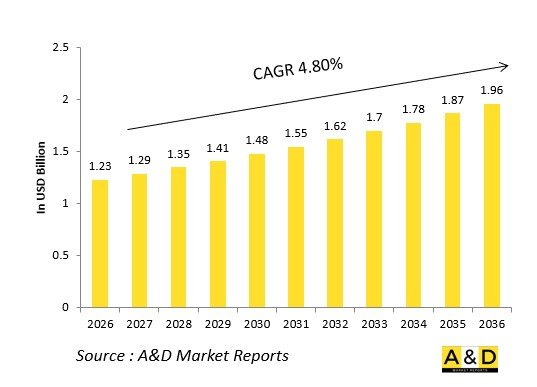
The Global Defense Electronic Counter Measures (ECM) market is estimated at USD 1.23 billion in 2026, projected to grow to USD 1.96 billion by 2036 at a Compound Annual Growth Rate (CAGR) of 4.80% over the forecast period 2026-2036.
Introduction:
Electronic Counter Measures (ECM) stand as vital shields in modern battlefields, disrupting enemy radars, communications, and guidance systems to protect friendly assets. Deployed on aircraft, ships, warships, and ground units, ECM employs jamming, deception, and digital radio frequency memory to deny adversaries targeting data. Amid surging threats from precision-guided munitions and swarming drones, forces worldwide accelerate ECM enhancements for spectrum supremacy. Innovations like software-defined architectures enable agile responses to adaptive radars, while integration with ESM creates comprehensive electronic warfare ecosystems. Geopolitical flashpoints drive procurement, with emphasis on lightweight, high-power systems for fifth-generation platforms. Collaborative defense pacts foster shared development, blending commercial tech with military hardening. This forward-looking analysis delves into technological leaps, market drivers, regional shifts, and pivotal programs propelling ECM's pivotal role in future conflicts.
Technology Impact in Defense Electronic Counter Measures (ECM)
ECM technology transforms defense postures by delivering potent, adaptive jamming across contested electromagnetic spectra. Digital radio frequency memory recreates enemy signals with distortions, luring missiles off course via spoofing. Gallium nitride transmitters pack immense power into compact modules, ideal for fast jets and unmanned vehicles. AI-orchestrated beamforming directs energy precisely, overwhelming specific threats without collateral interference. Cognitive ECM learns from encounters, autonomously tuning parameters against frequency-agile radars. Integration with directed energy weapons promises silent, inexhaustible countermeasures. Naval applications feature towed arrays that create virtual escorts, baffling submarine hunters. Drone swarms leverage networked ECM for collective denial, reshaping air superiority tactics. These strides shift ECM from brute-force jammers to intelligent disruptors, amplifying survivability in high-intensity operations and enabling offensive maneuvers under fire.
Key Drivers in Defense Electronic Counter Measures (ECM)
Escalating peer conflicts fuel ECM urgency, as precision weapons proliferate and electronic attack tactics evolve. Modern air forces demand podded and towed dispensers to counter integrated air defenses, spurring platform retrofits. Naval modernization prioritizes shipboard ECM against anti-access strategies, integrating with decoy launchers. Budget priorities tilt toward resilient supply chains, mitigating raw material risks for high-power components. Climate regulations push eco-friendly designs, like efficient cooling for sustained operations. Alliances accelerate co-development, harmonizing standards for joint missions. Cyber vulnerabilities necessitate hardened ECM processors, blending electronic and digital protections. Industry mergers streamline innovation, merging radar expertise with jamming prowess. Export markets expand as mid-tier powers seek asymmetric advantages via modular kits. These forces ensure ECM evolves in lockstep with threats, safeguarding assets and enabling mission success.
Regional Trends in Defense Electronic Counter Measures (ECM)
North America dominates ECM innovation, fielding advanced digital jammers for carrier strike groups and stealth fighters. Europe pursues collaborative upgrades, focusing on frigate-mounted systems amid North Atlantic patrols. Asia-Pacific nations ramp indigenous production, tailoring airborne ECM for island-chain defenses. Middle Eastern operators emphasize ground-launched jammers for urban warfare and missile interception. Indo-Pacific partnerships yield interoperable towed arrays, countering submarine incursions. South American forces adopt cost-effective dispensers for border security, while African militaries integrate ECM into counter-insurgency platforms. Global emphasis on open-system architectures facilitates swift upgrades and coalition compatibility. Regional hotspots dictate priorities-from Arctic electronic denial to desert anti-drone barrages-driving customized solutions. Technology transfers balance proliferation risks with strategic alliances, shaping a dynamic ECM landscape.
Key Defense Electronic Counter Measures (ECM) Programs
Prominent ECM programs showcase integrated disruption across domains. Advanced fighter aircraft integrate conformal jammers, spoofing multifunction radars during deep strikes. Destroyer classes feature high-energy directed jammers, protecting task forces from salvo attacks. Electronic warfare aircraft pioneer stand-off pods, blanketing sectors with barrage noise. Rotary-wing platforms deploy fiber-optic towed decoys, evading man-portable threats. Uncrewed combat vehicles test swarm ECM, coordinating denial against ground clutter. International consortia deliver naval self-protection suites, fusing chaff with digital deception. Ground systems evolve into vehicle-mounted arrays for mechanized advances. Highlights include adaptive gallium nitride amplifiers and machine learning directors, proven in live-fire trials. These efforts prioritize modularity for lifecycle extensions, ensuring robust countermeasures in evolving threat environments.
Table of Contents
Defense Electronic Counter Measures (ECM) Market - Table of Contents
Defense Electronic Counter Measures (ECM) Market Report Definition
Defense Electronic Counter Measures (ECM) Market Segmentation
By Region
By Platform
By Technique
By Threat Type
Defense Electronic Counter Measures (ECM) Market Analysis for next 10 Years
The 10-year Defense Electronic Counter Measures (ECM) Market analysis would give a detailed overview of Defense Electronic Counter Measures (ECM) Market growth, changing dynamics, technology adoption overviews and the overall market attractiveness is covered in this chapter.
Market Technologies of Defense Electronic Counter Measures (ECM) Market
This segment covers the top 10 technologies that is expected to impact this market and the possible implications these technologies would have on the overall market.
Global Defense Electronic Counter Measures (ECM) Market Forecast
The 10-year Defense Electronic Counter Measures (ECM) Market forecast of this market is covered in detailed across the segments which are mentioned above.
Regional Defense Electronic Counter Measures (ECM) Market Trends & Forecast
The regional counter drone market trends, drivers, restraints and Challenges of this market, the Political, Economic, Social and Technology aspects are covered in this segment. The market forecast and scenario analysis across regions are also covered in detailed in this segment. The last part of the regional analysis includes profiling of the key companies, supplier landscape and company benchmarking. The current market size is estimated based on the normal scenario.
North America
Drivers, Restraints and Challenges
PEST
Market Forecast & Scenario Analysis
Key Companies
Supplier Tier Landscape
Company Benchmarking
Europe
Middle East
APAC
South America
Country Analysis of Defense Electronic Counter Measures (ECM) Market
This chapter deals with the key defense programs in this market, it also covers the latest news and patents which have been filed in this market. Country level 10 year market forecast and scenario analysis are also covered in this chapter.
US
Defense Programs
Latest News
Patents
Current levels of technology maturation in this market
Market Forecast & Scenario Analysis
Canada
Italy
France
Germany
Netherlands
Belgium
Spain
Sweden
Greece
Australia
South Africa
India
China
Russia
South Korea
Japan
Malaysia
Singapore
Brazil
Opportunity Matrix for Defense Electronic Counter Measures (ECM) Market
The opportunity matrix helps the readers understand the high opportunity segments in this market.
Expert Opinions on Defense Electronic Counter Measures (ECM) Market Report
Hear from our experts their opinion of the possible analysis for this market.
Conclusions
About Aviation and Defense Market Reports
List of Tables
- Table 1: 10 Year Market Outlook, 2026-2036
- Table 2: Drivers, Impact Analysis, North America
- Table 3: Restraints, Impact Analysis, North America
- Table 4: Challenges, Impact Analysis, North America
- Table 5: Drivers, Impact Analysis, Europe
- Table 6: Restraints, Impact Analysis, Europe
- Table 7: Challenges, Impact Analysis, Europe
- Table 8: Drivers, Impact Analysis, Middle East
- Table 9: Restraints, Impact Analysis, Middle East
- Table 10: Challenges, Impact Analysis, Middle East
- Table 11: Drivers, Impact Analysis, APAC
- Table 12: Restraints, Impact Analysis, APAC
- Table 13: Challenges, Impact Analysis, APAC
- Table 14: Drivers, Impact Analysis, South America
- Table 15: Restraints, Impact Analysis, South America
- Table 16: Challenges, Impact Analysis, South America
- Table 17: Scenario Analysis, Scenario 1, By Technique, 2026-2036
- Table 18: Scenario Analysis, Scenario 1, By Platform, 2026-2036
- Table 19: Scenario Analysis, Scenario 1, By Region, 2026-2036
- Table 20: Scenario Analysis, Scenario 2, By Technique, 2026-2036
- Table 21: Scenario Analysis, Scenario 2, By Platform, 2026-2036
- Table 22: Scenario Analysis, Scenario 2, By Region, 2026-2036
List of Figures
- Figure 1: Global Defense Electronic Counter Measures (ECM) Market Forecast, 2026-2036
- Figure 2: Global Defense Electronic Counter Measures (ECM) Market Forecast, By Technique, 2026-2036
- Figure 3: Global Defense Electronic Counter Measures (ECM) Market Forecast, By Platform, 2026-2036
- Figure 4: Global Defense Electronic Counter Measures (ECM) Market Forecast, By Region, 2026-2036
- Figure 5: North America, Defense Electronic Counter Measures (ECM) Market, Forecast, 2026-2036
- Figure 6: Europe, Defense Electronic Counter Measures (ECM) Market, Forecast, 2026-2036
- Figure 7: Middle East, Defense Electronic Counter Measures (ECM) Market, Forecast, 2026-2036
- Figure 8: APAC, Defense Electronic Counter Measures (ECM) Market, Forecast, 2026-2036
- Figure 9: South America, Defense Electronic Counter Measures (ECM) Market, Forecast, 2026-2036
- Figure 10: United States, Defense Electronic Counter Measures (ECM) Market, Technology Maturation, 2026-2036
- Figure 11: United States, Defense Electronic Counter Measures (ECM) Market, Forecast, 2026-2036
- Figure 12: Canada, Defense Electronic Counter Measures (ECM) Market, Technology Maturation, 2026-2036
- Figure 13: Canada, Defense Electronic Counter Measures (ECM) Market, Forecast, 2026-2036
- Figure 14: Italy, Defense Electronic Counter Measures (ECM) Market, Technology Maturation, 2026-2036
- Figure 15: Italy, Defense Electronic Counter Measures (ECM) Market, Market Forecast, 2026-2036
- Figure 16: France, Defense Electronic Counter Measures (ECM) Market, Technology Maturation, 2026-2036
- Figure 17: France, Defense Electronic Counter Measures (ECM) Market, Market Forecast, 2026-2036
- Figure 18: Germany, Defense Electronic Counter Measures (ECM) Market, Technology Maturation, 2026-2036
- Figure 19: Germany, Defense Electronic Counter Measures (ECM) Market, Market Forecast, 2026-2036
- Figure 20: Netherlands, Defense Electronic Counter Measures (ECM) Market, Technology Maturation, 2026-2036
- Figure 21: Netherlands, Defense Electronic Counter Measures (ECM) Market, Market Forecast, 2026-2036
- Figure 22: Belgium, Defense Electronic Counter Measures (ECM) Market, Technology Maturation, 2026-2036
- Figure 23: Belgium, Defense Electronic Counter Measures (ECM) Market, Market Forecast, 2026-2036
- Figure 24: Spain, Defense Electronic Counter Measures (ECM) Market, Technology Maturation, 2026-2036
- Figure 25: Spain, Defense Electronic Counter Measures (ECM) Market, Market Forecast, 2026-2036
- Figure 26: Sweden, Defense Electronic Counter Measures (ECM) Market, Technology Maturation, 2026-2036
- Figure 27: Sweden, Defense Electronic Counter Measures (ECM) Market, Forecast, 2026-2036
- Figure 28: Brazil, Defense Electronic Counter Measures (ECM) Market, Technology Maturation, 2026-2036
- Figure 29: Brazil, Defense Electronic Counter Measures (ECM) Market, Market Forecast, 2026-2036
- Figure 30: Australia, Defense Electronic Counter Measures (ECM) Market, Technology Maturation, 2026-2036
- Figure 31: Australia, Defense Electronic Counter Measures (ECM) Market, Market Forecast, 2026-2036
- Figure 32: India, Defense Electronic Counter Measures (ECM) Market, Technology Maturation, 2026-2036
- Figure 33: India, Defense Electronic Counter Measures (ECM) Market, Market Forecast, 2026-2036
- Figure 34: China, Defense Electronic Counter Measures (ECM) Market, Technology Maturation, 2026-2036
- Figure 35: China, Defense Electronic Counter Measures (ECM) Market, Market Forecast, 2026-2036
- Figure 36: Saudi Arabia, Defense Electronic Counter Measures (ECM) Market, Technology Maturation, 2026-2036
- Figure 37: Saudi Arabia, Defense Electronic Counter Measures (ECM) Market, Market Forecast, 2026-2036
- Figure 38: South Korea, Defense Electronic Counter Measures (ECM) Market, Technology Maturation, 2026-2036
- Figure 39: South Korea, Defense Electronic Counter Measures (ECM) Market, Market Forecast, 2026-2036
- Figure 40: Japan, Defense Electronic Counter Measures (ECM) Market, Technology Maturation, 2026-2036
- Figure 41: Japan, Defense Electronic Counter Measures (ECM) Market, Market Forecast, 2026-2036
- Figure 42: Malaysia, Defense Electronic Counter Measures (ECM) Market, Technology Maturation, 2026-2036
- Figure 43: Malaysia, Defense Electronic Counter Measures (ECM) Market, Market Forecast, 2026-2036
- Figure 44: Singapore, Defense Electronic Counter Measures (ECM) Market, Technology Maturation, 2026-2036
- Figure 45: Singapore, Defense Electronic Counter Measures (ECM) Market, Market Forecast, 2026-2036
- Figure 46: United Kingdom, Defense Electronic Counter Measures (ECM) Market, Technology Maturation, 2026-2036
- Figure 47: United Kingdom, Defense Electronic Counter Measures (ECM) Market, Market Forecast, 2026-2036
- Figure 48: Opportunity Analysis, Defense Electronic Counter Measures (ECM) Market, By Technique (Cumulative Market), 2026-2036
- Figure 49: Opportunity Analysis, Defense Electronic Counter Measures (ECM) Market, By Technique (CAGR), 2026-2036
- Figure 50: Opportunity Analysis, Defense Electronic Counter Measures (ECM) Market, By (Cumulative Market), 2026-2036
- Figure 51: Opportunity Analysis, Defense Electronic Counter Measures (ECM) Market, By Platform(CAGR), 2026-2036
- Figure 52: Opportunity Analysis, Defense Electronic Counter Measures (ECM) Market, By Region (Cumulative Market), 2026-2036
- Figure 53: Opportunity Analysis, Defense Electronic Counter Measures (ECM) Market, By Region (CAGR), 2026-2036
- Figure 54: Scenario Analysis, Defense Electronic Counter Measures (ECM) Market, Cumulative Market, 2026-2036
- Figure 55: Scenario Analysis, Defense Electronic Counter Measures (ECM) Market, Global Market, 2026-2036
- Figure 56: Scenario 1, Defense Electronic Counter Measures (ECM) Market, Total Market, 2026-2036
- Figure 57: Scenario 1, Defense Electronic Counter Measures (ECM) Market, By Technique, 2026-2036
- Figure 58: Scenario 1, Defense Electronic Counter Measures (ECM) Market, By Platform, 2026-2036
- Figure 59: Scenario 1, Defense Electronic Counter Measures (ECM) Market, By Region, 2026-2036
- Figure 60: Scenario 2, Defense Electronic Counter Measures (ECM) Market, Total Market, 2026-2036
- Figure 61: Scenario 2, Defense Electronic Counter Measures (ECM) Market, By Technique, 2026-2036
- Figure 62: Scenario 2, Defense Electronic Counter Measures (ECM) Market, By Platform, 2026-2036
- Figure 63: Scenario 2, Defense Electronic Counter Measures (ECM) Market, By Region, 2026-2036
- Figure 64: Company Benchmark, Defense Electronic Counter Measures (ECM) Market, 2026-2036

