PUBLISHER: Aviation & Defense Market Reports (A&D) | PRODUCT CODE: 1977163

PUBLISHER: Aviation & Defense Market Reports (A&D) | PRODUCT CODE: 1977163
Global Defense External Drop Tanks Market 2026-2036
Global Defense External Drop Tanks Market 2026-2036
The Global Defense External Drop Tanks Market is estimated at USD 0.58 billion in 2026, projected to grow to USD 0.85 billion by 2036 at a Compound Annual Growth Rate (CAGR) of 3.70% over the forecast period 2026-2036.
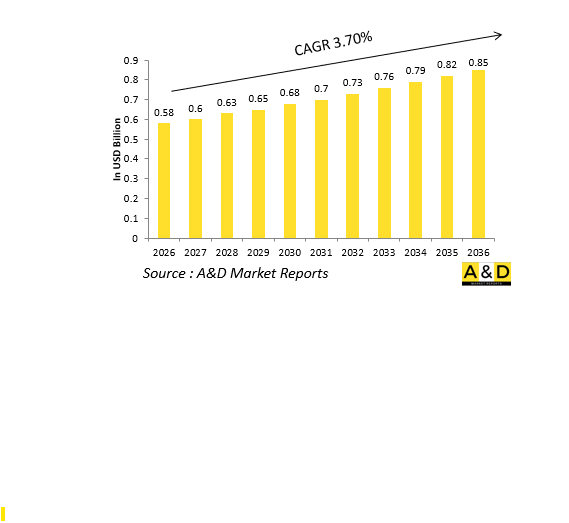
Introduction:
External drop tanks serve as essential force multipliers in defense aviation, providing tactical aircraft with temporary surge capacity to extend combat radius without compromising agility. These streamlined, jettisonable fuel containers, attached to wing or fuselage hardpoints, enable fighters, attack jets, and bombers to reach distant targets, loiter longer, or evade threats during return flights. The global market for drop tanks is set for robust progression, propelled by the need for affordable range enhancement amid evolving aerial threats.
Market offerings span conformal designs for minimal drag, self-sealing variants for survivability, and quick-release mechanisms for seamless deployment. Manufacturers prioritize lightweight alloys, aerodynamic shaping, and compatibility with multi-mission platforms. As air forces grapple with expansive theaters and peer adversaries, drop tanks gain prominence, supporting everything from deep strikes to maritime patrols. This sector reflects a broader push toward versatile, cost-efficient solutions that amplify existing fleets' reach and persistence.
Technology Impact in Defense External Drop Tanks Market
Technological strides are revolutionizing the defense external drop tanks market, enhancing efficiency, safety, and integration. Advanced composites and hybrid materials reduce weight while withstanding extreme g-forces and thermal stresses, allowing larger capacities without payload penalties. Smart valves with inertial sensors enable automatic jettison in emergencies, preventing asymmetric drag that could doom aircraft in dogfights.
Embedded diagnostics and IoT connectivity transmit real-time fuel status to cockpits and command centers, optimizing mission planning. Anti-vortex baffles and foam suppressants mitigate sloshing and explosion risks, while conformal bladder designs conform to airframe contours for stealthier profiles. Additive manufacturing accelerates custom variants for diverse aircraft, cutting production timelines. Integration with fly-by-wire systems automates fuel management, balancing center-of-gravity shifts. These innovations extend not just range but operational tempo, enabling seamless transitions from ferry to combat configurations and supporting unmanned systems in contested environments.
Key Drivers in Defense External Drop Tanks Market
Dynamic forces underpin the growth of the defense external drop tanks market. Escalating demands for power projection in vast operational areas drive adoption, as drop tanks offer immediate range boosts for legacy fleets facing modernization delays. Fiscal pressures favor these low-cost alternatives to engine upgrades or new aircraft, enabling sustained readiness without ballooning budgets.
Interoperability requirements in multinational coalitions spur standardized designs, facilitating joint exercises and shared logistics. Rising threats from long-range surface-to-air missiles necessitate standoff capabilities, where extended loiter supports precision strikes. Supply chain diversification mitigates geopolitical disruptions, promoting regional manufacturing hubs. Sustainability initiatives push for recyclable materials and crash-resistant fuels, aligning with green procurement policies. Training simulators incorporating drop tank dynamics enhance pilot proficiency in fuel-critical scenarios. Collectively, these drivers position drop tanks as indispensable for agile, expeditionary airpower in an era of persistent competition.
Regional Trends in Defense External Drop Tanks Market
Regional variations define the external drop tanks market, attuned to local doctrines and challenges. North America leads with high-performance variants for carrier ops and Pacific pivots, emphasizing rapid jettison and low-observable coatings. Europe focuses on NATO interoperability, developing modular tanks for multirole fighters defending expansive flanks.
Asia-Pacific trends toward maritime strike tanks, with corrosion-resistant designs for island chains and high-threat corridors, as nations bolster anti-access/area-denial countermeasures. The Middle East prioritizes desert-optimized tanks with dust filters and thermal shielding for prolonged patrols. In South America and Africa, emphasis falls on rugged, maintainable tanks for counterinsurgency and border security, leveraging cost-effective local adaptations. Global trends include technology offsets and co-production deals, enhancing domestic industries. These patterns underscore drop tanks' role in tailoring airpower to theater demands, from Arctic patrols to tropical surges.
Key Defense External Drop Tanks Market Programs
Flagship programs illuminate the external drop tanks market's innovation trajectory. The U.S. Navy's conformal tank refresh integrates smart sensors for F/A-18 variants, enhancing carrier deck cycles and stealth integration. Europe's Tempest demonstrator tests shape-shifting tanks that morph for subsonic cruise and supersonic dash, advancing sixth-generation compatibility.
India's lightweight composite program for Tejas fighters addresses high-altitude needs with quick-swap mechanisms, bolstering regional deterrence. Australia's loyal wingman initiative pairs drop tanks with unmanned escorts, enabling extended teaming in Indo-Pacific vastness. Israel's battle-proven self-sealing tanks for export fighters incorporate anti-missile chaff dispensers, merging fuel with defense. These efforts leverage digital engineering for accelerated certification, focusing on plug-and-play modularity and AI-optimized release profiles. They pioneer hybrid electric feeds and swarm-compatible designs, redefining drop tanks as smart nodes in networked air operations.
Table of Contents
Defense External Drop Tanks Market - Table of Contents
Defense External Drop Tanks Market Report Definition
Defense External Drop Tanks Market Segmentation
By Region
By Platform
By Type
By Capacity
Defense External Drop Tanks Market Analysis for next 10 Years
The 10-year Defense External Drop Tanks Market analysis would give a detailed overview of Defense External Drop Tanks Market growth, changing dynamics, technology adoption overviews and the overall market attractiveness is covered in this chapter.
Market Technologies of Defense External Drop Tanks Market
This segment covers the top 10 technologies that is expected to impact this market and the possible implications these technologies would have on the overall market.
Global Defense External Drop Tanks Market Forecast
The 10-year Defense External Drop Tanks Market forecast of this market is covered in detailed across the segments which are mentioned above.
Regional Defense External Drop Tanks Market Trends & Forecast
The regional counter drone market trends, drivers, restraints and Challenges of this market, the Political, Economic, Social and Technology aspects are covered in this segment. The market forecast and scenario analysis across regions are also covered in detailed in this segment. The last part of the regional analysis includes profiling of the key companies, supplier landscape and company benchmarking. The current market size is estimated based on the normal scenario.
North America
Drivers, Restraints and Challenges
PEST
Market Forecast & Scenario Analysis
Key Companies
Supplier Tier Landscape
Company Benchmarking
Europe
Middle East
APAC
South America
Country Analysis of Defense External Drop Tanks Market
This chapter deals with the key defense programs in this market, it also covers the latest news and patents which have been filed in this market. Country level 10 year market forecast and scenario analysis are also covered in this chapter.
US
Defense Programs
Latest News
Patents
Current levels of technology maturation in this market
Market Forecast & Scenario Analysis
Canada
Italy
France
Germany
Netherlands
Belgium
Spain
Sweden
Greece
Australia
South Africa
India
China
Russia
South Korea
Japan
Malaysia
Singapore
Brazil
Opportunity Matrix for Defense External Drop Tanks Market
The opportunity matrix helps the readers understand the high opportunity segments in this market.
Expert Opinions on Defense External Drop Tanks Market Report
Hear from our experts their opinion of the possible analysis for this market.
Conclusions
About Aviation and Defense Market Reports
List of Tables
- Table 1: 10 Year Market Outlook, 2026-2036
- Table 2: Drivers, Impact Analysis, North America
- Table 3: Restraints, Impact Analysis, North America
- Table 4: Challenges, Impact Analysis, North America
- Table 5: Drivers, Impact Analysis, Europe
- Table 6: Restraints, Impact Analysis, Europe
- Table 7: Challenges, Impact Analysis, Europe
- Table 8: Drivers, Impact Analysis, Middle East
- Table 9: Restraints, Impact Analysis, Middle East
- Table 10: Challenges, Impact Analysis, Middle East
- Table 11: Drivers, Impact Analysis, APAC
- Table 12: Restraints, Impact Analysis, APAC
- Table 13: Challenges, Impact Analysis, APAC
- Table 14: Drivers, Impact Analysis, South America
- Table 15: Restraints, Impact Analysis, South America
- Table 16: Challenges, Impact Analysis, South America
- Table 17: Scenario Analysis, Scenario 1, By Region, 2026-2036
- Table 18: Scenario Analysis, Scenario 1, By Platform, 2026-2036
- Table 19: Scenario Analysis, Scenario 1, By Type, 2026-2036
- Table 20: Scenario Analysis, Scenario 2, By Region, 2026-2036
- Table 21: Scenario Analysis, Scenario 2, By Platform, 2026-2036
- Table 22: Scenario Analysis, Scenario 2, By Type, 2026-2036
List of Figures
- Figure 1: Global Defense External Drop Tanks Market Forecast, 2026-2036
- Figure 2: Global Defense External Drop Tanks Market Forecast, By Region, 2026-2036
- Figure 3: Global Defense External Drop Tanks Market Forecast, By Platform, 2026-2036
- Figure 4: Global Defense External Drop Tanks Market Forecast, By Type, 2026-2036
- Figure 5: North America, Defense External Drop Tanks Market, Market Forecast, 2026-2036
- Figure 6: Europe, Defense External Drop Tanks Market, Market Forecast, 2026-2036
- Figure 7: Middle East, Defense External Drop Tanks Market, Market Forecast, 2026-2036
- Figure 8: APAC, Defense External Drop Tanks Market, Market Forecast, 2026-2036
- Figure 9: South America, Defense External Drop Tanks Market, Market Forecast, 2026-2036
- Figure 10: United States, Defense External Drop Tanks Market, Technology Maturation, 2026-2036
- Figure 11: United States, Defense External Drop Tanks Market, Market Forecast, 2026-2036
- Figure 12: Canada, Defense External Drop Tanks Market, Technology Maturation, 2026-2036
- Figure 13: Canada, Defense External Drop Tanks Market, Market Forecast, 2026-2036
- Figure 14: Italy, Defense External Drop Tanks Market, Technology Maturation, 2026-2036
- Figure 15: Italy, Defense External Drop Tanks Market, Market Forecast, 2026-2036
- Figure 16: France, Defense External Drop Tanks Market, Technology Maturation, 2026-2036
- Figure 17: France, Defense External Drop Tanks Market, Market Forecast, 2026-2036
- Figure 18: Germany, Defense External Drop Tanks Market, Technology Maturation, 2026-2036
- Figure 19: Germany, Defense External Drop Tanks Market, Market Forecast, 2026-2036
- Figure 20: Netherlands, Defense External Drop Tanks Market, Technology Maturation, 2026-2036
- Figure 21: Netherlands, Defense External Drop Tanks Market, Market Forecast, 2026-2036
- Figure 22: Belgium, Defense External Drop Tanks Market, Technology Maturation, 2026-2036
- Figure 23: Belgium, Defense External Drop Tanks Market, Market Forecast, 2026-2036
- Figure 24: Spain, Defense External Drop Tanks Market, Technology Maturation, 2026-2036
- Figure 25: Spain, Defense External Drop Tanks Market, Market Forecast, 2026-2036
- Figure 26: Sweden, Defense External Drop Tanks Market, Technology Maturation, 2026-2036
- Figure 27: Sweden, Defense External Drop Tanks Market, Market Forecast, 2026-2036
- Figure 28: Brazil, Defense External Drop Tanks Market, Technology Maturation, 2026-2036
- Figure 29: Brazil, Defense External Drop Tanks Market, Market Forecast, 2026-2036
- Figure 30: Australia, Defense External Drop Tanks Market, Technology Maturation, 2026-2036
- Figure 31: Australia, Defense External Drop Tanks Market, Market Forecast, 2026-2036
- Figure 32: India, Defense External Drop Tanks Market, Technology Maturation, 2026-2036
- Figure 33: India, Defense External Drop Tanks Market, Market Forecast, 2026-2036
- Figure 34: China, Defense External Drop Tanks Market, Technology Maturation, 2026-2036
- Figure 35: China, Defense External Drop Tanks Market, Market Forecast, 2026-2036
- Figure 36: Saudi Arabia, Defense External Drop Tanks Market, Technology Maturation, 2026-2036
- Figure 37: Saudi Arabia, Defense External Drop Tanks Market, Market Forecast, 2026-2036
- Figure 38: South Korea, Defense External Drop Tanks Market, Technology Maturation, 2026-2036
- Figure 39: South Korea, Defense External Drop Tanks Market, Market Forecast, 2026-2036
- Figure 40: Japan, Defense External Drop Tanks Market, Technology Maturation, 2026-2036
- Figure 41: Japan, Defense External Drop Tanks Market, Market Forecast, 2026-2036
- Figure 42: Malaysia, Defense External Drop Tanks Market, Technology Maturation, 2026-2036
- Figure 43: Malaysia, Defense External Drop Tanks Market, Market Forecast, 2026-2036
- Figure 44: Singapore, Defense External Drop Tanks Market, Technology Maturation, 2026-2036
- Figure 45: Singapore, Defense External Drop Tanks Market, Market Forecast, 2026-2036
- Figure 46: United Kingdom, Defense External Drop Tanks Market, Technology Maturation, 2026-2036
- Figure 47: United Kingdom, Defense External Drop Tanks Market, Market Forecast, 2026-2036
- Figure 48: Opportunity Analysis, Defense External Drop Tanks Market, By Region (Cumulative Market), 2026-2036
- Figure 49: Opportunity Analysis, Defense External Drop Tanks Market, By Region (CAGR), 2026-2036
- Figure 50: Opportunity Analysis, Defense External Drop Tanks Market, By Platform (Cumulative Market), 2026-2036
- Figure 51: Opportunity Analysis, Defense External Drop Tanks Market, By Platform (CAGR), 2026-2036
- Figure 52: Opportunity Analysis, Defense External Drop Tanks Market, By Type (Cumulative Market), 2026-2036
- Figure 53: Opportunity Analysis, Defense External Drop Tanks Market, By Type (CAGR), 2026-2036
- Figure 54: Scenario Analysis, Defense External Drop Tanks Market, Cumulative Market, 2026-2036
- Figure 55: Scenario Analysis, Defense External Drop Tanks Market, Global Market, 2026-2036
- Figure 56: Scenario 1, Defense External Drop Tanks Market, Total Market, 2026-2036
- Figure 57: Scenario 1, Defense External Drop Tanks Market, By Region, 2026-2036
- Figure 58: Scenario 1, Defense External Drop Tanks Market, By Platform, 2026-2036
- Figure 59: Scenario 1, Defense External Drop Tanks Market, By Type, 2026-2036
- Figure 60: Scenario 2, Defense External Drop Tanks Market, Total Market, 2026-2036
- Figure 61: Scenario 2, Defense External Drop Tanks Market, By Region, 2026-2036
- Figure 62: Scenario 2, Defense External Drop Tanks Market, By Platform, 2026-2036
- Figure 63: Scenario 2, Defense External Drop Tanks Market, By Type, 2026-2036
- Figure 64: Company Benchmark, Defense External Drop Tanks Market, 2026-2036

