PUBLISHER: Aviation & Defense Market Reports (A&D) | PRODUCT CODE: 2021200

PUBLISHER: Aviation & Defense Market Reports (A&D) | PRODUCT CODE: 2021200
Global Anti- Tank & Anti-Personnel Mines Market 2026-2036
Global Defense Anti- Tank & Anti-Personnel Mines Market
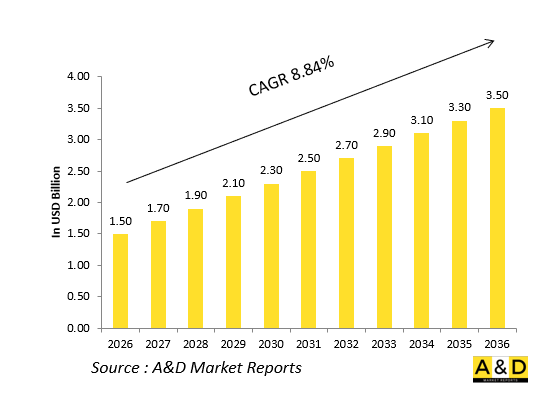
The Global Defense Anti- Tank & Anti-Personnel Mines Market is estimated at USD 1.50 billion in 2026, projected to grow to USD 3.50 billion by 2036 at a Compound Annual Growth Rate (CAGR) of 8.84% over the forecast period 2026-2036
1. Introduction:
The global defense anti-tank and anti-personnel mines market remains a sensitive yet strategically significant segment within land warfare capabilities. These systems are designed to restrict enemy movement, protect defensive positions, and create controlled barriers in conflict zones. While their use is subject to international regulations and humanitarian considerations, certain military forces continue to maintain and develop such systems for defensive purposes. Anti-tank mines are primarily used against armored vehicles, whereas anti-personnel mines are intended to deter or disrupt infantry movement. The evolving nature of ground combat and the emphasis on area denial strategies contribute to ongoing interest in these systems. Additionally, advancements in safety mechanisms and controlled deployment methods are shaping their development. Governments are balancing operational requirements with international compliance and ethical considerations. As a result, the market is influenced by both defense needs and regulatory frameworks across different regions.
2. Technology Impact in Defense Anti-Tank and Anti-Personnel Mines Market
Technological advancements are significantly influencing the design and deployment of anti-tank and anti-personnel mines, with a strong focus on safety, control, and compliance. Modern systems are incorporating self-deactivation and self-neutralization features to reduce long-term risks and align with international regulations. Improvements in sensor technology are enabling more precise activation mechanisms, allowing mines to respond to specific targets while minimizing unintended effects. Integration with remote monitoring and control systems is providing greater oversight and flexibility in deployment. Additionally, advancements in materials and manufacturing processes are enhancing durability and reliability under various environmental conditions. Research is also being conducted on alternatives that can achieve similar defensive objectives with reduced humanitarian impact. Digital technologies are supporting better tracking and management of deployed systems, improving accountability and operational planning. These innovations are reshaping the market by addressing both military requirements and ethical considerations.
3. Key Drivers in Defense Anti-Tank and Anti-Personnel Mines Market
The growth of the defense anti-tank and anti-personnel mines market is driven by a combination of strategic, operational, and regulatory factors. One of the primary drivers is the continued need for effective area denial and force protection in ground-based military operations. These systems are used to secure borders, protect critical infrastructure, and support defensive strategies in conflict zones. Rising geopolitical tensions and regional conflicts are prompting some nations to maintain or modernize their mine capabilities. Additionally, the focus on enhancing battlefield control and delaying enemy movement is contributing to demand. However, international treaties and humanitarian concerns are also influencing market dynamics, encouraging the development of safer and more controlled systems. Defense modernization programs are supporting the adoption of advanced technologies that align with compliance requirements. These factors collectively shape the market, balancing operational effectiveness with legal and ethical responsibilities.
4. Regional Trends in Defense Anti-Tank and Anti-Personnel Mines Market
Regional trends in the defense anti-tank and anti-personnel mines market vary significantly due to differing regulatory frameworks, security concerns, and defense strategies. North America and Europe are largely influenced by international agreements that restrict the use of certain types of mines, leading to a focus on compliant and alternative systems. In contrast, some regions in Asia-Pacific continue to prioritize land defense capabilities due to ongoing border tensions and security challenges. Countries in these areas may invest in advanced and controlled mine systems as part of their defensive strategies. The Middle East also presents demand driven by regional conflicts and the need for area denial capabilities. Emerging economies are navigating a balance between defense requirements and international compliance. Across all regions, there is a growing emphasis on developing safer technologies and improving monitoring and management systems to address humanitarian concerns while maintaining operational effectiveness.
5. Key Defense Anti-Tank and Anti-Personnel Mines Market Program
Key programs in the defense anti-tank and anti-personnel mines market are focused on enhancing safety, compliance, and operational control. Governments and defense organizations are investing in the development of next-generation systems that incorporate advanced safety features and controlled activation mechanisms. These programs often involve collaboration between defense contractors, research institutions, and regulatory bodies to ensure alignment with international standards. Emphasis is placed on technologies such as self-deactivation, remote monitoring, and precise targeting capabilities. Modernization initiatives are also aimed at replacing legacy systems with safer and more reliable alternatives. Additionally, efforts are being made to improve tracking, documentation, and clearance processes to reduce long-term risks. Research and development programs are exploring innovative solutions that can provide effective area denial while minimizing humanitarian impact. These initiatives are essential for balancing defense needs with global regulatory and ethical expectations.
Table of Contents
Anti-Tank & Anti-Personnel Mines Market - Table of Contents
Anti-Tank & Anti-Personnel Mines Market Report Definition
Anti-Tank & Anti-Personnel Mines Market Segmentation
By Application
By Type
By Region
Anti-Tank & Anti-Personnel Mines Market Analysis for next 10 Years
The 10-year anti-tank and anti-personnel mines market analysis would give a detailed overview of anti-tank and anti-personnel mines market growth, changing dynamics, technology adoption overviews and the overall market attractiveness is covered in this chapter.
Market Technologies of Anti-Tank & Anti-Personnel Mines Market
This segment covers the top 10 technologies that is expected to impact this market and the possible implications these technologies would have on the overall market.
Global Anti-Tank & Anti-Personnel Mines Market Forecast
The 10-year anti-tank and anti-personnel mines market forecast of this market is covered in detailed across the segments which are mentioned above.
Regional Anti-Tank & Anti-Personnel Mines Market Trends & Forecast
The regional anti-tank & anti-personnel mines market trends, drivers, restraints and Challenges of this market, the Political, Economic, Social and Technology aspects are covered in this segment. The market forecast and scenario analysis across regions are also covered in detailed in this segment. The last part of the regional analysis includes profiling of the key companies, supplier landscape and company benchmarking. The current market size is estimated based on the normal scenario.
North America
Drivers, Restraints and Challenges
PEST
Market Forecast & Scenario Analysis
Key Companies
Supplier Tier Landscape
Company Benchmarking
Europe
Middle East
APAC
South America
Country Analysis of Anti-Tank & Anti-Personnel Mines Market
This chapter deals with the key defense programs in this market, it also covers the latest news and patents which have been filed in this market. Country level 10 year market forecast and scenario analysis are also covered in this chapter.
US
Defense Programs
Latest News
Patents
Current levels of technology maturation in this market
Market Forecast & Scenario Analysis
Canada
Italy
France
Germany
Netherlands
Belgium
Spain
Sweden
Greece
Australia
South Africa
India
China
Russia
South Korea
Japan
Malaysia
Singapore
Brazil
Opportunity Matrix for Anti-Tank & Anti-Personnel Mines Market
The opportunity matrix helps the readers understand the high opportunity segments in this market.
Expert Opinions on Anti-Tank & Anti-Personnel Mines Market Report
Hear from our experts their opinion of the possible analysis for this market.
Conclusions
About Aviation and Defense Market Reports
List of Tables
- Table 1: 10 Year Market Outlook, 2026-2036
- Table 2: Drivers, Impact Analysis, North America
- Table 3: Restraints, Impact Analysis, North America
- Table 4: Challenges, Impact Analysis, North America
- Table 5: Drivers, Impact Analysis, Europe
- Table 6: Restraints, Impact Analysis, Europe
- Table 7: Challenges, Impact Analysis, Europe
- Table 8: Drivers, Impact Analysis, Middle East
- Table 9: Restraints, Impact Analysis, Middle East
- Table 10: Challenges, Impact Analysis, Middle East
- Table 11: Drivers, Impact Analysis, APAC
- Table 12: Restraints, Impact Analysis, APAC
- Table 13: Challenges, Impact Analysis, APAC
- Table 14: Drivers, Impact Analysis, South America
- Table 15: Restraints, Impact Analysis, South America
- Table 16: Challenges, Impact Analysis, South America
- Table 17: Scenario Analysis, Scenario 1, By Region, 2026-2036
- Table 18: Scenario Analysis, Scenario 1, By Type, 2026-2036
- Table 19: Scenario Analysis, Scenario 1, By Application, 2026-2036
- Table 20: Scenario Analysis, Scenario 2, By Region, 2026-2036
- Table 21: Scenario Analysis, Scenario 2, By Type, 2026-2036
- Table 22: Scenario Analysis, Scenario 2, By Application, 2026-2036
List of Figures
- Figure 1: Global Defense Anti-Tank & Anti-Personnel Mines Market Forecast, 2026-2036
- Figure 2: Global Defense Anti-Tank & Anti-Personnel Mines Market Forecast, By Region, 2026-2036
- Figure 3: Global Defense Anti-Tank & Anti-Personnel Mines Market Forecast, By Type, 2026-2036
- Figure 4: Global Defense Anti-Tank & Anti-Personnel Mines Market Forecast, By Application, 2026-2036
- Figure 5: North America, Defense Anti-Tank & Anti-Personnel Mines Market , Market Forecast, 2026-2036
- Figure 6: Europe, Defense Anti-Tank & Anti-Personnel Mines Market , Market Forecast, 2026-2036
- Figure 7: Middle East, Defense Anti-Tank & Anti-Personnel Mines Market , Market Forecast, 2026-2036
- Figure 8: APAC, Defense Anti-Tank & Anti-Personnel Mines Market , Market Forecast, 2026-2036
- Figure 9: South America, Defense Anti-Tank & Anti-Personnel Mines Market , Market Forecast, 2026-2036
- Figure 10: United States, Defense Anti-Tank & Anti-Personnel Mines Market , Region Maturation, 2026-2036
- Figure 11: United States, Defense Anti-Tank & Anti-Personnel Mines Market , Market Forecast, 2026-2036
- Figure 12: Canada, Defense Anti-Tank & Anti-Personnel Mines Market , Region Maturation, 2026-2036
- Figure 13: Canada, Defense Anti-Tank & Anti-Personnel Mines Market , Market Forecast, 2026-2036
- Figure 14: Italy, Defense Anti-Tank & Anti-Personnel Mines Market , Region Maturation, 2026-2036
- Figure 15: Italy, Defense Anti-Tank & Anti-Personnel Mines Market , Market Forecast, 2026-2036
- Figure 16: France, Defense Anti-Tank & Anti-Personnel Mines Market , Region Maturation, 2026-2036
- Figure 17: France, Defense Anti-Tank & Anti-Personnel Mines Market , Market Forecast, 2026-2036
- Figure 18: Germany, Defense Anti-Tank & Anti-Personnel Mines Market , Region Maturation, 2026-2036
- Figure 19: Germany, Defense Anti-Tank & Anti-Personnel Mines Market , Market Forecast, 2026-2036
- Figure 20: Netherlands, Defense Anti-Tank & Anti-Personnel Mines Market , Region Maturation, 2026-2036
- Figure 21: Netherlands, Defense Anti-Tank & Anti-Personnel Mines Market , Market Forecast, 2026-2036
- Figure 22: Belgium, Defense Anti-Tank & Anti-Personnel Mines Market , Region Maturation, 2026-2036
- Figure 23: Belgium, Defense Anti-Tank & Anti-Personnel Mines Market , Market Forecast, 2026-2036
- Figure 24: Spain, Defense Anti-Tank & Anti-Personnel Mines Market , Region Maturation, 2026-2036
- Figure 25: Spain, Defense Anti-Tank & Anti-Personnel Mines Market , Market Forecast, 2026-2036
- Figure 26: Sweden, Defense Anti-Tank & Anti-Personnel Mines Market , Region Maturation, 2026-2036
- Figure 27: Sweden, Defense Anti-Tank & Anti-Personnel Mines Market , Market Forecast, 2026-2036
- Figure 28: Brazil, Defense Anti-Tank & Anti-Personnel Mines Market , Region Maturation, 2026-2036
- Figure 29: Brazil, Defense Anti-Tank & Anti-Personnel Mines Market , Market Forecast, 2026-2036
- Figure 30: Australia, Defense Anti-Tank & Anti-Personnel Mines Market , Region Maturation, 2026-2036
- Figure 31: Australia, Defense Anti-Tank & Anti-Personnel Mines Market , Market Forecast, 2026-2036
- Figure 32: India, Defense Anti-Tank & Anti-Personnel Mines Market , Region Maturation, 2026-2036
- Figure 33: India, Defense Anti-Tank & Anti-Personnel Mines Market , Market Forecast, 2026-2036
- Figure 34: China, Defense Anti-Tank & Anti-Personnel Mines Market , Region Maturation, 2026-2036
- Figure 35: China, Defense Anti-Tank & Anti-Personnel Mines Market , Market Forecast, 2026-2036
- Figure 36: Saudi Arabia, Defense Anti-Tank & Anti-Personnel Mines Market , Region Maturation, 2026-2036
- Figure 37: Saudi Arabia, Defense Anti-Tank & Anti-Personnel Mines Market , Market Forecast, 2026-2036
- Figure 38: South Korea, Defense Anti-Tank & Anti-Personnel Mines Market , Region Maturation, 2026-2036
- Figure 39: South Korea, Defense Anti-Tank & Anti-Personnel Mines Market , Market Forecast, 2026-2036
- Figure 40: Japan, Defense Anti-Tank & Anti-Personnel Mines Market , Region Maturation, 2026-2036
- Figure 41: Japan, Defense Anti-Tank & Anti-Personnel Mines Market , Market Forecast, 2026-2036
- Figure 42: Malaysia, Defense Anti-Tank & Anti-Personnel Mines Market , Region Maturation, 2026-2036
- Figure 43: Malaysia, Defense Anti-Tank & Anti-Personnel Mines Market , Market Forecast, 2026-2036
- Figure 44: Singapore, Defense Anti-Tank & Anti-Personnel Mines Market , Region Maturation, 2026-2036
- Figure 45: Singapore, Defense Anti-Tank & Anti-Personnel Mines Market , Market Forecast, 2026-2036
- Figure 46: United Kingdom, Defense Anti-Tank & Anti-Personnel Mines Market , Region Maturation, 2026-2036
- Figure 47: United Kingdom, Defense Anti-Tank & Anti-Personnel Mines Market , Market Forecast, 2026-2036
- Figure 48: Opportunity Analysis, Defense Anti-Tank & Anti-Personnel Mines Market , By Region (Cumulative Market), 2026-2036
- Figure 49: Opportunity Analysis, Defense Anti-Tank & Anti-Personnel Mines Market , By Region (CAGR), 2026-2036
- Figure 50: Opportunity Analysis, Defense Anti-Tank & Anti-Personnel Mines Market , By Type(Cumulative Market), 2026-2036
- Figure 51: Opportunity Analysis, Defense Anti-Tank & Anti-Personnel Mines Market , By Type(CAGR), 2026-2036
- Figure 52: Opportunity Analysis, Defense Anti-Tank & Anti-Personnel Mines Market , By Application(Cumulative Market), 2026-2036
- Figure 53: Opportunity Analysis, Defense Anti-Tank & Anti-Personnel Mines Market , By Application(CAGR), 2026-2036
- Figure 54: Scenario Analysis, Defense Anti-Tank & Anti-Personnel Mines Market , Cumulative Market, 2026-2036
- Figure 55: Scenario Analysis, Defense Anti-Tank & Anti-Personnel Mines Market , Global Market, 2026-2036
- Figure 56: Scenario 1, Defense Anti-Tank & Anti-Personnel Mines Market , Total Market, 2026-2036
- Figure 57: Scenario 1, Defense Anti-Tank & Anti-Personnel Mines Market , By Region, 2026-2036
- Figure 58: Scenario 1, Defense Anti-Tank & Anti-Personnel Mines Market , By Type, 2026-2036
- Figure 59: Scenario 1, Defense Anti-Tank & Anti-Personnel Mines Market , By Application, 2026-2036
- Figure 60: Scenario 2, Defense Anti-Tank & Anti-Personnel Mines Market , Total Market, 2026-2036
- Figure 61: Scenario 2, Defense Anti-Tank & Anti-Personnel Mines Market , By Region, 2026-2036
- Figure 62: Scenario 2, Defense Anti-Tank & Anti-Personnel Mines Market , By Type, 2026-2036
- Figure 63: Scenario 2, Defense Anti-Tank & Anti-Personnel Mines Market , By Application, 2026-2036
- Figure 64: Company Benchmark, Defense Anti-Tank & Anti-Personnel Mines Market , 2026-2036

