PUBLISHER: Aviation & Defense Market Reports (A&D) | PRODUCT CODE: 2027678

PUBLISHER: Aviation & Defense Market Reports (A&D) | PRODUCT CODE: 2027678
Global Defense Armor Materials Market
Global Defense Armor Materials Market
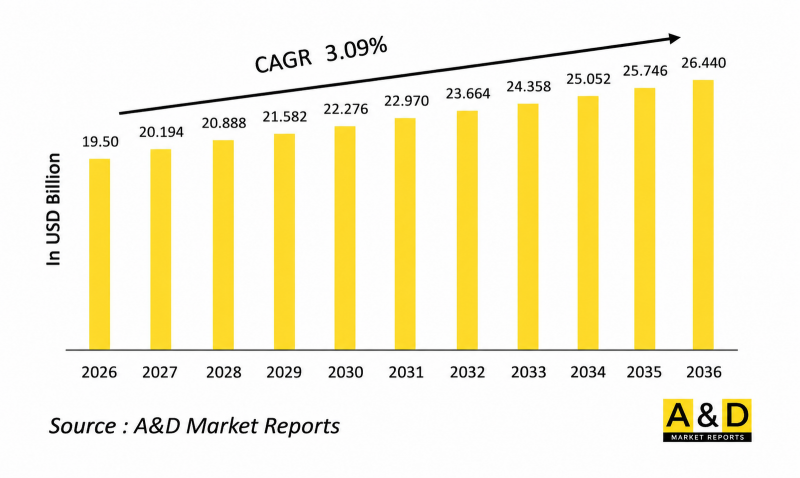
The Global Defense Armor Materials Market is estimated at USD 19.5 billion in 2026, projected to grow to USD 26.44 billion by 2036 at a Compound Annual Growth Rate (CAGR) of 3.09% over the forecast period 2026-2036.
1. Introduction
The Global Defense Armor Materials Market represents a critical segment within military protection systems, focusing on materials designed to withstand ballistic, explosive, and impact threats. These materials are widely used across armored vehicles, aircraft, naval platforms, and personal protective equipment such as body armor and helmets. The market has evolved significantly with the shift from traditional steel-based protection toward advanced composites, ceramics, and synthetic fibers that offer improved strength-to-weight ratios.
Modern defense strategies emphasize mobility alongside protection, driving the adoption of lightweight armor solutions that enhance operational efficiency without compromising survivability. Materials such as aramid fibers, ultra-high molecular weight polyethylene, and advanced ceramics are increasingly integrated into next-generation defense systems.
In addition, the growing complexity of warfare environments, including urban combat and asymmetric threats, has further increased the importance of versatile and multi-layered armor systems. As a result, the market continues to expand through innovation, strategic partnerships, and ongoing defense modernization programs worldwide.
2. Technology Impact in Defense Armor Materials Market (150 words)
Technological advancements are reshaping the Defense Armor Materials Market by enabling the development of high-performance, lightweight, and multi-functional protective systems. Innovations in nanotechnology and material science have led to the creation of advanced composites and hybrid armor solutions that combine ceramics, polymers, and metals to maximize protection while reducing overall weight.
The integration of smart materials is also emerging, allowing armor systems to adapt dynamically to different threat levels. Additive manufacturing is enhancing production efficiency by enabling complex armor geometries and rapid prototyping. Additionally, improvements in fiber technology, including high-strength aramid and polyethylene fibers, are enhancing flexibility and comfort in personal protection systems.
Advanced simulation and testing technologies are accelerating product development cycles, ensuring higher reliability and performance under extreme conditions. These innovations collectively contribute to improved survivability, mobility, and operational readiness across military platforms, making technology a central pillar in the evolution of modern armor materials.
3. Key Drivers in Defense Armor Materials Market (200 words)
The Defense Armor Materials Market is driven by the increasing demand for enhanced protection against evolving battlefield threats. The proliferation of advanced anti-armor weapons, including guided missiles and explosive devices, necessitates the continuous development of stronger and more resilient armor solutions.
Another major driver is the growing emphasis on lightweight materials that improve mobility and fuel efficiency without compromising protection. Military forces require armor systems that can be easily integrated into various platforms while maintaining operational agility.
Rising investments in defense modernization programs also play a crucial role in market growth. Governments across the globe are upgrading existing fleets and procuring advanced platforms, creating sustained demand for innovative armor materials. Additionally, the increasing focus on soldier survivability is boosting the adoption of advanced body armor systems that provide greater coverage and comfort.
Cost efficiency and scalability further influence market dynamics, encouraging the development of materials that balance performance with affordability for large-scale deployment. Moreover, the need for integrated protection systems that combine passive and active defense mechanisms is pushing manufacturers to innovate continuously, ensuring the market remains dynamic and technology-driven.
4. Regional Trends in Defense Armor Materials Market (200 words)
Regional trends in the Defense Armor Materials Market reflect varying threat perceptions, industrial capabilities, and defense priorities. North America remains a leading region due to strong defense infrastructure, advanced research capabilities, and significant investments in next-generation protection systems. The region emphasizes integrated armor solutions that combine multiple protective technologies for enhanced platform survivability.
Europe focuses on lightweight and modular armor systems, particularly for wheeled armored vehicles and personal protection equipment. Collaborative defense initiatives and strong research ecosystems contribute to innovation in advanced composites and ceramic materials.
The Asia-Pacific region is witnessing rapid growth driven by increasing defense expenditures and military modernization efforts in countries such as India and China. Regional players are investing in domestic manufacturing capabilities and advanced material development to reduce dependence on imports.
The Middle East prioritizes robust armor solutions tailored to harsh environmental conditions and asymmetric warfare scenarios. Meanwhile, emerging economies are increasingly seeking technology transfer agreements to develop local production capabilities. These regional dynamics collectively shape the global landscape, with innovation and localization emerging as key trends across markets.
5. Key Defense Armor Materials Market Program (200 words)
Key programs in the Defense Armor Materials Market are centered around enhancing vehicle survivability, reducing weight, and strengthening domestic manufacturing capabilities. One notable initiative involves collaboration between defense research organizations and manufacturing firms to develop advanced composite armor solutions for armored vehicles.
Programs focusing on hybrid armor technologies are gaining traction, combining traditional steel with advanced fibers and ceramics to achieve superior protection levels. These initiatives aim to improve resistance against modern threats while maintaining operational efficiency.
A significant example includes collaborative projects involving defense research agencies and industrial partners to produce advanced armor modules for main battle tanks and support vehicles. These programs emphasize indigenous development, reducing reliance on imports and strengthening national defense ecosystems.
Additionally, ongoing efforts in personal armor programs are enhancing soldier protection through lightweight, flexible, and ergonomic designs. Governments are also investing in testing and validation facilities to ensure compliance with stringent performance standards.
Such programs highlight the strategic importance of armor materials in defense planning, fostering innovation, industrial growth, and technological self-reliance while addressing evolving security challenges.
Table of Contents
Defense Armor Materials Market - Table of Contents
Defense Armor Materials Market Report Definition
Defense Armor Materials Market Segmentation
By Region
By Type
By Application
Defense Armor Materials Market Analysis for next 10 Years
The 10-year Defense Armor Materials Market analysis would give a detailed overview of Defense Armor Materials Market growth, changing dynamics, technology adoption overviews and the overall market attractiveness is covered in this chapter.
Market Technologies of Defense Armor Materials Market
This segment covers the top 10 technologies that is expected to impact this market and the possible implications these technologies would have on the overall market.
Global Defense Armor Materials Market Forecast
The 10-year Defense Armor Materials Market forecast of this market is covered in detailed across the segments which are mentioned above.
Regional Defense Armor Materials Market Trends & Forecast
The regional Defense Armor Materials Market trends, drivers, restraints and Challenges of this market, the Political, Economic, Social and Technology aspects are covered in this segment. The market forecast and scenario analysis across regions are also covered in detailed in this segment. The last part of the regional analysis includes profiling of the key companies, supplier landscape and company benchmarking. The current market size is estimated based on the normal scenario.
North America
Drivers, Restraints and Challenges
PEST
Market Forecast & Scenario Analysis
Key Companies
Supplier Tier Landscape
Company Benchmarking
Europe
Middle East
APAC
South America
Country Analysis of Defense Armor Materials Market
This chapter deals with the key defense programs in this market, it also covers the latest news and patents which have been filed in this market. Country level 10 year market forecast and scenario analysis are also covered in this chapter.
US
Defense Programs
Latest News
Patents
Current levels of technology maturation in this market
Market Forecast & Scenario Analysis
Canada
Italy
France
Germany
Netherlands
Belgium
Spain
Sweden
Greece
Australia
South Africa
India
China
Russia
South Korea
Japan
Malaysia
Singapore
Brazil
Opportunity Matrix for Defense Armor Materials Market
The opportunity matrix helps the readers understand the high opportunity segments in this market.
Expert Opinions on Defense Armor Materials Market Report
Hear from our experts their opinion of the possible analysis for this market.
Conclusions
About Aviation and Defense Market Reports
List of Tables
- Table 1: 10 Year Market Outlook, 2026-2036
- Table 2: Drivers, Impact Analysis, North America
- Table 3: Restraints, Impact Analysis, North America
- Table 4: Challenges, Impact Analysis, North America
- Table 5: Drivers, Impact Analysis, Europe
- Table 6: Restraints, Impact Analysis, Europe
- Table 7: Challenges, Impact Analysis, Europe
- Table 8: Drivers, Impact Analysis, Middle East
- Table 9: Restraints, Impact Analysis, Middle East
- Table 10: Challenges, Impact Analysis, Middle East
- Table 11: Drivers, Impact Analysis, Apac
- Table 12: Restraints, Impact Analysis, Apac
- Table 13: Challenges, Impact Analysis, Apac
- Table 14: Drivers, Impact Analysis, South America
- Table 15: Restraints, Impact Analysis, South America
- Table 16: Challenges, Impact Analysis, South America
- Table 17: Scenario Analysis, Scenario 1, By Region, 2026-2036
- Table 18: Scenario Analysis, Scenario 1, By Application2026-2036
- Table 19: Scenario Analysis, Scenario 1, By Type, 2026-2036
- Table 20: Scenario Analysis, Scenario 2, By Region, 2026-2036
- Table 21: Scenario Analysis, Scenario 2, By Application2026-2036
- Table 22: Scenario Analysis, Scenario 2, By Type, 2026-2036
List of Figures
- Figure 1: Global Defense Armor Materials Market Forecast, 2026-2036
- Figure 2: Global Defense Armor Materials Market Forecast, By Region, 2026-2036
- Figure 3: Global Defense Armor Materials Market Forecast, By Application2026-2036
- Figure 4: Global Defense Armor Materials Market Forecast, By Type, 2026-2036
- Figure 5: North America, Defense Armor Materials Market , Market Forecast, 2026-2036
- Figure 6: Europe, Defense Armor Materials Market , Market Forecast, 2026-2036
- Figure 7: Middle East, Defense Armor Materials Market , Market Forecast, 2026-2036
- Figure 8: Apac, Defense Armor Materials Market , Market Forecast, 2026-2036
- Figure 9: South America, Defense Armor Materials Market , Market Forecast, 2026-2036
- Figure 10: United States, Defense Armor Materials Market , Region Maturation, 2026-2036
- Figure 11: United States, Defense Armor Materials Market , Market Forecast, 2026-2036
- Figure 12: Canada, Defense Armor Materials Market , Region Maturation, 2026-2036
- Figure 13: Canada, Defense Armor Materials Market , Market Forecast, 2026-2036
- Figure 14: Italy, Defense Armor Materials Market , Region Maturation, 2026-2036
- Figure 15: Italy, Defense Armor Materials Market , Market Forecast, 2026-2036
- Figure 16: France, Defense Armor Materials Market , Region Maturation, 2026-2036
- Figure 17: France, Defense Armor Materials Market , Market Forecast, 2026-2036
- Figure 18: Germany, Defense Armor Materials Market , Region Maturation, 2026-2036
- Figure 19: Germany, Defense Armor Materials Market , Market Forecast, 2026-2036
- Figure 20: Netherlands, Defense Armor Materials Market , Region Maturation, 2026-2036
- Figure 21: Netherlands, Defense Armor Materials Market , Market Forecast, 2026-2036
- Figure 22: Belgium, Defense Armor Materials Market , Region Maturation, 2026-2036
- Figure 23: Belgium, Defense Armor Materials Market , Market Forecast, 2026-2036
- Figure 24: Spain, Defense Armor Materials Market , Region Maturation, 2026-2036
- Figure 25: Spain, Defense Armor Materials Market , Market Forecast, 2026-2036
- Figure 26: Sweden, Defense Armor Materials Market , Region Maturation, 2026-2036
- Figure 27: Sweden, Defense Armor Materials Market , Market Forecast, 2026-2036
- Figure 28: Brazil, Defense Armor Materials Market , Region Maturation, 2026-2036
- Figure 29: Brazil, Defense Armor Materials Market , Market Forecast, 2026-2036
- Figure 30: Australia, Defense Armor Materials Market , Region Maturation, 2026-2036
- Figure 31: Australia, Defense Armor Materials Market , Market Forecast, 2026-2036
- Figure 32: India, Defense Armor Materials Market , Region Maturation, 2026-2036
- Figure 33: India, Defense Armor Materials Market , Market Forecast, 2026-2036
- Figure 34: China, Defense Armor Materials Market , Region Maturation, 2026-2036
- Figure 35: China, Defense Armor Materials Market , Market Forecast, 2026-2036
- Figure 36: Saudi Arabia, Defense Armor Materials Market , Region Maturation, 2026-2036
- Figure 37: Saudi Arabia, Defense Armor Materials Market , Market Forecast, 2026-2036
- Figure 38: South Korea, Defense Armor Materials Market , Region Maturation, 2026-2036
- Figure 39: South Korea, Defense Armor Materials Market , Market Forecast, 2026-2036
- Figure 40: Japan, Defense Armor Materials Market , Region Maturation, 2026-2036
- Figure 41: Japan, Defense Armor Materials Market , Market Forecast, 2026-2036
- Figure 42: Malaysia, Defense Armor Materials Market , Region Maturation, 2026-2036
- Figure 43: Malaysia, Defense Armor Materials Market , Market Forecast, 2026-2036
- Figure 44: Singapore, Defense Armor Materials Market , Region Maturation, 2026-2036
- Figure 45: Singapore, Defense Armor Materials Market , Market Forecast, 2026-2036
- Figure 46: United Kingdom, Defense Armor Materials Market , Region Maturation, 2026-2036
- Figure 47: United Kingdom, Defense Armor Materials Market , Market Forecast, 2026-2036
- Figure 48: Opportunity Analysis, Defense Armor Materials Market , By Region (Cumulative Market), 2026-2036
- Figure 49: Opportunity Analysis, Defense Armor Materials Market , By Region (Cagr), 2026-2036
- Figure 50: Opportunity Analysis, Defense Armor Materials Market , By Application Cumulative Market), 2026-2036
- Figure 51: Opportunity Analysis, Defense Armor Materials Market , By Application(Cagr), 2026-2036
- Figure 52: Opportunity Analysis, Defense Armor Materials Market , By Type(Cumulative Market), 2026-2036
- Figure 53: Opportunity Analysis, Defense Armor Materials Market , By Type(Cagr), 2026-2036
- Figure 54: Scenario Analysis, Defense Armor Materials Market , Cumulative Market, 2026-2036
- Figure 55: Scenario Analysis, Defense Armor Materials Market , Global Market, 2026-2036
- Figure 56: Scenario 1, Defense Armor Materials Market , Total Market, 2026-2036
- Figure 57: Scenario 1, Defense Armor Materials Market , By Region, 2026-2036
- Figure 58: Scenario 1, Defense Armor Materials Market , By Application 2026-2036
- Figure 59: Scenario 1, Defense Armor Materials Market , By Type, 2026-2036
- Figure 60: Scenario 2, Defense Armor Materials Market , Total Market, 2026-2036
- Figure 61: Scenario 2, Defense Armor Materials Market , By Region, 2026-2036
- Figure 62: Scenario 2, Defense Armor Materials Market , By Application 2026-2036
- Figure 63: Scenario 2, Defense Armor Materials Market , By Type, 2026-2036
- Figure 64: Company Benchmark, Defense Armor Materials Market , 2026-2036

