
PUBLISHER: Aviation & Defense Market Reports (A&D) | PRODUCT CODE: 2042629

PUBLISHER: Aviation & Defense Market Reports (A&D) | PRODUCT CODE: 2042629
Global Mine Detection Market 2026-2036
Global Mine Detection Market
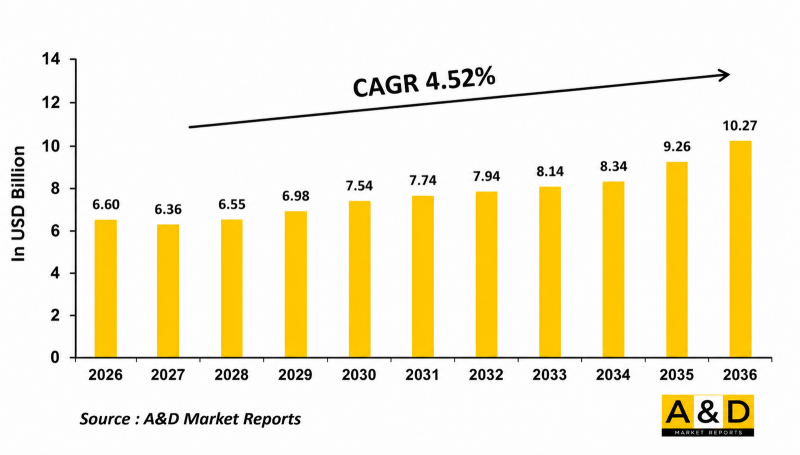
The Global Mine Detection Market is estimated at USD 6.60 billion in 2026, projected to grow to USD 10.27billion by 2036 at a Compound Annual Growth Rate (CAGR) of 4.52% over the forecast period 2026-2036.
Introduction
The global mine detection market plays a vital role in ensuring military security, humanitarian safety, and infrastructure development by supporting the identification and clearance of landmines and unexploded ordnance. Mine detection systems are widely used by defense forces, border security agencies, humanitarian organizations, and demining teams to detect explosive threats hidden beneath the ground or underwater. These systems include ground-penetrating radar, metal detectors, sonar systems, infrared sensors, drones, robotic platforms, and advanced imaging technologies that help improve operational safety and detection accuracy. The market is gaining importance due to the persistent threat posed by landmines in post-conflict regions and active combat zones. Governments and international organizations are increasingly investing in mine detection technologies to reduce civilian casualties, support peacekeeping missions, and restore safe access to agricultural land, transportation routes, and critical infrastructure. Technological advancements and growing integration of autonomous systems are further transforming mine detection operations by improving efficiency, reducing risk to personnel, and enabling faster threat identification in challenging environments.
Technology Impact in the Global Mine Detection Market
Technological advancement is significantly transforming the global mine detection market by improving detection precision, operational speed, and safety during demining operations. Modern mine detection systems increasingly incorporate artificial intelligence, machine learning, and advanced sensor fusion technologies to identify explosive threats with greater accuracy while reducing false alarms. Ground-penetrating radar and hyperspectral imaging technologies are enhancing the ability to detect deeply buried or non-metallic mines that are difficult to identify using conventional methods.
The growing use of unmanned aerial vehicles, robotic demining systems, and autonomous ground vehicles is also improving operational efficiency in hazardous environments. These systems allow military and humanitarian teams to conduct remote mine detection and clearance activities while minimizing direct human exposure to explosive threats. Additionally, advanced infrared sensors, sonar systems, and electro-optical technologies are strengthening underwater and surface mine detection capabilities across diverse terrains.
Cloud-based data analysis, geographic information systems, and real-time mapping technologies are further improving battlefield awareness and minefield management. Miniaturization of sensors and advancements in portable detection devices are also supporting rapid deployment operations, enabling security personnel to carry out efficient detection missions in remote and conflict-affected regions.
Key Drivers in the Global Mine Detection Market
One of the major drivers of the global mine detection market is the growing need to address the threat of landmines and unexploded ordnance in conflict and post-conflict regions. Millions of hidden explosive devices continue to pose serious risks to civilians, military personnel, and infrastructure development activities, creating strong demand for effective detection and clearance technologies.
Rising geopolitical tensions, border security concerns, and increasing military operations are also encouraging defense organizations to invest in advanced mine detection systems capable of improving troop safety and operational awareness. Governments and humanitarian agencies are actively supporting demining initiatives to restore agricultural land, transportation routes, and residential areas affected by explosive remnants of war.
Another important growth factor is the increasing adoption of autonomous and unmanned systems in military and humanitarian operations. Drones, robotic platforms, and remotely operated vehicles equipped with advanced sensors are helping reduce risks associated with manual mine detection procedures. Technological advancements in artificial intelligence, sensor fusion, and imaging technologies are further improving detection efficiency and reducing false detection rates.
Additionally, growing investments in defense modernization, homeland security, and disaster recovery programs are supporting the procurement of next-generation mine detection solutions across both military and civilian applications worldwide.
Regional Trends in the Global Mine Detection Market
North America remains a major region in the global mine detection market due to substantial defense investments, ongoing military modernization programs, and strong technological innovation in surveillance and detection systems. Defense agencies in the region are increasingly adopting advanced ground-penetrating radar systems, autonomous detection platforms, and artificial intelligence-enabled threat identification technologies to improve battlefield safety and border security operations.
Europe is witnessing steady growth in the mine detection market as governments focus on humanitarian demining activities, defense preparedness, and security cooperation initiatives. Several countries are investing in modern detection systems to support peacekeeping missions, infrastructure restoration, and military operations in conflict-prone regions.
The Asia-Pacific region is emerging as a rapidly growing market driven by rising defense expenditure, border disputes, and increasing demand for advanced security technologies. Countries across the region are modernizing defense capabilities and expanding the use of unmanned systems for mine detection and explosive threat management.
The Middle East and Africa continue to experience strong demand for mine detection technologies due to ongoing regional conflicts, post-war reconstruction activities, and the widespread presence of unexploded ordnance. Meanwhile, Latin America is gradually adopting mine detection solutions to strengthen border security and support humanitarian clearance operations in affected areas.
Key Programs in the Global Mine Detection Market
Several military modernization and humanitarian demining programs are driving the growth of the global mine detection market. Governments and international organizations are implementing large-scale mine clearance initiatives focused on improving public safety, restoring affected land, and supporting post-conflict recovery efforts. These programs involve the deployment of advanced detection systems, robotic platforms, and remote sensing technologies to accelerate demining operations.
Many defense agencies are investing in battlefield survivability programs that integrate mine detection sensors into armored vehicles, unmanned ground systems, and soldier protection equipment. Autonomous mine detection programs involving drones and robotic vehicles are gaining importance as military forces seek safer and more efficient methods of identifying explosive threats in hazardous environments.
Border security and infrastructure protection programs are also supporting market growth by encouraging the adoption of portable detection devices, surveillance technologies, and integrated command systems. Additionally, naval mine detection and underwater security initiatives are increasing demand for sonar-based systems and autonomous underwater vehicles capable of detecting underwater explosive hazards.
Research and development programs focused on artificial intelligence, sensor miniaturization, and advanced imaging technologies continue to support innovation in next-generation mine detection systems for both military and humanitarian applications worldwide.
Table of Contents
Mine Detection Market Report - Table of Contents
Mine Detection Market Report Definition
Mine Detection Market Segmentation
By Region
By Platform
By Type
Mine Detection Market Analysis for next 10 Years
The 10-year Mine Detection Market analysis would give a detailed overview of Mine Detection Market growth, changing dynamics, technology adoption overviews and the overall market attractiveness is covered in this chapter.
Market Technologies of Mine Detection Market
This segment covers the top 10 technologies that is expected to impact this market and the possible implications these technologies would have on the overall market.
Global Mine Detection Market Forecast
The 10-year Mine Detection Market forecast of this market is covered in detailed across the segments which are mentioned above.
Regional Mine Detection Market Trends & Forecast
The regional Mine Detection Market trends, drivers, restraints and Challenges of this market, the Political, Economic, Social and Technology aspects are covered in this segment. The market forecast and scenario analysis across regions are also covered in detailed in this segment. The last part of the regional analysis includes profiling of the key companies, supplier landscape and company benchmarking. The current market size is estimated based on the normal scenario.
North America
Drivers, Restraints and Challenges
PEST
Market Forecast & Scenario Analysis
Key Companies
Supplier Tier Landscape
Company Benchmarking
Europe
Middle East
APAC
South America
Country Analysis of Mine Detection Market
This chapter deals with the key defense programs in this market, it also covers the latest news and patents which have been filed in this market. Country level 10 year market forecast and scenario analysis are also covered in this chapter.
US
Defense Programs
Latest News
Patents
Current levels of technology maturation in this market
Market Forecast & Scenario Analysis
Canada
Italy
France
Germany
Netherlands
Belgium
Spain
Sweden
Greece
Australia
South Africa
India
China
Russia
South Korea
Japan
Malaysia
Singapore
Brazil
Opportunity Matrix for Mine Detection Market
The opportunity matrix helps the readers understand the high opportunity segments in this market.
Expert Opinions on Mine Detection Market Report
Hear from our experts their opinion of the possible analysis for this market.
Conclusions
About Aviation and Defense Market Reports
List of Tables
- Table 1: 10 Year Market Outlook, 2026-2036
- Table 2: Drivers, Impact Analysis, North America
- Table 3: Restraints, Impact Analysis, North America
- Table 4: Challenges, Impact Analysis, North America
- Table 5: Drivers, Impact Analysis, Europe
- Table 6: Restraints, Impact Analysis, Europe
- Table 7: Challenges, Impact Analysis, Europe
- Table 8: Drivers, Impact Analysis, Middle East
- Table 9: Restraints, Impact Analysis, Middle East
- Table 10: Challenges, Impact Analysis, Middle East
- Table 11: Drivers, Impact Analysis, Apac
- Table 12: Restraints, Impact Analysis, Apac
- Table 13: Challenges, Impact Analysis, Apac
- Table 14: Drivers, Impact Analysis, South America
- Table 15: Restraints, Impact Analysis, South America
- Table 16: Challenges, Impact Analysis, South America
- Table 17: Scenario Analysis, Scenario 1, By Region, 2026-2036
- Table 18: Scenario Analysis, Scenario 1, By Platform2026-2036
- Table 19: Scenario Analysis, Scenario 1, By Type, 2026-2036
- Table 20: Scenario Analysis, Scenario 2, By Region, 2026-2036
- Table 21: Scenario Analysis, Scenario 2, By Platform2026-2036
- Table 22: Scenario Analysis, Scenario 2, By Type, 2026-2036
List of Figures
- Figure 1: Global Defense Mine Detection Market Forecast, 2026-2036
- Figure 2: Global Defense Mine Detection Market Forecast, By Region, 2026-2036
- Figure 3: Global Defense Mine Detection Market Forecast, By Type 2026-2036
- Figure 4: Global Defense Mine Detection Market Forecast, By Platform, 2026-2036
- Figure 5: North America, Defense Mine Detection Market , Market Forecast, 2026-2036
- Figure 6: Europe, Defense Mine Detection Market , Market Forecast, 2026-2036
- Figure 7: Middle East, Defense Mine Detection Market , Market Forecast, 2026-2036
- Figure 8: Apac, Defense Mine Detection Market , Market Forecast, 2026-2036
- Figure 9: South America, Defense Mine Detection Market , Market Forecast, 2026-2036
- Figure 10: United States, Defense Mine Detection Market , Region Maturation, 2026-2036
- Figure 11: United States, Defense Mine Detection Market , Market Forecast, 2026-2036
- Figure 12: Canada, Defense Mine Detection Market , Region Maturation, 2026-2036
- Figure 13: Canada, Defense Mine Detection Market , Market Forecast, 2026-2036
- Figure 14: Italy, Defense Mine Detection Market , Region Maturation, 2026-2036
- Figure 15: Italy, Defense Mine Detection Market , Market Forecast, 2026-2036
- Figure 16: France, Defense Mine Detection Market , Region Maturation, 2026-2036
- Figure 17: France, Defense Mine Detection Market , Market Forecast, 2026-2036
- Figure 18: Germany, Defense Mine Detection Market , Region Maturation, 2026-2036
- Figure 19: Germany, Defense Mine Detection Market , Market Forecast, 2026-2036
- Figure 20: Netherlands, Defense Mine Detection Market , Region Maturation, 2026-2036
- Figure 21: Netherlands, Defense Mine Detection Market , Market Forecast, 2026-2036
- Figure 22: Belgium, Defense Mine Detection Market , Region Maturation, 2026-2036
- Figure 23: Belgium, Defense Mine Detection Market , Market Forecast, 2026-2036
- Figure 24: Spain, Defense Mine Detection Market , Region Maturation, 2026-2036
- Figure 25: Spain, Defense Mine Detection Market , Market Forecast, 2026-2036
- Figure 26: Sweden, Defense Mine Detection Market , Region Maturation, 2026-2036
- Figure 27: Sweden, Defense Mine Detection Market , Market Forecast, 2026-2036
- Figure 28: Brazil, Defense Mine Detection Market , Region Maturation, 2026-2036
- Figure 29: Brazil, Defense Mine Detection Market , Market Forecast, 2026-2036
- Figure 30: Australia, Defense Mine Detection Market , Region Maturation, 2026-2036
- Figure 31: Australia, Defense Mine Detection Market , Market Forecast, 2026-2036
- Figure 32: India, Defense Mine Detection Market , Region Maturation, 2026-2036
- Figure 33: India, Defense Mine Detection Market , Market Forecast, 2026-2036
- Figure 34: China, Defense Mine Detection Market , Region Maturation, 2026-2036
- Figure 35: China, Defense Mine Detection Market , Market Forecast, 2026-2036
- Figure 36: Saudi Arabia, Defense Mine Detection Market , Region Maturation, 2026-2036
- Figure 37: Saudi Arabia, Defense Mine Detection Market , Market Forecast, 2026-2036
- Figure 38: South Korea, Defense Mine Detection Market , Region Maturation, 2026-2036
- Figure 39: South Korea, Defense Mine Detection Market , Market Forecast, 2026-2036
- Figure 40: Japan, Defense Mine Detection Market , Region Maturation, 2026-2036
- Figure 41: Japan, Defense Mine Detection Market , Market Forecast, 2026-2036
- Figure 42: Malaysia, Defense Mine Detection Market , Region Maturation, 2026-2036
- Figure 43: Malaysia, Defense Mine Detection Market , Market Forecast, 2026-2036
- Figure 44: Singapore, Defense Mine Detection Market , Region Maturation, 2026-2036
- Figure 45: Singapore, Defense Mine Detection Market , Market Forecast, 2026-2036
- Figure 46: United Kingdom, Defense Mine Detection Market , Region Maturation, 2026-2036
- Figure 47: United Kingdom, Defense Mine Detection Market , Market Forecast, 2026-2036
- Figure 48: Opportunity Analysis, Defense Mine Detection Market , By Region (Cumulative Market), 2026-2036
- Figure 49: Opportunity Analysis, Defense Mine Detection Market , By Region (Cagr), 2026-2036
- Figure 50: Opportunity Analysis, Defense Mine Detection Market , By Type Cumulative Market), 2026-2036
- Figure 51: Opportunity Analysis, Defense Mine Detection Market , By Type (Cagr), 2026-2036
- Figure 52: Opportunity Analysis, Defense Mine Detection Market , By Platform(Cumulative Market), 2026-2036
- Figure 53: Opportunity Analysis, Defense Mine Detection Market , By Platform (Cagr), 2026-2036
- Figure 54: Scenario Analysis, Defense Mine Detection Market , Cumulative Market, 2026-2036
- Figure 55: Scenario Analysis, Defense Mine Detection Market , Global Market, 2026-2036
- Figure 56: Scenario 1, Defense Mine Detection Market , Total Market, 2026-2036
- Figure 57: Scenario 1, Defense Mine Detection Market , By Region, 2026-2036
- Figure 58: Scenario 1, Defense Mine Detection Market , By Type 2026-2036
- Figure 59: Scenario 1, Defense Mine Detection Market , By Platform, 2026-2036
- Figure 60: Scenario 2, Defense Mine Detection Market , Total Market, 2026-2036
- Figure 61: Scenario 2, Defense Mine Detection Market , By Region, 2026-2036
- Figure 62: Scenario 2, Defense Mine Detection Market , By Type 2026-2036
- Figure 63: Scenario 2, Defense Mine Detection Market , By Platform, 2026-2036
- Figure 64: Company Benchmark, Defense Mine Detection Market , 2026-2036

