
PUBLISHER: Aviation & Defense Market Reports (A&D) | PRODUCT CODE: 2042633

PUBLISHER: Aviation & Defense Market Reports (A&D) | PRODUCT CODE: 2042633
Global Missiles & Munition Fuses Market 2026-2036
Global Missiles & Munition Fuses Market
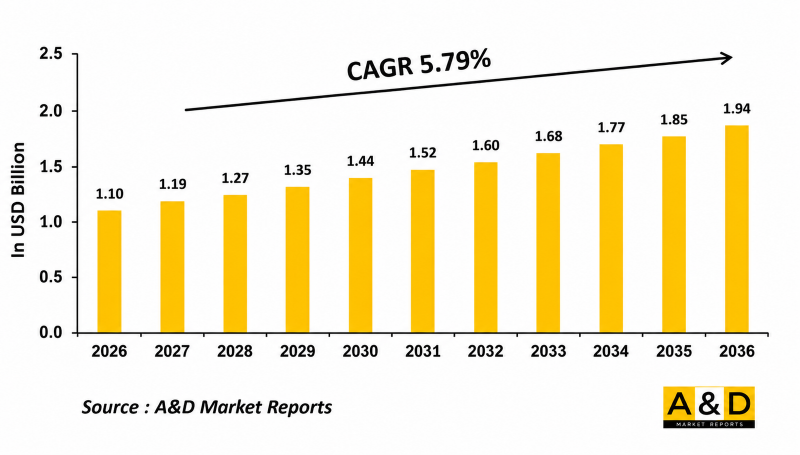
The Global Missiles & Munition Fuses Market is estimated at USD 1.10 billion in 2026, projected to grow to USD 1.94 billion by 2036 at a Compound Annual Growth Rate (CAGR) of 5.79% over the forecast period 2026-2036.
Introduction
The global missiles and munition fuses market plays a crucial role in modern defense systems by enabling the controlled activation, timing, and detonation of missiles, bombs, artillery shells, rockets, and other military munitions. Fuses are essential components that determine when and how a munition functions during combat operations, ensuring operational accuracy, safety, and mission effectiveness. These systems include impact fuses, proximity fuses, electronic fuses, time-delay fuses, and programmable smart fuses designed for various tactical and strategic applications across land, air, and naval platforms. Increasing geopolitical tensions, rising defense modernization initiatives, and growing demand for precision-guided weapon systems are driving the expansion of the market worldwide. Modern armed forces are focusing on advanced fuse technologies capable of supporting high-precision targeting, improved survivability, and enhanced battlefield adaptability. Additionally, the integration of electronic systems, smart sensors, and network-enabled technologies is transforming the performance and reliability of missiles and munitions used in modern warfare environments.
Technology Impact in the Global Missiles & Munition Fuses Market
Technological advancement is significantly transforming the global missiles and munition fuses market by improving weapon precision, safety, reliability, and operational flexibility. Modern fuse systems increasingly incorporate electronic components, programmable settings, and sensor-based activation technologies that enable munitions to function accurately under complex combat conditions. Smart fuses equipped with artificial intelligence and advanced processing systems are enhancing target recognition, detonation timing, and adaptive response capabilities for precision-guided munitions.
The integration of proximity sensing, radar technologies, infrared sensors, and digital communication systems is also improving the effectiveness of airburst, anti-armor, and anti-aircraft munitions. Additionally, miniaturization and lightweight electronic designs are supporting the development of compact fuse systems suitable for tactical missiles, drones, and precision artillery platforms.
Cybersecurity and electronic warfare resistance are becoming increasingly important as modern defense forces seek reliable fuse systems capable of operating in electronically contested environments. Advancements in safety and arming mechanisms are further improving storage stability, transport security, and operational safety for military personnel. Furthermore, the adoption of network-centric warfare concepts is encouraging the development of interconnected fuse technologies that support coordinated strike operations and enhanced battlefield awareness.
Key Drivers in the Global Missiles & Munition Fuses Market
One of the major drivers of the global missiles and munition fuses market is the increasing demand for precision-guided munitions and advanced missile systems across modern military forces. Defense organizations are prioritizing weapon systems capable of delivering accurate and controlled strikes while minimizing collateral damage and improving mission success rates.
Rising geopolitical tensions, cross-border conflicts, and evolving asymmetric warfare threats are also encouraging governments to strengthen ammunition modernization and missile procurement programs. Advanced fuse systems are essential for improving the operational performance of tactical missiles, artillery shells, aerial bombs, naval munitions, and air defense systems used in modern combat operations.
Another significant growth factor is the increasing adoption of smart and programmable munitions capable of functioning in multiple combat scenarios. Modern military operations require fuse technologies that support airburst detonation, delayed impact, proximity activation, and precision engagement against moving or concealed targets. This demand is accelerating investments in electronic fuse systems and sensor-based technologies.
The rapid expansion of autonomous combat systems, drones, and network-enabled warfare platforms is further supporting market growth. Additionally, defense modernization initiatives, increased military expenditure, and rising investments in indigenous weapons manufacturing are creating strong opportunities for advanced fuse technology development worldwide.
Regional Trends in the Global Missiles & Munition Fuses Market
North America remains a leading region in the global missiles and munition fuses market due to strong defense spending, advanced weapons development capabilities, and continuous investment in next-generation precision-guided munitions. The region is heavily focused on smart weapon technologies, electronic fuse systems, and advanced missile modernization programs aimed at strengthening military superiority and strategic deterrence.
Europe is experiencing steady market growth as countries enhance defense preparedness and expand investments in precision-guided weapons, air defense systems, and advanced ammunition technologies. Collaborative defense programs and modernization initiatives are encouraging the adoption of programmable and multi-function fuse systems across allied military forces.
The Asia-Pacific region is emerging as a rapidly growing market driven by increasing military expenditure, regional security concerns, and expanding indigenous defense manufacturing capabilities. Several countries are investing in advanced missile systems, artillery modernization, and smart munitions programs to improve combat effectiveness and strategic defense readiness.
The Middle East is also witnessing significant demand for advanced fuse technologies due to ongoing regional conflicts and increasing procurement of missile and air defense systems. Meanwhile, Latin America and Africa are gradually strengthening defense capabilities through ammunition modernization and border security enhancement programs.
Key Programs in the Global Missiles & Munition Fuses Market
Several missile modernization and advanced ammunition programs are driving the growth of the global missiles and munition fuses market. Governments worldwide are implementing precision strike and smart munitions initiatives focused on improving targeting accuracy, operational reliability, and mission flexibility through advanced fuse technologies.
Many defense agencies are investing in programmable fuse systems capable of supporting multiple operational modes, including airburst detonation, delayed penetration, and proximity activation for modern combat missions. Tactical missile enhancement programs are also encouraging the integration of electronic fuse technologies into precision-guided weapon platforms.
Artillery modernization programs continue to support market growth through the deployment of smart fuse systems designed for improved battlefield effectiveness and enhanced target engagement capabilities. Additionally, naval and air defense modernization initiatives are increasing demand for advanced fuse technologies integrated into interceptor missiles, anti-aircraft systems, and ship-launched munitions.
Research and development activities focused on artificial intelligence, miniaturized electronics, sensor integration, and electronic warfare resistance are further shaping next-generation fuse technologies. Collaborative international defense projects and indigenous weapons development programs are also accelerating innovation and long-term market expansion in the missiles and munition fuses industry worldwide.
Table of Contents
Missiles And Munition Fuse Market - Table of Contents
Missiles And Munition Fuse Market Report Definition
Missiles And Munition Fuse Market Segmentation
By Region
By Type of fuse
By End User
Missiles And Munition Fuse Market Analysis for next 10 Years
The 10-year missiles and munition fuse market analysis would give a detailed overview of missiles and munition fuse market growth, changing dynamics, technology adoption overviews and the overall market attractiveness is covered in this chapter.
Market Technologies of Missiles And Munition Fuse Market
This segment covers the top 10 technologies that is expected to impact this market and the possible implications these technologies would have on the overall market.
Global Missiles And Munition Fuse Market Forecast
The 10-year missiles and munition fuse market forecast of this market is covered in detailed across the segments which are mentioned above.
Regional Missiles And Munition Fuse Market Trends & Forecast
The regional missiles and munition fuse market trends, drivers, restraints and Challenges of this market, the Political, Economic, Social and Technology aspects are covered in this segment. The market forecast and scenario analysis across regions are also covered in detailed in this segment. The last part of the regional analysis includes profiling of the key companies, supplier landscape and company benchmarking. The current market size is estimated based on the normal scenario.
North America
Drivers, Restraints and Challenges
REST
Key Companies
Supplier Tier Landscape
Company Benchmarking
Market Forecast & Scenario Analysis
Europe
Middle East
APAC
South America
Country Analysis of Missiles And Munition Fuse Market
This chapter deals with the key programs in this market, it also covers the latest news and patents which have been filed in this market. Country level 10 year market forecast and scenario analysis are also covered in this chapter.
US
Program Mapping
Latest News
Patents
Current levels of technology maturation in this market
Market Forecast & Scenario Analysis
Canada
Italy
France
Germany
Netherlands
Belgium
Spain
Sweden
Greece
Australia
South Africa
India
China
Russia
South Korea
Japan
Malaysia
Singapore
Brazil
Opportunity Matrix for Missiles And Munition Fuse Market
The opportunity matrix helps the readers understand the high opportunity segments in this market.
Expert Opinions on Missiles And Munition Fuse Market Report
Hear from our experts their opinion of the possible analysis for this market.
Conclusions
About Aviation and Defense Market Reports
List of Tables
- Table 1: 10 Year Market Outlook, 2026-2036
- Table 2: Drivers, Impact Analysis, North America
- Table 3: Restraints, Impact Analysis, North America
- Table 4: Challenges, Impact Analysis, North America
- Table 5: Drivers, Impact Analysis, Europe
- Table 6: Restraints, Impact Analysis, Europe
- Table 7: Challenges, Impact Analysis, Europe
- Table 8: Drivers, Impact Analysis, Middle East
- Table 9: Restraints, Impact Analysis, Middle East
- Table 10: Challenges, Impact Analysis, Middle East
- Table 11: Drivers, Impact Analysis, Apac
- Table 12: Restraints, Impact Analysis, Apac
- Table 13: Challenges, Impact Analysis, Apac
- Table 14: Drivers, Impact Analysis, South America
- Table 15: Restraints, Impact Analysis, South America
- Table 16: Challenges, Impact Analysis, South America
- Table 17: Scenario Analysis, Scenario 1, By Region, 2026-2036
- Table 18: Scenario Analysis, Scenario 1, By Type of Fuse 2026-2036
- Table 19: Scenario Analysis, Scenario 1, By End User, 2026-2036
- Table 20: Scenario Analysis, Scenario 2, By Region, 2026-2036
- Table 21: Scenario Analysis, Scenario 2, By Type of Fuse 2026-2036
- Table 22: Scenario Analysis, Scenario 2, By End User, 2026-2036
List of Figures
- Figure 1: Global Defense Missiles And Munition Fuse Market Forecast, 2026-2036
- Figure 2: Global Defense Missiles And Munition Fuse Market Forecast, By Region, 2026-2036
- Figure 3: Global Defense Missiles And Munition Fuse Market Forecast, By Type of Fuse 2026-2036
- Figure 4: Global Defense Missiles And Munition Fuse Market Forecast, By End User, 2026-2036
- Figure 5: North America, Defense Missiles And Munition Fuse Market , Market Forecast, 2026-2036
- Figure 6: Europe, Defense Missiles And Munition Fuse Market , Market Forecast, 2026-2036
- Figure 7: Middle East, Defense Missiles And Munition Fuse Market , Market Forecast, 2026-2036
- Figure 8: Apac, Defense Missiles And Munition Fuse Market , Market Forecast, 2026-2036
- Figure 9: South America, Defense Missiles And Munition Fuse Market , Market Forecast, 2026-2036
- Figure 10: United States, Defense Missiles And Munition Fuse Market , Region Maturation, 2026-2036
- Figure 11: United States, Defense Missiles And Munition Fuse Market , Market Forecast, 2026-2036
- Figure 12: Canada, Defense Missiles And Munition Fuse Market , Region Maturation, 2026-2036
- Figure 13: Canada, Defense Missiles And Munition Fuse Market , Market Forecast, 2026-2036
- Figure 14: Italy, Defense Missiles And Munition Fuse Market , Region Maturation, 2026-2036
- Figure 15: Italy, Defense Missiles And Munition Fuse Market , Market Forecast, 2026-2036
- Figure 16: France, Defense Missiles And Munition Fuse Market , Region Maturation, 2026-2036
- Figure 17: France, Defense Missiles And Munition Fuse Market , Market Forecast, 2026-2036
- Figure 18: Germany, Defense Missiles And Munition Fuse Market , Region Maturation, 2026-2036
- Figure 19: Germany, Defense Missiles And Munition Fuse Market , Market Forecast, 2026-2036
- Figure 20: Netherlands, Defense Missiles And Munition Fuse Market , Region Maturation, 2026-2036
- Figure 21: Netherlands, Defense Missiles And Munition Fuse Market , Market Forecast, 2026-2036
- Figure 22: Belgium, Defense Missiles And Munition Fuse Market , Region Maturation, 2026-2036
- Figure 23: Belgium, Defense Missiles And Munition Fuse Market , Market Forecast, 2026-2036
- Figure 24: Spain, Defense Missiles And Munition Fuse Market , Region Maturation, 2026-2036
- Figure 25: Spain, Defense Missiles And Munition Fuse Market , Market Forecast, 2026-2036
- Figure 26: Sweden, Defense Missiles And Munition Fuse Market , Region Maturation, 2026-2036
- Figure 27: Sweden, Defense Missiles And Munition Fuse Market , Market Forecast, 2026-2036
- Figure 28: Brazil, Defense Missiles And Munition Fuse Market , Region Maturation, 2026-2036
- Figure 29: Brazil, Defense Missiles And Munition Fuse Market , Market Forecast, 2026-2036
- Figure 30: Australia, Defense Missiles And Munition Fuse Market , Region Maturation, 2026-2036
- Figure 31: Australia, Defense Missiles And Munition Fuse Market , Market Forecast, 2026-2036
- Figure 32: India, Defense Missiles And Munition Fuse Market , Region Maturation, 2026-2036
- Figure 33: India, Defense Missiles And Munition Fuse Market , Market Forecast, 2026-2036
- Figure 34: China, Defense Missiles And Munition Fuse Market , Region Maturation, 2026-2036
- Figure 35: China, Defense Missiles And Munition Fuse Market , Market Forecast, 2026-2036
- Figure 36: Saudi Arabia, Defense Missiles And Munition Fuse Market , Region Maturation, 2026-2036
- Figure 37: Saudi Arabia, Defense Missiles And Munition Fuse Market , Market Forecast, 2026-2036
- Figure 38: South Korea, Defense Missiles And Munition Fuse Market , Region Maturation, 2026-2036
- Figure 39: South Korea, Defense Missiles And Munition Fuse Market , Market Forecast, 2026-2036
- Figure 40: Japan, Defense Missiles And Munition Fuse Market , Region Maturation, 2026-2036
- Figure 41: Japan, Defense Missiles And Munition Fuse Market , Market Forecast, 2026-2036
- Figure 42: Malaysia, Defense Missiles And Munition Fuse Market , Region Maturation, 2026-2036
- Figure 43: Malaysia, Defense Missiles And Munition Fuse Market , Market Forecast, 2026-2036
- Figure 44: Singapore, Defense Missiles And Munition Fuse Market , Region Maturation, 2026-2036
- Figure 45: Singapore, Defense Missiles And Munition Fuse Market , Market Forecast, 2026-2036
- Figure 46: United Kingdom, Defense Missiles And Munition Fuse Market , Region Maturation, 2026-2036
- Figure 47: United Kingdom, Defense Missiles And Munition Fuse Market , Market Forecast, 2026-2036
- Figure 48: Opportunity Analysis, Defense Missiles And Munition Fuse Market , By Region (Cumulative Market), 2026-2036
- Figure 49: Opportunity Analysis, Defense Missiles And Munition Fuse Market , By Region (Cagr), 2026-2036
- Figure 50: Opportunity Analysis, Defense Missiles And Munition Fuse Market , By Type of Fuse Cumulative Market), 2026-2036
- Figure 51: Opportunity Analysis, Defense Missiles And Munition Fuse Market , By Type of Fuse (Cagr), 2026-2036
- Figure 52: Opportunity Analysis, Defense Missiles And Munition Fuse Market , By End User(Cumulative Market), 2026-2036
- Figure 53: Opportunity Analysis, Defense Missiles And Munition Fuse Market , By End User (Cagr), 2026-2036
- Figure 54: Scenario Analysis, Defense Missiles And Munition Fuse Market , Cumulative Market, 2026-2036
- Figure 55: Scenario Analysis, Defense Missiles And Munition Fuse Market , Global Market, 2026-2036
- Figure 56: Scenario 1, Defense Missiles And Munition Fuse Market , Total Market, 2026-2036
- Figure 57: Scenario 1, Defense Missiles And Munition Fuse Market , By Region, 2026-2036
- Figure 58: Scenario 1, Defense Missiles And Munition Fuse Market , By Type of Fuse 2026-2036
- Figure 59: Scenario 1, Defense Missiles And Munition Fuse Market , By End User, 2026-2036
- Figure 60: Scenario 2, Defense Missiles And Munition Fuse Market , Total Market, 2026-2036
- Figure 61: Scenario 2, Defense Missiles And Munition Fuse Market , By Region, 2026-2036
- Figure 62: Scenario 2, Defense Missiles And Munition Fuse Market , By Type of Fuse 2026-2036
- Figure 63: Scenario 2, Defense Missiles And Munition Fuse Market , By End User, 2026-2036
- Figure 64: Company Benchmark, Defense Missiles And Munition Fuse Market , 2026-2036

