PUBLISHER: Mordor Intelligence | PRODUCT CODE: 2097084

PUBLISHER: Mordor Intelligence | PRODUCT CODE: 2097084
North America Gluten-free Food and Beverage - Market Share Analysis, Industry Trends & Statistics, Growth Forecasts (2026 - 2031)
According to Mordor Intelligence, the North America gluten-Free food and Beverages market size is expected to grow from USD 2.72 billion in 2025 to USD 2.89 billion in 2026 and is forecast to reach USD 3.89 billion by 2031 at 6.15% CAGR over 2026-2031.
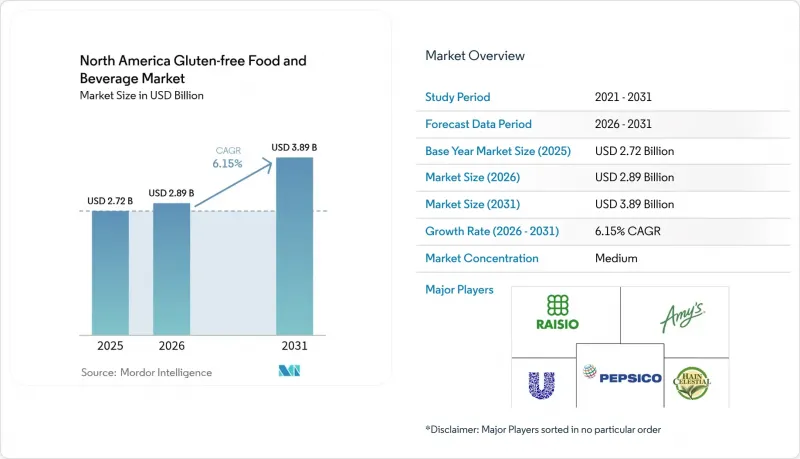
This report is Segmented by Product Type (Bakery Products, Snacks and RTE Products, Beverages, Condiments, Seasonings and Spreads, and More), Source (Plant-Based, Animal-Based), Distribution Channels (Supermarkets/Hypermarkets, and More), and Geography (United States, Canada, Mexico, Rest of North America). The Market Forecasts are Provided in Terms of Value (USD).
North America Gluten-free Food and Beverage Market Trends and Insights
Rising diagnosed celiac and gluten-sensitive population
About 1 in 133 North Americans grapple with celiac disease. In contrast, an estimated 6% of U.S. adults experience non-celiac gluten sensitivity, broadening the consumer base and driving demand for gluten-free products. Notably, pediatric diagnoses are outpacing adult ones, prompting schools and daycares to offer gluten-free options. This trend not only normalizes early-age consumption but also fosters long-term adoption of gluten-free diets. Regulatory clarity plays a pivotal role in supporting market growth; the FDA's definition of gluten at less than 20 ppm aligns with Health Canada's standards, providing manufacturers with legal certainty and ensuring product consistency. While demand driven by medical necessity remains consistent, the influx of lifestyle adopters leads to a higher churn rate, as these consumers often switch between dietary trends. This dynamic pushes brands to prioritize innovation and develop diverse product offerings to retain customers. Together, these elements not only fuel consistent growth but also diversify demand across various age groups, creating opportunities for market expansion.
Mainstream "better-for-you" positioning in retail
Thirty percent of U.S. shoppers are now cutting back on gluten, even without a formal diagnosis, signaling that gluten-free has become a staple in the wellness decision-making process. Retail giants like Walmart and Kroger have rolled out private-label gluten-free products, pricing them up to 25% lower than established brands. This pricing strategy pressures mid-tier brands to stand out through certifications or unique functional ingredients. As clean-label preferences gain traction, there's a noticeable shift in formulations, moving away from additives like modified starch to more natural binders such as chia and psyllium. This trend, where health-conscious choices converge, has elevated gluten-free products into a premium subcategory, garnering loyalty from affluent consumers. Yet, nutritionists are raising eyebrows at the blanket avoidance of gluten, introducing a wave of skepticism among consumers. Brands now face the challenge of addressing this skepticism head-on, emphasizing the importance of transparent communication.
Premium price versus conventional alternatives
In 2024, gluten-free bread commanded an average price of USD 6.50 per loaf, significantly outpacing wheat bread's USD 2.50 price tag. This price disparity poses challenges for mid-income consumers considering the switch. While private-label launches have narrowed this price gap, even a 1.5-time premium remains a deterrent for many, especially during economic downturns when gluten-free is often seen as a luxury. In Mexico, where minimum wages hover below USD 15 per day, gluten-free products remain largely out of reach for all but the upper-income brackets. Economic challenges in 2024 highlighted this sensitivity, with category growth decelerating as inflation tightened household budgets, as noted by. Consequently, manufacturers find themselves at a crossroads: should they reduce prices to expand their consumer base or maintain margins at the risk of slower unit growth.
Other drivers and restraints analyzed in the detailed report include:
- Shelf expansion across mass grocery chains
- Ingredient and process innovations improving organoleptics
- Manufacturing cross-contamination risks
For complete list of drivers and restraints, kindly check the Table Of Contents.
Segment Analysis
In 2025, bakery products dominated North America's gluten-free food and beverage market, claiming a 34.18% share of the market's value. This dominance is rooted in years of refining gluten-free flour systems to mimic wheat's elasticity, allowing celiac and gluten-sensitive consumers to enjoy familiar bread, pastries, and cakes. These advancements have been pivotal in addressing the challenges of replicating the texture and structure of traditional baked goods without gluten. While innovations in hydrocolloids and enzyme technologies have enhanced crumb structure and mouthfeel, the surge in popularity of low-carb and keto diets has tempered growth. Nevertheless, the deep-seated presence of bread and bakery items in Western diets, bolstered by the rise of private-label brands and extensive retail distribution, ensures bakery products remain central to gluten-free shopping. Additionally, the availability of gluten-free bakery options across mainstream retail channels has made these products more accessible, further solidifying their market position.
Meanwhile, the beverage segment is on a rapid ascent, projected to grow at an 8.59% CAGR. Brands are crafting functional drinks using gluten-free bases like oats, sorghum, millet, and rice, catering to consumers' desires for digestive comfort and clean labels. These beverages adhere to the same 20 ppm gluten threshold as foods, bolstering trust among gluten-sensitive individuals. With energy drinks, functional waters, and craft beers made from gluten-free grains, consumption spans from sports events to social gatherings. The segment's growth is also driven by the increasing consumer preference for beverages that combine health benefits with allergen-free claims, making them suitable for a broader audience. As the trend for functional hydration merges with allergen-free and "free-from" labels, beverages are poised to seize a larger slice of North America's gluten-free market, even as bakery products maintain their lead.
Complete Report Scope:
- Product Type
- Bakery Products
- Breads and Cakes
- Cookies and Biscuits
- Other Bakery Products
- Snacks and RTE Products
- Beverages
- Condiments, Seasonings and Spreads
- Dairy and Dairy Substitutes
- meat and Meat Substitutes
- Other Gluten-free Products
- Bakery Products
- By Source
- Plant-based
- Animal-Based
- Distribution Channels
- Supermarkets/Hypermarkets
- Convenience Stores
- Specialist Retailers
- Online Retail Stores
- Other Distribution Channels
- Geography
- United States
- Canada
- Mexico
- Rest of North America
List of Companies Covered in this Report:
- Hain Celestial Group Inc.
- General Mills Inc.
- PepsiCo Inc.
- Nestle S.A.
- Kellogg Company
- Conagra Brands Inc.
- Amy's Kitchen Inc.
- Mondelez International Inc.
- Bob's Red Mill Natural Foods
- Danone S.A.
- Kraft Heinz Company
- Campbell Soup Company
- Barilla Group
- Dr. Schar AG
- Freedom Foods Group
- Boulder Brands (Glutino)
- Raisio plc
- Quinoa Corporation (Ancient Harvest)
- Enjoy Life Natural Brands LLC
- Unilever plc
- Tootsie Roll Industries
- Vosges Haut-Chocolat LLC
- Yildiz Holding AS
Additional Benefits:
- The market estimate (ME) sheet in Excel format
- 3 months of analyst support
TABLE OF CONTENTS
1 INTRODUCTION
- 1.1 Study Assumptions and Market Definition
- 1.2 Scope of the Study
2 RESEARCH METHODOLOGY
3 EXECUTIVE SUMMARY
4 MARKET LANDSCAPE
- 4.1 Market Overview
- 4.2 Market Drivers
- 4.2.1 Rising diagnosed celiac and gluten-sensitive population
- 4.2.2 Mainstream 'better-for-you' positioning in retail
- 4.2.3 Shelf expansion across mass grocery chains
- 4.2.4 Ingredient and process innovations improving organoleptics
- 4.2.5 Esports and gaming snacks adopting gluten-free formats
- 4.2.6 Corporate wellness catering mandates
- 4.3 Market Restraints
- 4.3.1 Premium price versus conventional alternatives
- 4.3.2 Manufacturing cross-contamination risks
- 4.3.3 Climate-driven scarcity of specialty GF grains
- 4.3.4 Labelling grey-zone for 'gluten-reduced' claims
- 4.4 Consumer Behavior Analysis
- 4.5 Regulatory Landscape
- 4.6 Porter's Five Forces
- 4.6.1 Bargaining Power of Suppliers
- 4.6.2 Bargaining Power of Buyers
- 4.6.3 Threat of New Entrants
- 4.6.4 Threat of Substitutes
- 4.6.5 Competitive Rivalry
5 MARKET SIZE AND GROWTH FORECASTS (VALUE)
- 5.1 Product Type
- 5.1.1 Bakery Products
- 5.1.1.1 Breads and Cakes
- 5.1.1.2 Cookies and Biscuits
- 5.1.1.3 Other Bakery Products
- 5.1.2 Snacks and RTE Products
- 5.1.3 Beverages
- 5.1.4 Condiments, Seasonings and Spreads
- 5.1.5 Dairy and Dairy Substitutes
- 5.1.6 meat and Meat Substitutes
- 5.1.7 Other Gluten-free Products
- 5.1.1 Bakery Products
- 5.2 By Source
- 5.2.1 Plant-based
- 5.2.2 Animal-Based
- 5.3 Distribution Channels
- 5.3.1 Supermarkets/Hypermarkets
- 5.3.2 Convenience Stores
- 5.3.3 Specialist Retailers
- 5.3.4 Online Retail Stores
- 5.3.5 Other Distribution Channels
- 5.4 Geography
- 5.4.1 United States
- 5.4.2 Canada
- 5.4.3 Mexico
- 5.4.4 Rest of North America
6 COMPETITIVE LANDSCAPE
- 6.1 Market Concentration
- 6.2 Strategic Moves
- 6.3 Market Share Analysis
- 6.4 Company Profiles (includes Global level Overview, Market level overview, Core Segments, Financials as available, Strategic Information, Market Rank/Share for key companies, Products and Services, and Recent Developments)
- 6.4.1 Hain Celestial Group Inc.
- 6.4.2 General Mills Inc.
- 6.4.3 PepsiCo Inc.
- 6.4.4 Nestle S.A.
- 6.4.5 Kellogg Company
- 6.4.6 Conagra Brands Inc.
- 6.4.7 Amy's Kitchen Inc.
- 6.4.8 Mondelez International Inc.
- 6.4.9 Bob's Red Mill Natural Foods
- 6.4.10 Danone S.A.
- 6.4.11 Kraft Heinz Company
- 6.4.12 Campbell Soup Company
- 6.4.13 Barilla Group
- 6.4.14 Dr. Schar AG
- 6.4.15 Freedom Foods Group
- 6.4.16 Boulder Brands (Glutino)
- 6.4.17 Raisio plc
- 6.4.18 Quinoa Corporation (Ancient Harvest)
- 6.4.19 Enjoy Life Natural Brands LLC
- 6.4.20 Unilever plc
- 6.4.21 Tootsie Roll Industries
- 6.4.22 Vosges Haut-Chocolat LLC
- 6.4.23 Yildiz Holding AS
7 MARKET OPPORTUNITIES AND FUTURE OUTLOOK

