PUBLISHER: Mordor Intelligence | PRODUCT CODE: 2114316

PUBLISHER: Mordor Intelligence | PRODUCT CODE: 2114316
South America Fruit And Vegetable Ingredients - Market Share Analysis, Industry Trends & Statistics, Growth Forecasts (2026 - 2031)
According to Mordor Intelligence, the South America fruit and vegetable ingredients market size in 2026 is estimated at USD 14.52 billion, growing from 2025 value of USD 13.82 billion with 2031 projections showing USD 18.56 billion, growing at 5.04% CAGR over 2026-2031.
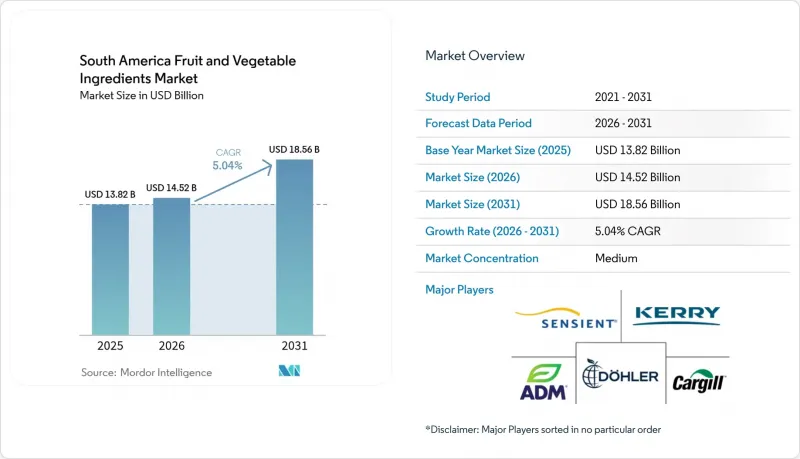
This report is Segmented by Ingredient Type (Fruits, Vegetables), Form (Concentrates, Pastes and Purees, Powders, and More), Application (Beverages, Confectionery, Bakery, Soups and Sauces, Dairy, RTE Products, and More), and Geography (Brazil, Argentina, Colombia, Peru, Chile, Rest of South America). Market Forecasts are Provided in Terms of Value (USD) and Volume (Tonnes).
South America Fruit And Vegetable Ingredients Market Trends and Insights
Rising demand for natural and clean-label ingredients
In South America, consumer scrutiny of ingredient lists has intensified. A 2024 survey by the Brazilian Association of Food Industries (ABIA) revealed that 68% of Brazilian shoppers actively avoid artificial colors and preservatives. This behavioral shift is compelling multinational food manufacturers to reformulate legacy SKUs. They're now turning to fruit and vegetable concentrates, purees, and powders, which provide color, flavor, and nutritional value without synthetic additives. The clean-label trend is especially evident in the dairy and confectionery segments. Here, brands are substituting artificial strawberry and orange flavors with real fruit purees, aligning with retailer demands for simpler ingredient lists. In 2024, Chile's Ministry of Health broadened its front-of-pack warning label system to encompass artificial additives. This move amplifies regulatory pressure, hastening the shift towards natural ingredients. Ingredient suppliers, in response, are channeling investments into cold-press and enzyme-assisted extraction technologies. These methods safeguard volatile flavor compounds and anthocyanins, allowing formulators to match the sensory qualities of synthetic alternatives, albeit at a 10-15% cost premium.
Expansion of the food processing industry
In 2024, Brazil's food processing sector raked in USD 233 billion, buoyed by agribusiness exports hitting record highs. As the Real weakened against the dollar, Brazilian concentrates and purees gained a competitive edge in global markets, as highlighted by the USDA Foreign Agricultural Service. The sector is now expanding into Parana and Santa Catarina states, establishing new processing parks alongside citrus and tropical fruit orchards. This strategic move aims to cut logistics costs and capitalize on harvest-season volumes. Meanwhile, in Argentina, the government unveiled the "Plan Agroindustrial 2030" in 2024. This initiative provides tax holidays and subsidized credit lines to processors in underutilized agricultural zones, especially those adopting spray-drying or freeze-drying technologies to tackle the post-harvest losses of over 25% historically seen in perishable fruits and vegetables. Additionally, the Mercosur-EU trade agreement's removal of tariffs on processed ingredients has spurred a flurry of greenfield investments. Multinational corporations and regional cooperatives are in a race, eager to secure duty-free access to European beverage and dairy manufacturers. These manufacturers, sourcing over EUR 2 billion worth of fruit and vegetable ingredients annually, stand to benefit significantly from the agreement.
Competition from synthetic and artificial alternatives
On a per-unit basis, synthetic flavors and colors are consistently cheaper than their natural fruit and vegetable counterparts. This price advantage exerts ongoing pressure in cost-sensitive sectors, notably carbonated soft drinks and hard candies. Major multinational flavor companies are channeling investments into nature-identical compounds. These compounds mimic the sensory profiles of genuine fruits, thanks to recent breakthroughs in fermentation-derived vanillin and enzymatically produced esters, achieving this at a significantly reduced cost. In Argentina and Colombia, the economic volatility and currency depreciation are so pronounced that mid-tier food manufacturers are compelled to prioritize ingredient costs, often at the expense of clean-label aspirations. South America's regulatory framework still endorses a broad spectrum of synthetic additives, many of which have been banned in Europe and North America. This leniency diminishes the urgency for reformulation, enabling legacy products to retain their market presence. In response to these dynamics, ingredient suppliers are innovating hybrid solutions. By merging minimal quantities of natural fruit or vegetable extracts with sanctioned synthetic components, they can market their products as "natural flavor with other natural flavors," commanding a premium over entirely synthetic options.
Other drivers and restraints analyzed in the detailed report include:
- Shift towards plant-based diets
- Product innovation and diversification
- Raw-material price volatility
For complete list of drivers and restraints, kindly check the Table Of Contents.
Segment Analysis
Forecasts indicate that from 2026 to 2031, the vegetable market will grow at a CAGR of 6.62%. This growth is set to outpace the 50.12% market share fruits held in 2025. Formulators are increasingly prioritizing functional ingredients, seeking nutritional benefits that extend beyond mere sweetness and flavor. Carrots and beetroots are carving out a niche in sports nutrition and plant-based dairy. Their inherent nitrate and beta-carotene content allows for clean-label fortification claims, eliminating the need for synthetic vitamins. Tomato-based components are making inroads into the savory snack and ready-to-eat meal markets. Formats like paste and powder are now preferred over MSG and hydrolyzed vegetable protein, catering to a consumer demand for familiar ingredient names. Meanwhile, pumpkin puree is gaining traction as a foundational ingredient in plant-based sauces and bakery fillings. Its ability to retain moisture and provide natural sweetness diminishes the necessity for added sugars and emulsifiers.
Fruits continue to dominate the ingredient landscape, firmly establishing their presence in beverages and confections. Oranges, apples, and pineapples lead the charge, making up the bulk of concentrate and puree volumes. Berries, on the other hand, are fetching premium prices in yogurt and ice cream. Their anthocyanin content not only imparts vibrant colors but also bolsters antioxidant marketing claims, appealing to health-conscious consumers. Ingredients derived from mangoes and bananas are becoming increasingly popular in smoothies and meal-replacement products. Their creamy texture and tropical flavor adeptly mask the off-notes often associated with plant-based proteins. This industry's pivot towards vegetables underscores a growing acknowledgment: functional benefits and nutritional fortification are now on par with sensory attributes in ingredient selection. This shift is particularly pronounced as regulators in Brazil and Chile impose stricter limits on added sugars in packaged foods.
Complete Report Scope:
- Ingredient Type
- Fruits
- Apple
- Orange
- Pineapple
- Mango
- Banana
- Berries
- Other Fruits
- Vegetables
- Carrots
- Beetroots
- Tomato
- Pumpkins
- Other Vegetables
- Fruits
- Form
- Concentrates
- Pastes and Purees
- Pieces and Slices
- Powders
- Others
- Application
- Beverages
- Confectionery Products
- Bakery Products
- Soups and Sauces
- Dairy Products
- RTE Products
- Others
- Geography
- Brazil
- Argentina
- Colombia
- Peru
- Chile
- Rest of South America
List of Companies Covered in this Report:
- Archer Daniels Midland
- Cargill, Incorporated
- Kerry Group plc
- (AGRANA Beteiligungs-AG)
- Dohler GmbH
- Tate & Lyle PLC
- Givaudan S.A.
- International Flavors & Fragrances
- Symrise AG
- Sensient Technologies
- Olam Food Ingredients
- SunOpta Inc.
- SVZ Industrial Fruit & Vegetable Ingredients
- Tree Top Inc.
- Taura Natural Ingredients
- Kanegrade
- FutureCeuticals
- DMH Ingredients
- NutriBotanica
- Paradise Fruits
Additional Benefits:
- The market estimate (ME) sheet in Excel format
- 3 months of analyst support
TABLE OF CONTENTS
1 INTRODUCTION
- 1.1 Study Assumptions and Market Definition
- 1.2 Scope of the Study
2 RESEARCH METHODOLOGY
3 EXECUTIVE SUMMARY
4 MARKET LANDSCAPE
- 4.1 Market Overview
- 4.2 Market Drivers
- 4.2.1 Rising demand for natural and clean-label ingredients
- 4.2.2 Expansion of the food processing industry
- 4.2.3 Shift towards plant-based diets
- 4.2.4 Product innovation and diversification
- 4.2.5 Chile and Peru bio-economy incentives for ingredient research and development
- 4.2.6 Supporting government initiatives and regulations
- 4.3 Market Restraints
- 4.3.1 Competition from synthetic and artificial alternatives
- 4.3.2 Raw-material price volatility
- 4.3.3 Stringent multi-country food-safety and labelling rules
- 4.3.4 Limited processing technology and expertise
- 4.4 Regulatory Landscape
- 4.5 Technological Outlook
- 4.6 Porter's Five Forces
- 4.6.1 Threat of New Entrants
- 4.6.2 Bargaining Power of Buyers
- 4.6.3 Bargaining Power of Suppliers
- 4.6.4 Threat of Substitutes
- 4.6.5 Intensity of Competitive Rivalry
5 MARKET SIZE AND GROWTH FORECASTS (VALUE AND VOLUME)
- 5.1 Ingredient Type
- 5.1.1 Fruits
- 5.1.1.1 Apple
- 5.1.1.2 Orange
- 5.1.1.3 Pineapple
- 5.1.1.4 Mango
- 5.1.1.5 Banana
- 5.1.1.6 Berries
- 5.1.1.7 Other Fruits
- 5.1.2 Vegetables
- 5.1.2.1 Carrots
- 5.1.2.2 Beetroots
- 5.1.2.3 Tomato
- 5.1.2.4 Pumpkins
- 5.1.2.5 Other Vegetables
- 5.1.1 Fruits
- 5.2 Form
- 5.2.1 Concentrates
- 5.2.2 Pastes and Purees
- 5.2.3 Pieces and Slices
- 5.2.4 Powders
- 5.2.5 Others
- 5.3 Application
- 5.3.1 Beverages
- 5.3.2 Confectionery Products
- 5.3.3 Bakery Products
- 5.3.4 Soups and Sauces
- 5.3.5 Dairy Products
- 5.3.6 RTE Products
- 5.3.7 Others
- 5.4 Geography
- 5.4.1 Brazil
- 5.4.2 Argentina
- 5.4.3 Colombia
- 5.4.4 Peru
- 5.4.5 Chile
- 5.4.6 Rest of South America
6 COMPETITIVE LANDSCAPE
- 6.1 Market Concentration
- 6.2 Strategic Moves
- 6.3 Market Share Analysis
- 6.4 Company Profiles (includes Global level Overview, Market level overview, Core Segments, Financials as available, Strategic Information, Market Rank/Share for key companies, Products and Services, and Recent Developments)
- 6.4.1 Archer Daniels Midland
- 6.4.2 Cargill, Incorporated
- 6.4.3 Kerry Group plc
- 6.4.4 (AGRANA Beteiligungs-AG)
- 6.4.5 Dohler GmbH
- 6.4.6 Tate & Lyle PLC
- 6.4.7 Givaudan S.A.
- 6.4.8 International Flavors & Fragrances
- 6.4.9 Symrise AG
- 6.4.10 Sensient Technologies
- 6.4.11 Olam Food Ingredients
- 6.4.12 SunOpta Inc.
- 6.4.13 SVZ Industrial Fruit & Vegetable Ingredients
- 6.4.14 Tree Top Inc.
- 6.4.15 Taura Natural Ingredients
- 6.4.16 Kanegrade
- 6.4.17 FutureCeuticals
- 6.4.18 DMH Ingredients
- 6.4.19 NutriBotanica
- 6.4.20 Paradise Fruits
7 MARKET OPPORTUNITIES AND FUTURE OUTLOOK

