PUBLISHER: Mordor Intelligence | PRODUCT CODE: 2114778

PUBLISHER: Mordor Intelligence | PRODUCT CODE: 2114778
US Digestive Supplements - Market Share Analysis, Industry Trends & Statistics, Growth Forecasts (2026 - 2031)
According to Mordor Intelligence, the United States digestive supplements market size is expected to grow from USD 3.95 billion in 2025 to USD 4.16 billion in 2026 and is forecast to reach USD 5.38 billion by 2031 at 5.27% CAGR over 2026-2031.
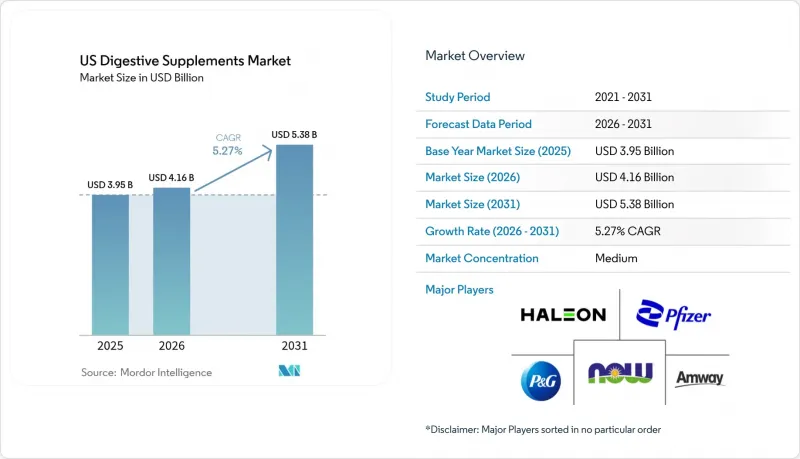
This report is Segmented by Type (Prebiotics, Probiotics, Enzymes, Botanicals, Others), Form (Capsules and Softgels, Tablets, Gummies and Chewables, Powders, Others), and Distribution Channel (Supermarkets/Hypermarkets, Specialty and Health Stores, Online Retailers, Other Distribution Channels). The Market Forecasts are Provided in Terms of Value (USD).
US Digestive Supplements Market Trends and Insights
Increasing Prevalence of Digestive Disorders Like IBS, GERD, And Lactose Intolerance Boosts Growth
The increasing prevalence of digestive disorders, such as Irritable Bowel Syndrome Gastroesophageal Reflux Disease, and lactose intolerance, is significantly driving the growth of the United States digestive supplements market. According to the National Institute of Diabetes and Digestive and Kidney Diseases, approximately 60 to 70 million people in the United States are affected by digestive diseases annually . IBS alone impacts 10-15% of the adult population according to American College of Gastroenterology . This growing patient population has led to a heightened demand for digestive supplements that can alleviate symptoms, improve nutrient absorption, and enhance overall gut health. Furthermore, government initiatives, such as the U.S. Food and Drug Administration's (FDA) regulation of dietary supplements under the Dietary Supplement Health and Education Act (DSHEA), ensure product safety and efficacy, thereby encouraging consumer trust. These factors, combined with increasing awareness campaigns about digestive health, are expected to further support market growth during the forecast period.
Rising Consumer Awareness of the Gut Microbiome's Role in Immunity and Mental Health.
Consumers in the United States are increasingly recognizing the critical role of the gut microbiome in supporting immunity and mental well-being. This growing awareness is driving demand for digestive supplements, as individuals seek products that promote gut health and overall wellness. The connection between gut health and its impact on the immune system, as well as mental health, has been highlighted by ongoing research and media coverage. Studies have shown that a balanced gut microbiome can enhance immune responses, reduce inflammation, and improve mood regulation, further emphasizing the importance of maintaining gut health. Additionally, the rising prevalence of digestive disorders, coupled with the increasing adoption of healthier lifestyles, is encouraging consumers to explore supplements that address these concerns. The availability of innovative products, such as probiotics, prebiotics, and enzyme-based supplements, is also contributing to market growth. This trend is expected to continue influencing the market, as consumers prioritize preventive health measures and look for solutions that address these specific health concerns. Furthermore, the growing focus on personalized nutrition and the integration of gut health into broader wellness strategies are likely to sustain the momentum in this market during the forecast period.
Limited FDA Approval and Standardization Across Digestive Supplement Products
In the United States digestive supplements market, regulatory complexity acts as a significant restraint on growth. The FDA's position that no traditional probiotics qualify for drug approval status, despite increasing clinical evidence supporting their therapeutic applications, creates a challenging environment for companies. This regulatory stance generates uncertainty for businesses seeking to make health claims, as they must navigate stringent requirements and unclear pathways for approval. Additionally, the FDA's planned reorganization in 2025, which includes the elimination of 170 positions from the Office of Inspections and Investigations, raises concerns about the agency's ability to maintain effective oversight. This reduction in staffing could potentially hinder the regulatory process, further complicating the market landscape. However, the FDA continues to enforce strict standards for new dietary ingredient notifications and structure-function claims, adding another layer of complexity for market participants. These regulatory challenges collectively constrain the growth potential of the United States digestive supplements market.
Other drivers and restraints analyzed in the detailed report include:
- High Demand for Probiotics and Enzyme Supplements for Bloating and Indigestion.
- Growing Use of Digestive Aids Among Aging Adults with Slower Metabolism
- Supply Chain Vulnerabilities Leading to Product Adulteration and Potency Degradation
For complete list of drivers and restraints, kindly check the Table Of Contents.
Segment Analysis
In the United States digestive supplements market, probiotics maintain a leading position with a 48.63% market share in 2025. This dominance is attributed to extensive clinical validation supporting their efficacy and the growing consumer familiarity with the benefits of a healthy gut microbiome. Probiotics are widely recognized for their role in improving digestive health, boosting immunity, and addressing various gastrointestinal issues, such as irritable bowel syndrome (IBS) and diarrhea. The increasing availability of probiotic supplements in various forms, including capsules, powders, and functional foods, has further contributed to their widespread adoption.
Enzymes, on the other hand, are emerging as the fastest-growing segment in the market, with a projected CAGR of 5.78% through 2031. This growth reflects the increasing recognition of enzymes' therapeutic applications in managing digestive disorders, such as lactose intolerance, pancreatic insufficiency, and gluten sensitivity. Enzyme supplements are gaining traction due to their ability to aid in the breakdown of complex food molecules, improving nutrient absorption and alleviating digestive discomfort. The rising awareness of enzyme-based supplements among healthcare professionals and consumers, coupled with advancements in enzyme formulations tailored to specific digestive needs, is expected to fuel their adoption during the forecast period.
Complete Report Scope:
- By Type
- Prebiotics
- Probiotics
- Enzymes
- Botanicals
- Other Types
- By Form
- Capsules and Softgels
- Tablets
- Gummies and Chewables
- Powders
- Other Forms
- By Distribution Channel
- Supermarkets/Hypermarkets
- Specialty and Health Stores
- Online Retailers
- Other Distribution Channels
List of Companies Covered in this Report:
- Amway Corporation
- Haleon PLC
- NOW Foods Inc.
- Nordic Naturals
- The Procter & Gamble Company
- Life Extension Foundation Buyers Club, Inc.
- Reckitt Benckiser Group plc
- Nestle S.A.
- Bayer AG
- BioGaia AB
- Gaia Herbs, Inc.
- Otsuka Pharmaceutical Co., Ltd
- Codeage LLC
- DSM-Firmenich AG
- MRO MaryRuth, LLC
- Pfizer Inc.
- Swanson Health Products
- Metagenics, LLC
- The Nue Co.
- 21st Century HealthCare, Inc.
Additional Benefits:
- The market estimate (ME) sheet in Excel format
- 3 months of analyst support
TABLE OF CONTENTS
1 INTRODUCTION
- 1.1 Study Assumptions and Market Definition
- 1.2 Scope of the Study
2 RESEARCH METHODOLOGY
3 EXECUTIVE SUMMARY
4 MARKET LANDSCAPE
- 4.1 Market Overview
- 4.2 Market Drivers
- 4.2.1 Increasing Prevalence of Digestive Disorders Like IBS, GERD, And Lactose Intolerance Boosts Growth
- 4.2.2 Rising Consumer Awareness of the Gut Microbiome's Role in Immunity and Mental Health
- 4.2.3 High Demand for Probiotics and Enzyme Supplements for Bloating and Indigestion
- 4.2.4 Growing Use of Digestive Aids Among Aging Adults with Slower Metabolism
- 4.2.5 Rising Interest in Clean-Label, Plant-Based Digestive Formulations
- 4.2.6 Enhanced Digestive Health Awareness Through Digital Media Platforms Adds to Its Growth
- 4.3 Market Restraints
- 4.3.1 Limited FDA Approval and Standardization Across Digestive Supplement Products
- 4.3.2 Supply Chain Vulnerabilities Leading to Product Adulteration and Potency Degradation
- 4.3.3 Consumer Price Sensitivity Restricting Premium Supplement Adoption
- 4.3.4 Market Growth Constraints Due To Competition from Natural Remedies
- 4.4 Supply-Chain Analysis
- 4.5 Porter's Five Forces Analysis
- 4.5.1 Bargaining Power of Buyers/Consumers
- 4.5.2 Bargaining Power of Suppliers
- 4.5.3 Threat of New Entrants
- 4.5.4 Threat of Substitute Products
- 4.5.5 Intensity of Competitive Rivalry
5 MARKET SIZE AND GROWTH FORECASTS ( VALUE)
- 5.1 By Type
- 5.1.1 Prebiotics
- 5.1.2 Probiotics
- 5.1.3 Enzymes
- 5.1.4 Botanicals
- 5.1.5 Other Types
- 5.2 By Form
- 5.2.1 Capsules and Softgels
- 5.2.2 Tablets
- 5.2.3 Gummies and Chewables
- 5.2.4 Powders
- 5.2.5 Other Forms
- 5.3 By Distribution Channel
- 5.3.1 Supermarkets/Hypermarkets
- 5.3.2 Specialty and Health Stores
- 5.3.3 Online Retailers
- 5.3.4 Other Distribution Channels
6 COMPETITIVE LANDSCAPE
- 6.1 Market Concentration
- 6.2 Strategic Moves (M&A, Product Launches, Partnerships)
- 6.3 Market Positioning Analysis
- 6.4 Company Profiles (includes Global level Overview, Market level overview, Core Segments, Financials as available, Strategic Information, Market Rank/Share for key companies, Products and Services, and Recent Developments)
- 6.4.1 Amway Corporation
- 6.4.2 Haleon PLC
- 6.4.3 NOW Foods Inc.
- 6.4.4 Nordic Naturals
- 6.4.5 The Procter & Gamble Company
- 6.4.6 Life Extension Foundation Buyers Club, Inc.
- 6.4.7 Reckitt Benckiser Group plc
- 6.4.8 Nestle S.A.
- 6.4.9 Bayer AG
- 6.4.10 BioGaia AB
- 6.4.11 Gaia Herbs, Inc.
- 6.4.12 Otsuka Pharmaceutical Co., Ltd
- 6.4.13 Codeage LLC
- 6.4.14 DSM-Firmenich AG
- 6.4.15 MRO MaryRuth, LLC
- 6.4.16 Pfizer Inc.
- 6.4.17 Swanson Health Products
- 6.4.18 Metagenics, LLC
- 6.4.19 The Nue Co.
- 6.4.20 21st Century HealthCare, Inc.
7 MARKET OPPORTUNITIES AND FUTURE OUTLOOK

