PUBLISHER: Mordor Intelligence | PRODUCT CODE: 2119845

PUBLISHER: Mordor Intelligence | PRODUCT CODE: 2119845
United States Smart Shower - Market Share Analysis, Industry Trends & Statistics, Growth Forecasts (2026 - 2031)
According to Mordor Intelligence, the United States smart shower market size stands at USD 0.83 billion in 2026 and is projected to reach USD 1.49 billion by 2031, reflecting a 12.34% CAGR.
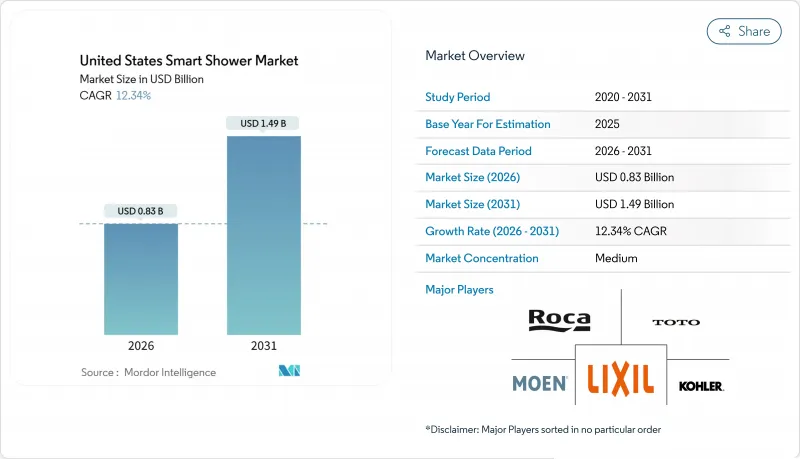
This report is Segmented by Type (Smart Shower Control, Smart Shower), End User (Residential, Commercial, Hotels & Restaurants, Spas & Wellness Centers), Distribution Channel (Multi-Brand Stores, Exclusive Stores), and Geography (Northeast, Midwest, South, West ). The Market Forecasts are Provided in Terms of Value (USD).
Global United States Smart Shower Market Trends and Insights
Rising Adoption of Smart-Home Automation
Connected devices continue to move deeper into residential spaces, and bathroom upgrades are beginning to reflect the same convenience, comfort, and monitoring that consumers already expect in living rooms and kitchens. In 2025, 63 % of United States households reported owning at least one smart home device, with 72 million smart speakers in use, reflecting strong penetration of connected technology and voice assistants. Smart interactions are widespread, with 68 % of users initiating commands via voice, while mobile apps are used by 84 % of smart homeowners to control devices. These adoption trends show that automation is becoming mainstream in United States homes, providing a foundation for integrated solutions such as smart showers. The United States smart shower market benefits when households adopt bundled smart-bathroom suites that align digital showers with leak monitoring and centralized app control for a consistent daily routine. Visualization and remote management tools reduce purchase friction by letting buyers understand features, plan installations, and compare options before committing to a major retrofit in the United States smart shower market. Commercial restrooms are reinforcing this behavior shift through facility-grade IoT that monitors activity and replenishment levels, which normalizes the use of sensors and data in hygiene environments. As water and energy programs recognize verified conservation features in qualifying products, eligibility for rebates creates a policy bridge that links smart functionality to measurable savings in the United States smart shower market.
Increasing Water-Conservation Regulations & Incentives
Water-conservation regulations and incentive programs are a key driver of the United States' smart shower market. Federal standards, including benchmarks established by the EPA's WaterSense program, guide manufacturers in designing efficient products and help consumers compare water-saving features. WaterSense partners with over 2,200 utilities, manufacturers, builders, and retailers to promote high-efficiency fixtures, including smart showerheads and monitoring systems. Since its inception, WaterSense-labeled products have saved 8.7 trillion gallons of water, with 1.2 trillion gallons saved in 2023 alone, and delivered approximately USD 207 billion in combined water and energy savings. The program now certifies more than 45,000 product models, giving homeowners wide options for upgrades. State and local rebate programs, particularly in Western regions, reduce upfront costs and make smart water-monitoring devices more accessible. Utilities distribute or rebate thousands of efficient fixtures directly to residents, encouraging household investment in efficiency upgrades. Insurance companies are also promoting adoption by subsidizing smart monitoring and automatic shutoff systems, which reduce risk and loss exposure.
High Upfront Product & Installation Cost
High upfront product and installation costs remain a key restraint in the United States smart shower market. Full-featured digital shower systems often carry significant price premiums compared with conventional fixtures, particularly when they include digital valves, multi-outlet controls, steam, and synchronized lighting and audio. Payback periods vary by location because water rates and local incentive programs differ, making savings more compelling in high-rate markets with rebates for WaterSense-aligned components. Installation costs can be high, especially when electrical connections, upgraded Wi-Fi coverage, or compliance with local plumbing codes in older homes are required. Insurance programs and value-chain partners are helping reduce these costs by offering device subsidies, premium discounts, and promotional offers tied to verified leak monitoring or automatic shutoff.
Other drivers and restraints analyzed in the detailed report include:
- Growth in Premium Housing Renovations
- Advances in IoT & Voice-Control Integrations
- Data-Privacy & Cybersecurity Concerns
For complete list of drivers and restraints, kindly check the Table Of Contents.
Segment Analysis
Smart Shower Control units secured a 53.37% share in 2025, reflecting early consumer preference for incremental upgrades that preserve existing fixtures while adding precise digital temperature and flow control. This format suits renovators who replace valves first and defer showerhead and body spray changes, which keeps upfront budgets contained in the United States smart shower market. Integrated Smart Shower systems that bundle leak detection, flow monitoring, and auto-shutoff capabilities are forecast to grow at a 17.49% CAGR through 2031 as insurance alignment and rebates reward systems that can verify water savings and prevent damage. Carrier programs that promote or require approved leak-monitoring solutions also shift behavior toward integrated setups that address loss prevention and user comfort in one package. As digital showering moves from niche to mainstream, combined control-and-monitor solutions will continue to gain traction among households that value both convenience and risk mitigation in the United States smart shower market.
Category lines are set to blur as vendors elevate base specifications, making leak analytics and app-based scheduling core to most launches while reserving multi-sensory upgrades for premium tiers. WaterSense-aligned components remain essential for utility programs, which reinforces attention to measured flow performance and setpoint stability in the United States smart shower market. In parallel, regional code requirements, installer training, and reliable Wi-Fi connectivity are becoming gating factors for sustained adoption at scale. Vendors that support clean onboarding, robust connectivity, and long-term firmware updates will hold an advantage as integrated systems replace control-only entries over the forecast period. This evolution reflects a broader transition where the United States smart shower market shifts from single-device improvements to ecosystem solutions that combine safety, conservation, and daily personalization.
Complete Report Scope:
- By Type
- Smart Shower Control
- Smart Shower
- By End User
- Residential
- Commercial
- Hotels & Restaurants
- Spas & Wellness Centers
- By Distribution Channel
- Multi-Brand Stores
- Exclusive Stores
- By Geography
- Northeast
- Midwest
- South
- West
Geography Analysis
The South United States region held 31.39% of 2025 revenue, reflecting population inflows, a broad housing pipeline, and steady renovation activity across sunbelt markets. In many Southern metros, residential development and the large base of existing homes support both premium remodels and mid-price smart upgrades in the United States smart shower market. Insurance-led incentives and better broadband infrastructure are also improving readiness for connected fixtures and real-time monitoring in more counties and suburban communities. Code requirements vary by jurisdiction and can add components to the bill of materials, but they also standardize performance expectations for new builds and major remodels. As carriers and builders align on leak prevention and verifiable conservation, adoption will continue to benefit from risk reduction and lifecycle cost savings.
The West United States region is projected to grow at a 12.39% CAGR, supported by aggressive water conservation policies, high-income technology hubs, and sustained interest in sustainability-led renovations. Eligible households can access rebates from major water agencies for qualified flow monitors, which amplifies the appeal of integrated smart shower systems that verify savings alongside comfort in the United States smart shower market. Cities and utilities are also advancing complementary programs that encourage outdoor water savings, which indirectly unlock household budgets for in-home conservation upgrades. Adoption of recirculating systems that can cut water usage by up to 80% shows how Western consumers weigh upfront investment against long-term resilience and environmental gain. These dynamics contribute to a clear runway for growth while shaping specifications that emphasize monitoring, automation, and resource efficiency.
Midwestern and Northeastern states trail the West on rebates and code-driven pull but still show distinct pathways to adoption based on property age, freeze risk, and coastal income patterns. Older housing stock can raise retrofit costs by requiring electrical upgrades and plumbing adjustments before digital valves and hubs can operate reliably in the United States smart shower market. In freeze-prone markets, carrier emphasis on leak prevention and pipe protection strengthens the case for whole-home monitoring and automatic shutoff. Coastal metros in the Northeast add premium demand from higher-income households that invest in wellness features and digital control consistency across bathroom fixtures. Regional distributors and installers will continue to tailor offers to local code expectations and buyer priorities, while retailers leverage WaterSense guidance to simplify product selection.
List of Companies Covered in this Report:
- Kohler Co.
- Moen (Fortune Brands Innovations)
- LIXIL Group (American Standard, Grohe)
- Delta Faucet (Masco Corp.)
- Hansgrohe SE
- Roca Sanitario
- Brizo
- Gessi S.p.A.
- Jaquar Group
- Aqualisa
- Jacuzzi Brands LLC
- RainStick Shower
- U by Moen
- Hydrao
- Vigo Industries
- Speakman
- Ebb-And-Flow Smart Showers
- WaterHawk
- DreamSpa
- Methven USA
Additional Benefits:
- The market estimate (ME) sheet in Excel format
- 3 months of analyst support
TABLE OF CONTENTS
1 Introduction
- 1.1 Study Assumptions & Market Definition
- 1.2 Scope of the Study
2 Research Methodology
3 Executive Summary
4 Market Landscape
- 4.1 Market Overview
- 4.2 Market Drivers
- 4.2.1 Rising adoption of smart-home automation
- 4.2.2 Increasing water-conservation regulations & incentives
- 4.2.3 Growth in premium housing renovations
- 4.2.4 Advances in IoT & voice-control integrations
- 4.2.5 Insurance rebates for leak-detection enabled fixtures
- 4.2.6 Wellness-oriented ambient features (aroma, chromo)
- 4.3 Market Restraints
- 4.3.1 High upfront product & installation cost
- 4.3.2 Data-privacy & cybersecurity concerns
- 4.3.3 Interoperability gaps across smart-home ecosystems
- 4.3.4 Plumbing-code variance across municipalities
- 4.4 Value / Supply-Chain Analysis
- 4.5 Regulatory Landscape
- 4.6 Technological Outlook
- 4.7 Porter's Five Forces Analysis
- 4.7.1 Threat of New Entrants
- 4.7.2 Bargaining Power of Suppliers
- 4.7.3 Bargaining Power of Buyers
- 4.7.4 Threat of Substitutes
- 4.7.5 Competitive Rivalry
5 Market Size & Growth Forecasts (Value, USD)
- 5.1 By Type
- 5.1.1 Smart Shower Control
- 5.1.2 Smart Shower
- 5.2 By End User
- 5.2.1 Residential
- 5.2.2 Commercial
- 5.2.3 Hotels & Restaurants
- 5.2.4 Spas & Wellness Centers
- 5.3 By Distribution Channel
- 5.3.1 Multi-Brand Stores
- 5.3.2 Exclusive Stores
- 5.4 By Geography
- 5.4.1 Northeast
- 5.4.2 Midwest
- 5.4.3 South
- 5.4.4 West
6 Competitive Landscape
- 6.1 Market Concentration
- 6.2 Strategic Moves
- 6.3 Market Share Analysis
- 6.4 Company Profiles (includes Global-level Overview, Market-level Overview, Core Segments, Financials as available, Strategic Information, Market Rank/Share for key companies, Products & Services, and Recent Developments)
- 6.4.1 Kohler Co.
- 6.4.2 Moen (Fortune Brands Innovations)
- 6.4.3 LIXIL Group (American Standard, Grohe)
- 6.4.4 Delta Faucet (Masco Corp.)
- 6.4.5 Hansgrohe SE
- 6.4.6 Roca Sanitario
- 6.4.7 Brizo
- 6.4.8 Gessi S.p.A.
- 6.4.9 Jaquar Group
- 6.4.10 Aqualisa
- 6.4.11 Jacuzzi Brands LLC
- 6.4.12 RainStick Shower
- 6.4.13 U by Moen
- 6.4.14 Hydrao
- 6.4.15 Vigo Industries
- 6.4.16 Speakman
- 6.4.17 Ebb-And-Flow Smart Showers
- 6.4.18 WaterHawk
- 6.4.19 DreamSpa
- 6.4.20 Methven USA
7 Market Opportunities & Future Outlook
- 7.1 AI-driven water-management & analytics services
- 7.2 Retrofit-friendly smart-shower kits for existing bathrooms

