
PUBLISHER: Aviation & Defense Market Reports (A&D) | PRODUCT CODE: 1936044

PUBLISHER: Aviation & Defense Market Reports (A&D) | PRODUCT CODE: 1936044
Global Defense Fighter Aircraft Boarding Ladders Market 2026-2036
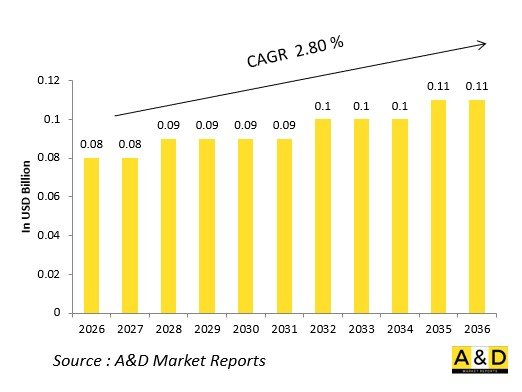
The Global Defense Fighter Aircraft Boarding Ladders Market is estimated at USD 0.08 billion in 2026, projected to grow to USD 0.11 billion by 2036 at a Compound Annual Growth Rate (CAGR) of 2.80% over the forecast period 2026-2036.
Introduction
The global Defense Fighter Aircraft Boarding Ladders market plays a vital role in enhancing operational readiness for air forces worldwide. These specialized ladders provide essential access solutions for fighter jets, ensuring pilots can board and disembark swiftly during missions, maintenance, or rapid deployments. As defense forces prioritize agility in contested environments, demand surges for ladders that combine durability, portability, and ease of use.
Market evolution reflects broader trends in aerospace sustainment, where boarding ladders evolve from basic mechanical aids to smart systems integrated with aircraft platforms. Manufacturers innovate with corrosion-resistant alloys, composite materials, and modular designs that adapt to various fighter models, from legacy platforms to next-generation stealth aircraft. Emphasis on reduced weight minimizes logistical burdens, while foldable and telescopic mechanisms accelerate setup in austere airfields.
Geopolitical tensions and modernization programs drive procurement, with air forces seeking ladders compatible with advanced avionics and sensor suites. Supply chains emphasize ruggedization against extreme weather and electromagnetic interference. Competitive landscapes feature established aerospace firms alongside specialized suppliers, fostering collaborations for customized solutions. This market underscores the critical link between ground support equipment and aerial superiority, promising sustained growth amid rising defense budgets and technological convergence.
Technology Impact in Defense Fighter Aircraft Boarding Ladders
Technological advancements profoundly shape the Defense Fighter Aircraft Boarding Ladders sector, transforming simple access tools into high-performance assets. Integration of lightweight composites and carbon fiber reduces overall mass, enabling faster deployment without compromising structural integrity under high winds or rough terrain. Automation emerges as a game-changer, with hydraulic or electric actuators allowing one-person operation and automatic stabilization sensors that adjust to aircraft tilt.
Smart materials, such as shape-memory alloys, enable self-deploying ladders that respond to environmental cues, minimizing human error in high-stress scenarios. Embedded IoT sensors monitor wear, predict maintenance needs, and transmit data to base stations, aligning with predictive logistics trends in modern air forces. Compatibility with fighter jet canopies incorporates non-slip surfaces treated with advanced coatings to prevent icing or chemical exposure.
Additive manufacturing accelerates prototyping of custom ladder segments, tailored to specific aircraft variants like multirole fighters or lightweight interceptors. Electromagnetic shielding protects against directed-energy threats, while modular designs facilitate rapid reconfiguration for different mission profiles. These innovations enhance sortie generation rates, reduce turnaround times, and bolster safety protocols. Ultimately, technology elevates boarding ladders from ancillary gear to integral components of networked air operations, driving efficiency in contested airspace.
Key Drivers in Defense Fighter Aircraft Boarding Ladders
Several forces propel the Defense Fighter Aircraft Boarding Ladders market forward. Fleet modernization stands paramount, as air forces upgrade aging fighters to advanced platforms requiring precise, compatible access solutions. This shift demands ladders that interface seamlessly with stealth designs, low-observable coatings, and elevated fuselages, spurring innovation in adjustable heights and stealth-compatible materials.
Operational tempo escalates drivers, with doctrines emphasizing rapid deployment and high sortie rates in peer-adversary scenarios. Ladders must support quick boarding in forward operating bases, prompting designs focused on portability, one-hand deployment, and resistance to sand, salt, or arctic conditions. Logistics optimization fuels demand, as lighter ladders cut transport costs and integrate with air-mobile sustainment chains.
Geopolitical realignments intensify procurement, particularly in regions bolstering airpower deterrence. Export-oriented production benefits from allied interoperability standards, encouraging standardized ladder interfaces. Sustainability mandates push for recyclable composites and low-maintenance finishes, aligning with green procurement policies. Supply chain resilience, post-disruptions, drives localized manufacturing and dual-sourcing strategies.
Human factors, including pilot safety and reduced injury risks, underscore ergonomic designs with anti-fatigue steps and integrated lighting. Regulatory compliance for crashworthiness and fire resistance further shapes offerings. Collectively, these drivers position boarding ladders as enablers of air dominance, intertwining with broader aerospace sustainment ecosystems.
Regional Trends in Defense Fighter Aircraft Boarding Ladders
Regional dynamics reveal distinct trends in the Defense Fighter Aircraft Boarding Ladders market. In Asia-Pacific, rapid air force expansion dominates, with emphasis on indigenous production to support growing fleets of multirole fighters. Nations prioritize rugged ladders for tropical climates and island-hopping operations, fostering local suppliers integrated into offset agreements.
North America leads in technological sophistication, where mature ecosystems drive smart, sensor-equipped ladders compatible with fifth-generation aircraft. Focus shifts to expeditionary capabilities, with designs optimized for carrier decks and austere strips amid great-power competition.
Europe emphasizes standardization through collaborative programs, yielding modular ladders interoperable across NATO fleets. Harsh weather adaptations, like de-icing mechanisms, gain traction, alongside sustainability-focused materials from regional composites hubs.
Middle East trends center on high-mobility solutions for desert environments, with demand for heat-resistant, dust-proof ladders tied to fighter acquisitions from global primes. Latin America sees steady sustainment-driven procurement, upgrading legacy platforms with cost-effective, lightweight designs.
Africa's market evolves around peacekeeping and counter-insurgency needs, favoring portable, low-maintenance ladders for bush airstrips. Cross-regional supply chains converge on advanced materials, while export controls shape technology transfers. These patterns highlight tailored innovations meeting diverse threat landscapes.
Key Defense Fighter Aircraft Boarding Ladders Programs
Prominent programs highlight the strategic importance of Defense Fighter Aircraft Boarding Ladders. Next-generation fighter sustainment initiatives integrate advanced ladders with stealth platforms, featuring automated deployment and biometric locks for secure access. Collaborative developments yield universal kits adaptable to multiple airframes, streamlining logistics for multinational exercises.
Navalized variants emerge in carrier strike group enhancements, with corrosion-proof, stowable ladders designed for deck operations amid rough seas. Expeditionary air wing programs prioritize air-transportable models that erect in seconds, supporting distributed lethality concepts.
Upgrade packages for legacy fleets retrofit smart ladders with vibration-dampening and load sensors, extending service life while boosting safety. Indigenous programs in emerging powers develop cost-optimized designs using local alloys, aligned with self-reliance goals.
Simulation-integrated testing validates ladders under extreme scenarios, from electromagnetic pulses to blast overpressures. Joint ventures between OEMs and specialists produce hybrid electro-mechanical systems, reducing manpower needs. Export-oriented programs bundle ladders with aircraft deals, ensuring compatibility and training packages.
These efforts underscore ladders' role in mission readiness, intertwining with digital twins for virtual prototyping and fleet management. Ongoing prototypes explore drone-compatible mini-ladders, foreshadowing unmanned trends.
Table of Contents
Defense Fighter Aircraft Boarding Ladders Market - Table of Contents
Defense Fighter Aircraft Boarding Ladders Market Report Definition
Defense Fighter Aircraft Boarding Ladders Market Segmentation
By Integration Type
By Deployment Mechanism
By Material
By Aircraft Type
By Stowage Location
Defense Fighter Aircraft Boarding Ladders Market Analysis for next 10 Years
The 10-year Defense Fighter Aircraft Boarding Ladders Market analysis would give a detailed overview of Defense Fighter Aircraft Boarding Ladders Market growth, changing dynamics, technology adoption overviews and the overall market attractiveness is covered in this chapter.
Market Technologies of Defense Fighter Aircraft Boarding Ladders Market
This segment covers the top 10 technologies that is expected to impact this market and the possible implications these technologies would have on the overall market.
Global Defense Fighter Aircraft Boarding Ladders Market Forecast
The 10-year Defense Fighter Aircraft Boarding Ladders Market forecast of this market is covered in detailed across the segments which are mentioned above.
Regional Defense Fighter Aircraft Boarding Ladders Market Trends & Forecast
The regional counter drone market trends, drivers, restraints and Challenges of this market, the Political, Economic, Social and Technology aspects are covered in this segment. The market forecast and scenario analysis across regions are also covered in detailed in this segment. The last part of the regional analysis includes profiling of the key companies, supplier landscape and company benchmarking. The current market size is estimated based on the normal scenario.
North America
Drivers, Restraints and Challenges
PEST
Market Forecast & Scenario Analysis
Key Companies
Supplier Tier Landscape
Company Benchmarking
Europe
Middle East
APAC
South America
Country Analysis of Defense Fighter Aircraft Boarding Ladders Market
This chapter deals with the key defense programs in this market, it also covers the latest news and patents which have been filed in this market. Country level 10 year market forecast and scenario analysis are also covered in this chapter.
US
Defense Programs
Latest News
Patents
Current levels of technology maturation in this market
Market Forecast & Scenario Analysis
Canada
Italy
France
Germany
Netherlands
Belgium
Spain
Sweden
Greece
Australia
South Africa
India
China
Russia
South Korea
Japan
Malaysia
Singapore
Brazil
Opportunity Matrix for Defense Fighter Aircraft Boarding Ladders Market
The opportunity matrix helps the readers understand the high opportunity segments in this market.
Expert Opinions on Defense Fighter Aircraft Boarding Ladders Market Report
Hear from our experts their opinion of the possible analysis for this market.
Conclusions
About Aviation and Defense Market Reports
List of Tables
- Table 1: 10 Year Market Outlook, 2026-2036
- Table 2: Drivers, Impact Analysis, North America
- Table 3: Restraints, Impact Analysis, North America
- Table 4: Challenges, Impact Analysis, North America
- Table 5: Drivers, Impact Analysis, Europe
- Table 6: Restraints, Impact Analysis, Europe
- Table 7: Challenges, Impact Analysis, Europe
- Table 8: Drivers, Impact Analysis, Middle East
- Table 9: Restraints, Impact Analysis, Middle East
- Table 10: Challenges, Impact Analysis, Middle East
- Table 11: Drivers, Impact Analysis, APAC
- Table 12: Restraints, Impact Analysis, APAC
- Table 13: Challenges, Impact Analysis, APAC
- Table 14: Drivers, Impact Analysis, South America
- Table 15: Restraints, Impact Analysis, South America
- Table 16: Challenges, Impact Analysis, South America
- Table 17: Scenario Analysis, Scenario 1, By Region, 2026-2036
- Table 18: Scenario Analysis, Scenario 1, By Platform, 2026-2036
- Table 19: Scenario Analysis, Scenario 1, By Integration , 2026-2036
- Table 20: Scenario Analysis, Scenario 2, By Region, 2026-2036
- Table 21: Scenario Analysis, Scenario 2, By Platform, 2026-2036
- Table 22: Scenario Analysis, Scenario 2, By Integration , 2026-2036
List of Figures
- Figure 1: Global Fighter Aircraft Boarding Ladders Market Forecast, 2026-2036
- Figure 2: Global Fighter Aircraft Boarding Ladders Market Forecast, By Region, 2026-2036
- Figure 3: Global Fighter Aircraft Boarding Ladders Market Forecast, By Platform, 2026-2036
- Figure 4: Global Fighter Aircraft Boarding Ladders Market Forecast, By Integration , 2026-2036
- Figure 5: North America, Fighter Aircraft Boarding Ladders Market, Forecast, 2026-2036
- Figure 6: Europe, Fighter Aircraft Boarding Ladders Market, Forecast, 2026-2036
- Figure 7: Middle East, Fighter Aircraft Boarding Ladders Market, Forecast, 2026-2036
- Figure 8: APAC, Fighter Aircraft Boarding Ladders Market, Forecast, 2026-2036
- Figure 9: South America, Fighter Aircraft Boarding Ladders Market, Forecast, 2026-2036
- Figure 10: United States, Fighter Aircraft Boarding Ladders Market, Technology Maturation, 2026-2036
- Figure 11: United States, Fighter Aircraft Boarding Ladders Market, Forecast, 2026-2036
- Figure 12: Canada, Fighter Aircraft Boarding Ladders Market, Technology Maturation, 2026-2036
- Figure 13: Canada, Fighter Aircraft Boarding Ladders Market, Forecast, 2026-2036
- Figure 14: Italy, Fighter Aircraft Boarding Ladders Market, Technology Maturation, 2026-2036
- Figure 15: Italy, Fighter Aircraft Boarding Ladders Market, Market Forecast, 2026-2036
- Figure 16: France, Fighter Aircraft Boarding Ladders Market, Technology Maturation, 2026-2036
- Figure 17: France, Fighter Aircraft Boarding Ladders Market, Market Forecast, 2026-2036
- Figure 18: Germany, Fighter Aircraft Boarding Ladders Market, Technology Maturation, 2026-2036
- Figure 19: Germany, Fighter Aircraft Boarding Ladders Market, Market Forecast, 2026-2036
- Figure 20: Netherlands, Fighter Aircraft Boarding Ladders Market, Technology Maturation, 2026-2036
- Figure 21: Netherlands, Fighter Aircraft Boarding Ladders Market, Market Forecast, 2026-2036
- Figure 22: Belgium, Fighter Aircraft Boarding Ladders Market, Technology Maturation, 2026-2036
- Figure 23: Belgium, Fighter Aircraft Boarding Ladders Market, Market Forecast, 2026-2036
- Figure 24: Spain, Fighter Aircraft Boarding Ladders Market, Technology Maturation, 2026-2036
- Figure 25: Spain, Fighter Aircraft Boarding Ladders Market, Market Forecast, 2026-2036
- Figure 26: Sweden, Fighter Aircraft Boarding Ladders Market, Technology Maturation, 2026-2036
- Figure 27: Sweden, Fighter Aircraft Boarding Ladders Market, Market Forecast, 2026-2036
- Figure 28: Brazil, Fighter Aircraft Boarding Ladders Market, Technology Maturation, 2026-2036
- Figure 29: Brazil, Fighter Aircraft Boarding Ladders Market, Market Forecast, 2026-2036
- Figure 30: Australia, Fighter Aircraft Boarding Ladders Market, Technology Maturation, 2026-2036
- Figure 31: Australia, Fighter Aircraft Boarding Ladders Market, Market Forecast, 2026-2036
- Figure 32: India, Fighter Aircraft Boarding Ladders Market, Technology Maturation, 2026-2036
- Figure 33: India, Fighter Aircraft Boarding Ladders Market, Market Forecast, 2026-2036
- Figure 34: China, Fighter Aircraft Boarding Ladders Market, Technology Maturation, 2026-2036
- Figure 35: China, Fighter Aircraft Boarding Ladders Market, Market Forecast, 2026-2036
- Figure 36: Saudi Arabia, Fighter Aircraft Boarding Ladders Market, Technology Maturation, 2026-2036
- Figure 37: Saudi Arabia, Fighter Aircraft Boarding Ladders Market, Market Forecast, 2026-2036
- Figure 38: South Korea, Fighter Aircraft Boarding Ladders Market, Technology Maturation, 2026-2036
- Figure 39: South Korea, Fighter Aircraft Boarding Ladders Market, Market Forecast, 2026-2036
- Figure 40: Japan, Fighter Aircraft Boarding Ladders Market, Technology Maturation, 2026-2036
- Figure 41: Japan, Fighter Aircraft Boarding Ladders Market, Market Forecast, 2026-2036
- Figure 42: Malaysia, Fighter Aircraft Boarding Ladders Market, Technology Maturation, 2026-2036
- Figure 43: Malaysia, Fighter Aircraft Boarding Ladders Market, Market Forecast, 2026-2036
- Figure 44: Singapore, Fighter Aircraft Boarding Ladders Market, Technology Maturation, 2026-2036
- Figure 45: Singapore, Fighter Aircraft Boarding Ladders Market, Market Forecast, 2026-2036
- Figure 46: United Kingdom, Fighter Aircraft Boarding Ladders Market, Technology Maturation, 2026-2036
- Figure 47: United Kingdom, Fighter Aircraft Boarding Ladders Market, Market Forecast, 2026-2036
- Figure 48: Opportunity Analysis, Fighter Aircraft Boarding Ladders Market, By Region (Cumulative Market), 2026-2036
- Figure 49: Opportunity Analysis, Fighter Aircraft Boarding Ladders Market, By Region (CAGR), 2026-2036
- Figure 50: Opportunity Analysis, Fighter Aircraft Boarding Ladders Market, By (Cumulative Market), 2026-2036
- Figure 51: Opportunity Analysis, Fighter Aircraft Boarding Ladders Market, By Platform(CAGR), 2026-2036
- Figure 52: Opportunity Analysis, Fighter Aircraft Boarding Ladders Market, By Integration (Cumulative Market), 2026-2036
- Figure 53: Opportunity Analysis, Fighter Aircraft Boarding Ladders Market, By Integration (CAGR), 2026-2036
- Figure 54: Scenario Analysis, Fighter Aircraft Boarding Ladders Market, Cumulative Market, 2026-2036
- Figure 55: Scenario Analysis, Fighter Aircraft Boarding Ladders Market, Global Market, 2026-2036
- Figure 56: Scenario 1, Fighter Aircraft Boarding Ladders Market, Total Market, 2026-2036
- Figure 57: Scenario 1, Fighter Aircraft Boarding Ladders Market, By Region, 2026-2036
- Figure 58: Scenario 1, Fighter Aircraft Boarding Ladders Market, By Platform, 2026-2036
- Figure 59: Scenario 1, Fighter Aircraft Boarding Ladders Market, By Integration , 2026-2036
- Figure 60: Scenario 2, Fighter Aircraft Boarding Ladders Market, Total Market, 2026-2036
- Figure 61: Scenario 2, Fighter Aircraft Boarding Ladders Market, By Region, 2026-2036
- Figure 62: Scenario 2, Fighter Aircraft Boarding Ladders Market, By Platform, 2026-2036
- Figure 63: Scenario 2, Fighter Aircraft Boarding Ladders Market, By Integration , 2026-2036
- Figure 64: Company Benchmark, Fighter Aircraft Boarding Ladders Market, 2026-2036

