
PUBLISHER: Aviation & Defense Market Reports (A&D) | PRODUCT CODE: 1966918

PUBLISHER: Aviation & Defense Market Reports (A&D) | PRODUCT CODE: 1966918
Global Defense Active Protection System (APS) Radars Market 2026-2036
Global Defense Active Protection System (APS) Radars Market
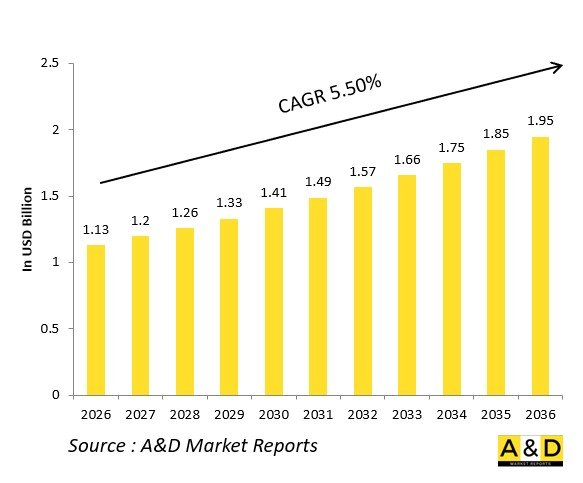
The Global Defense Active Protection System (APS) Radars Market is estimated at USD 1.13 billion in 2026, projected to grow to USD 1.95 billion by 2036 at a Compound Annual Growth Rate (CAGR) of 5.50% over the forecast period 2026-2036.
Introduction: Global Defense Active Protection System (APS) Radars Market
The Global Defense Active Protection System Radars Market is emerging as a critical enabler of armored vehicle survivability in modern combat environments. APS radars serve as the sensing backbone of active protection systems, detecting, tracking, and classifying incoming threats before countermeasures are deployed. As anti-armor weapons become more agile and precise, militaries are shifting from passive protection toward proactive defensive solutions. APS radars support this transition by providing rapid situational awareness and high-confidence threat discrimination. Defense forces are integrating these radars across a range of platforms, including main battle tanks and combat vehicles, to enhance crew safety and mission effectiveness. Industry focus is centered on compact designs, reliability in harsh environments, and seamless integration with vehicle electronics. The growing emphasis on layered defense architectures positions APS radars as a cornerstone technology in future armored warfare strategies worldwide.
Technology Impact in Defense Active Protection System (APS) Radars
Technological innovation is significantly shaping the capabilities of defense active protection system radars. Advances in radar signal processing, digital beamforming, and sensor fusion have improved detection accuracy and reduced reaction time against fast-moving threats. Modern APS radars are designed to operate effectively in cluttered environments, maintaining performance despite terrain obstacles and electronic interference. Improvements in solid-state electronics and antenna design support compact, lightweight systems suitable for diverse vehicle platforms. Integration with onboard computing and command systems enables real-time data sharing and automated response coordination. Enhanced software algorithms allow precise threat classification, minimizing false alarms and collateral risk. Additionally, increased resistance to jamming and cyber interference strengthens operational reliability. These technological developments ensure APS radars remain adaptable to evolving threat landscapes while supporting the broader shift toward intelligent and autonomous vehicle protection systems.
Key Drivers in Defense Active Protection System (APS) Radars
Several key factors are driving demand for defense active protection system radars. The rapid evolution of anti-tank guided missiles and other precision threats has heightened the need for early detection and rapid response capabilities. Military modernization programs increasingly prioritize survivability technologies that offer active defense rather than relying solely on passive armor. Operational experience has demonstrated the effectiveness of APS solutions in reducing vehicle losses and protecting personnel. Growing emphasis on networked battlefield awareness further supports adoption of radar-based protection systems. Defense procurement strategies also favor modular solutions that can be adapted across different platforms. Investment in domestic defense technologies and collaboration with specialized sensor manufacturers accelerate development and deployment. Together, these drivers reflect a broader shift toward intelligent protection systems that enhance battlefield resilience and operational confidence for armored forces.
Regional Trends in Defense Active Protection System (APS) Radars
Regional trends in the defense APS radars market are influenced by distinct security environments and defense priorities. North America focuses on advanced sensor integration and next-generation vehicle protection programs. European defense forces emphasize interoperability and survivability upgrades for armored fleets operating in coalition environments. In the Asia-Pacific region, rising defense preparedness and platform modernization initiatives are driving interest in active protection technologies. Middle Eastern countries prioritize APS radars due to persistent exposure to guided and unguided anti-armor threats. Emerging defense markets are gradually adopting APS radar solutions through international partnerships and technology transfer arrangements. Regional industrial capabilities and government support for indigenous defense manufacturing shape system design and sourcing decisions. Overall, regional adoption patterns demonstrate growing global recognition of APS radars as essential components of modern armored vehicle defense strategies.
Key Defense Active Protection System (APS) Radars Program
Key defense APS radar programs focus on enhancing threat detection and response capabilities across armored vehicle fleets. Many vehicle upgrade initiatives include the integration of APS radars to complement existing protection systems. Defense agencies collaborate closely with radar technology providers to tailor solutions for specific operational requirements. Programs often emphasize scalability, allowing radars to be deployed across different vehicle classes with minimal modification. Testing and evaluation efforts prioritize reliability under combat conditions and compatibility with countermeasure systems. Research initiatives support the development of next-generation radar architectures with improved coverage and faster processing. Domestic production programs strengthen supply chain resilience and ensure long-term sustainment. Export-oriented initiatives also promote defense cooperation among allied nations. Collectively, these programs highlight the strategic importance of APS radars in safeguarding armored forces against evolving battlefield threats.
Table of Contents
Global Defense Active Protection System (APS) Radars Market - Table of Contents
Global Defense Active Protection System (APS) Radars Market Report Definition
Global Defense Active Protection System (APS) Radars Market Segmentation
By Region
By Platform
By Radar Type
By Range
Global Defense Active Protection System (APS) Radars Market Analysis for next 10 Years
The 10-year Global Defense Active Protection System (APS) Radars Market analysis would give a detailed overview of Global Defense Active Protection System (APS) Radars Market growth, changing dynamics, technology adoption overviews and the overall market attractiveness is covered in this chapter.
Market Technologies of Global Defense Active Protection System (APS) Radars Market
This segment covers the top 10 technologies that is expected to impact this market and the possible implications these technologies would have on the overall market.
Global Defense Active Protection System (APS) Radars Market Forecast
The 10-year Global Defense Active Protection System (APS) Radars Market forecast of this market is covered in detailed across the segments which are mentioned above.
Regional Global Defense Active Protection System (APS) Radars Market Trends & Forecast
The regional counter drone market trends, drivers, restraints and Challenges of this market, the Political, Economic, Social and Technology aspects are covered in this segment. The market forecast and scenario analysis across regions are also covered in detailed in this segment. The last part of the regional analysis includes profiling of the key companies, supplier landscape and company benchmarking. The current market size is estimated based on the normal scenario.
North America
Drivers, Restraints and Challenges
PEST
Market Forecast & Scenario Analysis
Key Companies
Supplier Tier Landscape
Company Benchmarking
Europe
Middle East
APAC
South America
Country Analysis of Global Defense Active Protection System (APS) Radars Market
This chapter deals with the key defense programs in this market, it also covers the latest news and patents which have been filed in this market. Country level 10 year market forecast and scenario analysis are also covered in this chapter.
US
Defense Programs
Latest News
Patents
Current levels of technology maturation in this market
Market Forecast & Scenario Analysis
Canada
Italy
France
Germany
Netherlands
Belgium
Spain
Sweden
Greece
Australia
South Africa
India
China
Russia
South Korea
Japan
Malaysia
Singapore
Brazil
Opportunity Matrix for Global Defense Active Protection System (APS) Radars Market
The opportunity matrix helps the readers understand the high opportunity segments in this market.
Expert Opinions on Global Defense Active Protection System (APS) Radars Market Report
Hear from our experts their opinion of the possible analysis for this market.
Conclusions
About Aviation and Defense Market Reports
List of Tables
- Table 1: 10 Year Market Outlook, 2026-2036
- Table 2: Drivers, Impact Analysis, North America
- Table 3: Restraints, Impact Analysis, North America
- Table 4: Challenges, Impact Analysis, North America
- Table 5: Drivers, Impact Analysis, Europe
- Table 6: Restraints, Impact Analysis, Europe
- Table 7: Challenges, Impact Analysis, Europe
- Table 8: Drivers, Impact Analysis, Middle East
- Table 9: Restraints, Impact Analysis, Middle East
- Table 10: Challenges, Impact Analysis, Middle East
- Table 11: Drivers, Impact Analysis, APAC
- Table 12: Restraints, Impact Analysis, APAC
- Table 13: Challenges, Impact Analysis, APAC
- Table 14: Drivers, Impact Analysis, South America
- Table 15: Restraints, Impact Analysis, South America
- Table 16: Challenges, Impact Analysis, South America
- Table 17: Scenario Analysis, Scenario 1, By Radar Type, 2026-2036
- Table 18: Scenario Analysis, Scenario 1, By Platform, 2026-2036
- Table 19: Scenario Analysis, Scenario 1, By Region, 2026-2036
- Table 20: Scenario Analysis, Scenario 2, By Radar Type, 2026-2036
- Table 21: Scenario Analysis, Scenario 2, By Platform, 2026-2036
- Table 22: Scenario Analysis, Scenario 2, By Region, 2026-2036
List of Figures
- Figure 1: Global Defense Active Protection System (APS) Radars Market Forecast, 2026-2036
- Figure 2: Global Defense Active Protection System (APS) Radars Market Forecast, By Radar Type, 2026-2036
- Figure 3: Global Defense Active Protection System (APS) Radars Market Forecast, By Platform, 2026-2036
- Figure 4: Global Defense Active Protection System (APS) Radars Market Forecast, By Region, 2026-2036
- Figure 5: North America, Defense Active Protection System (APS) Radars Market, Forecast, 2026-2036
- Figure 6: Europe, Defense Active Protection System (APS) Radars Market, Forecast, 2026-2036
- Figure 7: Middle East, Defense Active Protection System (APS) Radars Market, Forecast, 2026-2036
- Figure 8: APAC, Defense Active Protection System (APS) Radars Market, Forecast, 2026-2036
- Figure 9: South America, Defense Active Protection System (APS) Radars Market, Forecast, 2026-2036
- Figure 10: United States, Defense Active Protection System (APS) Radars Market, Radar Type Maturation, 2026-2036
- Figure 11: United States, Defense Active Protection System (APS) Radars Market, Forecast, 2026-2036
- Figure 12: Canada, Defense Active Protection System (APS) Radars Market, Radar Type Maturation, 2026-2036
- Figure 13: Canada, Defense Active Protection System (APS) Radars Market, Forecast, 2026-2036
- Figure 14: Italy, Defense Active Protection System (APS) Radars Market, Radar Type Maturation, 2026-2036
- Figure 15: Italy, Defense Active Protection System (APS) Radars Market, Market Forecast, 2026-2036
- Figure 16: France, Defense Active Protection System (APS) Radars Market, Radar Type Maturation, 2026-2036
- Figure 17: France, Defense Active Protection System (APS) Radars Market, Market Forecast, 2026-2036
- Figure 18: Germany, Defense Active Protection System (APS) Radars Market, Radar Type Maturation, 2026-2036
- Figure 19: Germany, Defense Active Protection System (APS) Radars Market, Market Forecast, 2026-2036
- Figure 20: Netherlands, Defense Active Protection System (APS) Radars Market, Radar Type Maturation, 2026-2036
- Figure 21: Netherlands, Defense Active Protection System (APS) Radars Market, Market Forecast, 2026-2036
- Figure 22: Belgium, Defense Active Protection System (APS) Radars Market, Radar Type Maturation, 2026-2036
- Figure 23: Belgium, Defense Active Protection System (APS) Radars Market, Market Forecast, 2026-2036
- Figure 24: Spain, Defense Active Protection System (APS) Radars Market, Radar Type Maturation, 2026-2036
- Figure 25: Spain, Defense Active Protection System (APS) Radars Market, Market Forecast, 2026-2036
- Figure 26: Sweden, Defense Active Protection System (APS) Radars Market, Radar Type Maturation, 2026-2036
- Figure 27: Sweden, Defense Active Protection System (APS) Radars Market, Forecast, 2026-2036
- Figure 28: Brazil, Defense Active Protection System (APS) Radars Market, Radar Type Maturation, 2026-2036
- Figure 29: Brazil, Defense Active Protection System (APS) Radars Market, Market Forecast, 2026-2036
- Figure 30: Australia, Defense Active Protection System (APS) Radars Market, Radar Type Maturation, 2026-2036
- Figure 31: Australia, Defense Active Protection System (APS) Radars Market, Market Forecast, 2026-2036
- Figure 32: India, Defense Active Protection System (APS) Radars Market, Radar Type Maturation, 2026-2036
- Figure 33: India, Defense Active Protection System (APS) Radars Market, Market Forecast, 2026-2036
- Figure 34: China, Defense Active Protection System (APS) Radars Market, Radar Type Maturation, 2026-2036
- Figure 35: China, Defense Active Protection System (APS) Radars Market, Market Forecast, 2026-2036
- Figure 36: Saudi Arabia, Defense Active Protection System (APS) Radars Market, Radar Type Maturation, 2026-2036
- Figure 37: Saudi Arabia, Defense Active Protection System (APS) Radars Market, Market Forecast, 2026-2036
- Figure 38: South Korea, Defense Active Protection System (APS) Radars Market, Radar Type Maturation, 2026-2036
- Figure 39: South Korea, Defense Active Protection System (APS) Radars Market, Market Forecast, 2026-2036
- Figure 40: Japan, Defense Active Protection System (APS) Radars Market, Radar Type Maturation, 2026-2036
- Figure 41: Japan, Defense Active Protection System (APS) Radars Market, Market Forecast, 2026-2036
- Figure 42: Malaysia, Defense Active Protection System (APS) Radars Market, Radar Type Maturation, 2026-2036
- Figure 43: Malaysia, Defense Active Protection System (APS) Radars Market, Market Forecast, 2026-2036
- Figure 44: Singapore, Defense Active Protection System (APS) Radars Market, Radar Type Maturation, 2026-2036
- Figure 45: Singapore, Defense Active Protection System (APS) Radars Market, Market Forecast, 2026-2036
- Figure 46: United Kingdom, Defense Active Protection System (APS) Radars Market, Radar Type Maturation, 2026-2036
- Figure 47: United Kingdom, Defense Active Protection System (APS) Radars Market, Market Forecast, 2026-2036
- Figure 48: Opportunity Analysis, Defense Active Protection System (APS) Radars Market, By Radar Type(Cumulative Market), 2026-2036
- Figure 49: Opportunity Analysis, Defense Active Protection System (APS) Radars Market, By Radar Type(CAGR), 2026-2036
- Figure 50: Opportunity Analysis, Defense Active Protection System (APS) Radars Market, By (Cumulative Market), 2026-2036
- Figure 51: Opportunity Analysis, Defense Active Protection System (APS) Radars Market, By Platform(CAGR), 2026-2036
- Figure 52: Opportunity Analysis, Defense Active Protection System (APS) Radars Market, By Region (Cumulative Market), 2026-2036
- Figure 53: Opportunity Analysis, Defense Active Protection System (APS) Radars Market, By Region (CAGR), 2026-2036
- Figure 54: Scenario Analysis, Defense Active Protection System (APS) Radars Market, Cumulative Market, 2026-2036
- Figure 55: Scenario Analysis, Defense Active Protection System (APS) Radars Market, Global Market, 2026-2036
- Figure 56: Scenario 1, Defense Active Protection System (APS) Radars Market, Total Market, 2026-2036
- Figure 57: Scenario 1, Defense Active Protection System (APS) Radars Market, By Radar Type, 2026-2036
- Figure 58: Scenario 1, Defense Active Protection System (APS) Radars Market, By Platform, 2026-2036
- Figure 59: Scenario 1, Defense Active Protection System (APS) Radars Market, By Region, 2026-2036
- Figure 60: Scenario 2, Defense Active Protection System (APS) Radars Market, Total Market, 2026-2036
- Figure 61: Scenario 2, Defense Active Protection System (APS) Radars Market, By Radar Type, 2026-2036
- Figure 62: Scenario 2, Defense Active Protection System (APS) Radars Market, By Platform, 2026-2036
- Figure 63: Scenario 2, Defense Active Protection System (APS) Radars Market, By Region, 2026-2036
- Figure 64: Company Benchmark, Defense Active Protection System (APS) Radars Market, 2026-2036

