PUBLISHER: Aviation & Defense Market Reports (A&D) | PRODUCT CODE: 1996998

PUBLISHER: Aviation & Defense Market Reports (A&D) | PRODUCT CODE: 1996998
Global Defense Radar Power Supplies / Processors Market 2026-2036
Global Defense Radar Power Supplies / Processors Market
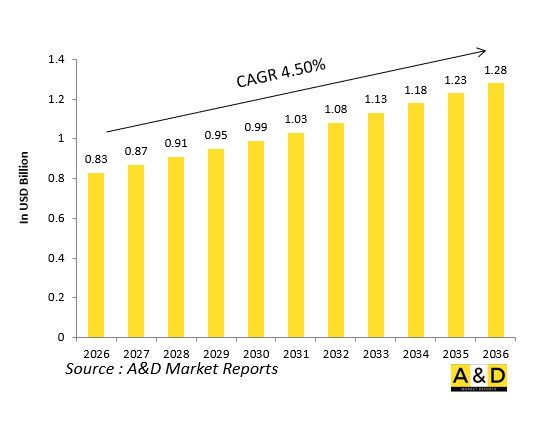
The Global Defense Radar Power Supplies / Processors Market is estimated at USD 0.83 billion in 2026, projected to grow to USD 1.28 billion by 2036 at a Compound Annual Growth Rate (CAGR) of 4.50% over the forecast period 2026-2036.
1. Introduction:
Defense radar power supplies and processors are mission critical subsystems that provide stable, high quality electrical power and advanced signal computation for military radar suites across airborne, naval, and ground platforms. These components enable active electronically scanned array (AESA), mechanically scanned, and multi mode radars to perform long range surveillance, tracking, fire control, electronic warfare sensing, and counter unmanned aircraft system functions.
Over the 2026-2036 horizon, the market is expanding alongside rising global demand for advanced radar systems, which increasingly rely on denser sensor arrays, higher transmit power apertures, and real time digital beamforming. Radar power supplies must deliver tightly regulated, high efficiency power within strict size, weight, and thermal constraints, particularly on aircraft and mobile platforms. Radar processors, meanwhile, handle complex signal processing algorithms, data fusion, and AI assisted tracking, transforming raw radar returns into actionable situational awareness and targeting data. Together, these subsystems are becoming central enablers of modern air defense, maritime surveillance, and integrated air battle management architectures.
2. Technology Impact in Defense Radar Power Supplies / Processors Market
Technology is fundamentally reshaping defense radar power supplies and processors, enabling more capable, compact, and energy efficient radar systems. Modern radar power supplies increasingly leverage high efficiency topologies, advanced thermal management techniques, and wide bandgap semiconductor devices such as gallium nitride (GaN) to support higher power transmit apertures within constrained platform envelopes. These supplies also integrate sophisticated power management and monitoring functions, allowing real time load balancing and fault detection across radar transmit/receive modules.
On the processing side, multi core and many core processors, field programmable gate arrays, and advanced signal processing architectures are enabling real time implementation of complex beamforming, clutter rejection, and tracking filters. Open standards such as VPX and modular open systems approaches (MOSA) allow rapid insertion of new processor and power conversion hardware without redesigning entire radar line replaceable units. Digital beamforming and parallel processing requirements are pushing demand for high throughput, low latency interconnect fabrics and compact, low power radar processors that can sit close to the antenna array. These advances collectively raise radar sensitivity, multi target capacity, and operational resilience while easing integration into space and power constrained platforms.
3. Key Drivers in Defense Radar Power Supplies / Processors Market
The defense radar power supply and processor market is driven by the global shift toward multi mission, network centric radar systems that must perform long range search, tracking, fire control, and electronic warfare sensing simultaneously. As air forces, navies, and armies procure advanced AESA and counter drone radars, demand rises for high efficiency power solutions and high throughput processors that can handle vastly greater data volumes without outstripping SWaP budgets.
Another key driver is the proliferation of advanced fighters, naval vessels, and ground based air defense systems whose radar suites require reliable, ruggedized power and real time processing under harsh environmental and vibration conditions. Fleet modernization and life extension programs are also driving upgrades to legacy radar processors and power regulation units to support software defined modes, digital beamforming, and AI assisted tracking without full system redesigns. Interoperability and standardization efforts, including open architecture computing and modular power conversion blocks, further encourage adoption of common radar power and processor building blocks across platforms and services. At the same time, tougher thermal management and EMC constraints in dense combat air and naval environments are reinforcing demand for integrated, optimized radar power and processing solutions.
4. Regional Trends in Defense Radar Power Supplies / Processors Market
Regionally, North America remains a leading hub for advanced radar power and processing technologies, supported by large scale fighter, naval, and ground based air defense programs that emphasize high performance AESA and multi mode radars. The United States and its partners are investing in next generation radar architectures whose design tightly couples GaN based transmit modules, advanced power conversion units, and high density embedded processors to maximize functional density and mission flexibility.
In Europe, collaborative combat air and multi role programs are driving demand for modular, open architecture radar power and processing solutions that support interoperability and shared logistics across national fleets. The Asia Pacific region is witnessing rapid growth as several nations modernize their air defense and maritime surveillance capabilities and expand indigenous radar and semiconductor production, creating demand for domestic or co developed radar power and processor modules. Middle Eastern and Gulf states are investing in advanced radar equipped platforms whose power and processing subsystems must operate reliably in high temperature and high dust environments while supporting multi mission modes. Across regions, there is a growing preference for compact, low SWaP, thermally optimized radar power and processor units that can be reused or upgraded across fixed wing, rotary wing, naval, and ground based platforms.
5. Key Defense Radar Power Supplies / Processors Market Program
Several flagship defense programs are shaping the radar power supply and processor market over the 2026-2036 horizon. Next generation fighter initiatives are specifying advanced radar architectures that integrate GaN based transmit/receive modules with tightly coupled power regulation and digital beamforming processors, enabling high power aperture AESA radars without exceeding platform level SWaP envelopes. Naval combat air and air defense programs are equipping ships with powerful multi mode radars whose power conversion and signal processing chains support long range surveillance, missile tracking, and layered defense operations.
Airborne early warning and counter drone radar programs are relying on compact, high throughput processor cards and efficient power supply units to detect and track small, low observable UAVs and swarming threats. Ground based air defense and wide area surveillance programs are investing in modular radar processing and power conversion racks that can be rapidly reconfigured for different missions and threats. Multinational and coalition level initiatives are standardizing radar power and processor interfaces and open architecture form factors, enabling shared logistics, software libraries, and upgrade paths across partner nations. Through these programs, radar power supplies and processors are evolving from background support components into central enablers of advanced sensing, tracking, and electronic warfare capabilities across the air, land, and sea domains.
Table of Contents
Defense Radar Power Supplies / Processors Market - Table of Contents
Defense Radar Power Supplies / Processors Market Report Definition
Defense Radar Power Supplies / Processors Market Segmentation
By Region
By Component
By Radar Type
By Platform
By Cooling
Defense Radar Power Supplies / Processors Market Analysis for next 10 Years
The 10-year Defense Radar Power Supplies / Processors Market analysis would give a detailed overview of Defense Radar Power Supplies / Processors Market growth, changing dynamics, technology adoption overviews and the overall market attractiveness is covered in this chapter.
Market Technologies of Defense Radar Power Supplies / Processors Market
This segment covers the top 10 technologies that is expected to impact this market and the possible implications these technologies would have on the overall market.
Global Defense Radar Power Supplies / Processors Market Forecast
The 10-year Defense Radar Power Supplies / Processors Market forecast of this market is covered in detailed across the segments which are mentioned above.
Regional Defense Radar Power Supplies / Processors Market Trends & Forecast
The regional counter drone market trends, drivers, restraints and Challenges of this market, the Political, Economic, Social and Technology aspects are covered in this segment. The market forecast and scenario analysis across regions are also covered in detailed in this segment. The last part of the regional analysis includes profiling of the key companies, supplier landscape and company benchmarking. The current market size is estimated based on the normal scenario.
North America
Drivers, Restraints and Challenges
PEST
Market Forecast & Scenario Analysis
Key Companies
Supplier Tier Landscape
Company Benchmarking
Europe
Middle East
APAC
South America
Country Analysis of Defense Radar Power Supplies / Processors Market
This chapter deals with the key defense programs in this market, it also covers the latest news and patents which have been filed in this market. Country level 10 year market forecast and scenario analysis are also covered in this chapter.
US
Defense Programs
Latest News
Patents
Current levels of technology maturation in this market
Market Forecast & Scenario Analysis
Canada
Italy
France
Germany
Netherlands
Belgium
Spain
Sweden
Greece
Australia
South Africa
India
China
Russia
South Korea
Japan
Malaysia
Singapore
Brazil
Opportunity Matrix for Defense Radar Power Supplies / Processors Market
The opportunity matrix helps the readers understand the high opportunity segments in this market.
Expert Opinions on Defense Radar Power Supplies / Processors Market Report
Hear from our experts their opinion of the possible analysis for this market.
Conclusions
About Aviation and Defense Market Reports
List of Tables
- Table 1: 10 Year Market Outlook, 2026-2036
- Table 2: Drivers, Impact Analysis, North America
- Table 3: Restraints, Impact Analysis, North America
- Table 4: Challenges, Impact Analysis, North America
- Table 5: Drivers, Impact Analysis, Europe
- Table 6: Restraints, Impact Analysis, Europe
- Table 7: Challenges, Impact Analysis, Europe
- Table 8: Drivers, Impact Analysis, Middle East
- Table 9: Restraints, Impact Analysis, Middle East
- Table 10: Challenges, Impact Analysis, Middle East
- Table 11: Drivers, Impact Analysis, APAC
- Table 12: Restraints, Impact Analysis, APAC
- Table 13: Challenges, Impact Analysis, APAC
- Table 14: Drivers, Impact Analysis, South America
- Table 15: Restraints, Impact Analysis, South America
- Table 16: Challenges, Impact Analysis, South America
- Table 17: Scenario Analysis, Scenario 1, By Region, 2026-2036
- Table 18: Scenario Analysis, Scenario 1, By Platform, 2026-2036
- Table 19: Scenario Analysis, Scenario 1, By Radar Type, 2026-2036
- Table 20: Scenario Analysis, Scenario 2, By Region, 2026-2036
- Table 21: Scenario Analysis, Scenario 2, By Platform, 2026-2036
- Table 22: Scenario Analysis, Scenario 2, By Radar Type, 2026-2036
List of Figures
- Figure 1: Global Defense Radar Power Supplies / Processors Market Forecast, 2026-2036
- Figure 2: Global Defense Radar Power Supplies / Processors Market Forecast, By Region, 2026-2036
- Figure 3: Global Defense Radar Power Supplies / Processors Market Forecast, By Platform, 2026-2036
- Figure 4: Global Defense Radar Power Supplies / Processors Market Forecast, By Radar Type, 2026-2036
- Figure 5: North America, Defense Radar Power Supplies / Processors Market , Market Forecast, 2026-2036
- Figure 6: Europe, Defense Radar Power Supplies / Processors Market , Market Forecast, 2026-2036
- Figure 7: Middle East, Defense Radar Power Supplies / Processors Market , Market Forecast, 2026-2036
- Figure 8: APAC, Defense Radar Power Supplies / Processors Market , Market Forecast, 2026-2036
- Figure 9: South America, Defense Radar Power Supplies / Processors Market , Market Forecast, 2026-2036
- Figure 10: United States, Defense Radar Power Supplies / Processors Market , Region Maturation, 2026-2036
- Figure 11: United States, Defense Radar Power Supplies / Processors Market , Market Forecast, 2026-2036
- Figure 12: Canada, Defense Radar Power Supplies / Processors Market , Region Maturation, 2026-2036
- Figure 13: Canada, Defense Radar Power Supplies / Processors Market , Market Forecast, 2026-2036
- Figure 14: Italy, Defense Radar Power Supplies / Processors Market , Region Maturation, 2026-2036
- Figure 15: Italy, Defense Radar Power Supplies / Processors Market , Market Forecast, 2026-2036
- Figure 16: France, Defense Radar Power Supplies / Processors Market , Region Maturation, 2026-2036
- Figure 17: France, Defense Radar Power Supplies / Processors Market , Market Forecast, 2026-2036
- Figure 18: Germany, Defense Radar Power Supplies / Processors Market , Region Maturation, 2026-2036
- Figure 19: Germany, Defense Radar Power Supplies / Processors Market , Market Forecast, 2026-2036
- Figure 20: Netherlands, Defense Radar Power Supplies / Processors Market , Region Maturation, 2026-2036
- Figure 21: Netherlands, Defense Radar Power Supplies / Processors Market , Market Forecast, 2026-2036
- Figure 22: Belgium, Defense Radar Power Supplies / Processors Market , Region Maturation, 2026-2036
- Figure 23: Belgium, Defense Radar Power Supplies / Processors Market , Market Forecast, 2026-2036
- Figure 24: Spain, Defense Radar Power Supplies / Processors Market , Region Maturation, 2026-2036
- Figure 25: Spain, Defense Radar Power Supplies / Processors Market , Market Forecast, 2026-2036
- Figure 26: Sweden, Defense Radar Power Supplies / Processors Market , Region Maturation, 2026-2036
- Figure 27: Sweden, Defense Radar Power Supplies / Processors Market , Market Forecast, 2026-2036
- Figure 28: Brazil, Defense Radar Power Supplies / Processors Market , Region Maturation, 2026-2036
- Figure 29: Brazil, Defense Radar Power Supplies / Processors Market , Market Forecast, 2026-2036
- Figure 30: Australia, Defense Radar Power Supplies / Processors Market , Region Maturation, 2026-2036
- Figure 31: Australia, Defense Radar Power Supplies / Processors Market , Market Forecast, 2026-2036
- Figure 32: India, Defense Radar Power Supplies / Processors Market , Region Maturation, 2026-2036
- Figure 33: India, Defense Radar Power Supplies / Processors Market , Market Forecast, 2026-2036
- Figure 34: China, Defense Radar Power Supplies / Processors Market , Region Maturation, 2026-2036
- Figure 35: China, Defense Radar Power Supplies / Processors Market , Market Forecast, 2026-2036
- Figure 36: Saudi Arabia, Defense Radar Power Supplies / Processors Market , Region Maturation, 2026-2036
- Figure 37: Saudi Arabia, Defense Radar Power Supplies / Processors Market , Market Forecast, 2026-2036
- Figure 38: South Korea, Defense Radar Power Supplies / Processors Market , Region Maturation, 2026-2036
- Figure 39: South Korea, Defense Radar Power Supplies / Processors Market , Market Forecast, 2026-2036
- Figure 40: Japan, Defense Radar Power Supplies / Processors Market , Region Maturation, 2026-2036
- Figure 41: Japan, Defense Radar Power Supplies / Processors Market , Market Forecast, 2026-2036
- Figure 42: Malaysia, Defense Radar Power Supplies / Processors Market , Region Maturation, 2026-2036
- Figure 43: Malaysia, Defense Radar Power Supplies / Processors Market , Market Forecast, 2026-2036
- Figure 44: Singapore, Defense Radar Power Supplies / Processors Market , Region Maturation, 2026-2036
- Figure 45: Singapore, Defense Radar Power Supplies / Processors Market , Market Forecast, 2026-2036
- Figure 46: United Kingdom, Defense Radar Power Supplies / Processors Market , Region Maturation, 2026-2036
- Figure 47: United Kingdom, Defense Radar Power Supplies / Processors Market , Market Forecast, 2026-2036
- Figure 48: Opportunity Analysis, Defense Radar Power Supplies / Processors Market , By Region (Cumulative Market), 2026-2036
- Figure 49: Opportunity Analysis, Defense Radar Power Supplies / Processors Market , By Region (CAGR), 2026-2036
- Figure 50: Opportunity Analysis, Defense Radar Power Supplies / Processors Market , By Platform (Cumulative Market), 2026-2036
- Figure 51: Opportunity Analysis, Defense Radar Power Supplies / Processors Market , By Platform (CAGR), 2026-2036
- Figure 52: Opportunity Analysis, Defense Radar Power Supplies / Processors Market , By Radar Type(Cumulative Market), 2026-2036
- Figure 53: Opportunity Analysis, Defense Radar Power Supplies / Processors Market , By Radar Type(CAGR), 2026-2036
- Figure 54: Scenario Analysis, Defense Radar Power Supplies / Processors Market , Cumulative Market, 2026-2036
- Figure 55: Scenario Analysis, Defense Radar Power Supplies / Processors Market , Global Market, 2026-2036
- Figure 56: Scenario 1, Defense Radar Power Supplies / Processors Market , Total Market, 2026-2036
- Figure 57: Scenario 1, Defense Radar Power Supplies / Processors Market , By Region, 2026-2036
- Figure 58: Scenario 1, Defense Radar Power Supplies / Processors Market , By Platform, 2026-2036
- Figure 59: Scenario 1, Defense Radar Power Supplies / Processors Market , By Radar Type, 2026-2036
- Figure 60: Scenario 2, Defense Radar Power Supplies / Processors Market , Total Market, 2026-2036
- Figure 61: Scenario 2, Defense Radar Power Supplies / Processors Market , By Region, 2026-2036
- Figure 62: Scenario 2, Defense Radar Power Supplies / Processors Market , By Platform, 2026-2036
- Figure 63: Scenario 2, Defense Radar Power Supplies / Processors Market , By Radar Type, 2026-2036
- Figure 64: Company Benchmark, Defense Radar Power Supplies / Processors Market , 2026-2036

