PUBLISHER: Aviation & Defense Market Reports (A&D) | PRODUCT CODE: 2009454

PUBLISHER: Aviation & Defense Market Reports (A&D) | PRODUCT CODE: 2009454
Global Defense Aircraft Fuselage Structures Market 2026-2036
Global Defense Aircraft Fuselage Structures Market
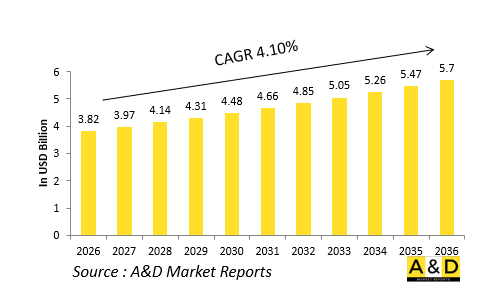
The Global Defense Aircraft Fuselage Structures Market is estimated at USD 3.82 billion in 2026, projected to grow to USD 5.7 billion by 2036 at a Compound Annual Growth Rate (CAGR) of 4.10% over the forecast period 2026-2036.
Introduction:
The defense aircraft fuselage structures market encompasses the design, manufacturing, and integration of robust airframes essential for military aircraft. These structures form the core skeleton, supporting wings, engines, avionics, and weapon systems while enduring extreme operational stresses like high-speed maneuvers, aerial combat, and harsh environments. Advancements in materials such as composites, alloys, and hybrid laminates drive lighter, stronger designs that enhance fuel efficiency, payload capacity, and stealth capabilities. Key players include major aerospace primes and specialized suppliers focusing on modular fuselages for fighter jets, bombers, transport aircraft, and unmanned systems. Market growth stems from rising geopolitical tensions, modernization programs, and demands for next-generation platforms with superior survivability. Innovations in additive manufacturing and smart sensors further optimize production and maintenance. This sector remains pivotal for national defense strategies, balancing performance, cost, and rapid deployment needs across global militaries.
Technology Impact in Defense Aircraft Fuselage Structures Market
Technological advancements profoundly shape the defense aircraft fuselage structures market, revolutionizing material science and production methods. Composite materials like carbon fiber-reinforced polymers offer superior strength-to-weight ratios, reducing structural mass while improving corrosion resistance and radar absorbency for stealth operations. Additive manufacturing enables complex geometries, rapid prototyping, and on-demand repairs, slashing lead times and costs. Digital twins and AI-driven simulations predict fatigue, optimize load paths, and integrate health monitoring systems for real-time structural integrity assessments. Hybrid metal-composite fusions combine durability with flexibility, ideal for high-stress zones. Automation in assembly, including robotic layup and laser welding, boosts precision and scalability. These innovations address challenges like thermal expansion in hypersonic designs and ballistic protection in combat fuselages. Overall, technology enhances aircraft agility, longevity, and mission readiness, propelling market evolution toward sustainable, adaptable airframes for future warfare scenarios.
Key Drivers in Defense Aircraft Fuselage Structures Market
Several critical drivers propel the defense aircraft fuselage structures market forward. Geopolitical instability and escalating global threats necessitate fleet modernizations, spurring demand for advanced fuselages in new fighter programs and upgrades. Budget reallocations toward high-performance platforms prioritize lightweight structures that extend range and endurance without compromising armor. Sustainability mandates push for recyclable composites and efficient manufacturing to meet environmental regulations. Supply chain resilience, post-disruptions, emphasizes domestic production and diversified sourcing for strategic materials. Rising unmanned aerial systems (UAS) adoption requires compact, modular fuselages for swarming tactics and long-endurance missions. Integration of directed-energy weapons and sensors demands reinforced mounts and electromagnetic shielding. Collaborative international programs foster technology transfers, accelerating innovation. Economic pressures drive cost-effective designs via digital engineering, while workforce upskilling in advanced composites sustains growth. These factors collectively fuel a dynamic market focused on superior lethality and survivability.
Regional Trends in Defense Aircraft Fuselage Structures Market
Regional dynamics in the defense aircraft fuselage structures market reflect diverse strategic priorities and industrial capabilities. North America leads with robust R&D ecosystems, dominating advanced composites and stealth technologies for next-gen fighters. Europe emphasizes collaborative frameworks, integrating sustainable materials across multinational programs for transport and multirole aircraft. Asia-Pacific surges through indigenous development, focusing on cost-competitive alloys and rapid production for regional air superiority. The Middle East invests heavily in upgrade kits and armored fuselages amid security concerns. Emerging markets in Latin America and Africa prioritize rugged, low-maintenance designs for patrol and training roles. Trends include technology localization to reduce import reliance, joint ventures for skill transfer, and adaptation to local climates like desert corrosion resistance. Supply chain shifts promote regional hubs, while export controls shape material flows. This landscape underscores a shift toward self-reliant, tailored solutions aligned with national defense postures.
Key Defense Aircraft Fuselage Structures Market Programs
Prominent programs define the defense aircraft fuselage structures market, showcasing cutting-edge engineering. Next-generation fighter initiatives feature all-composite airframes with integrated stealth shaping and sensor fusion for superior agility. Heavy bomber upgrades incorporate blast-resistant hybrids and modular sections for extended service life. Transport aircraft modernizations emphasize wide-body fuselages with reinforced cargo bays and rapid reconfigurable interiors. Unmanned combat aerial vehicles (UCAVs) pioneer lightweight, attritable designs using automated layup for swarm deployments. Hypersonic platform developments test thermal-protected structures blending ceramics and metals. Key collaborations involve fuselage sections for multirole jets, focusing on interoperability and quick-turn repairs. These programs drive material qualification, testing regimes, and supply chain innovations. Industry consortia advance digital threading from design to sustainment, ensuring scalability. Success hinges on balancing innovation with proven reliability, setting benchmarks for future military aviation structures.
Table of Contents
Global Defense Aircraft Fuselage Structures Market - Table of Contents
Global Defense Aircraft Fuselage Structures Market Report Definition
Global Defense Aircraft Fuselage Structures Market Segmentation
By Region
By Platform
By Structure Type
By Component
By Aircraft Type
Global Defense Aircraft Fuselage Structures Market Analysis for next 10 Years
The 10-year Global Defense Aircraft Fuselage Structures Market analysis would give a detailed overview of Global Defense Aircraft Fuselage Structures Market growth, changing dynamics, technology adoption overviews and the overall market attractiveness is covered in this chapter.
Market Technologies of Global Defense Aircraft Fuselage Structures Market
This segment covers the top 10 technologies that is expected to impact this market and the possible implications these technologies would have on the overall market.
Global Defense Aircraft Fuselage Structures Market Forecast
The 10-year Global Defense Aircraft Fuselage Structures Market forecast of this market is covered in detailed across the segments which are mentioned above.
Regional Global Defense Aircraft Fuselage Structures Market Trends & Forecast
The regional counter drone market trends, drivers, restraints and Challenges of this market, the Political, Economic, Social and Technology aspects are covered in this segment. The market forecast and scenario analysis across regions are also covered in detailed in this segment. The last part of the regional analysis includes profiling of the key companies, supplier landscape and company benchmarking. The current market size is estimated based on the normal scenario.
North America
Drivers, Restraints and Challenges
PEST
Market Forecast & Scenario Analysis
Key Companies
Supplier Tier Landscape
Company Benchmarking
Europe
Middle East
APAC
South America
Country Analysis of Global Defense Aircraft Fuselage Structures Market
This chapter deals with the key defense programs in this market, it also covers the latest news and patents which have been filed in this market. Country level 10 year market forecast and scenario analysis are also covered in this chapter.
US
Defense Programs
Latest News
Patents
Current levels of technology maturation in this market
Market Forecast & Scenario Analysis
Canada
Italy
France
Germany
Netherlands
Belgium
Spain
Sweden
Greece
Australia
South Africa
India
China
Russia
South Korea
Japan
Malaysia
Singapore
Brazil
Opportunity Matrix for Global Defense Aircraft Fuselage Structures Market
The opportunity matrix helps the readers understand the high opportunity segments in this market.
Expert Opinions on Global Defense Aircraft Fuselage Structures Market Report
Hear from our experts their opinion of the possible analysis for this market.
Conclusions
About Aviation and Defense Market Reports
List of Tables
- Table 1: 10 Year Market Outlook, 2026-2036
- Table 2: Drivers, Impact Analysis, North America
- Table 3: Restraints, Impact Analysis, North America
- Table 4: Challenges, Impact Analysis, North America
- Table 5: Drivers, Impact Analysis, Europe
- Table 6: Restraints, Impact Analysis, Europe
- Table 7: Challenges, Impact Analysis, Europe
- Table 8: Drivers, Impact Analysis, Middle East
- Table 9: Restraints, Impact Analysis, Middle East
- Table 10: Challenges, Impact Analysis, Middle East
- Table 11: Drivers, Impact Analysis, APAC
- Table 12: Restraints, Impact Analysis, APAC
- Table 13: Challenges, Impact Analysis, APAC
- Table 14: Drivers, Impact Analysis, South America
- Table 15: Restraints, Impact Analysis, South America
- Table 16: Challenges, Impact Analysis, South America
- Table 17: Scenario Analysis, Scenario 1, By Region, 2026-2036
- Table 18: Scenario Analysis, Scenario 1, By Platform, 2026-2036
- Table 19: Scenario Analysis, Scenario 1, By Structure Type, 2026-2036
- Table 20: Scenario Analysis, Scenario 2, By Region, 2026-2036
- Table 21: Scenario Analysis, Scenario 2, By Platform, 2026-2036
- Table 22: Scenario Analysis, Scenario 2, By Structure Type, 2026-2036
List of Figures
- Figure 1: Global Defense Aircraft Fuselage Structures Market Forecast, 2026-2036
- Figure 2: Global Defense Aircraft Fuselage Structures Market Forecast, By Region, 2026-2036
- Figure 3: Global Defense Aircraft Fuselage Structures Market Forecast, By Platform, 2026-2036
- Figure 4: Global Defense Aircraft Fuselage Structures Market Forecast, By Structure Type, 2026-2036
- Figure 5: North America, Defense Aircraft Fuselage Structures Market, Market Forecast, 2026-2036
- Figure 6: Europe, Defense Aircraft Fuselage Structures Market, Market Forecast, 2026-2036
- Figure 7: Middle East, Defense Aircraft Fuselage Structures Market, Market Forecast, 2026-2036
- Figure 8: APAC, Defense Aircraft Fuselage Structures Market, Market Forecast, 2026-2036
- Figure 9: South America, Defense Aircraft Fuselage Structures Market, Market Forecast, 2026-2036
- Figure 10: United States, Defense Aircraft Fuselage Structures Market, Region Maturation, 2026-2036
- Figure 11: United States, Defense Aircraft Fuselage Structures Market, Market Forecast, 2026-2036
- Figure 12: Canada, Defense Aircraft Fuselage Structures Market, Region Maturation, 2026-2036
- Figure 13: Canada, Defense Aircraft Fuselage Structures Market, Market Forecast, 2026-2036
- Figure 14: Italy, Defense Aircraft Fuselage Structures Market, Region Maturation, 2026-2036
- Figure 15: Italy, Defense Aircraft Fuselage Structures Market, Market Forecast, 2026-2036
- Figure 16: France, Defense Aircraft Fuselage Structures Market, Region Maturation, 2026-2036
- Figure 17: France, Defense Aircraft Fuselage Structures Market, Market Forecast, 2026-2036
- Figure 18: Germany, Defense Aircraft Fuselage Structures Market, Region Maturation, 2026-2036
- Figure 19: Germany, Defense Aircraft Fuselage Structures Market, Market Forecast, 2026-2036
- Figure 20: Netherlands, Defense Aircraft Fuselage Structures Market, Region Maturation, 2026-2036
- Figure 21: Netherlands, Defense Aircraft Fuselage Structures Market, Market Forecast, 2026-2036
- Figure 22: Belgium, Defense Aircraft Fuselage Structures Market, Region Maturation, 2026-2036
- Figure 23: Belgium, Defense Aircraft Fuselage Structures Market, Market Forecast, 2026-2036
- Figure 24: Spain, Defense Aircraft Fuselage Structures Market, Region Maturation, 2026-2036
- Figure 25: Spain, Defense Aircraft Fuselage Structures Market, Market Forecast, 2026-2036
- Figure 26: Sweden, Defense Aircraft Fuselage Structures Market, Region Maturation, 2026-2036
- Figure 27: Sweden, Defense Aircraft Fuselage Structures Market, Market Forecast, 2026-2036
- Figure 28: Brazil, Defense Aircraft Fuselage Structures Market, Region Maturation, 2026-2036
- Figure 29: Brazil, Defense Aircraft Fuselage Structures Market, Market Forecast, 2026-2036
- Figure 30: Australia, Defense Aircraft Fuselage Structures Market, Region Maturation, 2026-2036
- Figure 31: Australia, Defense Aircraft Fuselage Structures Market, Market Forecast, 2026-2036
- Figure 32: India, Defense Aircraft Fuselage Structures Market, Region Maturation, 2026-2036
- Figure 33: India, Defense Aircraft Fuselage Structures Market, Market Forecast, 2026-2036
- Figure 34: China, Defense Aircraft Fuselage Structures Market, Region Maturation, 2026-2036
- Figure 35: China, Defense Aircraft Fuselage Structures Market, Market Forecast, 2026-2036
- Figure 36: Saudi Arabia, Defense Aircraft Fuselage Structures Market, Region Maturation, 2026-2036
- Figure 37: Saudi Arabia, Defense Aircraft Fuselage Structures Market, Market Forecast, 2026-2036
- Figure 38: South Korea, Defense Aircraft Fuselage Structures Market, Region Maturation, 2026-2036
- Figure 39: South Korea, Defense Aircraft Fuselage Structures Market, Market Forecast, 2026-2036
- Figure 40: Japan, Defense Aircraft Fuselage Structures Market, Region Maturation, 2026-2036
- Figure 41: Japan, Defense Aircraft Fuselage Structures Market, Market Forecast, 2026-2036
- Figure 42: Malaysia, Defense Aircraft Fuselage Structures Market, Region Maturation, 2026-2036
- Figure 43: Malaysia, Defense Aircraft Fuselage Structures Market, Market Forecast, 2026-2036
- Figure 44: Singapore, Defense Aircraft Fuselage Structures Market, Region Maturation, 2026-2036
- Figure 45: Singapore, Defense Aircraft Fuselage Structures Market, Market Forecast, 2026-2036
- Figure 46: United Kingdom, Defense Aircraft Fuselage Structures Market, Region Maturation, 2026-2036
- Figure 47: United Kingdom, Defense Aircraft Fuselage Structures Market, Market Forecast, 2026-2036
- Figure 48: Opportunity Analysis, Defense Aircraft Fuselage Structures Market, By Region (Cumulative Market), 2026-2036
- Figure 49: Opportunity Analysis, Defense Aircraft Fuselage Structures Market, By Region (CAGR), 2026-2036
- Figure 50: Opportunity Analysis, Defense Aircraft Fuselage Structures Market, By Platform (Cumulative Market), 2026-2036
- Figure 51: Opportunity Analysis, Defense Aircraft Fuselage Structures Market, By Platform (CAGR), 2026-2036
- Figure 52: Opportunity Analysis, Defense Aircraft Fuselage Structures Market, By Structure Type(Cumulative Market), 2026-2036
- Figure 53: Opportunity Analysis, Defense Aircraft Fuselage Structures Market, By Structure Type(CAGR), 2026-2036
- Figure 54: Scenario Analysis, Defense Aircraft Fuselage Structures Market, Cumulative Market, 2026-2036
- Figure 55: Scenario Analysis, Defense Aircraft Fuselage Structures Market, Global Market, 2026-2036
- Figure 56: Scenario 1, Defense Aircraft Fuselage Structures Market, Total Market, 2026-2036
- Figure 57: Scenario 1, Defense Aircraft Fuselage Structures Market, By Region, 2026-2036
- Figure 58: Scenario 1, Defense Aircraft Fuselage Structures Market, By Platform, 2026-2036
- Figure 59: Scenario 1, Defense Aircraft Fuselage Structures Market, By Structure Type, 2026-2036
- Figure 60: Scenario 2, Defense Aircraft Fuselage Structures Market, Total Market, 2026-2036
- Figure 61: Scenario 2, Defense Aircraft Fuselage Structures Market, By Region, 2026-2036
- Figure 62: Scenario 2, Defense Aircraft Fuselage Structures Market, By Platform, 2026-2036
- Figure 63: Scenario 2, Defense Aircraft Fuselage Structures Market, By Structure Type, 2026-2036
- Figure 64: Company Benchmark, Defense Aircraft Fuselage Structures Market, 2026-2036

