PUBLISHER: Aviation & Defense Market Reports (A&D) | PRODUCT CODE: 2027677

PUBLISHER: Aviation & Defense Market Reports (A&D) | PRODUCT CODE: 2027677
Global Defense Aircraft Propulsion Market
Global Defense Aircraft Propulsion Market
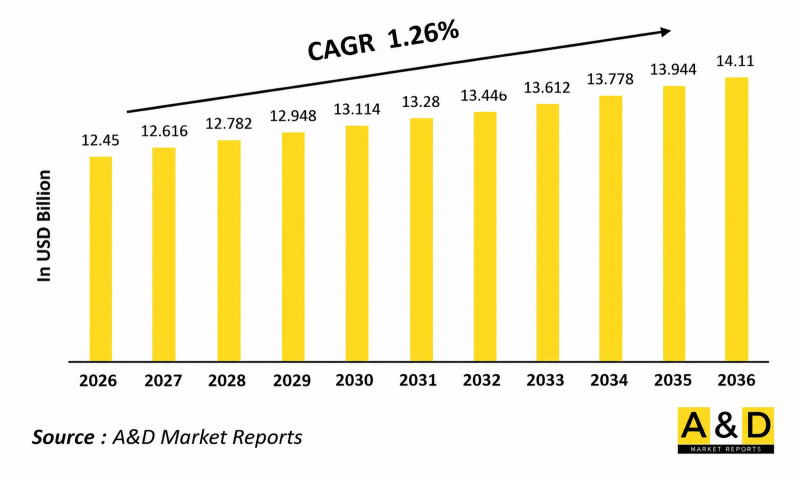
The Global Defense Aircraft Propulsion Market is estimated at USD 12.45 billion in 2026, projected to grow to USD 14.11 billion by 2036 at a Compound Annual Growth Rate (CAGR) of 1.26% over the forecast period 2026-2036.
1. Introduction
The Global Defense Aircraft Propulsion Market encompasses a wide range of technologies and systems responsible for generating thrust in military aircraft. These propulsion systems are fundamental to achieving mission-critical capabilities such as speed, altitude, range, and payload delivery. The market includes various engine types, including turbofan, turbojet, turboprop, and emerging hybrid-electric systems, each tailored to specific aircraft roles. As defense forces worldwide focus on enhancing air superiority and operational readiness, propulsion systems are becoming increasingly sophisticated. The growing complexity of modern warfare, combined with the need for rapid response and precision, is driving the demand for advanced propulsion technologies. Additionally, the expansion of unmanned aerial systems and next-generation fighter programs is reshaping market dynamics. With ongoing investments in research and development, the propulsion market is evolving toward more efficient, reliable, and adaptable solutions that support a wide range of defense applications.
2. Technology Impact in Defense Aircraft Propulsion Market
Technology is playing a transformative role in the defense aircraft propulsion market, enabling significant improvements in performance and efficiency. The development of high-bypass turbofan engines has enhanced fuel efficiency and reduced operational costs, while advanced turbojet and ramjet technologies continue to support high-speed military applications. Hybrid and electric propulsion systems are emerging as viable alternatives, particularly for unmanned platforms, offering reduced noise and thermal signatures. Additive manufacturing is enabling the production of lighter and more complex engine components, improving overall efficiency and reducing production timelines. Advanced cooling techniques and high-temperature materials are allowing engines to operate under more extreme conditions, increasing durability and performance. Digital technologies, including artificial intelligence and predictive analytics, are improving maintenance practices and reducing downtime. These technological advancements are not only enhancing aircraft capabilities but also redefining the future of military propulsion systems.
3. Key Drivers in Defense Aircraft Propulsion Market
The defense aircraft propulsion market is driven by several critical factors shaping global military strategies. Increasing defense budgets across major economies are enabling large-scale procurement and modernization programs, directly boosting demand for advanced propulsion systems. The growing need for next-generation fighter aircraft and strategic bombers is further accelerating engine development. The rapid expansion of unmanned aerial vehicles is another major driver, requiring specialized propulsion systems optimized for endurance and efficiency. Geopolitical tensions and evolving security threats are compelling nations to invest in superior air capabilities, including high-performance engines. Additionally, the push for fuel efficiency and reduced emissions is influencing the adoption of advanced propulsion technologies. Continuous innovation in materials and engineering is also enabling the development of lighter, more efficient engines. Strategic partnerships between governments and aerospace companies are fostering research and development, ensuring a steady pipeline of advanced propulsion solutions for future defense needs.
4. Regional Trends in Defense Aircraft Propulsion Market
The defense aircraft propulsion market exhibits distinct regional trends driven by varying defense priorities and capabilities. North America leads the market due to its advanced aerospace industry, strong defense funding, and extensive fleet of military aircraft. Europe follows closely, supported by collaborative defense programs and a focus on technological innovation. The Asia-Pacific region is experiencing rapid growth, driven by increasing defense budgets and efforts to strengthen indigenous aerospace capabilities. Countries in this region are investing heavily in domestic engine development and production to enhance self-reliance. The Middle East is characterized by ongoing procurement of advanced aircraft and propulsion systems, driven by regional security concerns. Latin America and Africa are gradually expanding their defense aviation capabilities, with a focus on modernization and capacity building. These regional trends highlight the global nature of the propulsion market and its importance in maintaining strategic military advantages.
5. Key Defense Aircraft Propulsion Market Program
Key programs in the defense aircraft propulsion market are centered on advancing propulsion technologies to meet evolving military requirements. Next-generation fighter programs are incorporating adaptive engines designed to deliver enhanced performance and efficiency. Programs focused on unmanned systems are driving the development of compact and efficient propulsion solutions tailored for long-endurance missions. Engine upgrade and retrofit programs are also significant, enabling existing aircraft to achieve improved performance and extended service life. International collaborations are playing a vital role in sharing expertise and reducing development costs for complex propulsion systems. Additionally, sustainability initiatives are encouraging the exploration of alternative propulsion technologies with lower environmental impact. Maintenance and support programs remain essential, ensuring the reliability and longevity of propulsion systems across various aircraft platforms. These programs collectively underscore the strategic importance of propulsion technology in modern defense aviation.
Table of Contents
Defense Aircraft Propulsion Market - Table of Contents
Defense Aircraft Propulsion Market Report Definition
Defense Aircraft Propulsion Market Segmentation
By Engine
By Region
By Aircraft Type
Defense Aircraft Propulsion Market Analysis for next 10 Years
The 10-year defense aircraft propulsion market analysis would give a detailed overview of defense aircraft propulsion market growth, changing dynamics, technology adoption overviews and the overall market attractiveness is covered in this chapter.
Market Technologies of Defense Aircraft Propulsion Market
This segment covers the top 10 technologies that is expected to impact this market and the possible implications these technologies would have on the overall market.
Global Defense Aircraft Propulsion Market Forecast
The 10-year defense aircraft propulsion market forecast of this market is covered in detailed across the segments which are mentioned above.
Regional Defense Aircraft Propulsion Market Trends & Forecast
The regional defense aircraft propulsion market trends, drivers, restraints and Challenges of this market, the Political, Economic, Social and Technology aspects are covered in this segment. The market forecast and scenario analysis across regions are also covered in detailed in this segment. The last part of the regional analysis includes profiling of the key companies, supplier landscape and company benchmarking. The current market size is estimated based on the normal scenario.
North America
Drivers, Restraints and Challenges
PEST
Market Forecast & Scenario Analysis
Key Companies
Supplier Tier Landscape
Company Benchmarking
Europe
Middle East
APAC
South America
Country Analysis of Defense Aircraft Propulsion Market
This chapter deals with the key defense programs in this market, it also covers the latest news and patents which have been filed in this market. Country level 10 year market forecast and scenario analysis are also covered in this chapter.
US
Defense Programs
Latest News
Patents
Current levels of technology maturation in this market
Market Forecast & Scenario Analysis
Canada
Italy
France
Germany
Netherlands
Belgium
Spain
Sweden
Greece
Australia
South Africa
India
China
Russia
South Korea
Japan
Malaysia
Singapore
Brazil
Opportunity Matrix for Defense Aircraft Propulsion Market
The opportunity matrix helps the readers understand the high opportunity segments in this market.
Expert Opinions on Defense Aircraft Propulsion Market Report
Hear from our experts their opinion of the possible analysis for this market.
Conclusions
About Aviation and Defense Market Reports
List of Tables
- Table 1: 10 Year Market Outlook, 2026-2036
- Table 2: Drivers, Impact Analysis, North America
- Table 3: Restraints, Impact Analysis, North America
- Table 4: Challenges, Impact Analysis, North America
- Table 5: Drivers, Impact Analysis, Europe
- Table 6: Restraints, Impact Analysis, Europe
- Table 7: Challenges, Impact Analysis, Europe
- Table 8: Drivers, Impact Analysis, Middle East
- Table 9: Restraints, Impact Analysis, Middle East
- Table 10: Challenges, Impact Analysis, Middle East
- Table 11: Drivers, Impact Analysis, Apac
- Table 12: Restraints, Impact Analysis, Apac
- Table 13: Challenges, Impact Analysis, Apac
- Table 14: Drivers, Impact Analysis, South America
- Table 15: Restraints, Impact Analysis, South America
- Table 16: Challenges, Impact Analysis, South America
- Table 17: Scenario Analysis, Scenario 1, By Region, 2026-2036
- Table 18: Scenario Analysis, Scenario 1, By Aircraft Type2026-2036
- Table 19: Scenario Analysis, Scenario 1, By Engine, 2026-2036
- Table 20: Scenario Analysis, Scenario 2, By Region, 2026-2036
- Table 21: Scenario Analysis, Scenario 2, By Aircraft Type2026-2036
- Table 22: Scenario Analysis, Scenario 2, By Engine, 2026-2036
List of Figures
- Figure 1: Global Defense Aircraft Propulsion Market Forecast, 2026-2036
- Figure 2: Global Defense Aircraft Propulsion Market Forecast, By Region, 2026-2036
- Figure 3: Global Defense Aircraft Propulsion Market Forecast, By Aircraft Type2026-2036
- Figure 4: Global Defense Aircraft Propulsion Market Forecast, By Engine, 2026-2036
- Figure 5: North America, Defense Aircraft Propulsion Market , Market Forecast, 2026-2036
- Figure 6: Europe, Defense Aircraft Propulsion Market , Market Forecast, 2026-2036
- Figure 7: Middle East, Defense Aircraft Propulsion Market , Market Forecast, 2026-2036
- Figure 8: Apac, Defense Aircraft Propulsion Market , Market Forecast, 2026-2036
- Figure 9: South America, Defense Aircraft Propulsion Market , Market Forecast, 2026-2036
- Figure 10: United States, Defense Aircraft Propulsion Market , Region Maturation, 2026-2036
- Figure 11: United States, Defense Aircraft Propulsion Market , Market Forecast, 2026-2036
- Figure 12: Canada, Defense Aircraft Propulsion Market , Region Maturation, 2026-2036
- Figure 13: Canada, Defense Aircraft Propulsion Market , Market Forecast, 2026-2036
- Figure 14: Italy, Defense Aircraft Propulsion Market , Region Maturation, 2026-2036
- Figure 15: Italy, Defense Aircraft Propulsion Market , Market Forecast, 2026-2036
- Figure 16: France, Defense Aircraft Propulsion Market , Region Maturation, 2026-2036
- Figure 17: France, Defense Aircraft Propulsion Market , Market Forecast, 2026-2036
- Figure 18: Germany, Defense Aircraft Propulsion Market , Region Maturation, 2026-2036
- Figure 19: Germany, Defense Aircraft Propulsion Market , Market Forecast, 2026-2036
- Figure 20: Netherlands, Defense Aircraft Propulsion Market , Region Maturation, 2026-2036
- Figure 21: Netherlands, Defense Aircraft Propulsion Market , Market Forecast, 2026-2036
- Figure 22: Belgium, Defense Aircraft Propulsion Market , Region Maturation, 2026-2036
- Figure 23: Belgium, Defense Aircraft Propulsion Market , Market Forecast, 2026-2036
- Figure 24: Spain, Defense Aircraft Propulsion Market , Region Maturation, 2026-2036
- Figure 25: Spain, Defense Aircraft Propulsion Market , Market Forecast, 2026-2036
- Figure 26: Sweden, Defense Aircraft Propulsion Market , Region Maturation, 2026-2036
- Figure 27: Sweden, Defense Aircraft Propulsion Market , Market Forecast, 2026-2036
- Figure 28: Brazil, Defense Aircraft Propulsion Market , Region Maturation, 2026-2036
- Figure 29: Brazil, Defense Aircraft Propulsion Market , Market Forecast, 2026-2036
- Figure 30: Australia, Defense Aircraft Propulsion Market , Region Maturation, 2026-2036
- Figure 31: Australia, Defense Aircraft Propulsion Market , Market Forecast, 2026-2036
- Figure 32: India, Defense Aircraft Propulsion Market , Region Maturation, 2026-2036
- Figure 33: India, Defense Aircraft Propulsion Market , Market Forecast, 2026-2036
- Figure 34: China, Defense Aircraft Propulsion Market , Region Maturation, 2026-2036
- Figure 35: China, Defense Aircraft Propulsion Market , Market Forecast, 2026-2036
- Figure 36: Saudi Arabia, Defense Aircraft Propulsion Market , Region Maturation, 2026-2036
- Figure 37: Saudi Arabia, Defense Aircraft Propulsion Market , Market Forecast, 2026-2036
- Figure 38: South Korea, Defense Aircraft Propulsion Market , Region Maturation, 2026-2036
- Figure 39: South Korea, Defense Aircraft Propulsion Market , Market Forecast, 2026-2036
- Figure 40: Japan, Defense Aircraft Propulsion Market , Region Maturation, 2026-2036
- Figure 41: Japan, Defense Aircraft Propulsion Market , Market Forecast, 2026-2036
- Figure 42: Malaysia, Defense Aircraft Propulsion Market , Region Maturation, 2026-2036
- Figure 43: Malaysia, Defense Aircraft Propulsion Market , Market Forecast, 2026-2036
- Figure 44: Singapore, Defense Aircraft Propulsion Market , Region Maturation, 2026-2036
- Figure 45: Singapore, Defense Aircraft Propulsion Market , Market Forecast, 2026-2036
- Figure 46: United Kingdom, Defense Aircraft Propulsion Market , Region Maturation, 2026-2036
- Figure 47: United Kingdom, Defense Aircraft Propulsion Market , Market Forecast, 2026-2036
- Figure 48: Opportunity Analysis, Defense Aircraft Propulsion Market , By Region (Cumulative Market), 2026-2036
- Figure 49: Opportunity Analysis, Defense Aircraft Propulsion Market , By Region (Cagr), 2026-2036
- Figure 50: Opportunity Analysis, Defense Aircraft Propulsion Market , By Aircraft Type Cumulative Market), 2026-2036
- Figure 51: Opportunity Analysis, Defense Aircraft Propulsion Market , By Aircraft Type(Cagr), 2026-2036
- Figure 52: Opportunity Analysis, Defense Aircraft Propulsion Market , By Engine(Cumulative Market), 2026-2036
- Figure 53: Opportunity Analysis, Defense Aircraft Propulsion Market , By Engine(Cagr), 2026-2036
- Figure 54: Scenario Analysis, Defense Aircraft Propulsion Market , Cumulative Market, 2026-2036
- Figure 55: Scenario Analysis, Defense Aircraft Propulsion Market , Global Market, 2026-2036
- Figure 56: Scenario 1, Defense Aircraft Propulsion Market , Total Market, 2026-2036
- Figure 57: Scenario 1, Defense Aircraft Propulsion Market , By Region, 2026-2036
- Figure 58: Scenario 1, Defense Aircraft Propulsion Market , By Aircraft Type2026-2036
- Figure 59: Scenario 1, Defense Aircraft Propulsion Market , By Engine, 2026-2036
- Figure 60: Scenario 2, Defense Aircraft Propulsion Market , Total Market, 2026-2036
- Figure 61: Scenario 2, Defense Aircraft Propulsion Market , By Region, 2026-2036
- Figure 62: Scenario 2, Defense Aircraft Propulsion Market , By Aircraft Type 2026-2036
- Figure 63: Scenario 2, Defense Aircraft Propulsion Market , By Engine, 2026-2036
- Figure 64: Company Benchmark, Defense Aircraft Propulsion Market , 2026-2036

