PUBLISHER: Aviation & Defense Market Reports (A&D) | PRODUCT CODE: 2066788

PUBLISHER: Aviation & Defense Market Reports (A&D) | PRODUCT CODE: 2066788
Global Unmanned Naval vessels Simulation Market 2026-2036
Global Unmanned Naval Vessels Simulation Market
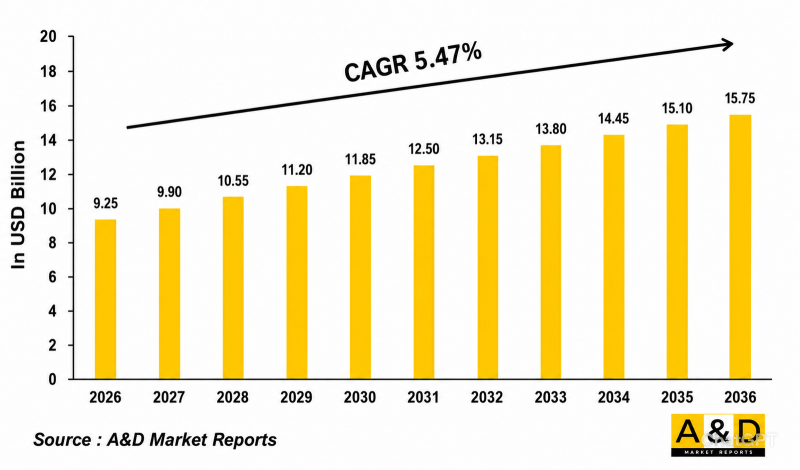
The Global Unmanned Naval vessels Simulation Market is estimated at USD 9.25 billion in 2026, projected to grow to USD 15.75 billion by 2036 at a Compound Annual Growth Rate (CAGR) of 5.47% over the forecast period 2026-2036.
1. Introduction
The global unmanned naval vessels simulation market is becoming increasingly important as naval forces adopt autonomous and remotely operated maritime platforms for defense and security missions. Simulation systems provide realistic training environments that allow operators, mission planners, and maintenance personnel to develop proficiency without the costs and risks associated with live exercises. These solutions replicate operational conditions across surface and underwater environments, enabling users to practice navigation, surveillance, reconnaissance, mine countermeasures, and combat support missions. As naval organizations focus on integrating autonomous technologies into their fleets, simulation platforms are becoming essential for validating concepts, improving mission readiness, and enhancing crew training. The growing complexity of maritime operations and the need for interoperability between manned and unmanned systems are further driving demand. Advanced simulation technologies also support system testing, operational planning, and performance assessment, making them valuable tools for naval modernization programs worldwide.
2. Technology Impact in Unmanned Naval Vessels Simulation Market
Technological innovation is transforming the unmanned naval vessels simulation market by delivering highly realistic and immersive training environments. Artificial intelligence is enabling dynamic scenario generation and intelligent threat behavior, allowing operators to experience realistic mission conditions. Advanced modeling and digital twin technologies are improving the accuracy of vessel performance simulation and mission planning. Virtual reality and augmented reality solutions are enhancing user engagement and training effectiveness through immersive operational experiences. Cloud-based simulation platforms enable distributed training exercises, allowing participants from multiple locations to collaborate in real time. Improvements in sensor modeling, environmental simulation, and communication network replication are also strengthening the realism of training scenarios. Integration with autonomous navigation systems enables operators to evaluate system responses and mission outcomes under diverse conditions. These technological advancements are increasing operational preparedness and supporting the successful deployment of unmanned naval platforms.
3. Key Drivers in Unmanned Naval Vessels Simulation Market
The unmanned naval vessels simulation market is driven by the increasing adoption of autonomous maritime systems for defense and security applications. Naval forces are seeking efficient methods to train operators and validate mission concepts without exposing valuable assets to operational risks. The growing complexity of maritime threats and the need for rapid decision-making are encouraging the use of advanced simulation environments. Defense organizations are also focusing on reducing training costs while improving operational readiness through virtual exercises. The integration of unmanned vessels into broader naval operations requires comprehensive training programs that support interoperability and mission coordination. Additionally, the need to evaluate autonomous behaviors and mission performance before deployment is increasing demand for simulation solutions. Technological advancements in digital modeling, artificial intelligence, and immersive training systems are further supporting market growth. As autonomous naval operations expand, simulation platforms will remain critical for capability development and operational effectiveness.
4. Regional Trends in Unmanned Naval Vessels Simulation Market
North America continues to lead the unmanned naval vessels simulation market due to strong investments in autonomous maritime technologies and advanced naval training programs. Europe is emphasizing collaborative defense initiatives and the integration of autonomous systems into maritime security operations. The Asia-Pacific region is witnessing growing demand as countries expand naval modernization efforts and strengthen maritime surveillance capabilities. Regional governments are investing in simulation technologies to support training and operational planning for emerging unmanned platforms. The Middle East is adopting advanced maritime simulation systems to improve naval preparedness and protect strategic waterways. Meanwhile, emerging economies are gradually incorporating simulation solutions into defense training programs to enhance operational efficiency. Across all regions, there is increasing emphasis on realistic training environments, interoperability, and digital transformation. These trends are supporting the expansion of the unmanned naval vessels simulation market worldwide.
5. Key Unmanned Naval Vessels Simulation Market Program
Key programs in the unmanned naval vessels simulation market focus on developing advanced training, testing, and mission rehearsal environments for autonomous maritime operations. Defense organizations are investing in integrated simulation frameworks that replicate real-world operational conditions and support multi-domain exercises. These programs often involve collaboration among naval agencies, technology providers, and research institutions to improve simulation fidelity and operational relevance. Emphasis is placed on validating autonomous navigation, mission planning, and threat response capabilities before deployment. Modernization initiatives are incorporating digital twins, virtual reality, and artificial intelligence into simulation ecosystems to improve training outcomes. Efforts are also being directed toward creating interoperable platforms that support joint operations between manned and unmanned assets. Research programs continue to explore next-generation simulation technologies that enhance realism and operational flexibility, ensuring naval forces remain prepared for evolving maritime challenges.
Table of Contents
Global Unmanned Naval vessels Simulation Market - Table of Contents
Global Unmanned Naval vessels Simulation market Report Definition
Global Unmanned Naval vessels Simulation market Segmentation
By Region
By Type
By Application
By Component
Global Unmanned Naval vessels Simulation market Analysis for next 10 Years
The 10-year Global Unmanned Naval vessels Simulation market analysis would give a detailed overview of Global Unmanned Naval vessels Simulation market growth, changing dynamics, technology adoption overviews and the overall market attractiveness is covered in this chapter.
Market Technologies of Global Unmanned Naval vessels Simulation
This segment covers the top 10 technologies that is expected to impact this market and the possible implications these technologies would have on the overall market.
Global Unmanned Naval vessels Simulation market Forecast
The 10-year Global Unmanned Naval vessels Simulation market forecast of this market is covered in detailed across the segments which are mentioned above.
Regional Unmanned Naval vessels Simulation market Trends & Forecast
The regional Global Unmanned Naval vessels Simulation market trends, drivers, restraints and Challenges of this market, the Political, Economic, Social and Technology aspects are covered in this segment. The market forecast and scenario analysis across regions are also covered in detailed in this segment. The last part of the regional analysis includes profiling of the key companies, supplier landscape and company benchmarking. The current market size is estimated based on the normal scenario.
North America
Drivers, Restraints and Challenges
PEST
Market Forecast & Scenario Analysis
Key Companies
Supplier Tier Landscape
Company Benchmarking
Europe
Middle East
APAC
South America
Country Analysis of Access Control Market
This chapter deals with the key defense programs in this market, it also covers the latest news and patents which have been filed in this market. Country level 10 year market forecast and scenario analysis are also covered in this chapter.
US
Defense Programs
Latest News
Patents
Current levels of technology maturation in this market
Market Forecast & Scenario Analysis
Canada
Italy
France
Germany
Netherlands
Belgium
Spain
Sweden
Greece
Australia
South Africa
India
China
Russia
South Korea
Japan
Malaysia
Singapore
Brazil
Opportunity Matrix for Global Unmanned Naval vessels Simulation market
The opportunity matrix helps the readers understand the high opportunity segments in this market.
Expert Opinions on Global Unmanned Naval vessels Simulation market Report
Hear from our experts their opinion of the possible analysis for this market.
Conclusions
About Aviation and Defense Market Reports
List of Tables
- Table 1: 10 Year Market Outlook, 2026-2036
- Table 2: Drivers, Impact Analysis, North America
- Table 3: Restraints, Impact Analysis, North America
- Table 4: Challenges, Impact Analysis, North America
- Table 5: Drivers, Impact Analysis, Europe
- Table 6: Restraints, Impact Analysis, Europe
- Table 7: Challenges, Impact Analysis, Europe
- Table 8: Drivers, Impact Analysis, Middle East
- Table 9: Restraints, Impact Analysis, Middle East
- Table 10: Challenges, Impact Analysis, Middle East
- Table 11: Drivers, Impact Analysis, Apac
- Table 12: Restraints, Impact Analysis, Apac
- Table 13: Challenges, Impact Analysis, Apac
- Table 14: Drivers, Impact Analysis, South America
- Table 15: Restraints, Impact Analysis, South America
- Table 16: Challenges, Impact Analysis, South America
- Table 17: Scenario Analysis, Scenario 1, By Region, 2026-2036
- Table 18: Scenario Analysis, Scenario 1, By Type, 2026-2036
- Table 19: Scenario Analysis, Scenario 1, By Component, 2026-2036
- Table 20: Scenario Analysis, Scenario 2, By Region, 2026-2036
- Table 21: Scenario Analysis, Scenario 2, By Type, 2026-2036
- Table 22: Scenario Analysis, Scenario 2, By Component, 2026-2036
List of Figures
- Figure 1: Global Defense Unmanned Naval vessels Simulation Market Forecast, 2026-2036
- Figure 2: Global Defense Unmanned Naval vessels Simulation Market Forecast, By Region, 2026-2036
- Figure 3: Global Defense Unmanned Naval vessels Simulation Market Forecast, By Type2026-2036
- Figure 4: Global Defense Unmanned Naval vessels Simulation Market Forecast, By Component, 2026-2036
- Figure 5: North America, Defense Unmanned Naval vessels Simulation Market, Market Forecast, 2026-2036
- Figure 6: Europe, Defense Unmanned Naval vessels Simulation Market, Market Forecast, 2026-2036
- Figure 7: Middle East, Defense Unmanned Naval vessels Simulation Market, Market Forecast, 2026-2036
- Figure 8: Apac, Defense Unmanned Naval vessels Simulation Market, Market Forecast, 2026-2036
- Figure 9: South America, Defense Unmanned Naval vessels Simulation Market, Market Forecast, 2026-2036
- Figure 10: United States, Defense Unmanned Naval vessels Simulation Market, Region Maturation, 2026-2036
- Figure 11: United States, Defense Unmanned Naval vessels Simulation Market, Market Forecast, 2026-2036
- Figure 12: Canada, Defense Unmanned Naval vessels Simulation Market, Region Maturation, 2026-2036
- Figure 13: Canada, Defense Unmanned Naval vessels Simulation Market, Market Forecast, 2026-2036
- Figure 14: Italy, Defense Unmanned Naval vessels Simulation Market, Region Maturation, 2026-2036
- Figure 15: Italy, Defense Unmanned Naval vessels Simulation Market, Market Forecast, 2026-2036
- Figure 16: France, Defense Unmanned Naval vessels Simulation Market, Region Maturation, 2026-2036
- Figure 17: France, Defense Unmanned Naval vessels Simulation Market, Market Forecast, 2026-2036
- Figure 18: Germany, Defense Unmanned Naval vessels Simulation Market, Region Maturation, 2026-2036
- Figure 19: Germany, Defense Unmanned Naval vessels Simulation Market, Market Forecast, 2026-2036
- Figure 20: Netherlands, Defense Unmanned Naval vessels Simulation Market, Region Maturation, 2026-2036
- Figure 21: Netherlands, Defense Unmanned Naval vessels Simulation Market, Market Forecast, 2026-2036
- Figure 22: Belgium, Defense Unmanned Naval vessels Simulation Market, Region Maturation, 2026-2036
- Figure 23: Belgium, Defense Unmanned Naval vessels Simulation Market, Market Forecast, 2026-2036
- Figure 24: Spain, Defense Unmanned Naval vessels Simulation Market, Region Maturation, 2026-2036
- Figure 25: Spain, Defense Unmanned Naval vessels Simulation Market, Market Forecast, 2026-2036
- Figure 26: Sweden, Defense Unmanned Naval vessels Simulation Market, Region Maturation, 2026-2036
- Figure 27: Sweden, Defense Unmanned Naval vessels Simulation Market, Market Forecast, 2026-2036
- Figure 28: Brazil, Defense Unmanned Naval vessels Simulation Market, Region Maturation, 2026-2036
- Figure 29: Brazil, Defense Unmanned Naval vessels Simulation Market, Market Forecast, 2026-2036
- Figure 30: Australia, Defense Unmanned Naval vessels Simulation Market, Region Maturation, 2026-2036
- Figure 31: Australia, Defense Unmanned Naval vessels Simulation Market, Market Forecast, 2026-2036
- Figure 32: India, Defense Unmanned Naval vessels Simulation Market, Region Maturation, 2026-2036
- Figure 33: India, Defense Unmanned Naval vessels Simulation Market, Market Forecast, 2026-2036
- Figure 34: China, Defense Unmanned Naval vessels Simulation Market, Region Maturation, 2026-2036
- Figure 35: China, Defense Unmanned Naval vessels Simulation Market, Market Forecast, 2026-2036
- Figure 36: Saudi Arabia, Defense Unmanned Naval vessels Simulation Market, Region Maturation, 2026-2036
- Figure 37: Saudi Arabia, Defense Unmanned Naval vessels Simulation Market, Market Forecast, 2026-2036
- Figure 38: South Korea, Defense Unmanned Naval vessels Simulation Market, Region Maturation, 2026-2036
- Figure 39: South Korea, Defense Unmanned Naval vessels Simulation Market, Market Forecast, 2026-2036
- Figure 40: Japan, Defense Unmanned Naval vessels Simulation Market, Region Maturation, 2026-2036
- Figure 41: Japan, Defense Unmanned Naval vessels Simulation Market, Market Forecast, 2026-2036
- Figure 42: Malaysia, Defense Unmanned Naval vessels Simulation Market, Region Maturation, 2026-2036
- Figure 43: Malaysia, Defense Unmanned Naval vessels Simulation Market, Market Forecast, 2026-2036
- Figure 44: Singapore, Defense Unmanned Naval vessels Simulation Market, Region Maturation, 2026-2036
- Figure 45: Singapore, Defense Unmanned Naval vessels Simulation Market, Market Forecast, 2026-2036
- Figure 46: United Kingdom, Defense Unmanned Naval vessels Simulation Market, Region Maturation, 2026-2036
- Figure 47: United Kingdom, Defense Unmanned Naval vessels Simulation Market, Market Forecast, 2026-2036
- Figure 48: Opportunity Analysis, Defense Unmanned Naval vessels Simulation Market, By Region (Cumulative Market), 2026-2036
- Figure 49: Opportunity Analysis, Defense Unmanned Naval vessels Simulation Market, By Region (Cagr), 2026-2036
- Figure 50: Opportunity Analysis, Defense Unmanned Naval vessels Simulation Market, By Type Cumulative Market), 2026-2036
- Figure 51: Opportunity Analysis, Defense Unmanned Naval vessels Simulation Market, By Type(Cagr), 2026-2036
- Figure 52: Opportunity Analysis, Defense Unmanned Naval vessels Simulation Market, By Component(Cumulative Market), 2026-2036
- Figure 53: Opportunity Analysis, Defense Unmanned Naval vessels Simulation Market, By Component (Cagr), 2026-2036
- Figure 54: Scenario Analysis, Defense Unmanned Naval vessels Simulation Market, Cumulative Market, 2026-2036
- Figure 55: Scenario Analysis, Defense Unmanned Naval vessels Simulation Market, Global Market, 2026-2036
- Figure 56: Scenario 1, Defense Unmanned Naval vessels Simulation Market, Total Market, 2026-2036
- Figure 57: Scenario 1, Defense Unmanned Naval vessels Simulation Market, By Region, 2026-2036
- Figure 58: Scenario 1, Defense Unmanned Naval vessels Simulation Market, By Type, 2026-2036
- Figure 59: Scenario 1, Defense Unmanned Naval vessels Simulation Market, By Component, 2026-2036
- Figure 60: Scenario 2, Defense Unmanned Naval vessels Simulation Market, Total Market, 2026-2036
- Figure 61: Scenario 2, Defense Unmanned Naval vessels Simulation Market, By Region, 2026-2036
- Figure 62: Scenario 2, Defense Unmanned Naval vessels Simulation Market, By Type, 2026-2036
- Figure 63: Scenario 2, Defense Unmanned Naval vessels Simulation Market, By Component, 2026-2036
- Figure 64: Company Benchmark, Defense Unmanned Naval vessels Simulation Market, 2026-2036

