
PUBLISHER: Mordor Intelligence | PRODUCT CODE: 2044235

PUBLISHER: Mordor Intelligence | PRODUCT CODE: 2044235
United States Pea Protein - Market Share Analysis, Industry Trends & Statistics, Growth Forecasts (2026 - 2031)
The United States pea protein market size was valued at USD 338.78 million in 2025 and estimated to grow from USD 354.41 million in 2026 to reach USD 443.54 million by 2031, at a CAGR of 4.59% during the forecast period (2026-2031).
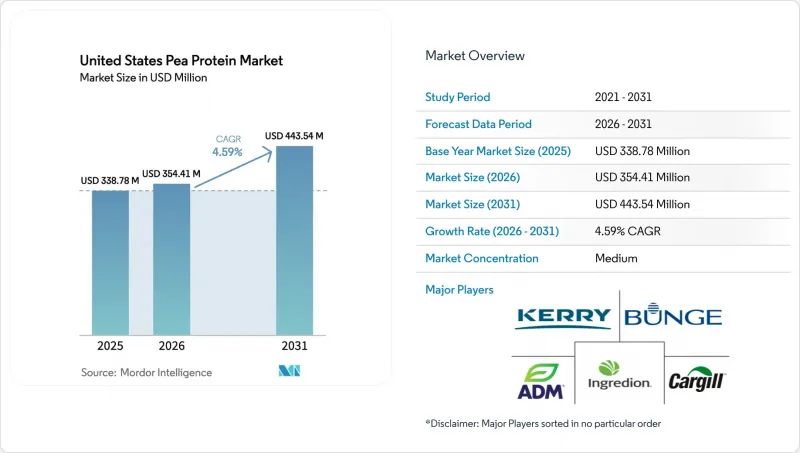
This growth is primarily driven by the rising consumer preference for plant-based and clean-label protein sources, as health-conscious consumers increasingly seek natural, minimally processed ingredients with transparent labeling. The growing popularity of vegetarian, vegan, and flexitarian lifestyles in the United States is significantly accelerating the adoption of pea protein across multiple food categories. Its expanding incorporation in meat alternatives, dairy-free beverages, plant-based yogurts, protein bars, ready-to-drink shakes, and sports nutrition products continues to broaden its application base. Moreover, manufacturers are actively investing in advanced processing technologies and formulation improvements to enhance taste, texture, solubility, and overall functionality, addressing earlier concerns related to flavor and mouthfeel.
United States Pea Protein Market Trends and Insights
Growing adoption of plant-based and flexitarian diets
The growing adoption of plant-based and flexitarian diets in the United States is significantly boosting the demand for pea protein. According to the Good Food Institute Report, around 60% of U.S. households purchased some type of plant-based food in 2024, reflecting a strong shift toward plant-forward eating habits. Consumers are increasingly seeking alternatives to animal-based proteins due to health, environmental, and ethical considerations, which has created a wider market for pea protein products. Pea protein is particularly favored for its allergen-free nature, neutral taste, and versatility across applications such as beverages, meat substitutes, and nutritional supplements. Food and beverage manufacturers are responding by incorporating pea protein into a range of products, from protein shakes to snack bars. As more households include plant-based items in their regular diet, the United States pea protein market is poised for steady growth over the coming years.
Consumer preference for clean and transparent labeling
Consumer preference for clean and transparent labeling is shaping purchasing decisions in the United States pea protein market. According to the 2024 IFIC Food & Health Survey, foods labeled as "Natural," "Organic," or "Healthy" rank among the top in-store signals, with 36% of American consumers preferring such labels. This trend reflects growing demand for products with clear ingredient lists, non-GMO certifications, and minimal processing. Manufacturers are increasingly focusing on clean-label formulations to meet these expectations, which influences product development and marketing strategies. Pea protein, being allergen-free and plant-based, aligns well with these preferences, allowing companies to appeal to health-conscious and environmentally aware consumers. Transparent labeling also builds trust and encourages repeat purchases, especially in the premium and functional foods segments.
Higher production and processing costs than conventional proteins
Higher production and processing costs compared to conventional proteins are limiting the widespread adoption of pea protein in the United States market. Extracting and refining pea protein into isolates and concentrates requires specialized equipment and energy-intensive processes, which increase manufacturing expenses. These higher costs are often reflected in the final product price, making pea protein less competitive against traditional proteins like soy, whey, and casein. Small and medium-sized food manufacturers may face budget constraints when incorporating pea protein into their formulations. Additionally, fluctuations in raw material availability and quality can further drive up production costs. While consumer demand for plant-based proteins is growing, price sensitivity among mainstream buyers continues to influence purchasing decisions.
Other drivers and restraints analyzed in the detailed report include:
- Strong demand from sports nutrition and protein supplements
- Rising health and wellness awareness among consumers
- Price sensitivity among mass-market consumers
For complete list of drivers and restraints, kindly check the Table Of Contents.
Segment Analysis
Pea protein isolates accounted for the largest share of the United States pea protein market in 2025, capturing 56.49% of total revenue, primarily due to their high protein concentration and functional advantages. With protein purity levels typically ranging between 85-90%, isolates are widely preferred in applications requiring consistent nutritional value and clean sensory attributes. Their neutral taste profile and excellent solubility make them especially suitable for ready-to-drink protein beverages, nutritional powders, and medical nutrition products. Isolates are also extensively used in infant formula and clinical nutrition, where digestibility and allergen-free characteristics are critical. Food and beverage manufacturers increasingly favor isolates for premium and performance-driven formulations.
Pea protein concentrates are projected to be the fastest growing segment in the market, registering a CAGR of 5.04% during the forecast period (2026-2031). Growth is largely driven by their cost-effectiveness compared to isolates, making them attractive for price-sensitive and high-volume applications. Concentrates are increasingly adopted in bakery, snacks, cereals, and meat analog formulations where moderate protein enrichment is sufficient. Their relatively lower processing intensity also aligns with clean-label and minimally processed ingredient trends. Additionally, food manufacturers are leveraging concentrates to balance functionality and affordability without compromising on plant-based positioning.
The United States Pea Protein Market Report is Segmented by Form (Concentrates, Isolates, Textured/Hydrolyzed), Nature (Conventional and Organic), Application (Animal Feed, Personal Care and Cosmetics, Food and Beverages, Supplements). The Market Forecasts are Provided in Terms of Value (USD) and Volume (Tons).
List of Companies Covered in this Report:
- Archer Daniels Midland Company
- Cargill, Incorporated
- Ingredion Incorporated
- Kerry Group PLC
- Bungee Global SA
- Glanbia PLC
- Roquette Freres S.A.
- Farbest Brands
- International Flavors & Fragrances Inc.
- The Scoular Company
- Puris Proteins LLC
- AGT Food and Ingredients Inc.
- Axiom Foods Inc.
- Burcon NutraScience Corp.
- Cosucra Groupe Warcoing
- Emsland Group
- Sotexpro S.A.
- Anchor Ingredients Co.
- Louis Dreyfus Company
- NOW Foods
Additional Benefits:
- The market estimate (ME) sheet in Excel format
- 3 months of analyst support
TABLE OF CONTENTS
1 INTRODUCTION
- 1.1 Study Assumptions and Market Definition
- 1.2 Scope of the Study
2 RESEARCH METHODOLOGY
3 EXECUTIVE SUMMARY
4 MARKET LANDSCAPE
- 4.1 Market Overview
- 4.2 Market Drivers
- 4.2.1 Growing adoption of plant-based and flexitarian diets
- 4.2.2 Consumer preference for clean and transparent labeling
- 4.2.3 Strong demand from sports nutrition and protein supplements
- 4.2.4 Rising health and wellness awareness among consumers
- 4.2.5 Increasing use in meat alternatives and plant-based foods
- 4.2.6 Sustainability and environmental benefits of pea cultivation
- 4.3 Market Restraints
- 4.3.1 Higher production and processing costs than conventional proteins
- 4.3.2 Price sensitivity among mass-market consumers
- 4.3.3 Raw material supply volatility and dependence on pea harvests
- 4.3.4 Taste and flavor challenges in certain food applications
- 4.4 Supply Chain Analysis
- 4.5 Regulatory Landscape
- 4.6 Technological Outlook
- 4.7 Porter's Five Forces Analysis
- 4.7.1 Threat of New Entrants
- 4.7.2 Bargaining Power of Buyers
- 4.7.3 Bargaining Power of Suppliers
- 4.7.4 Threat of Substitutes
- 4.7.5 Intensity of Competitive Rivalry
5 MARKET SIZE AND GROWTH FORECASTS (VALUE AND VOLUME)
- 5.1 By Form
- 5.1.1 Concentrates
- 5.1.2 Isolates
- 5.1.3 Textured/Hydrolyzed
- 5.2 By Nature
- 5.2.1 Conventional
- 5.2.2 Organic
- 5.3 By Application
- 5.3.1 Animal Feed
- 5.3.2 Personal Care and Cosmetics
- 5.3.3 Food and Beverages
- 5.3.3.1 Bakery
- 5.3.3.2 Beverages
- 5.3.3.3 Breakfast Cereals
- 5.3.3.4 Condiments/Sauces
- 5.3.3.5 Dairy and Dairy Alternative Products
- 5.3.3.6 Meat/Poultry/Seafood and Meat Alternative Products
- 5.3.3.7 RTE/RTC Food Products
- 5.3.3.8 Snacks
- 5.3.4 Supplements
- 5.3.4.1 Baby Food and Infant Formula
- 5.3.4.2 Elderly Nutrition and Medical Nutrition
- 5.3.4.3 Sport/Performance Nutrition
6 COMPETITIVE LANDSCAPE
- 6.1 Market Concentration
- 6.2 Strategic Moves
- 6.3 Market Positioning Analysis
- 6.4 Company Profiles (includes Global level Overview, Market level overview, Core Segments, Financials as available, Strategic Information, Market Rank/Share for key companies, Products and Services, and Recent Developments)
- 6.4.1 Archer Daniels Midland Company
- 6.4.2 Cargill, Incorporated
- 6.4.3 Ingredion Incorporated
- 6.4.4 Kerry Group PLC
- 6.4.5 Bungee Global SA
- 6.4.6 Glanbia PLC
- 6.4.7 Roquette Freres S.A.
- 6.4.8 Farbest Brands
- 6.4.9 International Flavors & Fragrances Inc.
- 6.4.10 The Scoular Company
- 6.4.11 Puris Proteins LLC
- 6.4.12 AGT Food and Ingredients Inc.
- 6.4.13 Axiom Foods Inc.
- 6.4.14 Burcon NutraScience Corp.
- 6.4.15 Cosucra Groupe Warcoing
- 6.4.16 Emsland Group
- 6.4.17 Sotexpro S.A.
- 6.4.18 Anchor Ingredients Co.
- 6.4.19 Louis Dreyfus Company
- 6.4.20 NOW Foods
7 MARKET OPPORTUNITIES AND FUTURE OUTLOOK

